Feng Shui Bagua: The Difference Between Prenatal and Postnatal Eight Trigrams
## What Is the Prenatal Bagua? The Prenatal Bagua (先天八卦), also known as Fuxi Bagua (伏羲八卦), is attributed to the legendary sage Fuxi (伏羲氏) of ancient China. Fuxi observed the patterns of heaven and ear
Feng Shui Bagua: The Difference Between Prenatal and Postnatal Eight Trigrams
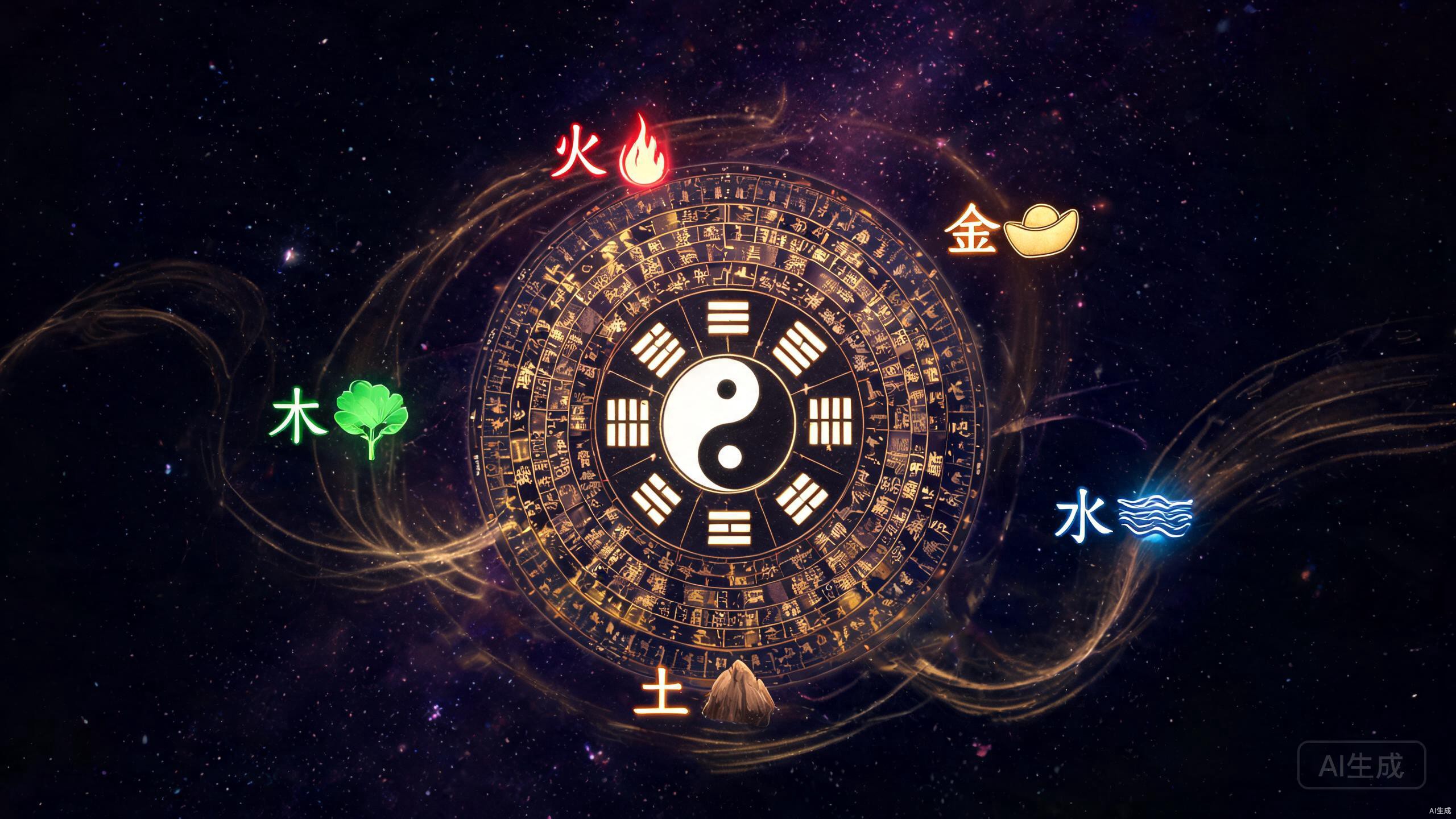
What Is the Prenatal Bagua?
The Prenatal Bagua (先天八卦), also known as Fuxi Bagua (伏羲八卦), is attributed to the legendary sage Fuxi (伏羲氏) of ancient China. Fuxi observed the patterns of heaven and earth, discerned the transformations of Yin and Yang, and derived the Prenatal Bagua from the Hetu (河图, Yellow River Map).
Cultural Context: The Bagua (八卦), or Eight Trigrams, is one of the foundational frameworks of Chinese metaphysics. Each trigram is a three-line symbol representing a natural force and a stage of cosmic change. The "Prenatal" and "Postnatal" arrangements are two ways of ordering these same eight trigrams — each revealing different layers of cosmic truth.
Directions of the Prenatal Bagua
The Prenatal Bagua arranges the eight trigrams as follows:
        Qian (South)
Dui (Southeast)    Xun (Southwest)
Li (East)          Kan (West)
Zhen (Northeast)   Gen (Northwest)
        Kun (North)
Number Sequence of the Prenatal Bagua
The numerical order of the Prenatal Bagua is: Qian 1, Dui 2, Li 3, Zhen 4, Xun 5, Kan 6, Gen 7, Kun 8.
This sequence embodies the generative process described in the Yi Jing: "The Taiji gives birth to the Two Forms (Yin and Yang); the Two Forms give birth to the Four Symbols; the Four Symbols give birth to the Eight Trigrams" (太极生两仪,两仪生四象,四象生八卦).
What Is the Postnatal Bagua?
The Postnatal Bagua (后天八卦), also known as Wen Wang Bagua (文王八卦), is attributed to King Wen of Zhou (周文王), who reputedly derived it from the Prenatal Bagua while imprisoned in Youli (羑里). The Postnatal Bagua fixes its directions according to the Luoshu (洛书, Luo River Writing) and emphasizes the flowing, ever-changing nature of all things.
Directions of the Postnatal Bagua
The Postnatal Bagua arrangement aligns perfectly with the Luoshu Nine Palaces:
        Li (South / 9)
Xun (Southeast / 4)    Kun (Southwest / 2)
Zhen (East / 3)        Dui (West / 7)
Gen (Northeast / 8)    Qian (Northwest / 6)
        Kan (North / 1)
Postnatal Bagua and the Five Elements
| Trigram | Direction | Five Elements | Nature | Family Member |
|---|---|---|---|---|
| Kan | North | Water | Water | Middle Son |
| Kun | Southwest | Earth | Earth | Mother |
| Zhen | East | Wood | Thunder | Eldest Son |
| Xun | Southeast | Wood | Wind | Eldest Daughter |
| Qian | Northwest | Metal | Heaven | Father |
| Dui | West | Metal | Lake | Youngest Daughter |
| Gen | Northeast | Earth | Mountain | Youngest Son |
| Li | South | Fire | Fire | Middle Daughter |
Cultural Context: Each trigram corresponds to a family member, a natural phenomenon, and an element. This multi-layered correspondence is what allows Feng Shui practitioners to analyze which areas of your home affect which occupants — a southwest issue may affect the mother, while a northwest issue may influence the father.
Core Differences Between Prenatal and Postnatal Bagua
| Comparison | Prenatal Bagua | Postnatal Bagua |
|---|---|---|
| Founder | Fuxi | King Wen of Zhou |
| Source | Hetu (Yellow River Map) | Luoshu (Luo River Writing) |
| Philosophical Focus | Ti (体, Essence / Origin) | Yong (用, Application / Change) |
| Core Idea | Yin-Yang Opposition | Flowing Transformation |
| Directional Pattern | Qian-South, Kun-North; Li-East, Kan-West | Li-South, Kan-North; Zhen-East, Dui-West |
| Main Application | Philosophy, Destiny Analysis | Feng Shui Layout, Directional Selection |
| Number Sequence | Qian 1, Dui 2, Li 3, Zhen 4... | Matches Luoshu Numbers |
| View of Time | Static, Primordial | Dynamic, Ever-Changing |
The Ti-Yong Relationship
The relationship between the Prenatal and Postnatal Bagua can be summarized by the classical concept of Ti-Yong (体用) — "Essence and Application":
- Prenatal as Ti (Essence): The Prenatal Bagua represents the primordial state of the universe — the "yet to be manifested" realm. It reveals the original face and inner law of all things in heaven and earth.
- Postnatal as Yong (Application): The Postnatal Bagua represents the universe in its applied, active state — the "already manifested" realm. It reveals the laws of transformation, change, and continuous renewal.
Simply put: the Prenatal Bagua explains what things are, while the Postnatal Bagua explains how to use them.
Application in Feng Shui
Postnatal Bagua Is Primary in Feng Shui Practice
In actual Feng Shui surveying and layout, the Postnatal Bagua is the main working tool:
- House Sitting and Facing: Use the Postnatal Bagua to determine the sitting mountain and facing direction of a house
- Auspicious and Inauspicious Directions: Analyze the fortune quality of each direction using the Luoshu Nine Palaces
- Family Members: Since each trigram corresponds to a family member, practitioners analyze how each sector's energy affects different occupants
- Annual Flying Stars: The Postnatal Bagua directions form the foundation of the Nine Palace Flying Stars (九宫飞星) system
The Supporting Role of the Prenatal Bagua
The Prenatal Bagua also has applications in certain advanced Feng Shui techniques:
- Destiny Analysis: The Prenatal number sequence is used in BaZi (八字, Eight Characters) destiny calculations
- Yin Dwelling Feng Shui (阴宅风水): Used to analyze the origin and trajectory of Dragon Veins (龙脉)
- Deep-Level Li Qi (理气, Compass Energy): Certain schools combine the Prenatal Bagua in their energy-direction methods
How to Apply This Knowledge in Your Home
- Map your home using the Postnatal Bagua: Identify which sector of your home corresponds to which trigram — this tells you which family member's energy is most affected by that area
- Check the key relationships: For example, the southwest (Kun) sector relates to the mother's health and the household's overall well-being
- Use Prenatal principles for reflection: When making major life decisions, contemplate the underlying essence of the situation — the "what is" — before choosing the practical action — the "how to use"
- Consult the Luoshu Nine Palaces for Flying Star analysis: This annual method layers time-based energy onto your home's fixed Bagua map
Quick Tips:
- Always use the Postnatal Bagua for everyday Feng Shui decisions like furniture placement, bedroom direction, and desk orientation
- Reserve the Prenatal Bagua for deeper metaphysical work such as BaZi analysis and ancestral grave placement
- Memorize the family-member associations (乾父坤母...) to quickly identify which area of your home influences each household member
Memory Verses
Prenatal Bagua Direction Verse
"Qian-South, Kun-North, Li-East, Kan-West; Dui-Southeast, Xun-Southwest; Zhen-Northeast, Gen-Northwest." (乾南坤北离东坎西,兑东南巽西南,震东北艮西北。)
Postnatal Bagua Direction Verse
"Li-South, Kan-North, Zhen-East, Dui-West; Xun-Southeast, Kun-Southwest; Gen-Northeast, Qian-Northwest." (离南坎北震东兑西,巽东南坤西南,艮东北乾西北。)
Family Member Correspondence (Postnatal)
"Qian is Father, Kun is Mother; Zhen is Eldest Son, Xun is Eldest Daughter; Kan is Middle Son, Li is Middle Daughter; Gen is Youngest Son, Dui is Youngest Daughter." (乾父坤母,震长男巽长女,坎中男离中女,艮少男兑少女。)
"The Prenatal is the Essence, the Postnatal is the Application; with Essence established, Application moves; with Application moving, Essence is revealed." (先天为体,后天为用;体立而后用行,用行而体显。) Feng Shui uses the Postnatal Bagua as its operational tool, but must never neglect the cosmic primordial truth revealed by the Prenatal Bagua.
Related Articles
- [[../01-风水入门/04-五行与八卦.md|Five Elements and Bagua: Mutual Generation and Restriction, Prenatal and Postnatal]]
- [[../01-风水入门/11-河图洛book与风水起源.md|Hetu and Luoshu: The Origins of Feng Shui]]
- [[../02-家居风水/12-风水化煞工具.md|Feng Shui Sha-Dissolving Tools: Complete Guide to Instruments and Taiji Point Location]]
- [[../02-家居风水/43-山海镇与八卦镜.md|Shanhai Zhen and Bagua Mirror: Powerful Sha-Dissolving Feng Shui Tools]]