Feng Shui Compass (Luopan): Structure, Layers, and How to Use It for Accurate Direction
## Feng Shui Compass Overview The Feng Shui Compass, also known as Luopan (罗盘), Luojing (罗经), or Luogeng (罗庚), is the essential measuring instrument used by Feng Shui masters when performing Kanyu (堪舆
Feng Shui Compass (Luopan): Structure, Layers, and How to Use It
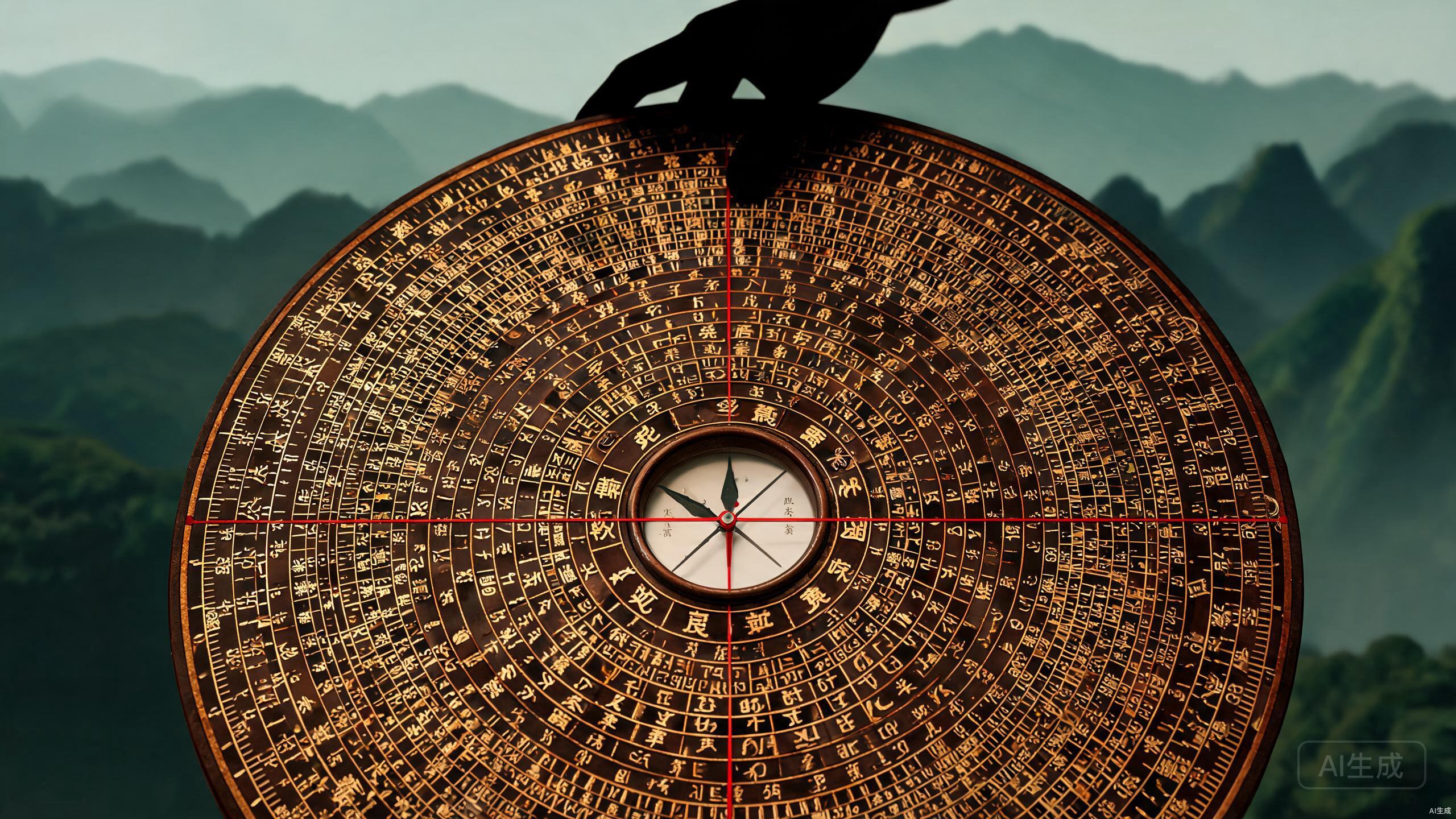
Feng Shui Compass Overview
The Feng Shui Compass, also known as Luopan (罗盘), Luojing (罗经), or Luogeng (罗庚), is the essential measuring instrument used by Feng Shui masters when performing Kanyu (堪舆, Feng Shui) readings to set direction and orientation. The invention of the Luopan represents humanity's ongoing exploration of the mysteries of the universe and human destiny. The gradually increasing number of concentric rings and the increasingly complex needle systems on the compass reflect centuries of accumulated practical experience.
Common Luopan types found in practice include the San He Pan (Triple Harmony Compass), San Yuan Pan (Three Cycles Compass), Comprehensive Pan, and Specialized Pan:
- San He Pan (Triple Harmony Compass): Has a longer history and is more widely used, though some of its markings can be difficult to interpret
- San Yuan Pan (Three Cycles Compass): Designed around the Three Cycles and Nine Periods (三元九运) time system
- Comprehensive Pan: Some versions combine elements primarily from the San He school, others primarily from the San Yuan school. These have the most layers and are mastered by the fewest practitioners
- Specialized Pan: Custom-designed by individual schools for specific purposes — practical and focused. For example, the "Xuan Kong Flying Stars Luopan" is designed exclusively for practitioners of Xuan Kong Flying Stars (玄空飞星) Feng Shui, with fewer layers for clarity and ease of use
Regardless of type, every Luopan contains one essential layer: the Twenty-Four Mountains (二十四山), because the compass's fundamental function is to determine direction.
The Three Main Components of the Luopan
1. Sea Bottom (Heaven Pool)
The Sea Bottom, also called the Heaven Pool (天池, tian chi), consists of a central pin, magnetic needle, baseline, cylindrical outer casing, and glass cover — all fixed at the center of the inner plate. At the center of the base is a sharp central pin, and the underside of the magnetic needle has a small hole that sits atop this pin.
- The arrow-tipped end of the compass needle points South; the opposite end points North
- The base of the Heaven Pool has a red line called the "Sea Bottom Line" (海底线), with two red dots at the North end
- During use, the north-pointing end of the magnetic needle must align with the Sea Bottom Line
- Modern Luopans have a crosshair printed on the Heaven Pool base, with East, South, West, and North marked at each end
Cultural Context: The Heaven Pool is more than a mechanical housing — in Feng Shui philosophy, it represents the Taiji Point (太极点), the still center from which all directional energies emanate. Keeping the needle perfectly centered here symbolizes balance and harmony between Heaven and Earth.
2. Inner Plate
The Inner Plate (内盘) is the rotating circular disk immediately surrounding the compass needle. Its surface contains multiple concentric circles, each called a "layer" or "ring." Each layer is divided into different segments — the simplest has only 8 divisions, while the most detailed has up to 384 divisions.
Each segment is printed with different characters or symbols. Luopans come in many varieties with varying numbers of layers — the most complex has 52 layers, while the simplest has only 5. Each Feng Shui school incorporates its own core teachings into the Luopan design, making the Chinese Feng Shui Compass a true encyclopedia of Chinese metaphysical knowledge.
3. Outer Plate
The Outer Plate (外盘) is a square tray that supports the inner plate. At the midpoint of each of its four outer edges is a small hole through which red threads are passed to form the "Heaven Heart Cross" (天心十道), used to read data from the inner plate's surface. The Heaven Heart Cross lines must be perfectly perpendicular. Newly purchased Luopans must be calibrated on the outer plate before first use.
The Meaning of Each Luopan Layer
A standard Luopan typically contains 19 layers (or more), with the following meanings:
| Layer | Name | Primary Use |
|---|---|---|
| Layer 1 | Heaven Pool (Taiji) | Compass needle, establishes North-South |
| Layer 2 | Pre-Heaven Bagua | Indicates pre-Heaven directions |
| Layer 3 | Nine Stars Plate | Distribution of the Greedy Wolf Star and other Nine Stars |
| Layer 4 | Twenty-Four Heavenly Stars Plate | Heavenly stars matched to earthly directions |
| Layer 5 | Earth Plate Correct Needle Twenty-Four Mountains | Primary direction-setting; measuring Dragon Veins |
| Layer 6 | Twenty-Four Solar Terms | Solar terms matched to directions |
| Layer 7 | Penetrating Mountain Seventy-Two Dragons | Penetrating the earth to identify Dragon Veins |
| Layer 8 | One Hundred Twenty Dragons | Gold Division (Fen Jin) |
| Layer 9 | Human Plate Middle Needle Twenty-Four Mountains | Sand identification |
| Layer 10 | Human Plate Middle Needle One Hundred Twenty Dragons | Human Plate Gold Division |
| Layer 11 | Penetrating Earth Sixty Dragons Plate | Channeling Earth Qi |
| Layer 12 | Two Hundred Forty Gold Division Plate | Precise Gold Division |
| Layer 13 | Twelve Lunar Mansions Plate | Lunar mansion correspondences |
| Layer 14 | Twelve Regional Divisions | Geographic regional correspondences |
| Layer 15 | Heaven Plate Seam Needle Twenty-Four Mountains | Water reception |
| Layer 16 | Heaven Plate Seam Needle One Hundred Twenty Dragons | Heaven Plate Gold Division |
| Layer 17 | Penetrating Earth Sixty Dragons Plate | Earth penetration |
| Layer 18 | Whole Heaven Five Elements | Heavenly Five Elements |
| Layer 19 | Celestial Degree Markings | Twenty-Eight Lunar Mansions degrees |
The three most commonly used layers are the three Twenty-Four Mountain plates: the Earth Plate Correct Needle for measuring Dragon Veins and setting direction, the Human Plate Middle Needle for identifying Sand (surrounding mountains), and the Heaven Plate Seam Needle for water reception.
Cultural Context: The three-needle system (Earth, Human, Heaven) reflects the Chinese cosmological principle of Unity of Heaven and Humanity (天人合一). Each needle has a slightly different magnetic adjustment to account for celestial, terrestrial, and human energetic influences — a sophisticated calibration refined over centuries.
How to Choose a Quality Luopan
A Luopan consists of three major components — the Sea Bottom, Inner Plate, and Outer Plate — and the quality of each directly affects measurement accuracy.
Choosing the Sea Bottom
- The cylindrical housing must be perfectly shaped, with the bottom crosshair at an exact 90-degree angle
- The central pin must be fixed at the intersection of the crosshair, perpendicular to the base, with an undamaged tip
- The magnetic needle must be perfectly straight with strong magnetism; both ends must be equal in weight — when placed on a flat surface, the needle should rest level
- The cover should ideally be glass (acrylic or plastic covers generate static electricity that affects accuracy)
- When the Sea Bottom is flipped upside down, the magnetic needle should remain in place
Choosing the Inner Plate
- The surface must be smooth and flat, with accurate divisions and clearly printed characters
- When rotated, the Zi (子), Wu (午), Mao (卯), and You (酉) lines must align perfectly with the outer plate's crosshair
- The inner plate must not wobble in any direction; rotation must be smooth, steady, and balanced
- The inner ring should fit snugly so the Sea Bottom remains firmly fixed
Choosing the Outer Plate
- The outer plate must be a true square, with four straight, unbent edges
- The four threading holes for the Heaven Heart Cross must be located precisely at the center of each edge
- For compasses with level bubbles: when both bubbles are centered, the magnetic needle should sit parallel to the dial surface
How to Use the Luopan
Finding the Central Point of a Home
To assess the Feng Shui of a Yang Dwelling (阳宅, yang zhai), the first step is to identify the home's center point — known in Feng Shui as "setting the central point" (立极, li ji):
| Home Shape | How to Find the Central Point |
|---|---|
| Square / Rectangle | Intersection of the square's two diagonals |
| Small protrusion | Ignore the protrusion; treat as a standard square |
| Small indentation | Mentally fill in the indentation; treat as a standard square |
| L-shape | Draw parallel lines through the midpoint of the length and width; their intersection is the central point |
| Triangle | Draw straight lines from the midpoints of the two slanted sides to the opposite corners; their intersection is the central point |
Determining the Sitting and Facing Direction
Setting the direction (立向, li xiang) means establishing the home's "sitting" (靠) and "facing" (向) orientations. "Sitting" refers to the direction you back toward; "facing" refers to the direction you look toward. Once the sitting direction is set, the facing direction follows naturally. Typically, a home has only one usable sitting degree — if the sitting and facing orientation is changed or the hall layout is irregular, the home cannot properly receive Vital Qi and prosperous Sand and Water.
Cultural Context: In classical Feng Shui, the "sitting" direction is considered the supportive, stabilizing force (like a mountain at your back), while the "facing" direction is where energy and opportunity enter. Think of it like sitting in a commanding office chair — supported behind you, with an open view ahead.
Step-by-Step Luopan Operation
-
Holding Position: Hold the outer plate with both hands (one on each side), stand with feet slightly apart, and position the Luopan at chest-to-abdomen height, keeping it perfectly level
-
Alignment: Your back represents "sitting" and your front represents "facing." The crosshair lines on the Luopan should align with the home's true front, back, left, and right (the Four Cardinal Directions)
-
Rotate the Inner Plate: Once the crosshair is fixed in position, use both thumbs to rotate the inner plate. The Heaven Pool will rotate with it until the magnetic needle settles and aligns with the red baseline inside the Heaven Pool
-
Read the Data: The end of the magnetic needle with the small hole must align with the two red dots on the baseline. The crosshair line at the facing direction now intersects with various layers on the inner plate, and all relevant data appears along the path of this crosshair line
-
Determine Sitting and Facing: The Twenty-Four Mountains layer sits near the Heaven Pool. The "Mountain" character on the facing side of the crosshair indicates the "facing" direction; the "Mountain" character on the sitting side indicates the "sitting" direction. For example, if the facing mountain is Zi (子) and the sitting mountain is Wu (午), it is called "Sitting Wu Facing Zi" (坐午向子)
Measuring the Home's Mountain Direction
- Indoor measurement: Stand at the exact center of the home with your back to the main entrance
- Outdoor measurement: Stand outside the main entrance, approximately three steps (seven footsteps) away, facing the door. Hold the Luopan at chest height, with the edge of the Luopan parallel to the door frame
Luopan Taboos and Important Precautions
Time-Based Taboos
Feng Shui masters traditionally observe strict timing rules when using the Luopan. Certain times are considered unsuitable for compass work, as they were believed to invite misfortune upon the practitioner. These restricted times are divided into "Rahu Days" (罗睺日) and "Master-Killing Hours" (杀师时). Rahu (罗睺) is the name of a star considered an "eclipsing deity" in Chinese astrology, and includes annual Rahu days, seasonal Rahu days, monthly Rahu days, and Master-Killing Hours.
Placement Precautions
- When not in use, the Luopan must be stored flat to keep the magnetic needle in normal condition. Tilting it sideways will cause the needle to drift and quickly lose its accuracy
- Keep the Luopan away from electrical currents or magnets — these will quickly demagnetize the needle
The Lu Ban Ruler
In addition to the Luopan, Feng Shui employs another important measuring tool: the Lu Ban Ruler (鲁班尺). Approximately 42.9 cm long, it is traditionally attributed to Gongshu Ban (公输班) of the Spring and Autumn Period state of Lu. From left to right, it contains four rows: traditional inches, the Lu Ban Ruler, the Ding Lan Ruler, and centimeters.
The Lu Ban Ruler is inscribed with eight characters: "Wealth" (财), "Illness" (病), "Separation" (离), "Righteousness" (义), "Authority" (官), "Robbery" (劫), "Harm" (害), and "Foundation" (本). Each character is subdivided into four smaller characters distinguishing auspicious from inauspicious meanings. Among them, "Wealth," "Righteousness," "Authority," and "Foundation" are auspicious, while "Illness," "Separation," "Robbery," and "Harm" are inauspicious. When building houses or making furniture, the height, width, and length of each component should be measured against this ruler to ensure an auspicious dimension.
Front Door optimal sizes: Welcoming Fortune, Side Wealth, Wealth Arrives, Great Auspice Master Bedroom Door optimal sizes: Wealth Arrives, Entering Treasure, Prosperity, Six Harmonies Children's Room Door optimal sizes: Ascending Success, Noble Son, Great Auspice, Increased Benefit
Quick Tips for Luopan Use
- Practice on familiar spaces first: Before using your Luopan for serious readings, practice measuring rooms in your own home to build confidence and accuracy
- Keep it away from electronics: Smartphones, speakers, and even some lighting fixtures can interfere with the magnetic needle
- Always calibrate before use: Check that the needle settles cleanly and aligns with the baseline before taking any reading — environmental shifts can affect accuracy
Related Articles
- [[../03-财运风水/11-横财风水局布局.md|Windfall Wealth Layout: Xuan Kong Three Secrets and Modern Yang Dwelling Windfall Layout]]
- [[../04-商业风水/52-商业风水与罗盘.md|Business Feng Shui and the Luopan]]
- [[../09-Yin Dwelling风水/52-Yin Dwelling风水中的罗盘使用技巧.md|Luopan Techniques in Yin Dwelling Feng Shui]]
- [[../01-风水入门/15-二十四山向详解.md|Twenty-Four Mountains and Directions Explained]]