Feng Shui Five Essentials: Dragon, Acupoint, Sand, Water, and Direction
## What Are the "Dragon, Acupoint, Sand, Water, and Direction"? The Five Essentials — Dragon (龙), Acupoint (穴), Sand (砂), Water (水), and Direction (向) — form the core foundation of Feng Shui, especial
Feng Shui Five Essentials: Dragon, Acupoint, Sand, Water, and Direction
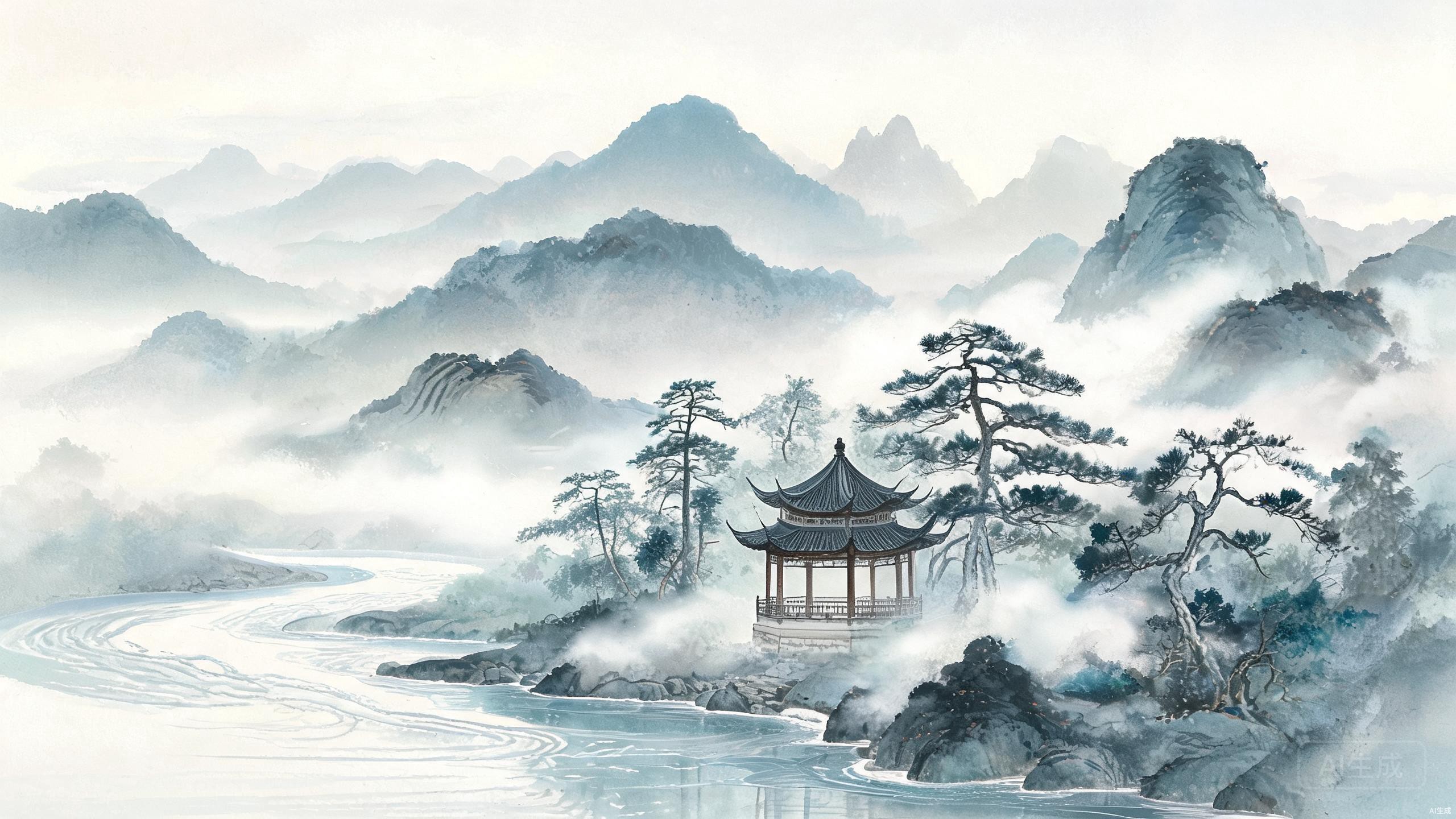
What Are the "Dragon, Acupoint, Sand, Water, and Direction"?
The Five Essentials — Dragon (龙), Acupoint (穴), Sand (砂), Water (水), and Direction (向) — form the core foundation of Feng Shui, especially within the Form School (形势派, Xing Shi Pai). These five elements serve as the fundamental criteria for evaluating the auspicious quality of any location, and none can be omitted.
Cultural Context: Known as the "Five Essentials of Feng Shui" (龙穴砂水向五诀), this framework has guided Chinese landform analysis for over a thousand years. Think of them as five lenses through which to read a landscape — together they reveal where Qi gathers, how it flows, and whether a site supports prosperity.
Miao Xiyong, a renowned Feng Shui master of the Ming Dynasty, wrote in Zang Jing Yi (Wings of the Book of Burial):
"The Dragon must be vital, the Acupoint must be accurate, the Sand must be elegant, the Water must embrace, and the Direction must be auspicious." (龙要真,穴要的,砂要秀,水要抱,向要吉。)
First Essential: Dragon (来龙)
What Is the Dragon?
In Feng Shui, the "Dragon" refers to the direction and undulation of mountain ranges. Because mountains rise and fall like a soaring celestial dragon, they are called Dragon Veins (龙脉, long mai).
Cultural Context: The dragon metaphor captures more than shape — it expresses the living energy of a mountain range. A Dragon Vein is believed to channel Qi across the landscape, much like arteries carry blood through the body.
Classifications of the Dragon
| Dragon Type | Characteristics | Auspicious Quality |
|---|---|---|
| Living Dragon (生龙) | Dynamic rise and fall, vibrant momentum | Auspicious |
| Dead Dragon (死龙) | Rigid, flat, no undulation | Inauspicious |
| Strong Dragon (强龙) | Mighty, grand, magnificent | Auspicious |
| Weak Dragon (弱龙) | Feeble, listless, lacking force | Inauspicious |
| Forward Dragon (顺龙) | Smooth progression, layer upon layer | Auspicious |
| Reverse Dragon (逆龙) | Moving backward, turning away | Inauspicious |
The Three Landings of the Dragon
- First Landing (初落): Where the Dragon Vein first emerges — Qi is still gathering
- Middle Landing (中落): The mid-section — Qi is at its peak strength
- Final Landing (末落): Where the Dragon Vein ends — Qi is fading
The Dragon's Entry (入首)
The final stretch of a Dragon Vein as it approaches the Acupoint is called the "Entry" (入首). This section's shape is critically important:
- Direct Dragon Entry (直龙入首): The Dragon Vein arrives straight on
- Horizontal Dragon Entry (横龙入首): The Dragon Vein arrives laterally and requires a "ghost tail" support
- Returning Dragon Entry (回龙入首): The Dragon Vein turns back toward its origin
- Flying Dragon Entry (飞龙入首): The Dragon Vein soars upward dramatically
- Submerged Dragon Entry (潜龙入首): The Dragon Vein sinks low into the earth
- Swimming Dragon Entry (游龙入首): The Dragon Vein winds sinuously along
Second Essential: Acupoint (穴位)
What Is an Acupoint?
The "Acupoint" (穴, xue) is the precise point where the Dragon Vein's Vital Qi concentrates — the specific location for building a Yang Dwelling (residence) or Yin Dwelling (burial site). Only by finding the true Acupoint can one Ride Vital Qi (乘生气) and harness its nourishing power.
Key Principles for Pointing the Acupoint
-
Acupoint Star (穴星): The small hill where the Acupoint is located — its shape varies:
- Metal Star Acupoint: Round-topped like a golden sphere
- Wood Star Acupoint: Tall and column-like
- Water Star Acupoint: Wave-like undulations
- Fire Star Acupoint: Sharp and flame-like
- Earth Star Acupoint: Square and platform-like
-
Acupoint Evidence (穴证): Signs that confirm a true Acupoint:
- Taiji Halo: Circular patterns visible in the Acupoint soil
- Warmth: The Acupoint location feels notably warm
- Five-Colored Soil: Soil displaying the five elemental colors
- Lush Vegetation: Unusually vibrant grass and trees above
-
Acupoint Taboos (穴忌):
- Avoid placing on hilltops (Qi scatters)
- Avoid placing at hill bases (Qi becomes turbid)
- Avoid placing on hard rock (no Qi present)
- Avoid placing on steep cliffs (unstable and unsafe)
Ten Major Acupoint Forms
| Acupoint Form | Characteristics | Best Suited For |
|---|---|---|
| Nest Acupoint (窝穴) | Hollow depression like a bird's nest | Yang Dwelling |
| Pincer Acupoint (钳穴) | Clamping form like pincers | Yin Dwelling |
| Nipple Acupoint (乳穴) | Protruding form like a nipple | Yin Dwelling |
| Bump Acupoint (突穴) | Raised lump-like protrusion | Yin Dwelling |
| Flat Acupoint (平穴) | Acupoint on flat ground | Yang Dwelling |
| Upward Acupoint (仰穴) | Facing upward | Yin Dwelling |
| Downward Acupoint (俯穴) | Facing downward | Yin Dwelling |
| Side Acupoint (侧穴) | Acupoint on the side | Yin Dwelling |
| Deflected Acupoint (闪穴) | Slightly off to one side | Yin Dwelling |
| Unusual Acupoint (怪穴) | Strange or unconventional form | Requires expert skill |
Third Essential: Sand (砂手)
What Is Sand?
"Sand" (砂) refers to the hills and elevated landforms surrounding the Acupoint, which serve to protect and embrace it. The term comes from ancient practice of using sand trays to model terrain features.
Key Sand Positions
| Sand Position | Location | Function |
|---|---|---|
| Azure Dragon Sand (青龙砂) | Left side | Left guardian — signifies official rank and nobility |
| White Tiger Sand (白虎砂) | Right side | Right guardian — signifies wealth |
| Vermilion Bird Sand (朱雀砂) | Front | Before the Bright Hall — signifies career advancement |
| Black Tortoise Sand (玄武砂) | Rear | Backing Mountain — signifies stable foundation |
| Desk Mountain (案山) | Near front | Like a writing desk — signifies literary success |
| Facing Mountain (朝山) | Distant front | Like subjects paying homage — signifies family prosperity |
Auspicious vs. Inauspicious Sand
Auspicious Sand Features:
- Elegant, dignified form
- Embraces the Acupoint with affection
- Appropriate height — neither oppressive nor distant
- Covered in lush vegetation
Inauspicious Sand Features:
- Broken, sharp, or jagged appearance
- Turned outward, not protecting the Acupoint
- Overwhelmingly tall and oppressive
- Bare with no vegetation
Azure Dragon and White Tiger Principles
Traditional Feng Shui teaches that "the Azure Dragon should be tall, the White Tiger should be subdued":
- Azure Dragon Sand (left) should be slightly higher than White Tiger Sand (right) — this produces talented people
- The height difference should not be excessive, or imbalance occurs
- Modern interpretations often favor "balanced Azure Dragon and White Tiger"
Fourth Essential: Water (水口)
What Is Water?
In Feng Shui, "Water" encompasses all water systems — rivers, lakes, ponds, canals, and streams. Water is considered the lifeblood of the mountains and the carrier of Qi.
The Zang Shu (Book of Burial) teaches:
"The method of Feng Shui values obtaining Water most highly; Storing Wind is secondary." (风水之法,得水为上,藏风次之。)
Auspicious and Inauspicious Water Forms
| Water Shape | Name | Auspicious Quality | Description |
|---|---|---|---|
| Embracing Water (环抱水) | Jade Belt Around the Waist | Greatly Auspicious | Water curves around in a protective arc |
| Gathering Water (聚面水) | Bright Hall Water | Greatly Auspicious | Water pools before the site |
| Nine-Turn Water (九曲水) | Winding and Curved | Auspicious | Water flows in affectionate bends |
| Step Water (仓板水) | Descending Layers | Auspicious | Water falls in terrace-like steps |
| Reverse Bow Water (反弓水) | Bow Turned Backward | Inauspicious | Water curves away like a reversed bow |
| Rushing Water (直冲水) | Arrow Shooting the Site | Inauspicious | Water shoots straight toward the Acupoint |
| Foot-Cutting Water (割脚水) | Water Hugging the Base | Inauspicious | Water flows too close to the site |
| Diverging Water (分流水) | Splitting Apart | Inauspicious | Wealth Qi scatters in different directions |
The Importance of the Water Mouth (水口)
The Water Mouth (水口, shui kou) — where water exits — determines whether Qi is retained:
- Auspicious Water Mouth: Guarded by intersecting mountains, water does not rush away
- Inauspicious Water Mouth: Water leaves unobstructed, Qi departs with it
Fifth Essential: Direction (朝向)
What Is Direction?
"Direction" (向) refers to the orientation of a residence or burial site. The choice of Sitting and Facing (坐向) directly determines whether the structure can receive prosperous Qi.
Principles for Setting Direction
- Riding Dragon Qi (乘龙气): Direction must harmonize with the Dragon Vein's path
- Receiving Water Qi (收水气): Direction should capture auspicious incoming water
- Avoiding Sha Qi (避煞气): Steer clear of inauspicious directions that generate harmful energy
- Matching the Current Period (合元运): Align with the prosperous Qi directions of the current Yuan Yun (Time Period)
The Twenty-Four Mountains System
Precise Direction-setting uses the Twenty-Four Mountains (二十四山) system, with each mountain covering 15 degrees. Different Sitting and Facing combinations carry distinct auspicious and inauspicious meanings.
Common Auspicious Orientations
| Sitting and Facing | Name | Characteristics |
|---|---|---|
| Sitting North Facing South (坐北朝南) | Zi Mountain Wu Direction | Traditional optimal orientation |
| Sitting West Facing East (坐西朝东) | You Mountain Mao Direction | Welcomes purple Qi from the east |
| Sitting Northwest Facing Southeast | Qian Mountain Xun Direction | Heaven and Wind in harmony |
| Sitting Northeast Facing Southwest | Gen Mountain Kun Direction | Mountain and Earth in harmony |
Integrated Application of the Five Essentials
The Steps of Seeking Dragon and Pointing Acupoint (寻龙点穴)
- Seek the Dragon (寻龙): Observe mountain ranges to find a Dragon Vein rich with Vital Qi
- Point the Acupoint (点穴): Locate the precise point where Vital Qi concentrates
- Inspect the Sand (察砂): Verify that the surrounding Sand formations protect the Acupoint with affection
- Observe the Water (观水): Study the water's shape, source, and direction of flow
- Set the Direction (立向): Determine the optimal orientation based on Dragon, Acupoint, Sand, and Water
The Relationship Between the Five Essentials
| Element | Function | Relationship to Other Elements |
|---|---|---|
| Dragon | Source of Vital Qi | If the Dragon is true, the Acupoint is easy to find |
| Acupoint | Gathering point of Vital Qi | The Acupoint's fortune depends on Sand and Water |
| Sand | Protects Vital Qi | Sand guards the Acupoint; Acupoint rides the Dragon |
| Water | Concentrates Vital Qi | Water bounds Qi; Direction captures Water |
| Direction | Receives Vital Qi | Direction matches the Period; Period supports Direction |
Applying the Five Essentials in Urban Feng Shui
In urban environments, the Five Essentials correspond to modern features:
| Essential | Natural Feng Shui | Urban Feng Shui |
|---|---|---|
| Dragon | Mountain range direction | Road orientation, building cluster trends |
| Acupoint | Specific site point | Specific residence or office building |
| Sand | Surrounding hills | Neighboring buildings |
| Water | Rivers and lakes | Roads, overpasses, fountains |
| Direction | Sitting orientation | Building orientation |
How to Apply the Five Essentials in Your Modern Home
- Identify your "Dragon": Look at the main road, avenue, or elevated structure (like a tall building) that brings energy toward your home
- Find your "Acupoint": Identify the center of your home — the spot where natural light and foot traffic converge
- Assess your "Sand": Examine the buildings, walls, and structures on your left and right — do they protect your space, or do they press in oppressively?
- Map your "Water": Note the flow of foot traffic, roads, and pathways around your home — gentle curves are favorable, straight-on rushes are not
- Confirm your "Direction": Check that your main entrance faces an auspicious direction and avoids Sha Qi
Quick Tips:
- A building taller than yours behind your home serves as Backing Mountain — favorable
- A straight road pointing directly at your front door creates Road Rushing Sha — remedy with a Folding Screen or plants
- Curved roads embracing your building (rather than cutting away) signal incoming wealth energy
"When the Dragon is true and the Acupoint accurate, when Sand is elegant and Water embraces, when Direction is auspicious and Period prosperous — blessings flow naturally and enduringly." (龙真穴的砂水秀,向吉运旺福自悠。)
The Five Essentials of Dragon, Acupoint, Sand, Water, and Direction represent the essence of Feng Shui. Whether analyzing natural landscapes or urban architecture, these five elements must be evaluated together. Master them, and you hold the core key to Feng Shui.
Related Articles
- [[../09-Yin Dwelling风水/10-Yin Dwelling风水中的五诀-龙穴砂水向.md|Yin Dwelling Feng Shui: The Five Essentials — Dragon, Acupoint, Sand, Water, and Direction]]
- [[../07-风水故事/26-龙脉传说.md|Legend of the Dragon Vein: The Ancient Art of Seeking Dragon and Pointing Acupoint]]
- [[../08-百科问答库/49-什么是寻龙点穴?Yin Dwellingsite selection有哪些原则?.md|What Is Seeking Dragon and Pointing Acupoint? Key Principles for Yin Dwelling Site Selection]]
- [[../09-Yin Dwelling风水/04-寻龙点穴入门-什么是龙脉.md|Seeking Dragon and Pointing Acupoint: What Is a Dragon Vein?]]