Feng Shui Storing Wind and Gathering Qi: The Core Principle for a Lucky Home
## The Origin of "Storing Wind and Gathering Qi" "Storing Wind and Gathering Qi" (藏风聚气) is the foundational concept of Feng Shui theory, first articulated by Guo Pu (郭璞) of the Jin Dynasty in his semi
Feng Shui: The Principle of "Storing Wind and Gathering Qi"
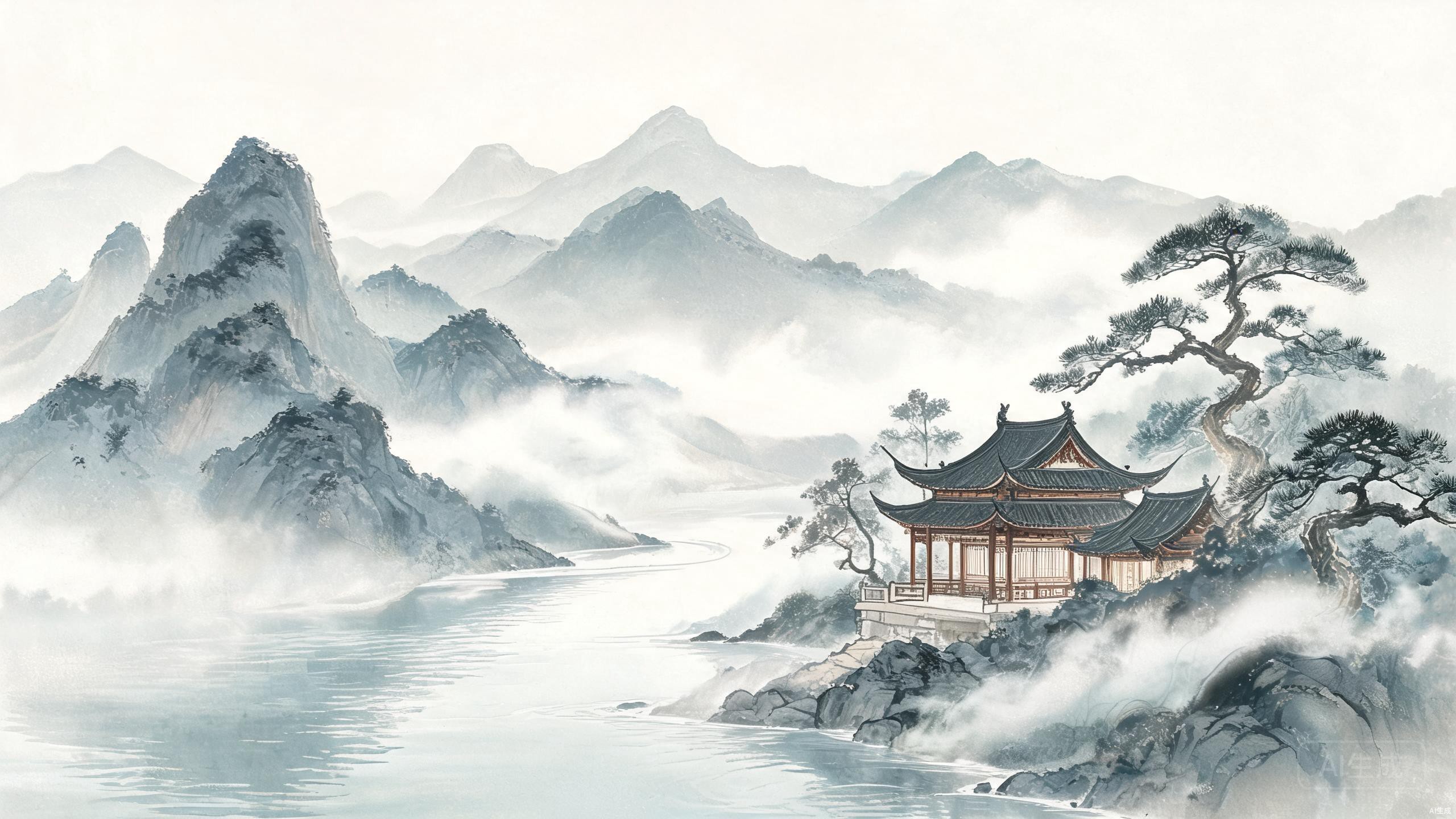
The Origin of "Storing Wind and Gathering Qi"
"Storing Wind and Gathering Qi" (藏风聚气) is the foundational concept of Feng Shui theory, first articulated by Guo Pu (郭璞) of the Jin Dynasty in his seminal work Zang Shu (Book of Burial):
"Burial means Riding Vital Qi. Qi rides the wind and scatters, but is retained when encountering water. The ancients gathered it so it would not disperse and guided it so it would stay — thus they called it Feng Shui (Wind and Water)." (葬者,乘生气也。气乘风则散,界水则止。古人聚之使不散,行之使有止,故谓之风水。)
This passage brilliantly captures the essence of Feng Shui:
- Qi (气) is the very heart of Feng Shui practice
- Wind causes Qi to disperse and dissipate
- Water causes Qi to gather and settle
- Storing Wind (藏风): preventing Qi from being scattered by wind
- Gathering Qi (聚气): accumulating Qi so it does not dissipate
What Is "Qi"?
The Concept of Qi
In Feng Shui, "Qi" (气) is an invisible yet tangible energy that forms the fundamental source of all things in heaven and earth. The I Ching (Book of Changes) states: "Essence and Qi become material things; wandering spirits become transformation."
Qi is everywhere — invisible and intangible, yet ever-present. Feng Shui teaches us to recognize its presence through observable signs:
- Where Vital Qi flourishes: lush vegetation, abundant water, thriving wildlife
- Where Qi is absent: barren soil, dried-up streams, lifeless atmosphere
Cultural Context: In Chinese metaphysics, Qi is the vital life force that flows through all living things and spaces. Think of it as the energetic atmosphere of a location — when Qi gathers and flows smoothly, vitality and good fortune follow; when it scatters or stagnates, energy drains and opportunity fades. Western readers might recognize echoes of this concept in the ancient Greek notion of "pneuma" or modern ideas about environmental energy flow.
The Classifications of Qi
| Type of Qi | Characteristics | Influence |
|---|---|---|
| Vital Qi (Sheng Qi 生气) | Fresh, flowing, warm | Auspicious — supports health and good fortune |
| Dead Qi (Si Qi 死气) | Stagnant, cold, murky | Inauspicious — harms health and fortune |
| Sha Qi (煞气) | Sharp, aggressive, chaotic | Inauspicious — brings disaster |
| Prosperous Qi (Wang Qi 旺气) | Abundant, dynamic, ascending | Highly auspicious — attracts great luck |
What Is "Storing Wind"?
How Wind Affects Qi
Wind serves as Qi's vehicle, yet excessive wind causes Qi to scatter:
- Gentle breeze: circulates Qi and brings vitality (favorable wind)
- Strong wind: scatters Qi and destroys its accumulation (harmful wind)
- No wind at all: Qi stagnates and loses vibrancy (also unfavorable)
Conditions for Storing Wind
An ideal wind-protected environment should have:
- A solid barrier: a mountain or building shielding from behind
- No direct confrontations: avoid roads, rivers, or corridors rushing straight in
- Embracing protection: "sand hands" (砂手) flanking both sides, forming a Grand Secretary Chair shape
- Wind-mouth avoidance: not located in mountain passes or between tall buildings where wind funnels through
The Classic Pattern for Storing Wind
        Front Vermilion Bird (Bright Hall, open and spacious)
                ↓
Left Azure Dragon →  [Home]  ← Right White Tiger
                ↑
        Back Black Tortoise (Backing Mountain, stable and solid)
This configuration — "Bright Hall before, Backing Mountain behind, Azure Dragon to the left, White Tiger to the right" — represents the ideal form for Storing Wind and Gathering Qi.
Cultural Context: The Four Celestial Animals — Azure Dragon, White Tiger, Vermilion Bird, and Black Tortoise — are the four guardian symbols of Chinese cosmology, each watching over one cardinal direction. In Feng Shui, they translate abstract directional energies into observable landscape features, allowing practitioners to read the energetic quality of any environment.
What Is "Gathering Qi"?
How Water Affects Qi
Water plays a critical role in gathering Qi:
- "Water defines its boundary" (界水则止): flowing water can block and accumulate Qi
- Water governs wealth: in Feng Shui, water symbolizes financial fortune
- Gentle curves attract: curved water flow gathers Qi far better than straight, rushing currents
Conditions for Gathering Qi
An ideal Qi-gathering environment should feature:
- Water encircling the site: rivers or lakes flowing around the home
- Inward-curving water: water flowing in an embracing pattern (the "Jade Belt Around the Waist")
- An open Bright Hall: a spacious, level area in front of the home
- A basin-like terrain: higher around the edges, lower in the center — like the inside of a wok
Auspicious and Inauspicious Water Forms
| Water Form | Auspiciousness | Description |
|---|---|---|
| Embracing Water | Highly auspicious | Water curves inward like a belt around the site |
| Incoming Water | Auspicious | Water flows toward the home |
| Passing Water | Neutral | Water flows gently past the front |
| Reverse Bow Water | Inauspicious | Water curves away from the home like a bow |
| Direct Rush Water | Inauspicious | Water flows straight at the home |
| Foot-Cutting Water | Inauspicious | Water flows too close, cutting beneath the foundation |
How Storing Wind and Gathering Qi Appears in Modern Homes
External Environment
- Backing Mountain: a hill, ridge, or tall building behind the home that blocks northern winds
- Side Protectors: buildings or trees flanking the home like the Azure Dragon and White Tiger
- Bright Hall Before: an open area in front — a lawn, plaza, or water feature
- Wind-Mouth Avoidance: avoid building on hilltops, in mountain valleys, or between tall towers where wind rushes through
Internal Layout
- No Direct Door Alignment: avoid the front door aligning directly with windows, back doors, or balconies
- Gathering Qi in the Living Room: the living room should be spacious and square, located near the center of the home
- Storing Wind in Bedrooms: bedrooms should not be excessively large — oversized rooms allow Qi to scatter
- Avoid Piercing Hall Sha (穿堂煞): internal airflow should not cut straight through the home
Real-World Examples
A Home That Stores Wind and Gathers Qi:
- Sits facing south with green hills behind
- Lower hills embrace the property on both sides
- A river curves gracefully in front
- The courtyard features a rockery and koi pond
A Home That Fails to Store Wind and Gather Qi:
- Perched on a hilltop, exposed to wind from all sides
- Located in a mountain valley wind tunnel
- A reverse-bow shaped road faces the entrance
- Internal doors face doors and windows face windows, creating direct energy leaks
Quick Tip: Stand at your front door on a breezy day. If wind rushes straight through to the back of your home without circulating, your floor plan likely suffers from Piercing Hall Sha — a common cause of financial leakage and restless energy.
How to Judge Whether a Location Stores Wind and Gathers Qi
Intuitive Assessment Methods
- Observe vegetation: places with lush plant life usually have strong Qi
- Observe water sources: locations with abundant, clear water carry powerful Qi
- Observe wildlife: birds, butterflies, and beneficial insects gathering indicates good Qi
- Feel the atmosphere: notice whether you feel comfortable, calm, and at ease in the space
Professional Assessment Methods
- Luopan orientation: use a Luopan (Feng Shui Compass) to measure directions and analyze the mountain-facing relationship
- Landform analysis: study the Dragon Vein (龙脉), Sand formations, and Water Mouth (水口) patterns
- Li Qi calculation (理气): analyze Qi's prosperity and decline through Yuan Yun (元运) periods and Flying Star charts
How to Apply This at Home
- Start with the intuitive check: walk your property slowly and notice how your body responds — comfort signals good Qi
- Map the four guardians: identify what serves as your backing mountain, left dragon, right tiger, and front bright hall
- Identify water features: even a curved walkway or fountain can serve as symbolic water
- Consult a practitioner for complex sites: for challenging terrain or important decisions, a trained Feng Shui consultant can read subtle energies you may miss
Storing Wind and Gathering Qi in Modern Architecture
In today's cities, natural mountains and rivers are often absent — but the principle of Storing Wind and Gathering Qi remains entirely applicable:
| Traditional Element | Modern Substitute |
|---|---|
| Backing Mountain | Tall buildings or complexes behind |
| Left Azure Dragon | Structures on the left side |
| Right White Tiger | Structures on the right side |
| Bright Hall | Plaza, garden, or open road ahead |
| River | Road ("virtual water") or fountain |
| Embracing Water | Curved, encircling road or pathway |
Practical Adaptation for City Living
- Apartment dwellers: use your building's mass behind you as your backing mountain — avoid units at the very end of corridors where energy rushes through
- Ground-floor units: ensure dense landscaping or fencing on the sides to create the "dragon and tiger" embrace
- Street-facing units: a curved road in front is more auspicious than a long straight road rushing toward your door
- Interior layout: arrange furniture to create a sense of backing and protection — your desk and bed should ideally have a solid wall behind them
The Practical Value of Storing Wind and Gathering Qi
Understanding this principle holds genuine value for modern living:
- Choosing a home: select properties that store wind and gather Qi for greater comfort and well-being
- Interior design: arrange rooms thoughtfully to prevent Qi from scattering
- Garden and landscape design: create outdoor environments that embody Storing Wind and Gathering Qi
- Business location: choose Qi-gathering locations to support commercial success and prosperity
"Qi rides the wind and scatters, but is retained when encountering water. Storing Wind and Gathering Qi is the very first essential of Feng Shui." (气乘风则散,界水则止。藏风聚气,乃风水之第一要义。)
Whether in ancient times or the modern era, Storing Wind and Gathering Qi remains the central pursuit of Feng Shui practice. By understanding and applying this principle, you can create a harmonious, nurturing environment for yourself and your family — a home filled with lucky, prosperous, and harmonious energy.
Related Articles
- [[../06-风水文化与历史/30-风水与中医:同源理论的互证关系.md|Feng Shui and Traditional Chinese Medicine: How Two Ancient Systems Validate Each Other]]
- [[../08-百科问答库/59-什么是风水中的'气'?气如何影响人的运势?.md|What Is "Qi" in Feng Shui? How Does Qi Influence Your Fortune?]]
- [[../02-家居风水/33-阳台风水植物.md|Balcony Feng Shui Plants: Best Greenery for Wealth and Sha Qi Protection]]
- [[../02-家居风水/37-植物与风水.md|Plants and Feng Shui: Balancing the Five Elements with Home Greenery]]