San Yuan School Feng Shui: Dragon Gate Eight Formations and the Mystery of Heaven and Earth Trigrams
## San Yuan School Overview The San Yuan School (三元派, San Yuan Pai) is a branch of the Compass School (理气派, Li Qi Pai) that centers on time cycles as its core principle. Using the Three Cycles and Nin
San Yuan School Feng Shui: Dragon Gate Eight Formations and the Mystery of Heaven and Earth Trigrams
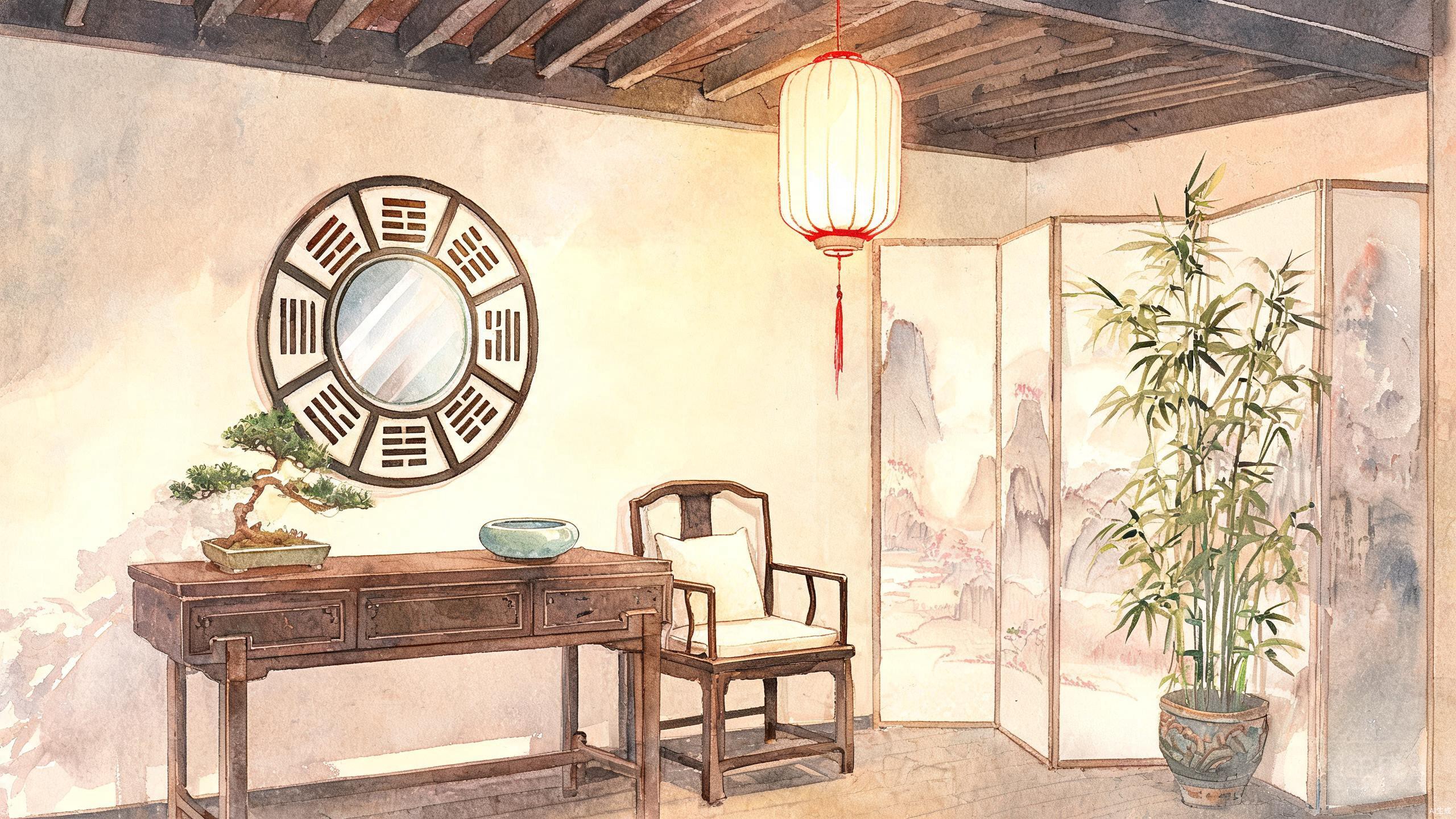
San Yuan School Overview
The San Yuan School (三元派, San Yuan Pai) is a branch of the Compass School (理气派, Li Qi Pai) that centers on time cycles as its core principle. Using the Three Cycles and Nine Periods (三元九运) as its foundational framework, combined with the transformative relationship between the Pre-Heaven Bagua and Post-Heaven Bagua, it calculates the auspicious and inauspicious changes in Feng Shui.
"Three Cycles" refers to the three major time periods — the Upper Cycle, Middle Cycle, and Lower Cycle. Each Cycle spans 60 years, making the complete Three Cycles equal to 180 years. The San Yuan School holds that Feng Shui's auspicious and inauspicious effects are closely tied to time — the same dwelling can be extremely lucky in one Cycle and decidedly unlucky in another.
Theoretical Foundation of the San Yuan School
Three Cycles and Nine Periods
The Three Cycles and Nine Periods (三元九运) form the core time framework of the San Yuan School:
| Cycle | Period | Years | Current Period Star | Trigram |
|---|---|---|---|---|
| Upper | 1 | 1864–1883 | One White | Kan (Water) |
| Upper | 2 | 1884–1903 | Two Black | Kun (Earth) |
| Upper | 3 | 1904–1923 | Three Jade | Zhen (Thunder) |
| Middle | 4 | 1924–1943 | Four Green | Xun (Wind) |
| Middle | 5 | 1944–1963 | Five Yellow | Center Palace |
| Middle | 6 | 1964–1983 | Six White | Qian (Heaven) |
| Lower | 7 | 1984–2003 | Seven Red | Dui (Lake) |
| Lower | 8 | 2004–2023 | Eight White | Gen (Mountain) |
| Lower | 9 | 2024–2043 | Nine Purple | Li (Fire) |
Cultural Context: The concept of "current period" (当运, dang yun) is fundamental to the San Yuan School. Just as seasons change, the dominant cosmic energy shifts every 20 years. A home that was lucky during the Eight Period (2004–2023) may need adjustments for the Nine Purple Li Fire Period (九紫离火运, 2024–2043), as different Bagua directions become favored.
Pre-Heaven Bagua and Post-Heaven Bagua
The San Yuan School places great importance on the relationship between the Pre-Heaven Bagua (先天八卦) and Post-Heaven Bagua (后天八卦). The Pre-Heaven Bagua represents the essence, while the Post-Heaven Bagua represents application.
Pre-Heaven Bagua Sequence: Qian 1, Dui 2, Li 3, Zhen 4, Xun 5, Kan 6, Gen 7, Kun 8 Post-Heaven Bagua Sequence: Kan 1, Kun 2, Zhen 3, Xun 4, Center 5, Qian 6, Dui 7, Gen 8, Li 9
The San Yuan School holds that the Pre-Heaven Bagua is the substance (体) and the Post-Heaven Bagua is the function (用). Feng Shui layout should use the Post-Heaven Bagua as the guiding principle while incorporating the wisdom of the Pre-Heaven Bagua.
Parent and Six Children Trigrams
The San Yuan School divides the Bagua (Eight Trigrams) into Parent Trigrams and Six Children Trigrams:
| Category | Trigram | Attribute |
|---|---|---|
| Parent | Qian (Heaven) | Father |
| Parent | Kun (Earth) | Mother |
| Eldest Son | Zhen (Thunder) | Eldest Male |
| Middle Son | Kan (Water) | Middle Male |
| Youngest Son | Gen (Mountain) | Youngest Male |
| Eldest Daughter | Xun (Wind) | Eldest Female |
| Middle Daughter | Li (Fire) | Middle Female |
| Youngest Daughter | Dui (Lake) | Youngest Female |
The San Yuan School uses the Parent and Six Children Trigrams to deduce the evolution of Feng Shui patterns.
Dragon Gate Eight Formations
The Dragon Gate Eight Formations (龙门八局, Long Men Ba Ju) is a unique Feng Shui pattern analysis method belonging to the San Yuan School. It was promoted and expanded by late Qing Dynasty Feng Shui master Zeng Zinan (曾子南) and others.
Basic Concept of the Eight Formations
The Dragon Gate Eight Formations divides Feng Shui patterns into eight types. Auspicious and inauspicious outcomes are determined by the relationship between the incoming Dragon Vein, the entering point, the sitting and facing direction, the incoming water, and the outgoing water.
Names of the Eight Formations:
- Correct Formation (正局)
- Reverse Formation (反局)
- Inclined Formation (兼局)
- Mixed Formation (杂局)
- Wrong Formation (错局)
- Empty Formation (空局)
- Defeated Formation (败局)
- Extinct Formation (绝局)
Conditions for the Correct Formation
The Correct Formation (正局) is the most ideal pattern and requires the following conditions:
- Proper Dragon Vein: The incoming Dragon Vein's direction aligns with the sitting mountain
- Beautiful Entrance: The point where the Dragon Vein enters has an elegant form
- Accurate Direction: The sitting and facing direction conforms to the Three Cycles and Nine Periods
- Auspicious Incoming Water: The incoming water flows from an auspicious direction
- Correct Outgoing Water: The outgoing water direction follows proper water method principles
Characteristics of Each Formation
| Formation | Characteristics | Auspiciousness |
|---|---|---|
| Correct | Dragon, direction, water, sand all aligned | Greatly Auspicious |
| Reverse | Dragon and water opposing each other | Inauspicious |
| Inclined | Sitting and facing with inclined needle | Mixed Fortune |
| Mixed | Dragon and water in disarray | Inauspicious |
| Wrong | Direction set incorrectly | Greatly Inauspicious |
| Empty | No Dragon Vein, no Qi | Greatly Inauspicious |
| Defeated | True Dragon but false acupoint | Inauspicious |
| Extinct | Dragon, acupoint, sand, water all inauspicious | Extremely Inauspicious |
Xuan Kong Da Gua
Xuan Kong Da Gua (玄空大卦) represents the advanced content of the San Yuan School, integrating the 64 Hexagrams with Feng Shui to perform precise calculations of fortune and misfortune.
The 64 Hexagrams and Twenty-Four Mountains
Xuan Kong Da Gua assigns the 64 Hexagrams across the Twenty-Four Mountains (二十四山), with 2-3 hexagrams assigned to each mountain. The auspicious or inauspicious nature of each hexagram determines the fortune of that direction.
Trigram and Line Transformation (抽爻换象): The core method of Xuan Kong Da Gua is "Trigram and Line Transformation" — by changing one specific line within a hexagram, a new hexagram emerges, which reveals changes in fortune.
Hexagram Luck and Hexagram Qi
Xuan Kong Da Gua emphasizes Hexagram Luck (卦运) and Hexagram Qi (卦气):
- Hexagram Luck: The time-based fortune associated with a hexagram
- Hexagram Qi: The prosperity or decline level of the hexagram
A hexagram in its Current Period is a prosperous hexagram, while one in a Lost Period is a declining hexagram. Locations where prosperous hexagrams arrive are auspicious; locations where declining hexagrams arrive are inauspicious.
Cultural Context: Xuan Kong Da Gua is considered the most intellectually demanding branch of Feng Shui. It requires mastery of the I Ching's 64 hexagrams and their ever-shifting relationships. In modern practice, this method is often consulted for major life decisions — property purchases, business launches, and ancestral burial placement.
Practical Application of the San Yuan School
Period Luck and Home Selection
The San Yuan School teaches that choosing a home should consider the current Period Luck (元运):
For the Nine Period (2024–2043), favorable choices include:
- Homes Sitting North Facing South (Kan dwelling — One White Vital Qi)
- Homes Sitting South Facing North (Li dwelling — Nine Purple in Current Period)
- Homes Sitting Northeast Facing Southwest (Gen dwelling — Eight White lingering energy)
Homes to avoid:
- Sitting and facing directions that clash with the Current Period
- Homes whose once-prosperous star positions have already passed
Period Luck and Layout Adjustments
The same home requires different layouts during different Periods:
Adjusting an Eight Period home for the Nine Period:
- The Eight White wealth star has declined — reduce wealth-activating arrangements in the Northeast
- Nine Purple is now in its Current Period — strengthen arrangements in the South
- One White Vital Qi is in the North — early preparation can be made
Three Cycles Date Selection
The San Yuan School places strong emphasis on date selection (择日), choosing auspicious days and times for important activities:
- Year Pillar Selection: Choose a year compatible with the person's Chinese Zodiac
- Month Pillar Selection: Choose a month aligned with the Current Period
- Day Pillar Selection: Choose an auspicious day from the traditional almanac
- Hour Pillar Selection: Choose a fortunate hour
Strengths and Limitations of the San Yuan School
Strengths
- Strong Time Awareness: Fully considers time factors and dynamically analyzes Feng Shui
- Deep Theoretical System: Incorporates Pre-Heaven and Post-Heaven Bagua plus the 64 Hexagrams — profound and layered
- Strong Predictive Ability: Can forecast how Feng Shui changes over time
- Compatible with Destiny Studies: Can be combined with BaZi (八字) Four Pillars analysis
Limitations
- Steep Learning Curve: Requires mastery of Bagua, the 64 Hexagrams, and other I Ching knowledge
- Complex Calculations: Dragon Gate Eight Formations and Xuan Kong Da Gua involve intricate computations
- Hidden Lineage Transmission: Some core methods have been kept secret
- Limited Modern Application: More difficult to apply in contemporary urban Feng Shui
Differences Between the San Yuan School and Xuan Kong Flying Stars
| Comparison | San Yuan School | Xuan Kong Flying Stars |
|---|---|---|
| Core Focus | Three Cycles and Nine Periods; Pre-Heaven and Post-Heaven | Luo Shu Nine Stars; Flying Star Chart |
| Emphasis | Time Cycles | Spatial Direction |
| Method | Dragon Gate Eight Formations; Da Gua | Flying Star Chart; Combination Analysis |
| Difficulty | Higher | High |
| Application | Primarily Yin Dwelling | Primarily Yang Dwelling |
In practice, the San Yuan School and Xuan Kong Flying Stars both belong to the Compass School (理气派), share common theoretical roots, and are often combined in real-world applications.
Classic Texts of the San Yuan School
| Title | Author | Content |
|---|---|---|
| San Yuan Di Li (Three Cycles Geography) | Anonymous | Comprehensive guide to the San Yuan School |
| Long Men Ba Ju (Dragon Gate Eight Formations) | Zeng Zinan (曾子南) | Detailed explanation of the Eight Formations |
| Xuan Kong Da Gua (Mysterious Void Great Hexagram) | Jiang Dahong (蒋大鸿) | Theory of the Great Hexagrams |
| San Yuan Mi Ben (Secret San Yuan Manuscript) | Lineage-Transmitted | Heart teachings of the San Yuan School |
With its profound theory and powerful time-based predictive ability, the San Yuan School stands as one of the most advanced branches within the Compass School. For serious learners seeking the deepest understanding of Feng Shui, the San Yuan School is an essential and irreplaceable field of study.
How to Begin Studying the San Yuan School
If you are drawn to this advanced system, here is a suggested learning path:
- Master the Bagua First: Ensure you have a solid foundation in the Pre-Heaven and Post-Heaven Eight Trigrams before advancing
- Study the Three Cycles and Nine Periods: Understand which period we are currently in (Nine Period: 2024–2043) and how it affects your home
- Learn the Flying Stars System: This provides essential groundwork for the more complex Da Gua calculations
- Consult a Qualified Master: Given the complexity and lineage-based transmission of the San Yuan School, working with an experienced teacher is highly recommended
Quick Tips:
- If you live in a home built during the Eight Period (2004–2023), reassess your Feng Shui for the Nine Period transition
- The Nine Purple Li Fire Period (2024–2043) emphasizes the South direction — consider placing Fire element items there (red décor, candles, lighting)
- Never attempt Dragon Gate Eight Formations analysis on your own without proper training — incorrect application can lead to harmful outcomes
Related Articles
- [[../09-Yin Dwelling风水/51-Yin Dwelling风水流派-三合派与三元派的区别.md|Yin Dwelling Feng Shui Schools: Differences Between the San He School and San Yuan School]]
- [[../03-财运风水/11-横财风水局布局.md|Windfall Wealth Layout: Xuan Kong Three Secrets and Modern Yang Dwelling Windfall Arrangements]]
- [[../06-风水文化与历史/19-风水典籍解析:《青囊序》——曾文辿的玄空启蒙.md|Feng Shui Classic Analysis: Qing Nang Xu — Zeng Wenzhan's Xuan Kong Enlightenment]]
- [[../06-风水文化与历史/25-Feng Shui Masters Through History:沈竹祁——沈氏玄空学的奠基人.md|Historical Feng Shui Masters: Shen Zhuqi — Founder of Shen's Xuan Kong Study]]