What Is Feng Shui? Origins, Definition, and Core Principles for Harmony and Prosperity
## What Is Feng Shui? Feng Shui (风水), anciently known as Kanyu (堪舆, kan yu) — literally "examining heaven and earth" — is also called *Geography* or *Land-Reading Art*. It is a uniquely Chinese discip
What Is Feng Shui? Origins, Definition, and Core Principles
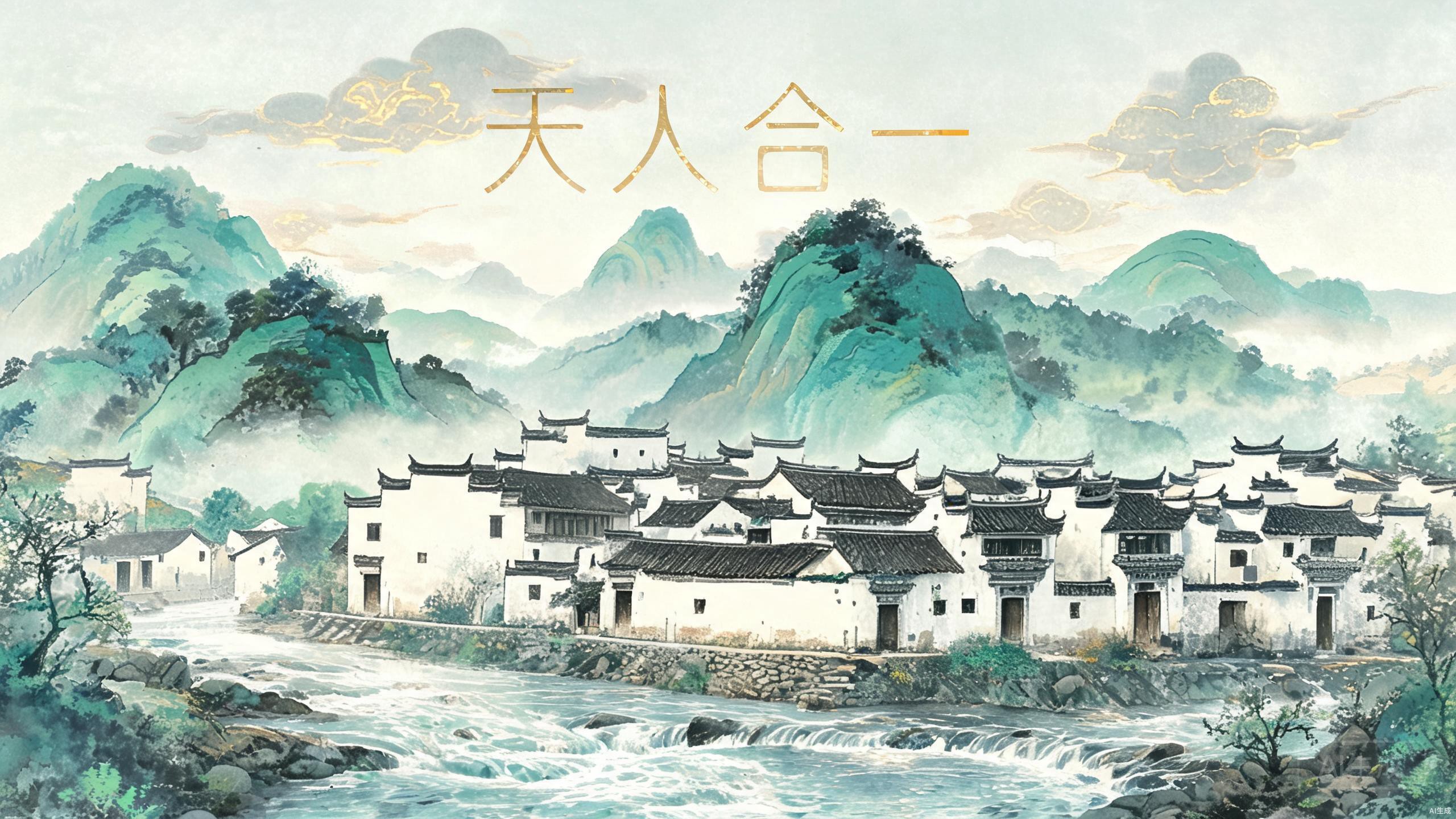
What Is Feng Shui?
Feng Shui (风水), anciently known as Kanyu (堪舆, kan yu) — literally "examining heaven and earth" — is also called Geography or Land-Reading Art. It is a uniquely Chinese discipline that studies the relationship between people and their environment. The character Kan (堪) refers to Heaven's way, while Yu (舆) refers to Earth's way. The practice of Kanyu seeks to harmonize Heaven and Earth to create the optimal living environment for humanity.
The most classic definition of Feng Shui was given by Guo Pu (郭璞) of the Jin Dynasty in his foundational text Zang Shu (Book of Burial):
"Burial means riding Vital Qi (生气). Qi rides the wind and scatters, but is retained when encountering water. The ancients gathered it so it would not disperse and guided it so it would stay — thus they called it Feng Shui." (葬者,乘生气也。气乘风则散,界水则止。古人聚之使不散,行之使有止,故谓之风水。)
This passage reveals the essence of Feng Shui: through Storing Wind and Gathering Qi (藏风聚气, cang feng ju qi), one accumulates the Vital Qi of Heaven and Earth so that the inhabitants receive nature's nourishment.
From a modern perspective, Feng Shui is a practical discipline that integrates geography, geology, meteorology, architecture, landscape science, ecology, and psychology. Its purpose is to carefully examine the natural environment, work in harmony with nature, and make measured use of it — selecting and creating the ideal built environment that supports physical health, mental well-being, and human flourishing. The ultimate goal is to achieve what the ancients called "the harmony of Yin and Yang, the unity of Heaven and humanity, and the balance of body and mind."
Cultural Context: When Westerners hear "Feng Shui," they often think only of interior decoration — where to place a mirror or a plant. In reality, traditional Feng Shui encompasses much more: site selection, orientation, architectural layout, and even the timing of construction. It is closer to environmental design science combined with cosmological philosophy than to simple home décor.
The Origins and Development of Feng Shui
Primitive Feng Shui (Ancient Times)
Human awareness of Feng Shui principles dates back to prehistoric societies. Facing harsh natural conditions, early people chose caves that were sheltered from the wind and faced the sun as their dwellings — this was the earliest application of Feng Shui wisdom.
Archaeological evidence supports this. The famous Banpo Village site of the Yangshao Culture in Xi'an sits on a terrace overlooking the Chan River, backed by the White Deer Plateau with its dense forests. This perfectly embodies the principle of "backed by mountains, facing water, and oriented to the sun."
As human society evolved from nomadic herding to settled agriculture during the clan period, people had to choose permanent dwelling sites carefully. Every Yangshao Culture settlement was built on yellow-earth terraces along rivers — a siting principle that reflects the earliest seeds of Feng Shui wisdom.
Cultural Context: The Banpo Village site (circa 4500 BCE) is one of the world's earliest known examples of deliberate settlement planning. The fact that ancient peoples instinctively chose locations combining mountain shelter, water access, and southern solar exposure demonstrates that practical environmental wisdom long preceded formal Feng Shui theory.
Sprouting and Formation (Xia-Shang-Zhou to Pre-Qin)
Once writing emerged, Feng Shui began to appear in historical records. Oracle bone inscriptions from the Shang Dynasty contain numerous divinations about choosing dwelling sites. The Yi Zhou Shu (Lost Book of Zhou) records "the earth must match the heavenly seasons, so that all things flourish" — observing the heavens above and the earth below became the foundation of later Feng Shui practice.
Legend holds that during the Yellow Emperor's era, the compass chariot already existed, and there was a land-reading master named Qing Wuzi (青乌子). When Great Yu controlled the floods, a divine tortoise emerged from the Luo River carrying the Luoshu (洛书) on its back, while Fuxi derived the Hetu (河图) from a dragon-horse emerging from the Yellow River to map out the Pre-Heaven Bagua (Eight Trigrams). These legends reflect just how early Feng Shui wisdom began to germinate.
During the pre-Qin period, the popularity of the Zhou Yi (Book of Changes) and the Yin-Yang Five Elements (阴阳五行) theories laid the theoretical foundation for Feng Shui. By the Warring States period, specialized house-reading activities had emerged. The Shang Shu (Book of Documents) records that "When King Cheng was at Feng and wished to build a capital, he sent Duke Shao to survey the site first" — the earliest record of Yang Dwelling (阳宅) Feng Shui.
Development and Flourishing (Han Dynasty to Ming-Qing)
The Han Dynasty saw the emergence of works such as Kanyu Jin Kui, Gong Zhai Di Xing, Yi Xi Fa, and Tu Zhai Shu, marking the first systematic summary and codification of Feng Shui theory.
During the Wei-Jin period, Guo Pu (郭璞) built the complete theoretical framework of Feng Shui in his Zang Shu, introducing the concept of Qi (气) into the core of Feng Shui practice. Later generations therefore honored him as the founding father of Feng Shui.
Cultural Context: Guo Pu (276–324 AD) is to Feng Shui what Confucius is to Confucianism — the figure who organized scattered folk practices into a coherent philosophical system. His 20-character definition of Feng Shui remains the most quoted passage in the entire tradition.
The Tang Dynasty was the golden age of Feng Shui theory. Yang Yunsong (杨筠松) practiced and taught Feng Shui among the common people, elevating the Form School (形势派, Xing Shi Pai) to greatness. His works Yi Long Jing (Classic of Doubting Dragon) and Han Long Jing (Classic of Shaking Dragon) are considered treasures of the tradition. In the Song Dynasty, two major branches took shape: the Jiangxi Form School and the Fujian Compass School (理气派, Li Qi Pai).
During the Ming and Qing Dynasties, Feng Shui theory became highly developed — perhaps excessively so, with so many texts appearing that the field risked oversaturation. Feng Shui masters expanded their practice from imperial palaces to homes in towns and villages across the land.
Core Principles of Feng Shui
Unity of Heaven and Humanity
The Unity of Heaven and Humanity (天人合一, tian ren he yi) is the central philosophy of Feng Shui, rooted in the cosmic worldview of the Zhou Yi. Feng Shui explores how site selection, orientation, and layout of buildings can harmonize with the patterns of Heaven, the rhythms of nature, and human destiny. Using the Hetu, Luoshu, Bagua, and Five Elements as its foundation, Feng Shui employs architectural layout, spatial division, directional adjustment, and color application to achieve harmony between people and nature.
As the Huang Di Zhai Jing (Yellow Emperor's Classic of Dwelling) so eloquently states:
"A dwelling is the hinge of Yin and Yang, the standard for human relationships." (夫宅者,乃阴阳之枢纽、人伦之轨模。)
A home is far more than mere shelter from wind and rain — it is the crucial nexus where the Qi of Yin and Yang meet and merge.
Cultural Context: "Unity of Heaven and Humanity" sounds abstract, but its practical meaning is simple: your home should feel like a natural extension of the landscape, not a fortress against it. Good Feng Shui homes "breathe" with their surroundings — they capture sunlight, channel breezes gently, and connect visually with nature.
Storing Wind and Gathering Qi
The core objective of Feng Shui is to locate and gather Vital Qi (生气, sheng qi) — the nourishing Qi of Heaven and Earth that sustains all living things. A place rich in Vital Qi should be: sheltered from harsh winds, open to gentle sun, surrounded by clear mountains and fresh waters, with flowing streams, thriving vegetation, and an abundance of birdsong and fragrant flowers.
Feng Shui practice examines an extraordinarily wide range of factors — from celestial movements and climate cycles to mountain ranges and water flow, down to plant species, soil composition, and the play of light and shadow. Its scope spans astronomy, geography, geology, ecology, meteorology, and hydrology.
Yin-Yang Balance
Yin-Yang balance is one of the fundamental principles of Feng Shui. Treating Qi (气) as its core and the Yin-Yang Five Elements as its theoretical framework, Feng Shui holds that all things are formed through the interaction of Yin and Yang. While the Feng Shui of Yang Dwellings (阳宅, yang zhai) — homes of the living — and Yin Dwellings (阴宅, yin zhai) — burials of the deceased — each has its own focus, both ultimately pursue the balance and harmony of Yin and Yang.
How to Apply These Core Principles Today
Even without mountains and rivers, you can bring these ancient principles into modern living:
- Connect with nature: Place indoor plants near windows, open blinds during daylight hours, and choose natural materials (wood, stone, cotton) over synthetic ones when possible
- Mind the Qi flow: Arrange furniture so people can move through your home in gentle curves rather than straight lines; avoid blocking doorways or creating cramped corridors
- Balance Yin and Yang: Pair soft lighting and warm colors (Yang energy) with quiet corners and cool tones (Yin energy); mix soft textures (cushions, rugs) with solid structures (wooden shelves, stone surfaces)
- Honor the entrance: Your front door is the "mouth of Qi" — keep it well-lit, unobstructed, and welcoming
Quick Tips:
- Walk through your home at different times of day and notice where sunlight pools and where shadows gather — aim for a healthy balance of both
- Avoid placing your bed, desk, or stove directly in line with the front door — this allows Qi (and your fortune) to rush straight through without benefitting you
- A small water feature near your entrance (fountain, aquarium, or even a clear glass bowl of water) symbolically invites wealth Qi to flow into your home
Feng Shui and Modern Society
Traditional Feng Shui contains both scientific wisdom and outdated superstition. Contemporary scholars advocate approaching it through the lens of modern science — preserving its insights while discarding obsolete elements — so that Feng Shui can better serve humanity. Many Feng Shui principles regarding site selection, building orientation, and spatial layout have been validated and absorbed by modern architecture, environmental psychology, and ecology. Today, Feng Shui is recognized as an important component of the science of human habitat design.
"While good Feng Shui can nurture a person, only those of virtue deserve to dwell in it. Where virtue is thin, Feng Shui is lost; where virtue is abundant, Feng Shui gathers." — Paying attention to Feng Shui is valuable, but cultivating virtue and goodwill is even more important. This is the deepest wisdom of the tradition.
Related Articles
- [[../06-风水文化与历史/42-汉代风水:从卜宅到相宅的转变.md|Han Dynasty Feng Shui: From Site Divination to House Reading]]
- [[../06-风水文化与历史/26-风水与儒家文化:儒学思想对风水理论的渗透.md|Feng Shui and Confucian Culture: How Confucian Thought Shaped Feng Shui Theory]]
- [[../08-百科问答库/01-什么是风水?风水的科学依据是什么?.md|What Is Feng Shui? What Is the Scientific Basis of Feng Shui?]]
- [[../01-风水入门/11-河图洛book与风水起源.md|Hetu, Luoshu, and the Origins of Feng Shui]]