Yang Gong Feng Shui Secrets: The True Teachings of the Master Who Saved the Poor
## The Life of Yang Yunsong Yang Yunsong (杨筠松, 834–900 AD), courtesy name Shumao, known by his honorific title "Jiupin" (救贫, "Savior of the Poor"), was a native of Douzhou in the Tang Dynasty. He stan
Yang Gong Feng Shui Secrets: The True Teachings of the Master Who Saved the Poor
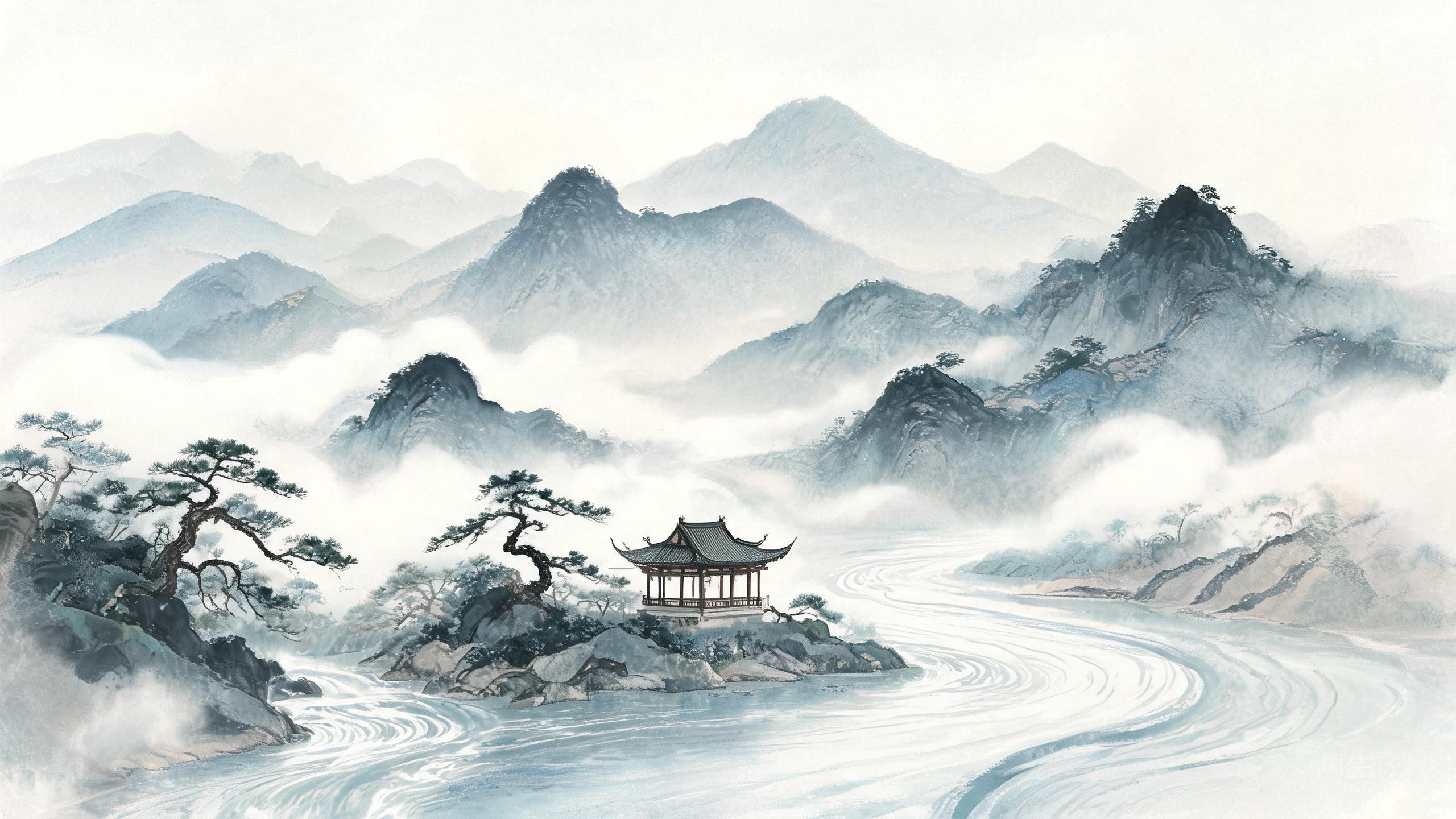
The Life of Yang Yunsong
Yang Yunsong (杨筠松, 834–900 AD), courtesy name Shumao, known by his honorific title "Jiupin" (救贫, "Savior of the Poor"), was a native of Douzhou in the Tang Dynasty. He stands as one of the most celebrated Feng Shui masters in Chinese history. He served under Emperor Xizong of Tang as Golden Purple Light Grand Master and Director of Feng Shui (灵台地理事), overseeing all Feng Shui matters for imperial construction projects.
After the Huang Chao Rebellion (黄巢起义) captured the capital Chang'an, Yang Yunsong fled the imperial court carrying secret Feng Shui manuscripts. He eventually settled in the Ganzhou region of Jiangxi, where he lived in seclusion and took on disciples. By doing so, he brought Feng Shui knowledge — once reserved exclusively for royalty — to ordinary people. Generations later, he came to be honored as Master Jiupin ("The Savior of the Poor").
Legends Surrounding Yang Gong
Many fascinating legends surround Yang Yunsong:
The Origin of "Yang Jiupin": According to tradition, when Yang Yunsong arrived in Jiangxi, he saw the local people living in poverty. He used his Feng Shui expertise to help them select auspicious sites for homes and ancestral graves. Families he advised often saw their fortunes improve and their households flourish. Grateful for his kindness, the people called him "Jiupin" — the one who saved them from poverty.
The Teacher-Student Bond with Zeng Wendan: Legend has it that while Yang Yunsong was traveling through the mountains and rivers of Yudu County in Ganzhou, he encountered a young scholar named Zeng Wendan (曾文辿). Seeing Yang Yunsong holding a Luopan (Feng Shui Compass) with a gaze as sharp as a torchlight, Zeng recognized him as no ordinary man and became his disciple. Zeng Wendan went on to become one of Yang Gong's most outstanding students.
Cultural Context: In Imperial China, Feng Shui knowledge was a closely guarded state secret. Yang Yunsong's act of "stealing" the imperial manuals to share them with common people represents a pivotal democratization of this ancient art — making it accessible to scholars, farmers, and merchants alike.
The Core Classics of Yang Gong Feng Shui
Yang Yunsong authored many works throughout his life, the most important of which are collectively known as the "Five Classics of Yang Gong" (杨公五经).
Han Long Jing (Classic of Shaking Dragon)
The Han Long Jing (《撼龙经》(Han Long Jing)) is Yang Yunsong's most important work, offering a systematic discussion of the methods for Seeking Dragon and Pointing Acupoint (寻龙点穴).
Main Contents:
- Classification and identification of Dragon Veins
- The movement and convergence of dragons
- Distinguishing Trunk Dragons (干龙) from Branch Dragons (支龙)
- Judging the auspiciousness and nobility of a dragon
Famous Passage:
"Mount Sumeru is the spine of heaven and earth, its central mass steadies all creation. Like a human's backbone and neck, four limbs of dragon rise boldly outward."
Yi Long Jing (Classic of Doubting Dragon)
The Yi Long Jing (《疑龙经》(Yi Long Jing)) serves as a companion to the Han Long Jing, specifically addressing difficult questions that arise in dragon-seeking and acupoint-pointing.
Main Contents:
- Distinguishing true Dragon Veins from false ones
- The narrowing passages and transitions of dragons
- The entry point and convergence of dragons
- Methods for handling unusual terrain
Zang Fa Dao Zhang (Burial Methods and Inverted Staff)
The Zang Fa Dao Zhang (《葬法倒杖》(Burial Methods and Inverted Staff)) focuses exclusively on Yin Dwelling (阴宅) burial methods, serving as a practical guide for acupoint identification and direction setting.
Main Contents:
- Twelve burial methods
- The technique of the inverted staff (倒杖)
- Principles of Setting Direction (立向)
- Judging depth, shallowness, height, and lowness
Qing Nang Ao Yu (Mysterious Words of the Green Satchel)
The Qing Nang Ao Yu (《青囊奥语》(Mysterious Words of the Green Satchel)) is a classic text on Li Qi (Compass Energy, Li Qi (Compass Energy)), known for its profound and mysterious language — often called "Yang Gong's Heart Method."
Main Contents:
- The mysteries of Xuan Kong (Mysterious Void) Li Qi
- The principles of Yin and Yang intercourse
- The method of male-female coordination
Tian Yu Jing (Classic of Heavenly Jade)
The Tian Yu Jing (《天玉经》(Classic of Heavenly Jade)), also attributed to Yang Yunsong, is an important classic of Xuan Kong Feng Shui studies.
Main Contents:
- The Jiangdong One Gua, Jiangxi One Gua, and South-North One Gua
- Methods of star arrangement (挨星)
- Application of the Three Cycles and Nine Periods (三元九运)
The Core Theories of Yang Gong Feng Shui
Dragon Vein Theory
Yang Gong Feng Shui places the highest importance on Dragon Veins (龙脉), regarding them as the carriers of Vital Qi (生气).
The Three Landings of the Dragon:
- Initial Landing (初落): The Dragon Vein first converges; Vital Qi has not yet stabilized
- Middle Landing (中落): The Dragon Vein converges at mid-range; Vital Qi is at its strongest
- Final Landing (末落): The Dragon Vein reaches its end; Vital Qi has weakened
The Dragon's Entry (入首): The form of the Dragon Vein's entry (入首) — the final stretch before entering the acupoint site — determines the auspiciousness of the location:
- Direct Dragon Entry (直龙入首): Dragon Vein arrives straight; Qi rushes directly forward
- Horizontal Dragon Entry (横龙入首): Dragon Vein arrives laterally; Qi spreads sideways
- Returning Dragon Entry (回龙入首): Dragon Vein turns back; Qi circulates inward
- Dodging Dragon Entry (闪龙入首): Dragon Vein weaves and dodges; Qi flows in winding patterns
Yang Gong's Twelve Burial Methods
Yang Yunsong codified twelve burial methods suited to different terrains:
| Method | Applicable Terrain | Characteristics |
|---|---|---|
| Forward Staff (顺杖) | Dragon Vein arrives directly | Burial follows the dragon's direction |
| Reverse Staff (逆杖) | Dragon Vein rushes forward | Burial goes against the dragon's direction |
| Shortened Staff (缩杖) | Dragon Vein moves urgently | Burial at a shortened distance |
| Separated Staff (离杖) | Dragon Vein separates | Burial away from the dragon |
| Hidden Staff (没杖) | Dragon Vein disappears | Burial at the disappearance point |
| Piercing Staff (穿杖) | Dragon Vein pierces through | Burial at the piercing point |
| Competing Staff (斗杖) | Dragon Vein competes | Burial at the competing point |
| Cutting Staff (截杖) | Dragon Vein is cut off | Burial at the cut-off point |
| Facing Staff (对杖) | Dragon Vein faces inward | Burial at the facing point |
| Connecting Staff (缀杖) | Dragon Vein connects | Burial at the connecting point |
| Offending Staff (犯杖) | Dragon Vein offends Sha | Burial at the offending point |
| Opening Staff (开杖) | Dragon Vein opens a tent | Burial at the opening point |
Yang Gong's Water Methods
Yang Gong Feng Shui also offers profound research into water methods (水法), summarized in the principle: "Water methods are many, but Sheng Qi and Wang Qi (prosperous energy) are the essence."
Yang Gong's Four Major Water Configurations:
- Fire Configuration (火局): Yi andBing meet and flow toward Xu
- Water Configuration (水局): Xin andRen converge at Chen
- Metal Configuration (金局): Dou and Niu receive the Qi of Ding and Geng
- Wood Configuration (木局): Jin and Yang collect the spirit of Gui and Jia
Cultural Context: The "Four Major Water Configurations" describe how rivers and waterways interact with surrounding landforms to produce specific energetic qualities. In traditional practice, each configuration favors different industries, family structures, and life paths.
The Lineage of Yang Gong Feng Shui
The Three Great Disciples
Yang Yunsong's three most famous disciples:
| Disciple | Specialty | Lineage |
|---|---|---|
| Zeng Wendan (曾文辿) | Master of Form (形势) | Zeng Family Feng Shui |
| Liao Yu (廖瑀) | Skilled in Li Qi (理气) | Liao Family Feng Shui |
| Liu Jiangdong (刘江东) | Versatile in both | Liu Family Feng Shui |
The Feng Shui Legacy of San Liao Village
San Liao Village (三僚村), located in Xingguo County, Ganzhou City, Jiangxi Province, is honored as "China's First Village of Feng Shui Culture" (中国风水文化第一村). This is where Yang Yunsong taught his disciples, and where descendants of the Zeng and Liao families have lived for generations, preserving the Yang Gong Feng Shui tradition.
Many historical sites related to Yang Gong Feng Shui remain preserved in San Liao Village:
- Yang Gong Ancestral Hall (杨公祠): A shrine dedicated to Yang Yunsong
- Zeng Family Ancestral Hall (曾氏宗祠): The ancestral hall of Zeng Wendan's descendants
- Liao Family Ancestral Hall (廖氏宗祠): The ancestral hall of Liao Yu's descendants
- San Liao Feng Shui Cultural Scenic Area (三僚风水文化景区): An exhibition center showcasing Yang Gong Feng Shui culture
The Modern Transmission of Yang Gong Feng Shui
After more than a thousand years of transmission, Yang Gong Feng Shui has branched into several schools:
- Form School (形势派): Focused on Dragon, Acupoint, Sand, and Water; represented by the Zeng family of San Liao
- Compass School (理气派): Focused on directional Li Qi; represented by the Liao family of San Liao
- Integrated School (综合派): Combines both Form and Li Qi; the path most modern Feng Shui practitioners follow
Practical Essentials of Yang Gong Feng Shui
Secrets of Seeking Dragon and Pointing Acupoint
Yang Gong Feng Shui follows a "Twelve-Dragon-Acupoint Song" for dragon-seeking and acupoint-pointing.
Key Points for Seeking the Dragon:
- Ancestor Mountain must be mighty: The origin of the Dragon Vein must be grand
- Young Ancestor must be elegant: The middle section should be graceful
- Parent Mountain must be intimate: The near section should feel close and protective
- Entry must be beautiful: The Dragon Vein's entry should be aesthetically pleasing
- Acupoint Star must be correct: The central mountain at the site should be upright
- Acupoint Verification must be true: All confirming signs must be present
Judging Sand and Water
Yang Gong on Sand (砂):
"Sand must have feeling; water must have intention. Sand that turns its back is heartless; water that shoots straight lacks intention."
Yang Gong on Water (水):
"Water must meander — meandering shows feeling. Water must embrace — embracing shows righteousness."
Principles of Setting Direction
Yang Gong Feng Shui emphasizes the principle of "Dragon, Direction, and Water in Harmony" (龙向水相配) when setting direction.
Three Principles for Setting Direction:
- Dragon and Direction Harmony: Sitting and facing directions must align with the incoming dragon
- Water and Direction Harmony: The facing direction must align with water method principles
- Sand and Direction Correspondence: The facing direction must correspond with surrounding hills
How to Apply Yang Gong Principles Today
Modern practitioners can adapt these ancient principles to contemporary spaces:
- Identify your "Dragon": In urban settings, tall buildings, hills, or major landscape features serve as the "mountain support" representing the dragon
- Locate your "Acupoint": The quietest, most protected spot in your home — often the center of activity — represents the acupoint where Qi gathers
- Observe your "Sand": Neighboring buildings, trees, and walls should embrace your home without sharp angles pointing toward it
- Read your "Water": Roads, driveways, and pathways act as water flow — gentle curves bring wealth, while straight shoots or reverse bows create Sha Qi
- Set your "Direction": Your main entrance orientation determines which energies flow into your space
Quick Tips:
- Look for the "three embraces" in your surroundings: support behind, protection on both sides, and openness in front
- Avoid homes where a road or river rushes directly toward your front door — this creates Sha Qi that disrupts wealth
- A gentle curve in the path leading to your entrance is more auspicious than a straight shot
The Modern Value of Yang Gong Feng Shui
Reference for Environmental Planning
Yang Gong Feng Shui's theories on Dragon Veins, Sand, and Water offer valuable insights for modern environmental planning:
- Urban site selection should consider terrain and topography
- Architectural design should harmonize with natural mountain forms
- Water system planning should prioritize ecological and environmental protection
Preservation of Cultural Heritage
San Liao Village, as the birthplace of Yang Gong Feng Shui, has been listed for cultural heritage protection. Yang Gong Feng Shui itself has also been recognized as intangible cultural heritage.
Value for Academic Research
Yang Gong Feng Shui contains rich knowledge of geography, ecology, and psychology, deserving deeper academic exploration.
Quick Tips:
- Yang Gong Feng Shui's emphasis on harmony with nature aligns with modern sustainable design principles
- The concept of "Storing Wind and Gathering Qi" (藏风聚气) translates well to modern energy-efficient building practices
- Studying classical Feng Shui texts can deepen appreciation for traditional Chinese landscape wisdom
Selected Passages from Yang Gong's Classics
From the Han Long Jing:
"The dragon moves — one cul, one dip, one rise, one fall — like the rise and fall of waves, like the strings of a qin and se."
From the Yi Long Jing:
"True dragons often have many holes and leaks, but within those leaks true Qi gathers. False dragons often appear complete, but within their completeness there is no true Qi."
From the Zang Fa Dao Zhang:
"Burial means riding the Vital Qi. When Qi comes, water guides it; when Qi stops, water bounds it."
Yang Gong Feng Shui stands as a treasure of Chinese traditional culture, enduring for a thousand years without fading. Its core philosophy of "Unity of Heaven and Humanity" (天人合一) continues to offer profound insights for our lives today.
Related Articles
- [[../06-风水文化与历史/44-唐代风水:杨筠松与形势派的确立.md|Tang Dynasty Feng Shui: Yang Yunsong and the Establishment of the Form School]]
- [[../06-风水文化与历史/17-风水典籍解析:《撼龙经》——杨筠松的寻龙诀.md|Feng Shui Classic Analysis: Han Long Jing — Yang Yunsong's Secrets of Seeking the Dragon]]
- [[../07-风水故事/05-杨筠松救贫传奇.md|The Legend of Yang Yunsong Saving the Poor — The Remarkable Life of the Jiangxi Form School Patriarch]]
- [[../07-风水故事/14-杨筠松救贫传说.md|The Legend of Yang Yunsong Saving the Poor — Yang Gong's Feng Shui Tales of Helping the World]]