Children's Room and Study Feng Shui: Location, Wenchang Position, Colors and Lighting
## The Feng Shui Significance of Children's Rooms and Studies A child's academic performance is deeply connected to their environment. Since children spend most of their time in their rooms, the selec
Children's Room and Study Feng Shui: Location, Wenchang Position, Colors and Lighting
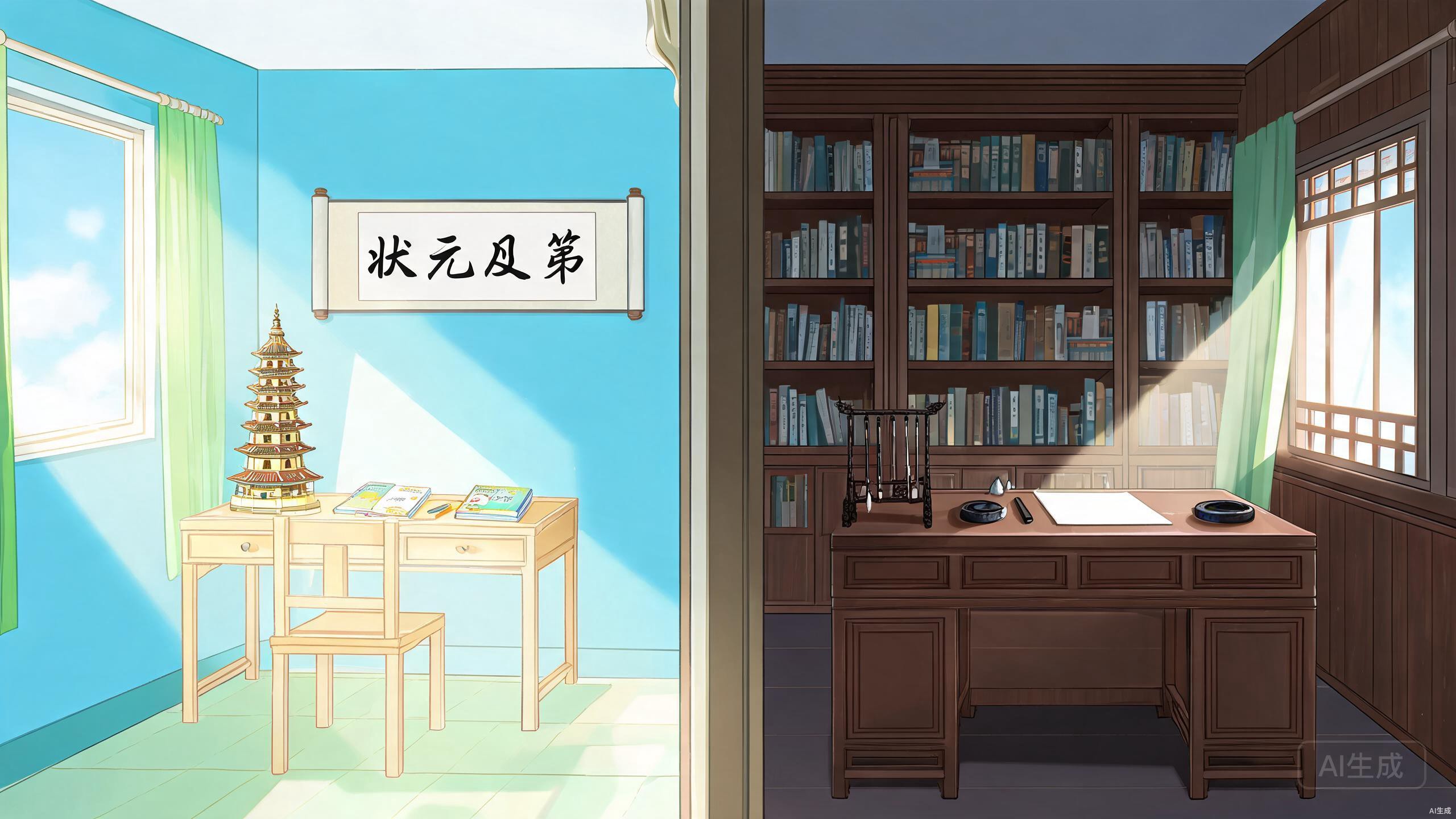
The Feng Shui Significance of Children's Rooms and Studies
A child's academic performance is deeply connected to their environment. Since children spend most of their time in their rooms, the selection and arrangement of these spaces inevitably influence their studies. In the classic Chinese legend Legend of the White Snake, Xu Shilin was an incarnation of the Wenchang Star (文昌星) and later rose to become the top scholar (Zhuang Yuan) in the imperial examination. In truth, every person has their own Wenchang Position (文昌位) — a direction that can be identified based on their birth time and the orientation of their home.
Children's Room Feng Shui
Location Selection
-
Best placed in an auspicious direction: According to Eight Mansions Feng Shui, a children's room should be located in the child's Sheng Qi direction (生气方) or Tian Yi direction (天医方). The East represents the eldest son, while the Southeast represents the eldest daughter — choose accordingly based on the child's gender.
-
Should not be in the center of the home: The center of the house is the Taiji Point, where energy is strongest but also most unstable. It is not suitable for a child's long-term residence.
-
Should not be near the kitchen or bathroom: The kitchen belongs to Fire, and the bathroom to Water — both can negatively affect a child's health and learning.
-
Should be quiet and sunny: A children's room needs excellent natural light and ventilation, but should not be in a noisy area.
Bed Placement
Beyond general bedroom Feng Shui principles, children's bed placement requires special attention:
- Bed should not lean against the window — drafts can cause the child to catch cold.
- Bed should not face the door directly — this disrupts the child's sense of security.
- No electrical appliances should be near the headboard — electromagnetic radiation can affect development.
- Bed should not be too high — for safe and easy access.
- Do not store clutter under the bed — keep the space ventilated.
Desk Placement
The desk arrangement directly impacts a child's study habits:
- Desk should face the door: When a child sits at the desk, being able to see the entrance gives a sense of security and improves concentration.
- Desk should have a solid backing: A wall or bookshelf behind provides a "Backing Mountain" (靠山) that supports stable learning.
- Desk should not have its back to the door: Studying with one's back to the entrance causes distraction and restlessness.
- Desk should not directly face the window: Outside scenery easily diverts attention.
- Desk should not sit beneath a beam: Beam Pressure Sha (横梁压顶) disrupts thinking and learning efficiency.
- Desk should not be next to the bed: Study and rest zones should be kept separate.
Colors and Lighting
Color choices in a children's room directly affect intelligence and emotions:
| Color | Effect | Best For |
|---|---|---|
| Light Green | Soothes the eyes, promotes growth | General use |
| Light Blue | Calms the mind, promotes sleep | Active children |
| Light Yellow | Warm and bright, stimulates appetite | Children with weak constitutions |
| Light Pink | Gentle and warm, nurtures emotion | Girls |
| Beige | Grounding and calming | Anxious children |
Lighting requirements:
- Main light should be bright — protects eyesight.
- Desk lamp should shine from the opposite side of the writing hand — avoids casting shadows.
- A small night light may remain on during sleep — but should not be too bright.
- Lights should not flicker — LED eye-protection lamps are ideal.
Children's Room Taboos
- Avoid excessive toys — they undermine concentration.
- Avoid images of fierce or predatory animals on the walls.
- Limit the number of mirrors.
- No sharp objects such as swords or knives.
- Floor should be covered with soft materials — prevents injury from falls.
Study Room Feng Shui
The Wenchang Position
The Wenchang Position governs academic achievement, reputation, and career success. The Wenchang Pagoda (文昌塔) is the most commonly used tool — it benefits study, reputation, and career. Children can place it at the head of their bed, adults on their desk, and scholars inside their bookcase. It sharpens the mind and helps one rank among the best in examinations.
There are several methods for determining the Wenchang Position:
1. Home-Based Wenchang Position
Determined by the Sitting and Facing direction of the residence:
| Sitting Direction | Wenchang Position |
|---|---|
| Sitting North Facing South | Northeast |
| Sitting South Facing North | South |
| Sitting East Facing West | Northwest |
| Sitting West Facing East | Southwest |
| Sitting Southeast Facing Northwest | Center |
| Sitting Northwest Facing Southeast | East |
| Sitting Northeast Facing Southwest | North |
| Sitting Southwest Facing Northeast | West |
2. Annual Wenchang Position
Each year the Wenchang Star flies to a different sector, which can be determined through the Annual Flying Stars chart. This position must be calculated using the Xuan Kong Flying Stars system.
3. Personal Wenchang Position
Determined by the Heavenly Stem of the individual's birth year — different stems correspond to different Wenchang positions.
Cultural Context: The Wenchang Star is one of the most revered celestial deities in Chinese culture, presiding over literature, wisdom, and scholarly success. In Feng Shui, locating and activating your Wenchang Position is believed to amplify intellectual energy and academic luck. Many traditional Chinese villages, like Ping Shan in Yuen Long, built literal Wenchang Pagodas to channel this auspicious energy for the entire community — a tradition said to produce generations of scholars and officials.
Study Room Layout
- The study should occupy the home's Wenchang Position: It is the optimal direction for learning and intellectual work.
- Desk should have a solid backing: A real wall or bookshelf behind provides the "Backing Mountain" that grounds one's career and studies.
- Desk should not directly face the door: Direct alignment invites outside distractions and breaks concentration.
- The study should be quiet: Keep it away from the living room, kitchen, and other noisy areas.
- The study should be bright: Adequate natural light and soft artificial lighting protect vision.
- Color scheme: Decorative materials should primarily use natural wood tones — they inspire creativity and intelligence. Wood's original color is the preferred choice for study décor.
Study Room Furnishings
- Bookshelf: Should not be too tall or too large — avoid creating oppressive pressure. Books should be arranged neatly.
- Wenchang Pagoda: Place a Wenchang Pagoda to strengthen study fortune. The historic village of Ping Shan in Yuen Long features such a Feng Shui pagoda, and the village has long been known for producing scholars and high officials.
- Calligraphy and paintings: Display inspirational works such as "Heaven Rewards the Diligent" (天道酬勤) or "Virtue Carries All Things" (厚德载物).
- Plants: Add scholarly plants such as Asparagus Fern (文竹) or Lucky Bamboo (富贵竹) — both symbolize academic progress.
- Four Treasures of the Study: The traditional brush, ink, paper, and inkstone (文房四宝) enhance the cultural atmosphere of the room.
Study Room Taboos
- The study should not double as a bedroom.
- The desk should not face the bathroom door.
- Limit the number of electrical appliances.
- Avoid dark, damp conditions.
- Keep the desk clear of clutter.
Supplementary Methods for Boosting Academic Performance
Wenchang Foods
Parents who thoughtfully prepare brain-boosting meals can also improve a child's memory. Include foods known to support brain development, such as walnuts, fish, and eggs.
Optimizing the Learning Environment
- Maintain good ventilation for ample oxygen to the brain.
- Keep indoor temperature between 18–24°C (64–75°F) — optimal for learning.
- Minimize noise distractions.
- Regularly tidy the desk to keep the learning environment organized.
Feng Shui Adjustments by Age Group
Early Childhood (Ages 0–3)
Prioritize safety. The room should feel warm and gentle — avoid sharp objects and use warm colors.
Preschool (Ages 3–6)
Add brain-stimulating elements such as alphabet charts and number posters. Colors can be more lively.
School Age (Ages 6–12)
Focus shifts to studying. Desk placement becomes crucial, the Wenchang Position should be activated, and toy distractions minimized.
Adolescence (Ages 12–18)
Respect privacy and let the child participate in decorating their room. Choose calming, mature tones, and select a desk suitable for long study sessions.
Conclusion
The essence of Feng Shui for children's rooms and studies lies in creating an environment that supports learning, growth, and health. Identifying the Wenchang Position, arranging the desk properly, and choosing the right colors and lighting are the keys to enhancing academic Feng Shui. Remember: Feng Shui is a support — the child's own effort and good study habits remain the true foundation.
Related Articles
- [[../03-财运风水/40-book房与财运.md|Study Room and Wealth Fortune: Wenchang Position Layout for Prosperity and Wisdom]]
- [[../08-百科问答库/32-什么是文昌位?如何布置文昌位助学业?.md|What Is the Wenchang Position? How to Arrange It for Academic Success]]
- [[../01-风水入门/26-风水中的文昌位详解.md|A Complete Guide to the Wenchang Position in Feng Shui]]
- [[../07-风水故事/54-风水与官运.md|Feng Shui and Official Career: Legends of the Wenchang Position]]