Kitchen and Dining Room Feng Shui: Stove Placement, Kitchen Taboos & Dining Layout for Wealth and Harmony
## The Importance of Kitchen Feng Shui In Feng Shui, the orientation of major household features — the front door, stove, bed, and bathroom — determines the fortune of a home. Among these, the stove h
Kitchen and Dining Room Feng Shui: Stove Placement, Kitchen Taboos & Dining Layout for Wealth and Harmony
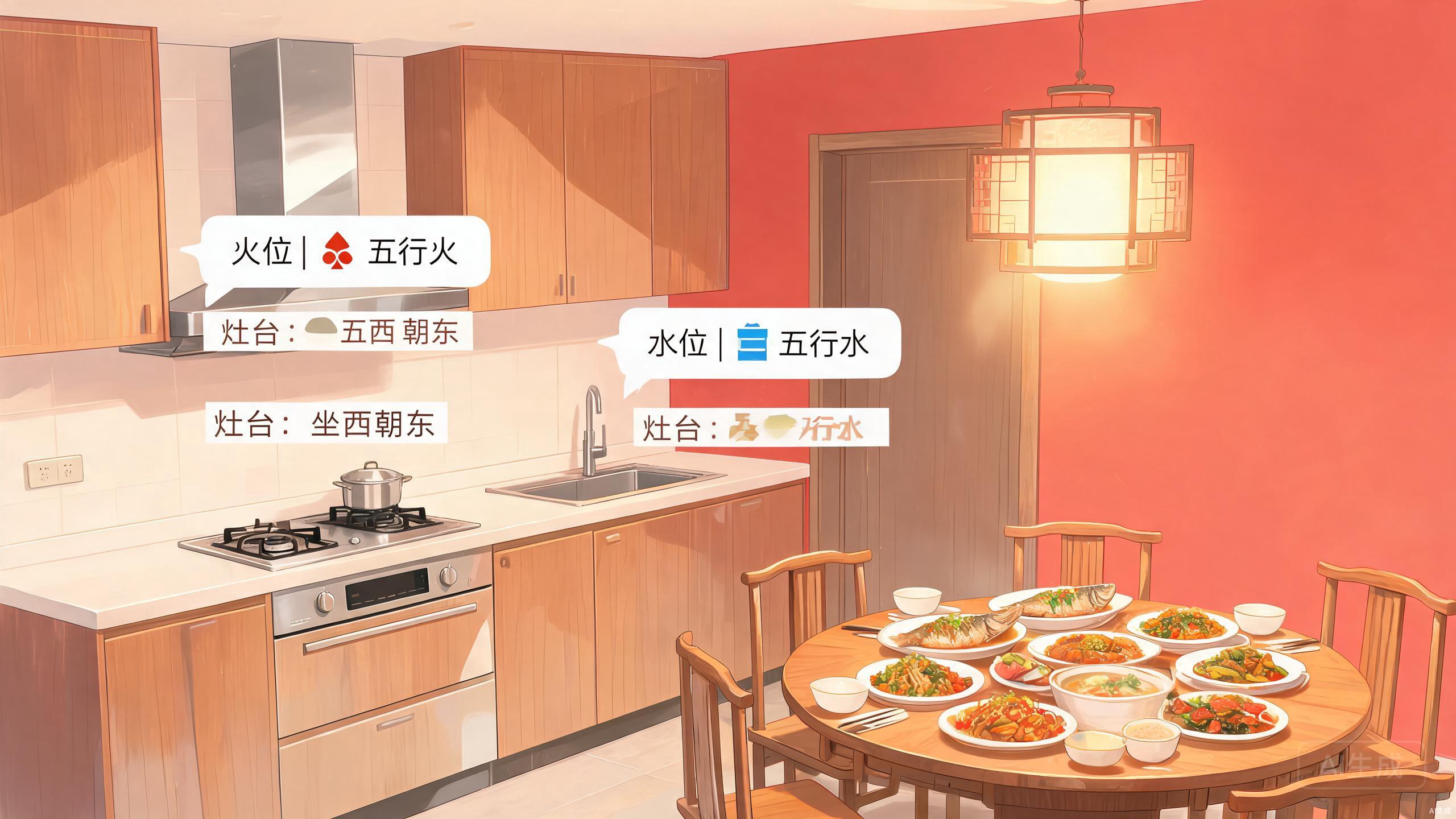
The Importance of Kitchen Feng Shui
In Feng Shui, the orientation of major household features — the front door, stove, bed, and bathroom — determines the fortune of a home. Among these, the stove holds the highest priority. The kitchen is where meals are prepared, directly affecting the whole family's health and nutrition. The stove belongs to the Fire element and represents the household's "fire energy" and "wealth energy." Therefore, kitchen Feng Shui directly impacts both family health and Wealth Fortune (财运).
Cultural Context: In Feng Shui theory, the stove is considered the "heart of the home's fire energy." Fire governs not only transformation and warmth but also the family's financial vitality. A well-placed stove protects wealth, while a poorly placed one can "burn away" prosperity.
Stove Placement and Direction
Stove Sitting and Facing Principles
-
Stove should not directly face the front door: "When the door opens to see the stove, wealth is constantly drained" (开门见灶,钱财多耗). When the stove faces the entrance directly, fire energy escapes outward, causing financial loss.
-
Stove should not directly face the bedroom door: Fire energy rushing into the bedroom affects the occupant's health and temperament.
-
Stove should not be placed due south: The south belongs to Fire, and the stove is also Fire — "Fire plus Fire" creates excessive heat, leading to irritability and quarrels among family members.
-
Stove should not be placed in the northwest: The northwest corresponds to the Qian (乾) trigram, representing the male head of household. Qian belongs to Metal, while the stove is Fire — "Fire controls Metal" (火克金), which is unfavorable for the man of the house.
-
Stove should not directly face the bathroom door: The bathroom is an impure space, while the stove is where food is prepared. When the two face each other, filthy Qi contaminates the stove and harms dietary health.
-
Stove should have a solid backing: Behind the stove should be a solid wall, not a window. A backing provides stability and prevents outside wind from affecting the flame.
Stove and Sink Relationship
Feng Shui emphasizes that "Water and Fire should not clash." The stove (Fire element) and the sink (Water element) should not be placed directly adjacent. If they must align on the same straight line, place a work counter between them to prevent direct Water-Fire conflict.
The refrigerator should also not directly face the stove. The refrigerator belongs to Water, the stove to Fire — their clash is equally unfavorable.
Burner Opening Direction
The direction the stove's burner opening faces also matters:
- It should face the homeowner's auspicious direction
- It should not face north (north is Water, which controls Fire)
- It should not face toward the bathroom
Kitchen Taboos
1. Kitchen Should Not Be in the Center of the Home
The center of the home is the Taiji Point (太极点), belonging to Earth in the Five Elements (Wu Xing). The kitchen is Fire — "Fire roasting the Center" disrupts the family's health and fortune. The center also makes ventilation and smoke exhaust difficult.
2. Kitchen Door Should Not Directly Face the Front Door
"Opening the door reveals the stove, wealth is constantly drained." Qi entering from the front door rushes straight into the kitchen, scattering its fire energy and wealth energy.
3. Kitchen Should Not Be Above or Below the Bedroom
If the kitchen is upstairs and the bedroom downstairs, this creates "fire pressing on the bed," harming health. Similarly, a bedroom directly above the kitchen is also unfavorable.
4. Kitchen Should Not Have a Beam Pressing Down on the Stove
A beam directly over the stove affects the cook's fortune and health. The remedy is to relocate the stove away from directly beneath the beam.
5. Kitchen Should Not Be Too Dark
The kitchen should remain bright and well-ventilated. "Bright, well-lit homes are auspicious; dark and gloomy homes are inauspicious" (宅内光明透亮为吉,阴暗灰秃为凶). Good lighting and ventilation support food hygiene and positive energy.
6. Kitchen Floor Should Not Be Higher Than the Living Room or Bedroom
If the kitchen floor sits higher than other rooms, wastewater may flow backward — in Feng Shui this represents "water adding upward," harming Wealth Fortune.
7. Kitchen Should Not Have Too Many Mirrors
Mirrors should not directly face the stove. When "fire energy" is reflected by a mirror surface, it doubles in intensity, leading to irritability among family members.
Kitchen Layout Essentials
Workflow Triangle
The kitchen workflow should be smooth and logical, following the sequence: Retrieve ingredients → Wash → Cut and prepare → Cook → Plate. Counter space should be generous enough for comfortable food preparation.
Ventilation
The kitchen must have proper ventilation and exhaust systems, including a range hood to remove cooking fumes promptly. Oil fumes are considered "turbid Qi" (浊气); long-term accumulation harms both health and fortune.
Color Selection
Kitchen colors should emphasize cleanliness and brightness:
- Recommended: White, light yellow, and other clean tones
- Avoid: Red, purple, and other overly fiery colors
- Avoid: Black, deep blue, and other gloomy colors
Quick Tip: If your kitchen feels visually heavy or dark, add bright LED under-cabinet lighting. It instantly lifts the Five Elements balance and makes the space feel more welcoming for cooking and gathering.
Kitchen Plants
Some oil-resistant plants — such as Spider Plants (吊兰) or Golden Pothos (绿萝) — can be placed in the kitchen. They purify the Qi and add Vital Qi (生气). However, avoid placing plants directly next to the stove, where cooking fumes will damage them.
Dining Room Feng Shui
Dining Room Location
The dining room should be adjacent to the kitchen for easy serving and clearing. It should not directly face the front door or the bathroom door. Ideally, it should be bright and spacious, creating a pleasant mealtime atmosphere.
Dining Table Selection
-
Shape: Round or oval tables are best, symbolizing family togetherness and unity. Rectangular tables are acceptable but should avoid sharp corners. Triangular or polygonal tables are not recommended.
-
Material: Wood is preferred for its warm, natural feel. Glass and metal are acceptable but feel cooler and less inviting.
-
Size: The table size should match the dining area and family size — neither too large nor too small for the space.
Dining Table Placement
-
Table should not directly face the front door: Outside activity disrupts the meal, affecting appetite and digestion.
-
Table should not directly face the bathroom door: Bathroom Qi rushing toward the dining table is unhygienic and diminishes appetite.
-
Table should not be placed beneath a beam: A beam pressing down on the table harms the diners' fortune.
-
No pendant light hanging too low above the table: A low-hanging light creates aoppressive feeling (oppressive feeling) over diners.
-
Table should have a solid backing: Ideally backed by a solid wall rather than open space behind diners.
Dining Room Décor
- Hang still-life paintings of fruits or flowers to stimulate appetite
- Display fresh flowers to add Vital Qi
- Use warm color tones to promote appetite
- Soft warm-yellow lighting creates a cozy dining atmosphere
Dining Room Taboos
- The dining table should not double as a desk or work surface — keep functions distinct
- Avoid clutter on the table surface
- The dining room should not house deity statues (altars should be kept well away from the dining area)
- Avoid arguments during meals — they affect digestion and family fortune
- Tableware should always be clean and intact; avoid cracked or chipped dishes
Kitchen and Dining Room Relationship
The kitchen and dining room are closely connected spaces. In Feng Shui, pay attention to these principles:
- Kitchen door should not directly face the dining table: Cooking fumes rush toward the table and interfere with dining
- Install a door or partition between kitchen and dining room: Prevents cooking fumes from entering the dining area
- Kitchen is Fire; dining room should be neutral: Dining room colors should not be too warm, to balance the kitchen's fire energy
- Serving path should be smooth: The route from kitchen to dining table should be short and convenient
How to Apply This: Quick Kitchen & Dining Feng Shui Checklist
- Map your stove's location: Identify which direction your stove faces and which wall backs it. Confirm it is not directly south, northwest, or aligned with the front or bathroom door
- Create separation between stove and sink: If they share a wall, ensure a work counter sits between them
- Brighten dark corners: Add under-cabinet lights or brighten walls with light paint to lift the Taiji energy of the kitchen
- Round out your dining table: If possible, choose a round or oval table to promote family harmony
- Back the table against a solid wall: Avoid placing the dining table in the middle of the room with no backing
- Keep the pathway clear: Ensure smooth flow from kitchen to dining table without obstacles
Quick Tips:
- Always keep the stove area clean and uncluttered — a messy stove symbolically "burns" your financial luck
- Hang a small piece of art featuring fruit in the dining area to activate appetite and abundance energy
- Repair any dripping faucets immediately; leaking water symbolizes Wealth Leakage (漏财)
Conclusion
The kitchen and dining room are the foundation of family health and nourishment. The core of kitchen Feng Shui is: proper stove placement, Water-Fire harmony, and bright ventilation. The core of dining room Feng Shui is: suitable location, well-chosen table, and warm atmosphere. When both spaces are arranged with care, you protect your family's health and create the stable energy needed for lasting prosperity.
Related Articles
- [[../03-财运风水/39-厨房与财运.md|Kitchen and Wealth Fortune: How Stove Placement Determines Family Prosperity]]
- [[../04-商业风水/21-餐饮店风水.md|Restaurant Feng Shui]]
- [[../02-家居风水/29-厨房炉灶风水.md|Kitchen Stove Feng Shui: Water-Fire Harmony for a Peaceful Home]]
- [[../02-家居风水/30-厨房色彩与材质.md|Kitchen Colors and Materials: Five Elements Balance for a Lucky Cooking Space]]