Commercial Feng Shui Do's and Don'ts: Complete Guide for Business Prosperity
## 1. Location Selection Do's and Don'ts ### Do's 1. Do choose a work environment that supports career growth: A workplace with good Feng Shui tends to bring success across all areas of business 2. Do
Commercial Feng Shui Do's and Don'ts: Complete Guide for Business Prosperity
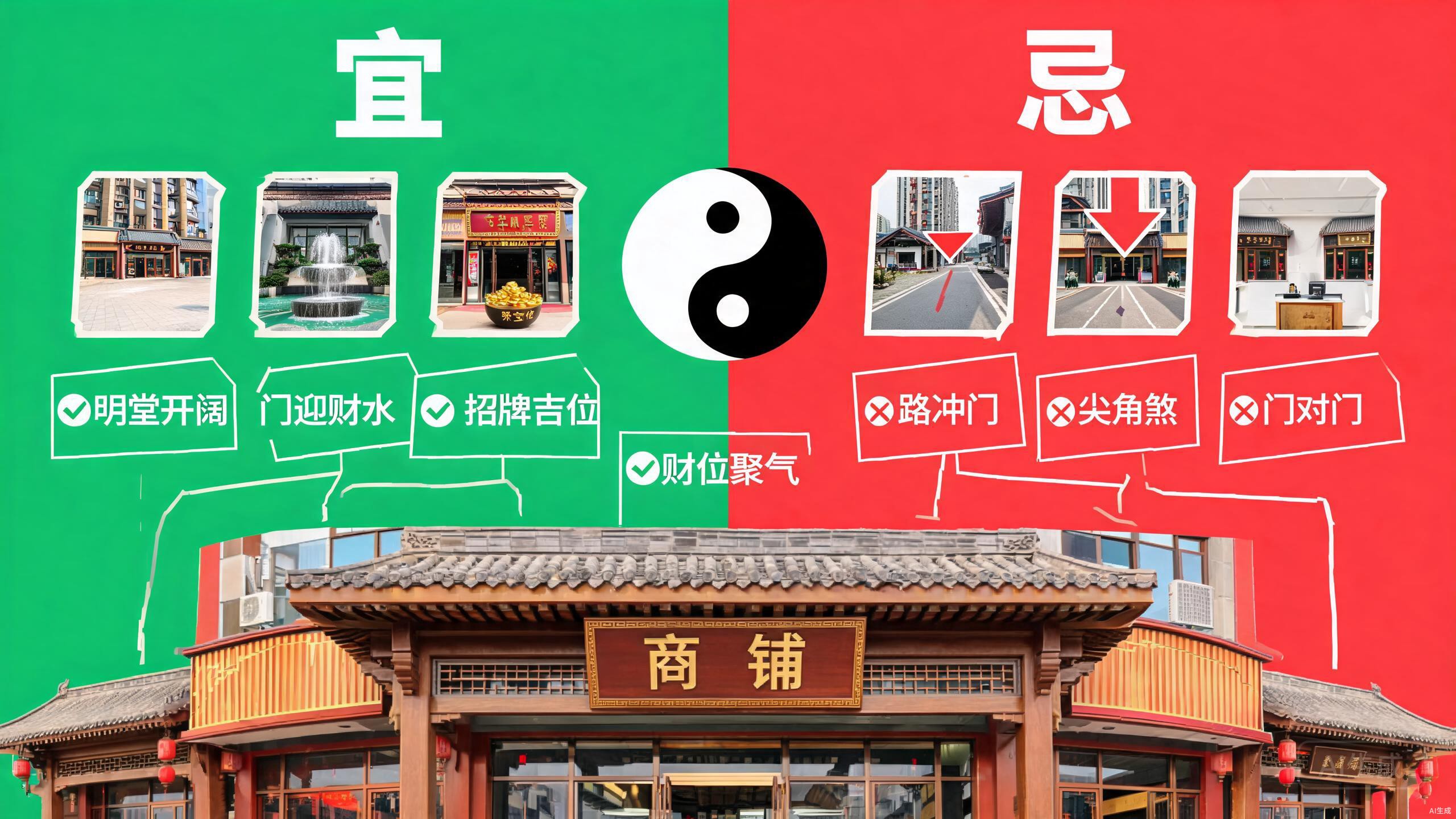
1. Location Selection Do's and Don'ts
Do's
- Do choose a work environment that supports career growth: A workplace with good Feng Shui tends to bring success across all areas of business
- Do select regions with strong development potential: Choose areas with upward economic momentum
- Do pick locations suited for investment: Match your investment to regional characteristics
- Do choose environments suited to your industry: The surroundings should align with your business type
- Do select retail locations with strong commercial atmosphere: Your storefront should be in a vibrant commercial zone
- Do choose production sites that are safe and convenient: Manufacturing facilities need accessibility and security
- Do select a site that Stores Wind and Gathers Qi (藏风聚气, cáng fēng jù qì): The environment should retain and accumulate Qi
- Do favor commercial buildings with "Jade Belt Around the Waist" (玉带环腰): When the road curves and embraces the building from the front
- Do choose an office with good overall Feng Shui: Consider all energetic factors holistically
- Do assess shop prosperity by observing "water" (实水和虚水): Use both real water and virtual water to judge location quality
Don'ts
- Don't underestimate the importance of workplace Feng Shui: Overconfidence that skill alone guarantees success anywhere is risky
- Don't choose regions with poor development prospects
- Don't select environments unsuited for your business type
- Don't build offices in environmentally hostile locations
- Don't build near the five types of "Road Sha" (路煞): Straight road rushing, reverse bow road, scissor road, T-junction, and crossroads directly facing your entrance
- Don't construct business buildings where the water table is too high
- Don't place office doors facing elevator entrances
- Don't determine directions without applying the central balance principle
Cultural Context: In Feng Shui, roads are considered "virtual water" (虚水) — they carry Qi just like rivers do. A road that curves around your building embraces and gathers Qi (lucky), while a road that points straight at your building rushes Sha Qi directly into your space (unlucky). This principle dates back thousands of years to imperial city planning.
2. Main Entrance Do's and Don'ts
Do's
- Do treat the main entrance as the "Qi Mouth" (气口): Your entrance should be spacious, bright, and welcoming
- Do align the entrance with the owner's BaZi (八字): The entrance direction should match the owner's birth chart
- Do keep the Qi Mouth unobstructed: The area before and after the entrance must remain clear
- Do install a Folding Screen (屏风, píng fēng) near the entrance: This Dissolves Sha (化煞, huà shà) and activates auspicious energy
- Do ensure the entrance opens to auspicious views: What you see first upon entering should be lucky symbols
- Do choose entrance colors based on the owner's Destiny Studies (命理): Match entrance colors to the owner's elemental needs
- Do keep the entrance well-lit: Bright entrances invite prosperous Qi
- Do maintain clean entrance flooring: The entryway floor should be spotless and in good repair
- Do place beneficial plants near the entrance: Use living greenery to welcome energy
- Do consider installing mirrors at the entrance: But follow specific placement rules
Don'ts
- Don't place the entrance facing an elevator: Rising and falling elevators disturb Qi flow
- Don't use colors or patterns that clash with the owner's elements: Avoid Five Elements (Wu Xing) conflicts
- Don't open both front and back doors simultaneously: Direct front-to-back flow drains both people and wealth
- Don't install large windows in rest areas: It disrupts rest quality
- Don't use protruding stone blocks as entrance decorations
- Don't neglect entrance floor conditions: Avoid damaged, dirty, or uneven flooring
- Don't place thorny plants near the entrance: Thorns create hostile, repelling energy
- Don't display decor that conflicts with the owner's Chinese Zodiac (十二生肖)
- Don't place mirrors facing the main door directly: Mirrors at the entrance push energy away
- Don't allow balconies to align in a straight line with the main entrance: This creates a "through path" that drains prosperity
Quick Tips:
- Stand at your entrance and observe what visitors see first — replace any negative imagery with auspicious symbols
- A small water feature near (but not directly facing) the entrance activates wealth Qi without creating rushing energy
- Keep entrance plants lush and healthy — wilting plants signal declining fortune
3. Wealth Position Do's and Don'ts
Do's
- Do place the cash register at the Wealth Position (财位): The wealth position concentrates Prosperous Qi (旺气)
- Do keep the wealth position bright and well-lit: Bright wealth areas signal thriving business
- Do place living plants at the wealth position: Choose evergreens with large, thick, round leaves
- Do display auspicious wealth symbols: Kumquat bonsai, Three Stars of Fortune (Fu, Lu, Shou), or Civil and Military Gods of Wealth statues
- Do place floor safes at the wealth position: A grounded safe at the wealth position fulfills Feng Shui requirements
Don'ts
- Don't allow dead leaves or withered plants at the wealth position: Decay signals wealth loss
- Don't subject the wealth position to pressure: Avoid heavy cabinets pressing down on this area
- Don't place water features at the wealth position: Aquariums are not recommended here
- Don't leave the wealth position empty: The wall behind should not be a glass window
- Don't allow clutter at the wealth position: Keep this area clean and organized
- Don't let the wealth position fall into darkness: Use eternal lamps to illuminate if needed
Cultural Context: The Wealth Position (财位, cái wèi) in a commercial setting is different from a home — it must be calculated based on the shop's sitting direction and the current Flying Star period. Simply placing an aquarium there (a common home remedy) can actually drain wealth in a business context because water flows away energy.
4. Office Layout Do's and Don'ts
Do's
- Do ensure the overall layout follows Feng Shui principles: Aim for square, balanced proportions
- Do use the Nine Palace Flying Stars (九宫飞星) for layout planning: Arrange key areas according to Flying Star positions
- Do favor small but elegant offices: Refined compact spaces outperform sprawling, impersonal ones
- Do use Folding Screens (屏风) and plants inside the office: They Dissolve Sha and enhance Qi
- Do choose wooden desks when possible: Wood element supports stable career energy
- Do maintain a harmonious, unified office style: Consistency creates cohesive energy
- Do match office colors to directional elements: Align colors with compass directions
- Do select building shape based on company needs: Match tower shape to business type
- Do fix roof leaks immediately: Address water damage promptly to prevent fortune leakage
- Do choose doors and windows that block both wind and noise
- Do use thick, dark curtains to block harsh Light Sha (光煞)
- Do maintain a square or rectangular floor plan
- Do keep walls complete and smooth
- Do seat the owner with a Backing Mountain (靠山) and wide view: Position leadership for support and vision
- Do use wooden desks throughout the office
Don'ts
- Don't create illogical internal partitions
- Don't scatter clutter throughout the office
- Don't have windowless offices
- Don't use floor patterns with sharp angles pointing at the door
- Don't allow Heaven Chopping Sha (天斩煞) to face the entrance
- Don't omit a clear central point (Taiji Point): Every office needs an energetic center
- Don't accept irregular floor plans
- Don't ignore the differences between classical and modern Feng Shui layouts
- Don't place flags on the right side of the owner's desk: The right side relates to specific energies that flags can disrupt
How to Apply Office Feng Shui Today
- Identify your commanding position: Place the key decision-maker's desk where they can see the door without being directly in line with it
- Check for overhead beams: Use decorative ceilings or hang crystals to neutralize Beam Pressure Sha (梁压煞)
- Establish a clear central point: Keep the office's energetic center open and uncluttered — this is where team energy gathers
- Layer your protections: Combine plants, screens, and lighting to create gentle, meandering Qi flow
5. Courtyard Feng Shui Do's and Don'ts
Do's
- Do maintain a quiet and clean surrounding environment
- Do balance and unify your landscape design
- Do place the courtyard in an auspicious direction
- Do position decorative rockeries in auspicious locations
- Do place courtyard ponds in auspicious locations
- Do use stone accents tastefully throughout the courtyard
- Do plant beneficial species in the courtyard
- Do keep proper distance between perimeter walls and the main building
Don'ts
- Don't place decorative rockeries in inauspicious directions
- Don't place courtyard ponds in inauspicious directions
- Don't use oddly shaped features that "attack" the balcony
Quick Tip: When designing a commercial courtyard, stand at the main building's entrance and observe the view. Water should curve toward you (gathering wealth), and any rock formations should feel protective rather than confrontational.
6. Cash Register Do's and Don'ts
Do's
- Do place the cash register on the Tiger side (白虎位): The White Tiger position represents stillness and helps retain wealth
- Do give the cash register a "backing mountain": Position it against a solid wall
Don'ts
- Don't place the register on the Dragon side (青龙位): The Azure Dragon side represents movement and fluctuation — not ideal for guarding money
- Don't position the wealth altar incorrectly
Cultural Context: In commercial Feng Shui, the White Tiger (白虎, bái hǔ) position — typically the right side when facing outward from the building — represents stability and protection. Since cash management requires steady guarding rather than active flow, placing the register here prevents wealth from "walking away." This is the opposite logic from some home applications where the Dragon side might be preferred.
7. Restroom Feng Shui Do's and Don'ts
Do's
- Do keep restrooms dry and well-ventilated
- Do ensure restrooms are waterproof and moisture-resistant
- Do place plants in restrooms to absorb excess moisture energy
- Do provide adequate natural lighting
- Do choose colors appropriate for restroom function
Quick Tip: Restrooms are considered places where wealth Qi drains away in Feng Shui. Keep the door closed at all times, fix any leaks immediately, and place a small healthy plant inside to recycle the Qi rather than letting it escape.
8. Interior Decoration Do's and Don'ts
Do's
- Do use calligraphy and paintings to add auspicious energy
- Do display clocks to add vitality and movement
- Do keep goldfish if you want fish — they symbolize wealth
- Do place dragon decorations in appropriate positions
- Do use crystal ornaments and sea salt to enhance Feng Shui
- Do use horse imagery for good fortune — six horses is ideal
Don'ts
- Don't display decorations that don't match the owner's status or industry
9. Business Naming Feng Shui Do's and Don'ts
Do's
- Do choose names with favorable numerology
- Do name based on the company's internal essence and vision
- Do consider homophones and their auspicious meanings
Don'ts
- Don't choose names that offend ethnic or religious beliefs
10. Commercial Feng Shui Quick Reference Table
| Category | Do's | Don'ts |
|---|---|---|
| Location | Store Wind and Gather Qi, Jade Belt Around the Waist | Road Sha, High Water Table |
| Main Entrance | Qi Mouth, Spacious and Bright | Facing Elevator, Front-to-Back Through Path |
| Wealth Position | Bright, Plants, Auspicious Symbols | Dead Leaves, Under Pressure, Water Features |
| Office | Square Shape, Backing Mountain, Harmonious | Beam Pressure, No Windows |
| Cash Register | White Tiger Position, Solid Backing | Dragon Position, Facing Door |
| Courtyard | Auspicious Direction, Balanced Design | Inauspicious Direction, Odd Shapes |
| Restroom | Dry and Ventilated, Waterproof | Damp, Dirty |
| Decoration | Calligraphy, Clocks, Goldfish | Inappropriate for Status |
| Naming | Good Numerology, Auspicious Homophones | Offensive to Beliefs |
11. Core Principles of Commercial Feng Shui
1. Heaven's Timing, Earth's Advantage, Human Harmony
Effective Commercial Feng Shui design goes beyond simply ensuring clean indoor Qi. By harnessing the influence of "Heaven's Timing" (天时) and "Earth's Advantage" (地利), you create "Human Harmony" (人和) — the prosperous business environment where wealth flows freely and "fortune comes smoothly" (财运亨通).
2. Sacred Ground Nurtures Exceptional People
Influenced by thousands of years of traditional culture and accumulated historical wisdom, people believe that exceptional people emerge from sacred ground, and that Qi must gather before wealth can grow. This is why Commercial Feng Shui remains a critical focus for business success.
3. Clear Distinctions Between Do's and Don'ts
In everyday commercial design, countless details matter — from main entrances and conference rooms to cafeterias and decorative accents. Even desk placement, air conditioning positioning, and interior decor affect the overall quality of "Human Qi" (人气) and "Wealth Fortune" (财运). Getting these details right has a decisive impact on your business outcomes.
Cultural Context: The three core principles — Heaven, Earth, and Human harmony — come from classical Chinese philosophy and reflect the holistic worldview of Feng Shui. A successful business Feng Shui layout harmonizes timing (when to act), location (where to operate), and people (how teams function together).
Conclusion
This comprehensive guide to Commercial Feng Shui do's and don'ts covers location selection, main entrances, wealth positions, office layouts, cash registers, courtyards, restrooms, decorations, and naming. The core principles are Storing Wind and Gathering Qi, attracting wealth through the Qi Mouth, and maintaining harmony and unity.
In practical application, adapt these principles to your specific situation — honoring traditional Feng Shui theory while accounting for modern commercial environments. This balanced approach creates an energetically supportive business space that promotes thriving trade, abundant prosperity, and lasting fortune.
Related Articles
- [[../02-家居风水/20-别墅风水site selection.md|Villa Feng Shui Location: Environment and Layout for Standalone Homes]]
- [[../07-风水故事/09-肯德基麦当劳的商铺风水.md|KFC and McDonald's Store Feng Shui — Location and Layout Wisdom of Famous Brands]]
- [[../08-百科问答库/37-商铺site selection有哪些风水要点?.md|Key Feng Shui Points for Shop Location Selection]]
- [[../02-家居风水/09-庭院与外部环境.md|Courtyards and External Environment: Four Celestial Animals, Dragon Vein Support, Road Patterns, and Trees]]