Heavenly Stems and Earthly Branches: Complete Guide to the Chinese Calendar System
The Heavenly Stems and Earthly Branches (天干地支, tiān gān dì zhī) form the foundational calendar system of Chinese metaphysics, developed over 4,000 years ago. This elegant framework of Ten Heavenly Ste
Heavenly Stems and Earthly Branches: Complete Guide to the Chinese Calendar System
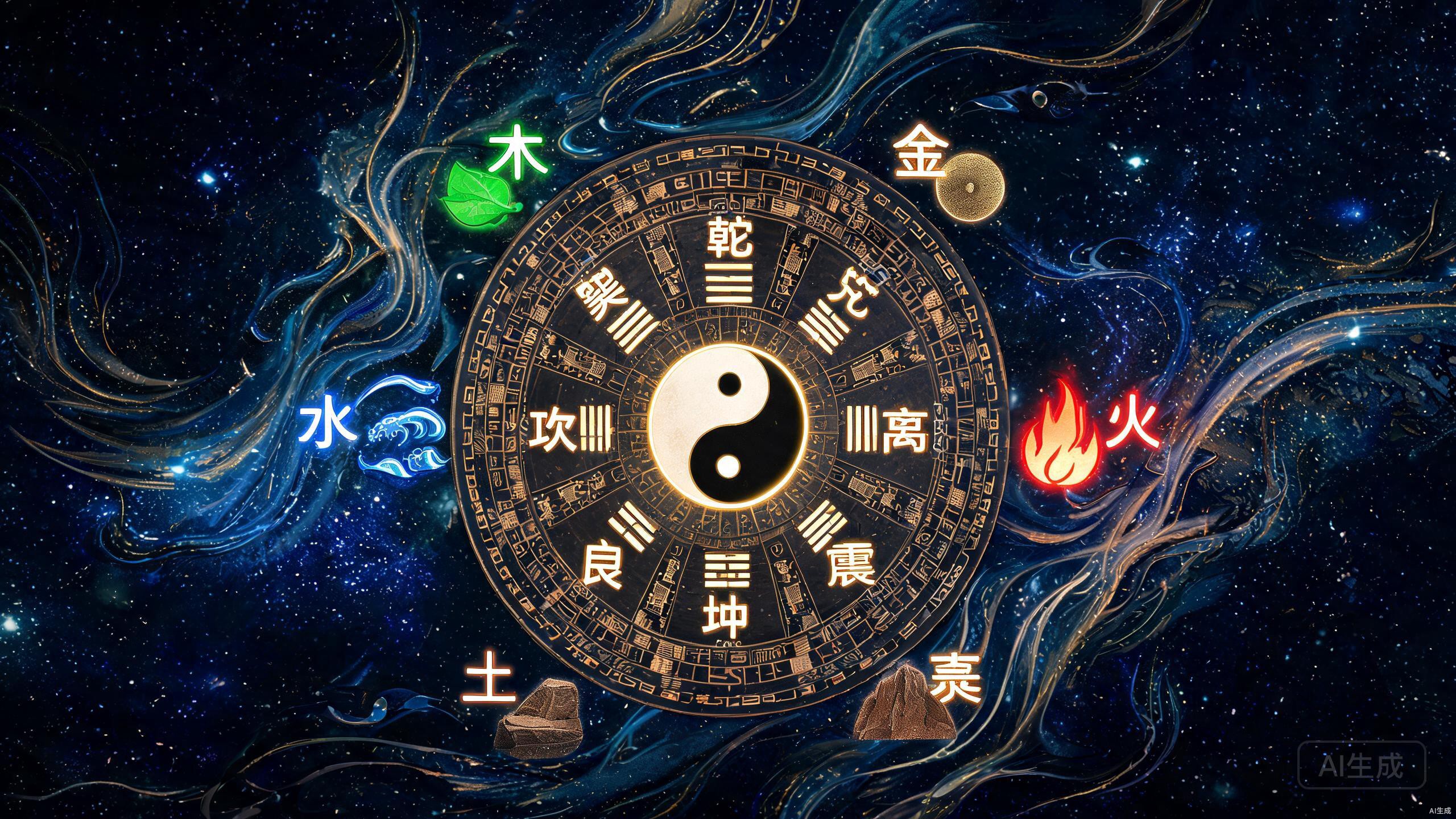
The Heavenly Stems and Earthly Branches (天干地支, tiān gān dì zhī) form the foundational calendar system of Chinese metaphysics, developed over 4,000 years ago. This elegant framework of Ten Heavenly Stems and Twelve Earthly Branches creates the 60-year cycle (Sexagenary Cycle) used in BaZi (八字) destiny analysis, Feng Shui (风水), traditional Chinese medicine, and historical dating.
Cultural Context: Think of the Heavenly Stems and Earthly Branches as the "DNA code" of Chinese metaphysics. Just as Western astrology uses zodiac signs and planetary positions, Chinese destiny studies use this stem-branch system to map the cosmic energy present at your birth — revealing personality traits, life cycles, and fortune patterns.
I. Overview of the Ten Heavenly Stems (十天干)
The Ten Heavenly Stems (十天干, shí tiān gān) represent the Yang (阳) and Yin (阴) energies of the Five Elements (五行, Wu Xing). Each stem carries specific elemental, directional, and seasonal associations.
| Stem | Element | Yin/Yang | Direction | Season | Symbolism |
|---|---|---|---|---|---|
| Jia (甲) | Wood | Yang | East | Spring | Towering Tree |
| Yi (乙) | Wood | Yin | East | Spring | Flowers and Vines |
| Bing (丙) | Fire | Yang | South | Summer | Sun Fire |
| Ding (丁) | Fire | Yin | South | Summer | Candle Fire |
| Wu (戊) | Earth | Yang | Center | Late Summer | Mountain and Land |
| Ji (己) | Earth | Yin | Center | Late Summer | Fields and Gardens |
| Geng (庚) | Metal | Yang | West | Autumn | Swords and Axes |
| Xin (辛) | Metal | Yin | West | Autumn | Jewelry and Gems |
| Ren (壬) | Water | Yang | North | Winter | Great Rivers |
| Gui (癸) | Water | Yin | North | Winter | Rain and Streams |
II. Overview of the Twelve Earthly Branches (十二地支)
The Twelve Earthly Branches (十二地支, shí èr dì zhī) correspond to the Twelve Chinese Zodiac (十二生肖) animals and map the flow of energy through space and time. Each branch governs a two-hour period, a month, and a directional sector.
| Branch | Zodiac | Element | Yin/Yang | Direction | Month | Hour |
|---|---|---|---|---|---|---|
| Zi (子) | Rat | Water | Yang | North | November | 23:00–01:00 |
| Chou (丑) | Ox | Earth | Yin | NNE | December | 01:00–03:00 |
| Yin (寅) | Tiger | Wood | Yang | East | January | 03:00–05:00 |
| Mao (卯) | Rabbit | Wood | Yin | East | February | 05:00–07:00 |
| Chen (辰) | Dragon | Earth | Yang | ESE | March | 07:00–09:00 |
| Si (巳) | Snake | Fire | Yin | SSE | April | 09:00–11:00 |
| Wu (午) | Horse | Fire | Yang | South | May | 11:00–13:00 |
| Wei (未) | Goat | Earth | Yin | WSW | June | 13:00–15:00 |
| Shen (申) | Monkey | Metal | Yang | WSW | July | 15:00–17:00 |
| You (酉) | Rooster | Metal | Yin | West | August | 17:00–19:00 |
| Xu (戌) | Dog | Earth | Yang | WNW | September | 19:00–21:00 |
| Hai (亥) | Pig | Water | Yin | WNW | October | 21:00–23:00 |
Cultural Context: The Earthly Branches do double duty — they are both timekeepers (each branch rules a two-hour period and a lunar month) and directional markers. This is why a Luopan (Feng Shui Compass) shows 24 mountains rather than just 8 directions: the branches add precision between the cardinal points.
III. The Sixty Jiazi Table (First Twenty)
When a Heavenly Stem pairs with an Earthly Branch, it forms one of the 60 Jiazi (甲子) units — the building blocks of the Sexagenary Cycle. Each combination also carries a Na Yin (纳音) element, adding another layer of meaning.
| No. | Stem-Branch | Na Yin Element | No. | Stem-Branch | Na Yin Element |
|---|---|---|---|---|---|
| 1 | Jia Zi | Sea Gold (海中金) | 11 | Jia Xu | Mountain Fire (山头火) |
| 2 | Yi Chou | Sea Gold (海中金) | 12 | Yi Hai | Mountain Fire (山头火) |
| 3 | Bing Yin | Furnace Fire (炉中火) | 13 | Bing Zi | Stream Water (涧下水) |
| 4 | Ding Mao | Furnace Fire (炉中火) | 14 | Ding Chou | Stream Water (涧下水) |
| 5 | Wu Chen | Great Forest Wood (大林木) | 15 | Wu Yin | City Earth (城头土) |
| 6 | Ji Si | Great Forest Wood (大林木) | 16 | Ji Mao | City Earth (城头土) |
| 7 | Geng Wu | Roadside Earth (路旁土) | 17 | Geng Chen | White Wax Metal (白蜡金) |
| 8 | Xin Wei | Roadside Earth (路旁土) | 18 | Xin Si | White Wax Metal (白蜡金) |
| 9 | Ren Shen | Sword Edge Metal (剑锋金) | 19 | Ren Wu | Willow Wood (杨柳木) |
| 10 | Gui You | Sword Edge Metal (剑锋金) | 20 | Gui Wei | Willow Wood (杨柳木) |
IV. The Five Heavenly Stem Combinations (天干五合)
When two specific Heavenly Stems appear together, they "combine" and transform into a new element. This dynamic interaction is essential in BaZi analysis.
| Combination | Stems | Transformed Element | Meaning |
|---|---|---|---|
| Jia-Ji (甲己) | Jia + Ji | Earth | Loyal and Trustworthy Earth |
| Yi-Geng (乙庚) | Yi + Geng | Metal | Righteous Metal |
| Bing-Xin (丙辛) | Bing + Xin | Water | Authoritative Water |
| Ding-Ren (丁壬) | Ding + Ren | Wood | Benevolent Wood |
| Wu-Gui (戊癸) | Wu + Gui | Fire | Radiant Fire |
V. Earthly Branch Clashes and Triple Harmonies
The Twelve Earthly Branches form two important patterns: Six Clashes (六冲) — pairs in direct opposition — and Three Harmonies (三合) — triplets that generate a unified element.
| Clash Pair | Branches | Direction | Triple Harmony | Element |
|---|---|---|---|---|
| Zi-Wu Clash | Zi–Wu | North–South | Shen-Zi-Chen | Water Harmony |
| Chou-Wei Clash | Chou–Wei | NNE–WSW | Hai-Mao-Wei | Wood Harmony |
| Yin-Shen Clash | Yin–Shen | East–West | Yin-Wu-Xu | Fire Harmony |
| Mao-You Clash | Mao–You | East–West | Si-You-Chou | Metal Harmony |
| Chen-Xu Clash | Chen–Xu | ESE–WNW | ||
| Si-Hai Clash | Si–Hai | SSE–WNW |
How to Apply This in Daily Life
- Check for clash years: If you were born in a year that clashes with the current year's branch, expect more turbulence — a good year for change, but proceed with caution in major decisions
- Find your harmony element: Identify which Triple Harmony triplet contains your birth branch to discover your supportive element
- Time activities by hour: Schedule important meetings or creative work during hours ruled by your favorable element
Quick Tips:
- Triple Harmony groups are considered powerful alliances — in Feng Shui, placing symbols of all three branches together activates the combined element
- Clash years are not "bad" — they simply bring disruption that clears space for growth and transformation
VI. Heavenly Stems and Earthly Branches in Daily Life
How to Map Your Own BaZi (Eight Characters)
Your BaZi chart consists of four "pillars" — each pillar is a stem-branch pair representing one dimension of your life:
- Year Pillar (年柱): Your family roots and ancestral energy — derived from your birth year
- Month Pillar (月柱): Your career and social environment — derived from your birth month
- Day Pillar (日柱): Your core self and relationships — derived from your birth day (requires a perpetual calendar)
- Hour Pillar (时柱): Your inner dreams and later life — derived from your birth hour
Birth Hour Reference Table
| Hour | Time Period | Earthly Branch |
|---|---|---|
| Zi Hour (子时) | 23:00–01:00 | Zi |
| Chou Hour (丑时) | 01:00–03:00 | Chou |
| Yin Hour (寅时) | 03:00–05:00 | Yin |
| Mao Hour (卯时) | 05:00–07:00 | Mao |
| Chen Hour (辰时) | 07:00–09:00 | Chen |
| Si Hour (巳时) | 09:00–11:00 | Si |
| Wu Hour (午时) | 11:00–13:00 | Wu |
| Wei Hour (未时) | 13:00–15:00 | Wei |
| Shen Hour (申时) | 15:00–17:00 | Shen |
| You Hour (酉时) | 17:00–19:00 | You |
| Xu Hour (戌时) | 19:00–21:00 | Xu |
| Hai Hour (亥时) | 21:00–23:00 | Hai |
How to Calculate Your Four Pillars
- Find the year stem-branch: Check a Chinese calendar or online converter for your birth year
- Determine the month branch: Use the solar terms (not the lunar month) to find the correct month branch
- Locate the day stem-branch: This requires a perpetual calendar (万年历) — the day pillar is the same for everyone born on that day worldwide
- Identify the hour branch: Use the table above based on your local birth time
Friendly Reminder: The Heavenly Stems and Earthly Branches are the bedrock of traditional Chinese culture. Beyond destiny studies (命理), they are widely applied in traditional Chinese medicine, astronomy, calendar systems, agriculture, and even Feng Shui practice — making them one of the most versatile and enduring frameworks in human history.
Related Articles
- [[../01-风水入门/14-六十甲子与纳音五行.md|Sexagenary Cycle and Na Yin Five Elements]]
- [[../01-风水入门/04-五行与八卦.md|Five Elements and Bagua: Mutual Generation, Restriction, and the Prenatal vs. Postnatal]]
- [[../02-家居风水/37-植物与风水.md|Plants and Feng Shui: Five Elements Balance and Wealth-Attracting Greenery]]
- [[../02-家居风水/55-家居色彩风水.md|Home Color Feng Shui: Five Elements Color Matching for Harmonious Spaces]]