Ancient Capital Feng Shui: Xi'an — The Dragon Vein and Feng Shui Layout of the Thirteen Dynasties Capital
Xi'an, historically known as Chang'an, Haojing, and Daxing, holds the record as the longest-serving capital with the most dynasties in Chinese history. Since the Western Zhou Dynasty established its c
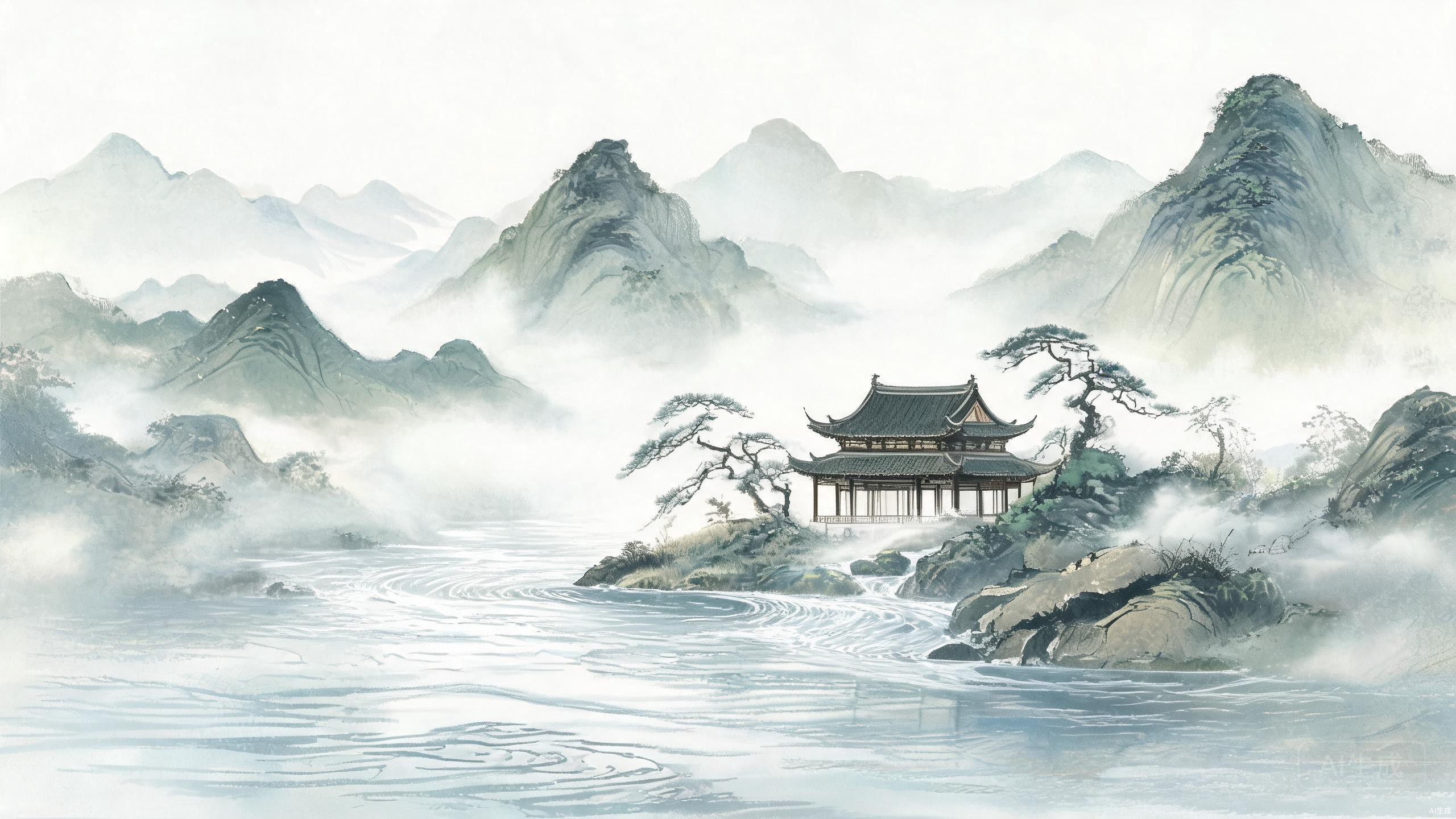
Introduction: Xi'an's Status in Chinese Capital History
Xi'an, historically known as Chang'an, Haojing, and Daxing, holds the record as the longest-serving capital with the most dynasties in Chinese history. Since the Western Zhou Dynasty established its capital here, a total of thirteen dynasties — including the Qin, Western Han, Eastern Han (Emperor Xian), Western Jin (Emperor Min), Former Zhao, Former Qin, Later Qin, Western Wei, Northern Zhou, Sui, and Tang — made this city their seat of power, accumulating over 1,100 years of capital history. The exceptional Feng Shui and geographical layout of Xi'an played a crucial role in making it the preferred capital for so many dynasties. From the macro-level mountain and river formations to the micro-level urban design, Xi'an represents a systematic application of ancient Chinese Feng Shui theory in citysite selection selection.
Guanzhong Plain's Geographical Layout: A Fortress of Four Passes and Eight Rivers Embracing Chang'an
Natural Barriers of the Guanzhong Plain
Xi'an is located in the heart of the Guanzhong Plain (关中平原), bordered by the Qinling Mountains to the south, the Wei River to the north, the strategic Tongguan Pass to the east, and the fortified Sang Pass to the west — forming a closed geographical pattern known as the "Land of Four Passes" (四塞之地). The Guanzhong Plain stretches approximately 300 kilometers east to west and 100 kilometers north to south, with flat terrain and fertile soil, earning it the ancient reputation of "Heavenly Kingdom of Abundance."
Cultural Context: In Feng Shui theory, the ideal settlement pattern is described as "Mountains Embracing and Water Surrounding" (山环水抱). This configuration provides protection from harsh winds while gathering nourishing Qi, creating an environment that supports prosperity and stability.
From a Feng Shui perspective, the Guanzhong Plain represents a perfect model of "Mountains Embracing and Water Surrounding." The Qinling Mountains stretch for a thousand miles from west to east, undulating like a giant dragon along the southern edge of the plain, serving as a natural "Backing Mountain." Mount Taibai, the main peak of the Qinling range, rises over 3,700 meters and provides powerful Earth Qi (地气) support for the entire region. The Northern Mountains — including Liang Mountain, Huanglong Mountain, and Cuoe Mountain — form the protective barrier on the opposite side, creating the ideal "Bright Hall in front, Backing Mountain behind" (前有照、后有靠) configuration.
Eight Rivers Embracing Chang'an
Xi'an's water system pattern is highly distinctive in Feng Shui terms. Eight major rivers — the Wei, Jing, Ba, Feng, Lao, Jue, Hao, and Chan Rivers — encircle Xi'an, forming the famous "Eight Rivers Embracing Chang'an" (八水绕长安) pattern. The Wei River, the largest tributary of the Yellow River, flows from west to east across the northern edge of the Guanzhong Plain, serving as the main waterway of the region. In Feng Shui theory, the Wei River acts like a jade belt embracing the city, bringing abundant water and Vital Qi to Chang'an.
The Ba and Chan Rivers flow east of Xi'an, the Feng and Lao Rivers flow west, the Jue and Hao Rivers flow south, and the Jing River merges into the Wei River north of the city. This multi-water convergence places Xi'an at the auspicious position of "Water Gathering at Heaven Heart" (水聚天心). Since Feng Shui teaches that "water governs wealth," locations where multiple waterways converge tend to attract fortune and talent — providing an excellent Feng Shui foundation for Xi'an to become the political, economic, and cultural heart of the nation.
Dragon Vein Analysis: The Qinling Dragon Vein and Chang'an's Central Axis
The Qinling Mountains' Dragon Vein Status
Within the Dragon Vein (龙脉) system of Chinese Feng Shui, the Qinling Mountains hold an extraordinarily important position. They serve not only as the watershed between the Yangtze and Yellow River systems but also as the natural geographical dividing line between northern and southern China. Among the "Three Great Dragon Veins of China" (北龙、中龙、南龙) — all originating from the Kunlun Mountains — the Qinling range forms the core component of the Central Dragon Vein.
Cultural Context: The Three Great Dragon Veins are the most spiritually significant mountain chains in Chinese Feng Shui, believed to channel the earth's primordial Qi from sacred Kunlun peaks across the entire nation. Each Dragon Vein is associated with specific regions, dynasties, and historical destinies.
The Central Dragon Vein originates from the Kunlun Mountains and runs through the Qilian, Qinling, Funiu, and Dabie ranges, eventually extending to the lower Yangtze region. The Qinling segment serves as a critical node along this path, with its mountain ridges winding majestically. From the Feng Shui perspective, the Dragon Vein Qi reaches its peak intensity near Xi'an, because the Qinling range forms a "Returning Dragon Facing the Ancestor" (回龙顾祖) pattern here: the mountains extend from west to east, then curve northward near Xi'an, creating an embracing formation.
The Central Axis Design of Chang'an
Chang'an's central axis design embodies the integration of Feng Shui theory with traditional Chinese urban planning philosophy. The Sui and Tang Dynasty central axis — Zhuque Avenue — ran from Mingde Gate in the south to Chengtian Gate (the main entrance of Taiji Palace) in the north, stretching approximately 8 kilometers in length and over 150 meters in width. This central axis aligned with the Zi Wu Valley of the Qinling Mountains in the distance, creating a true north-south orientation known as the "Zi Wu Direction" (子午向).
From a Feng Shui standpoint, Chang'an's central axis design subtly embodies the ancient cosmological concept of "Heaven is round, Earth is square" (天圆地方). The city was divided into orderly residential blocks (里坊) arranged like a checkerboard, reflecting the "Modeling Heaven and Earth" (法天象地) design philosophy. The imperial palace occupied the center-north position — the supreme "Sitting North Facing South" (坐北朝南) orientation — symbolizing the emperor's position at the North Star, surveying all beneath heaven.
Historical Feng Shui Analysis of Xi'an as Capital
Western Zhou's Haojing Site Selection
The Western Zhou Dynasty's decision to build Haojing on both banks of the Feng River reflects the Zhou people's sophisticated Feng Shui awareness. King Wen of Zhou constructed Fengjing on the western bank, while King Wu of Zhou built Haojing on the eastern bank, creating a "Twin Cities Side by Side" pattern across the river. From a Feng Shui perspective, this site selection leveraged the Feng River as a natural defense and water source, with the Qinling Mountains as backing and the Wei River facing forward — fulfilling the basic "Mountains Behind, Water in Front" conditions.
Qin Dynasty's Xianyang Site Selection
After unifying the six states, Qin Shi Huang constructed Xianyang City on the northern bank of the Wei River. The site's selection demonstrates the Qin people's emphasis on the "Modeling Heaven" (法天) philosophy. Historical records indicate that when building Xianyang Palace, Qin Shi Huang designed the palace layout to correspond with celestial star formations — using the Wei River to symbolize the Milky Way and individual palaces to represent constellations. This "Resembling Heaven, Modeling Earth" (象天法地) design philosophy essentially elevated the Feng Shui concept of "Unity of Heaven and Humanity" (天人合一) to its highest expression.
Sui and Tang Chang'an City Planning
The Sui and Tang Chang'an City represents the pinnacle of ancient Chinese urban planning and a prime example of Feng Shui theory applied to city design. Emperor Wen of Sui appointed Yuwen Kai to oversee the construction of Daxing City (later known as Chang'an), with Yuwen Kai fully applying the Form School (形势派) principles of Feng Shui theory.
Cultural Context: The Form School of Feng Shui focuses on observable physical features of the landscape — mountains, rivers, terrain shapes — rather than abstract calculations. It was the dominant approach during the Tang Dynasty and remains foundational to practical Feng Shui application today.
Chang'an City made full use of the topographical advantages of Longshou Plateau. Located in northern Xi'an, Longshou Plateau is an elevated landform on the southern bank of the Wei River, shaped like a dragon lowering its head to drink water. Both the Taiji Palace of the Sui Dynasty and the Daming Palace of the Tang Dynasty were built on this plateau, commanding the highest point of the entire city — advantageous for military defense while satisfying the Feng Shui requirement of an "Eminent Central Position."
Changes in Xi'an's Feng Shui Layout and Modern Lessons
Destruction of the Feng Shui Layout
After the late Tang Dynasty, Chang'an's Feng Shui layout suffered severe disruption. After Zhu Wen usurped the throne, he forced Emperor Zhaozong to relocate the capital to Luoyang and ordered the dismantling of Chang'an City, shipping timber down the Wei River to Luoyang. From that point, Chang'an gradually declined, losing its status as the national political center.
From a Feng Shui perspective, Chang'an's decline was associated with several factors: first, the ecological environment of the Guanzhong Plain gradually deteriorated, with serious soil erosion reducing agricultural productivity; second, rivers like the Wei accumulated sediment and reduced water flow, impairing transportation; third, the national economic center shifted southward, diminishing Chang'an's geographical advantages.
Modern Lessons Learned
As the capital of thirteen dynasties, Xi'an's Feng Shui layout provides valuable insights for contemporary times. First, city site selection should comprehensively consider geographical environment, natural resources, and transportation conditions — not rely solely on any single Feng Shui principle. Second, urban development must coordinate with the ecological environment, as overdevelopment candisrupt the original Feng Shui pattern. Finally, the central axis concept and symmetrical layout in urban planning reflect the essence of traditional Chinese culture and still hold important reference value for modern city design.
Conclusion
Xi'an's Feng Shui layout stands as an outstanding representative of ancient Chinese capital site selection and planning theory. From the macro-level Guanzhong Plain geographical configuration to the micro-level urban central axis design, it reflects the ancient people's profound understanding of the relationship between humanity and nature. Although Xi'an's Feng Shui pattern has undergone tremendous changes over the centuries, the underlying philosophy of harmonious coexistence between humans and nature remains worthy of in-depth study and reference.
Related Articles
- [[../01-风水入门/06-风水基础概念词典.md|Feng Shui Glossary: 18 Core Terms Explained]]
- [[../01-风水入门/31-Xing Shi School (Luan Tou School) Detailed Guide.md|Form School Explained: The Millennial Legacy of Dragon Vein and Sand]]
- [[../02-家居风水/09-庭院与外部环境.md|Courtyard and External Environment: Four Symbols, Dragon Vein Backing, Road Layout and Trees]]
- [[../07-风水故事/03-Qin Shi Huang Severing Jinling's Dragon Vein.md|Qin Shi Huang Severed the Nanjing Dragon Vein — The First Emperor's Feng Shui Panic]]
Remember: Feng Shui seeks to balance Yin and Yang energies — the dual forces that shape all existence.
How to Apply Historical Wisdom Today
- Study the classics: Read core texts like the Book of Burial to understand foundational principles
- Observe landscape patterns: Notice how natural landforms create different energy qualities
- Respect tradition: Honor the accumulated wisdom while adapting it to modern contexts
- Learn from masters: Study how historical Feng Shui experts applied principles in real cases
- Connect past to present: Use historical examples to inform your own space planning decisions
- Balance the Five Elements: Incorporate Wood, Fire, Earth, Metal, and Water in your décor for harmonious energy