Feng Shui and Ancient Military Strategy: How Cities Were Sited for Luck and Defense
In ancient China, Feng Shui and military strategy shared a close and complex relationship. Concepts from Feng Shui theory — such as *xíng shèng* (形胜, advantageous terrain), *dì shì* (地势, geographical
Introduction: Where Feng Shui Meets Military Strategy
In ancient China, Feng Shui and military strategy shared a close and complex relationship. Concepts from Feng Shui theory — such as xíng shèng (形胜, advantageous terrain), dì shì (地势, geographical position), and Dragon Vein (龙脉) — naturally aligned with military principles like terrain, geographical advantage, and defensive positioning. When ancient cities were sited and military fortifications were built, Feng Shui principles were often woven into military decision-making, becoming a vital component of Chinese military geography. City placement had to balance Feng Shui considerations of auspiciousness with military needs of attack and defense. The interplay between these two disciplines created a unique dimension in ancient Chinese urban planning. This article examines, from a military geography perspective, how Feng Shui was applied to ancient city siting and military defense.
Military Geography Concepts in Feng Shui Theory
Xíng Shèng (形胜) and Military Geography
The concept of xíng shèng (形胜, advantageous terrain) is key to understanding the relationship between Feng Shui and military strategy. Originally, the term described a region with superior terrain and a strategically defensible position. In Feng Shui, it refers to a sacred site where Dragon Veins converge and Vital Qi (生气, sheng qi) gathers. In military terms, it refers to terrain with strategic value — a stronghold that is easy to defend yet flexible for offense and retreat. Feng Shui masters and military strategists often reached the same conclusion: a region with rugged terrain, a complete water system, and abundant resources was both an auspicious site in Feng Shui and a strategic stronghold in warfare.
Cultural Context: The shared vocabulary between Feng Shui and military science is no coincidence. Both disciplines depend on reading the natural landscape — mountains, rivers, and passes — to understand how energy and armies move through space. What benefits Qi flow often benefits troop movement and supply lines.
Where Feng Shui and Defense Principles Align
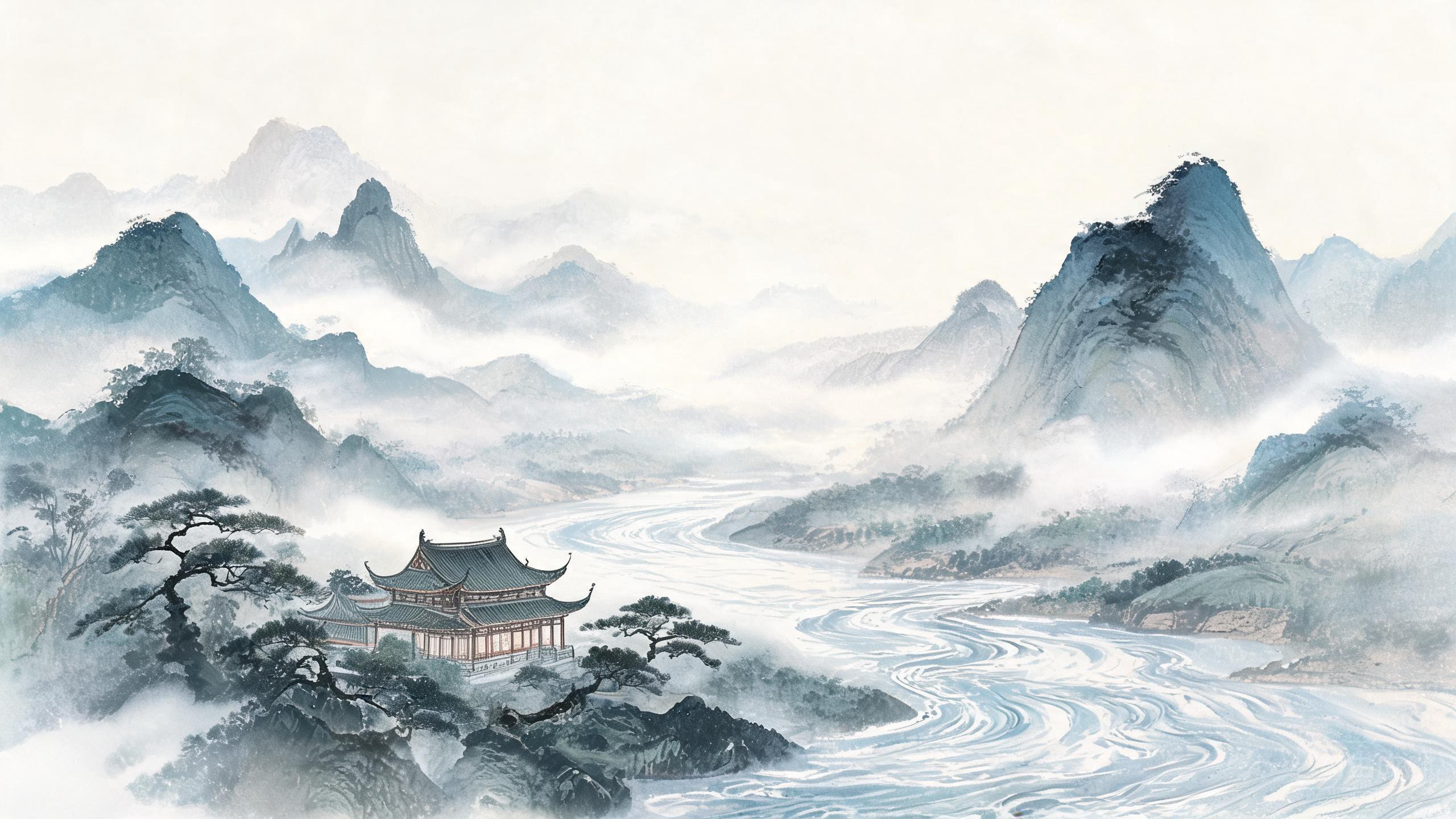
The Feng Shui principle of Storing Wind and Gathering Qi (藏风聚气) closely aligns with the military concept of barriers and shielding. Feng Shui requires that a residence or city site have mountains behind it as a Backing Mountain (靠山), water in front as a boundary, and hills on both sides as guardians. Militarily, this layout creates a natural defense system — mountains to the rear block enemy advances, water in front forms a natural barrier, and flanking hills restrict enemy maneuverability. The "ideal pattern" in Feng Shui is, more often than not, the "optimal defensive position" in military strategy.
Military Feng Shui in the Siting of Historical Capitals
Xi'an: A Perfect Marriage of Feng Shui and Defense
Xi'an (historically known as Chang'an) was one of China's longest-serving capitals, and its site exemplifies the perfect fusion of Feng Shui and military strategy. To its north lie the Qinling Mountains; to the south stretches the Wei River plain; to the east stand the strategic passes of Hangu and Tongguan; to the west sit the military strongholds of Sanguan and Longguan. This "land locked on four sides" (四塞之地) pattern was considered a Feng Shui auspicious site — "embraced by mountains and water, storing wind and gathering Qi" — and a strategically vital position offering "the ability to advance and retreat." When the Han and Tang dynasties chose Chang'an as their capital, they weighed both auspiciousness and security.
Beijing: Northern Shield for the Empire
Beijing served as the capital during the Yuan, Ming, and Qing dynasties, and its selection likewise reflects the integration of Feng Shui and military thinking. Beijing is backed by the Yan Mountains to the north, faces the North China Plain to the south, is shielded by the Taihang Mountains to the west, and opens onto the Bohai Sea to the east. This "Back to Mountain Facing Water" (背山面水) pattern was considered a supremely auspicious site in Feng Shui and a strategic stronghold for "repelling northern horsemen and controlling the central plains." When the Ming Dynasty rebuilt Beijing, planners followed Feng Shui principles while strengthening military fortifications — the height and thickness of the walls, the number of gates, and the design of urn-shaped defensive enclosures (瓮城) all reflected defense considerations.
Nanjing: Dragon-Tiger City with Hidden Vulnerabilities
Nanjing, the famous "Capital of Six Dynasties," was celebrated for its geographical configuration of "tiger crouching, dragon coiling" (虎踞龙盘) — considered a sovereign's residence in Feng Shui. To its north flows the Yangtze River as a natural moat; to the south winds the Qinhuai River; to the east rises Zhongshan (Purple Gold Mountain); to the west stands the stone fortress of Stone City (石头城). This "mountain-and-water balanced" layout was militarily advantageous — the Yangtze provided a natural defensive barrier, Zhongshan offered commanding high ground, and Stone City served as a fortified stronghold. However, Nanjing's Feng Shui configuration had a flaw: the "water behind" position (the Yangtze to the north) carried a military risk of being besieged. This weakness contributed to Nanjing's fall multiple times throughout history.
Feng Shui in Military Strongholds and Border Fortifications
Pass Selection: Siting for Strategic Advantage
China's ancient military passes — Hangu Pass, Tongguan, Jianmen Pass, and Juyong Pass — all reflect the principle of "holding a narrow advantage to defend." These passes were typically located in mountain defiles or at strategic points along rivers, exploiting terrain to create the classic defensive stance of "one man holds the pass, ten thousand cannot enter." From a Feng Shui perspective, these sites often sit at key nodes of the Dragon Vein — where mountain ranges narrow and cross, where waterways converge, and where terrain twists with a forbidding atmosphere. Both Feng Shui masters and military strategists emphasized careful observation and judgment of xíng shì (形势, form and situation) when selecting pass locations.
Border Fortress Layout: Feng Shui Meets Defense
China's ancient border fortifications — such as the Ming Dynasty's Nine Border Garrisons (辽东、蓟州、宣府、大同、太原、延绥、宁夏、固原、甘肃) — also reflected the fusion of Feng Shui and military strategy. These forts typically backed onto tall mountains and faced open plains, using terrain to construct layered defensive systems. The number of gates, the orientation of walls, and the design of moats balanced Feng Shui principles with military necessity. For example, when the Ming Dynasty built the Datong fortress, the walls were laid out in the shape of the Big Dipper — satisfying the Feng Shui principle of "modeling heaven on earth" (象天法地) while serving practical defensive purposes.
How to Recognize the Feng Shui-Defense Connection in Modern Spaces
Even in today's cities, you can spot places where the principles described above still shape urban planning:
- Old government districts: Many sit on elevated ground with mountains or hills behind — check city maps for this pattern near state buildings
- Historic city walls: Look for curved or angled walls; these often followed the contours of surrounding "protective mountains" rather than running in straight lines
- Border heritage sites: Locations like the Ming Great Wall passes still show the "narrow defile" pattern — visit them to see how terrain dictated placement
- Modern analogs: Gated communities and luxury developments often unconsciously apply these same rules — higher elevations, water features in front, and tree-lined boundaries
Quick Tip: When touring a historic Chinese city, look at the orientation of its main gates and the direction of its surrounding rivers. Notice how the city "turns its back" to mountains and "faces" water — you are seeing centuries of combined Feng Shui and military wisdom still visible in the urban fabric.
Tensions Between Feng Shui and Military Reality
Cases of Conflict
Despite their many alignments, Feng Shui and military strategy sometimes conflicted. Some cities were sited with too much emphasis on Feng Shui and too little on military reality, leaving them vulnerable in wartime. For instance, certain Song Dynasty cities were built to chase Feng Shui "auspicious signs" while neglecting actual defensive needs, making them easier to capture. These conflicts reveal the tension between Feng Shui ideals and military reality.
When Military Necessity Overrode Feng Shui
During periods of war, military needs often took precedence over Feng Shui considerations. When the Song Dynasty built bǎo sài (堡寨, fortified military outposts), defensive function came first — auspiciousness was secondary. Similarly, in border regions, city construction prioritized military security above all, with Feng Shui factors receding into the background. This "military-first" principle became especially pronounced in turbulent times.
The Dialogue Between Feng Shui and Military Thought
Feng Shui Ideas Within Chinese Military Classics
Ancient Chinese military texts are rich with Feng Shui-related thinking. The Sunzi Bingfa (孙子兵法, The Art of War) includes a "Terrain Chapter" that systematically classifies six terrain types — tōng xíng (通形, accessible), guà xíng (挂形, hanging), zhī xíng (支形, divergent), ài xíng (隘形, narrow), xiǎn xíng (险形, steep), and yuǎn xíng (远形, distant) — and the tactics for each. These categories closely correspond to Feng Shui's xíng shì (形势) classifications. Other texts — Sun Bin Bingfa (孙膑兵法), Wuzi (吴子), and Liutao (六韬) — also contain extensive discussions on the relationship between geography and warfare, mirroring the geographical understanding embedded in Feng Shui theory.
Cultural Context: The fact that military classics and Feng Shui texts independently developed similar terrain classifications shows how deeply landscape reading was embedded in Chinese strategic culture. Reading terrain well was considered essential to both harmonizing with nature and winning battles.
Feng Shui Masters in Military Decision-Making
Throughout Chinese history, Feng Shui masters sometimes participated directly in military decision-making. Especially for major projects like capital siting and fortress construction, practitioners were often summoned to advise. For example, when the Ming Dynasty rebuilt Beijing and constructed the Great Wall, Feng Shui masters helped with planning and site selection. This phenomenon — "Feng Shui participating in military affairs" — reflects both the era's respect for Feng Shui knowledge and the close ties between the two fields.
Conclusion: The Dialectical Relationship Between Feng Shui and the Military
The relationship between Feng Shui and ancient Chinese military strategy offers a valuable lens for understanding city planning and military culture in imperial China. The Feng Shui concept of xíng shì (形势) naturally aligns with the military geography principle of terrain, and a Feng Shui "auspicious site" was often also a military "stronghold." Yet tension existed — in wartime, military necessity frequently overrode Feng Shui ideals. The dialogue between Feng Shui and ancient warfare not only shaped the planning and construction of Chinese cities but also enriched the broader content of Chinese military thought. Today, studying this relationship offers significant academic value for understanding ancient Chinese urban planning and defensive systems.
Quick Tips for Modern Application:
- When evaluating property, consider both Feng Shui principles and practical safety — avoid sites that score well on one but poorly on the other
- Look at historic city maps of your region to understand how ancient planners balanced auspiciousness with defense
- Remember that the best locations combine inner harmony (Feng Shui) with outer security (defense) — this dual logic guided builders for millennia
Related Articles
- [[../01-风水入门/10-风水常见误区澄清.md|Common Feng Shui Misconceptions: Distinguishing Superstition from Science]]
- [[../01-风水入门/51-风水测量工具大全.md|Feng Shui Measurement Tools: A Complete Guide from Traditional to Modern]]
- [[../02-家居风水/33-阳台风水植物.md|Balcony Feng Shui Plants: Greenery for Wealth and Sha Protection]]
- [[../02-家居风水/16-南北通透户型的风水.md|South-North Through-Type Apartments: Feng Shui Strengths, Risks, and Layout Optimization]]