Feng Shui and Ancient Water Engineering: How Feng Shui Wisdom Shaped China's Greatest Hydraulic Projects
Water holds a central position in Chinese Feng Shui theory. The classical Feng Shui text *Zang Shu* (Book of Burial) states that "burial rides Vital Qi," and that Qi (气) comes to rest when it encounte
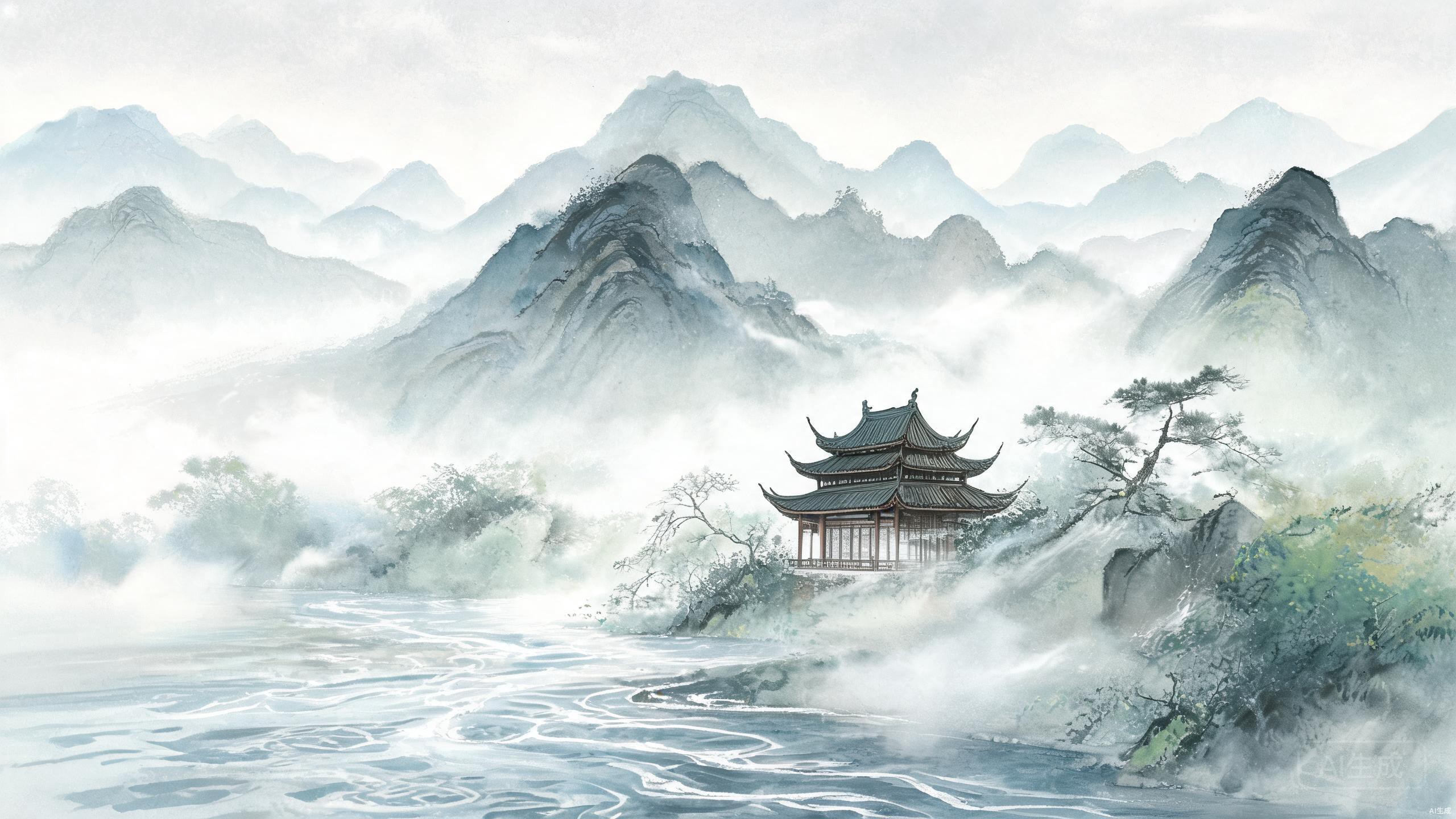
Introduction: Water Methods as Hydraulic Practice
Water holds a central position in Chinese Feng Shui theory. The classical Feng Shui text Zang Shu (Book of Burial) states that "burial rides Vital Qi," and that Qi (气) comes to rest when it encounters water — making water the essential element for the practice of Storing Wind and Gathering Qi (藏风聚气).
The Feng Shui concept of "water methods" (水法) — the observation, classification, and evaluation of waterways — became an important knowledge source for ancient Chinese hydraulic engineering. From the Dujiangyan irrigation system to the Lingqu Canal, from the Grand Canal to the Jiangnan waterway network, traces of Feng Shui thinking are visible throughout China's ancient water works.
The fusion of Feng Shui and hydraulic engineering reflects the practical application of the ancient Chinese philosophy of Unity of Heaven and Humanity (天人合一) in engineering practice. This article systematically examines how Feng Shui principles manifested in ancient water management projects from a historical perspective.
Cultural Context: In Feng Shui, water is far more than a physical resource — it symbolizes wealth, flow, and the circulation of fortune. The observation of rivers, lakes, and springs was never purely technical; it was inseparable from cosmological beliefs about how natural features shape human destiny.
Overview of Feng Shui Water Methods
The Core Content of Water Methods
The "water methods" of Feng Shui involve observing and evaluating the shape, direction, water quality, and flow speed of waterways — including rivers, lakes, and springs. Feng Shui practitioners classify water into "auspicious water" (吉水) and "inauspicious water" (凶水).
Auspicious water standards include:
- Curving or meandering flow
- Gentle flow speed
- Clear water quality
- Bright water color
Inauspicious water standards include:
- Straight, rushing flow
- Turbulent, rapid current
- Muddy water quality
- Dark, murky color
Although these standards carry a mystical veneer, they actually encode rational observation of waterway morphology and quality.
Quick Tip: Notice how "auspicious" water in Feng Shui description sounds remarkably like what modern hydraulic engineers recommend — slower, curving flow reduces erosion and improves water quality. Ancient wisdom often anticipated modern science.
Hydraulic Wisdom Within Water Methods
Feng Shui water theory contains a wealth of hydraulic insight:
- "Water should curve": Feng Shui holds that curving water gathers Qi. In hydraulic engineering, curving channels reduce flow velocity and scouring force, which helps flood control and irrigation.
- "Water should be clear": Clear water indicates low sediment content, which prolongs the operational life of water infrastructure.
- "Water should embrace": Water that "embraces" — flowing around rather than rushing straight — reduces bank erosion and stabilizes levees.
These principles demonstrate how Feng Shui's metaphysical observations translated into practical engineering benefits.
Feng Shui Applications in Ancient Water Engineering
The Feng Shui Wisdom of Dujiangyan
Dujiangyan is a monumental irrigation system built during the Warring States period under the supervision of Li Bing (李冰) and his son, the governors of Shu Commandery for the state of Qin. Remarkably, it remains operational today — over 2,200 years later.
The design of Dujiangyan embodies the water method wisdom of Feng Shui theory. The Fish Mouth Levee (鱼嘴) divides the Min River into an inner channel for irrigation and an outer channel for flood discharge. This "diversion" design aligns with the Feng Shui principle that "water should divide" — concentrated flow is considered inauspicious, while distributed flow "gathers Qi."
The Flying Sand Weir (飞沙堰) acts as a spillway that uses the natural "curve principle" of flowing water to flush sediment into the outer channel, keeping the inner channel clear. This embodies the Feng Shui requirement that "water should be clear."
The Feng Shui Considerations of the Lingqu Canal
The Lingqu Canal was built during the Qin Shi Huang era to connect the Xiang River and the Li River — linking the Yangtze River system with the Pearl River system. Its routing and design carefully considered topographical and hydrological features.
The canal's route traverses the Yuecheng Ridge (越城岭), the watershed divide between the two river systems. By exploiting the natural elevation difference and engineering features like the "Ploughshare Dike" (铧嘴) and the "Great and Small Balance Weirs" (大小天平), the project achieved inter-basin water transfer.
From a Feng Shui perspective, the canal's location at the Dragon Vein's "narrow pass" (过峡) — the low point between two waterways — allowed it to harness the principle of "drawing water." The canal's "water gate" (水门) design also aligns with the Feng Shui theory of Water Mouth (水口) — controlling water inlets and outlets to regulate flow volume.
Quick Tip: The concept of "water gates" — controlling water entry and exit — is essentially the same principle modern engineers use with sluice gates and check dams. The language differs; the hydraulic logic is identical.
The Feng Shui Philosophy of the Grand Canal
The Beijing-Hangzhou Grand Canal is the world's longest ancient canal, stretching approximately 1,794 kilometers and connecting Beijing to Hangzhou. Its planning reflects the Feng Shui concept of "water veins" (水脉).
The canal's route incorporates multiple natural rivers — including the Hai, Yellow, Huai, Yangtze, and Qiantang rivers — linking them through artificial channels to form a north-south "water vein" system. Its lock (水闸) design regulates water levels and flow speed, embodying the Feng Shui water method principle of "Storing Wind and Gathering Qi" through controlled water flow.
The Feng Shui Layout of the Jiangnan Water Network
The Jiangnan region (Yangtze River Delta) is one of the most hydraulically developed regions in ancient China. The formation of its water network is closely tied to Feng Shui theory.
Villages and towns throughout Jiangnan typically developed along riverbanks, creating the iconic "water town" (水乡) landscape. In constructing this water network, Feng Shui water methods were widely applied:
- Curving, graceful channel routes that form an "embracing" configuration
- Hierarchical water systems with main channels, branch channels, and irrigation ditches organized as a clear "water vein" hierarchy
This Feng Shui-based layout satisfied practical irrigation needs while simultaneously creating the celebrated aesthetic beauty of the Jiangnan water towns.
Feng Shui and Water Engineering Site Selection
Feng Shui Considerations in Dam Site Selection
In ancient water engineering, the selection of dam sites (called weirs, barriers, or sluices) was a critical decision. When Feng Shui practitioners participated in dam site selection, they evaluated:
- Topographical stability
- Water system abundance
- Water quality and cleanliness
- Flow suitability
These factors were essential for dam safety and operational efficiency. For example, ancient builders chose narrow channel sections with stable rock foundations — locations that Feng Shui termed the Water Mouth (水口), the "locking point" of water flow and a key position for "gathering Qi."
Feng Shui Principles in Canal Routing
Ancient canals — both irrigation and drainage — were also influenced by Feng Shui theory. When planning canal routes, Feng Shui practitioners followed the principle of "following the terrain" (顺地势). Canals were aligned with the natural rise and fall of the land, avoiding "inauspicious" terrain such as steep slopes and cliffs.
This "follow the terrain" approach had clear practical value: it minimized earthwork volumes, reduced construction costs, and improved structural stability.
Feng Shui and Flood Prevention
Flood Prevention Wisdom in Feng Shui
Feng Shui water methods contain substantial flood prevention insight. Practitioners paid particular attention to the "momentum" (势) of water — its strength and direction. This understanding was crucial for flood engineering.
The Feng Shui principles that "water should curve" and "water should slow" are fundamentally about velocity control: curving channels reduce flow speed and diminish the destructive force of floodwaters.
Feng Shui and Levee Construction
In ancient levee construction, Feng Shui theory also played a role. When consulting on levee alignment, practitioners considered the levee's "form" (形) and "momentum" (势):
- The levee's direction should follow the terrain's Dragon Vein
- The levee's slope should maintain Yin and Yang balance
While mystical in framing, the underlying engineering logic is sound: levees that conform to natural topography are demonstrably more stable and durable.
Feng Shui and Urban Flood Control
Ancient Chinese cities also referenced Feng Shui theory when designing flood protection infrastructure. For example, during the Song Dynasty, the flood facilities of Kaifeng were designed with "water gates" (水门) and "water cabinets" (水柜) — systems that controlled the connection between urban and external waterways to achieve flood prevention and drainage.
Beijing's city design similarly incorporated a sophisticated drainage system that used "water vein" pathways to channel rainwater and wastewater into the moat and surrounding rivers.
Quick Tip: When assessing your own home's flood resilience, apply the same ancient logic: check that water flows gently around (not through) your property, and ensure your drainage follows the natural slope of the land rather than fighting against it.
Feng Shui and Ancient Water Resource Management
Feng Shui and Water Resource Allocation
In ancient China, water resource allocation was often influenced by Feng Shui beliefs. Because water symbolized wealth (财), its distribution was seen as tied to the distribution of fortune. In some regions, allocation disputes between upstream and downstream users, or between left and right banks, were mediated through the "adjustments" of Feng Shui practitioners.
While lacking a scientific foundation, this "Feng Shui water adjustment" approach served a real social function in traditional communities — it provided a culturally accepted framework for negotiating water sharing.
Feng Shui and Water Dispute Mediation
In traditional society, water disputes (such as conflicts over water diversion or interception) were sometimes resolved by invoking the authority of Feng Shui masters. Practitioners could, for example, declare that "water rushing straight is inauspicious for both sides," persuading disputants to reach compromise.
This "Feng Shui mediation" approach could not fundamentally resolve engineering disputes, but it provided an effective culturally embedded tool for conflict resolution in traditional communities.
Conclusion: The Historical Value of Feng Shui Water Wisdom
The relationship between Feng Shui and ancient water engineering reveals the deep integration of "metaphysical cosmology" and "practical technology" in traditional Chinese hydraulic projects. Feng Shui water methods provided theoretical guidance, and practitioner consultations offered professional advisory input to engineering decisions.
This intimate relationship demonstrates how the ancient Chinese worldview of Unity of Heaven and Humanity was translated into concrete engineering practice.
In our own era — facing water scarcity and environmental degradation — revisiting the hydraulic wisdom embedded in Feng Shui offers valuable insights for exploring sustainable water resource management. The water wisdom of Feng Shui represents an important component of China's ancient cultural heritage, deserving serious study and transmission by contemporary practitioners and researchers.
Related Articles
- [[../01-风水入门/35-三合派风水入门.md|Introduction to San He School Feng Shui: Twelve Growth Stages and the Four Water Configurations]]
- [[../03-财运风水/13-水法催财详解.md|Water Methods for Wealth Enhancement: The Primary Technique of Feng Shui Wealth Activation]]
- [[../08-百科问答库/26-风水中的水代表什么?为什么水主财?.md|What Does Water Represent in Feng Shui? Why Does Water Govern Wealth?]]
- [[../09-Yin Dwelling风水/07-观水入门-风水中的水法详解.md|Introduction to Water Observation: A Detailed Guide to Feng Shui Water Methods]]