Feng Shui and Buddhist Culture: Sacred Wisdom in Temple Site Selection
Since Buddhism was introduced to China during the Han Dynasty, it has undergone profound integration with native Chinese culture over the centuries. This fusion is evident in philosophy, literature, a
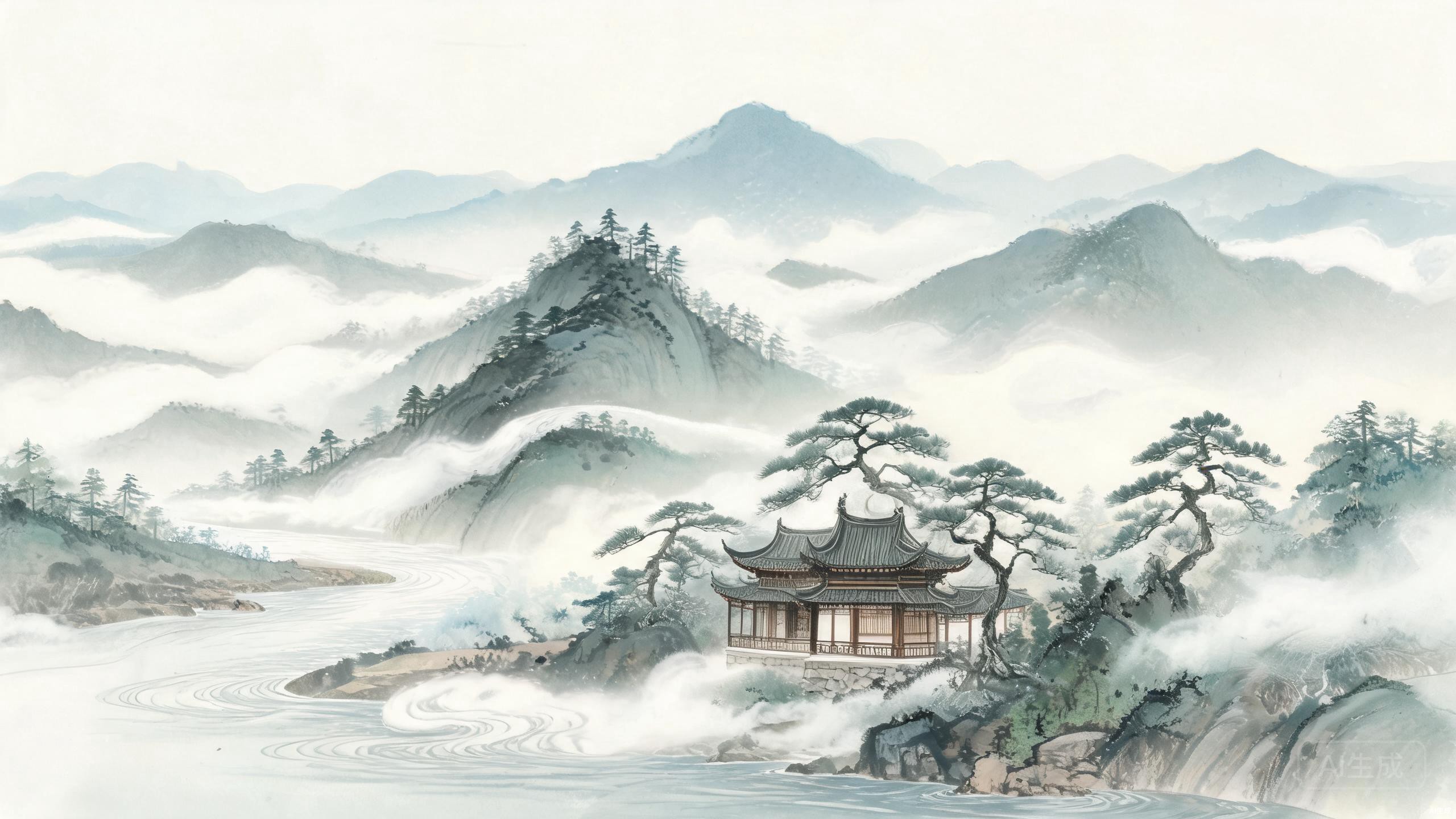
Introduction: Cultural Fusion After Buddhism Entered China
Since Buddhism was introduced to China during the Han Dynasty, it has undergone profound integration with native Chinese culture over the centuries. This fusion is evident in philosophy, literature, art, and architecture — and Feng Shui is no exception. Although Buddhism and Feng Shui hold different worldviews and values in theory, Buddhist temple site selection and construction have been deeply influenced by Feng Shui principles in practice.
Whether nestled high in sacred mountain ranges or hidden within bustling city neighborhoods, virtually every surviving Buddhist temple in China reflects Feng Shui principles in its site selection and layout. In this way, Feng Shui represents a vital dimension of how Buddhism took root in China and merged with local traditions.
Feng Shui Principles in Buddhist Temple Site Selection
Sacred Mountains and Great Monasteries
Chinese Buddhism holds the saying "Monks occupy most of the world's famous mountains" (天下名山僧占多), meaning that many renowned Buddhist temples are built atop celebrated mountain peaks. This site selection approach aligns closely with the Feng Shui principle of Mountains Embracing and Water Surrounding (山环水抱).
From a Feng Shui perspective, famous mountains typically possess vigorous Dragon Veins (龙脉), complete landscape configurations, and excellent conditions for Storing Wind and Gathering Qi (藏风聚气). Building Buddhist temples on such mountains benefits both monastic practice and the temple's spiritual vitality. China's Four Sacred Buddhist Mountains — Wutai, Emei, Putuo, and Jiuhua — are all sites with exceptional Feng Shuienergy pattern.
Wutai Mountain, located in Shanxi, features five towering peaks with majestic terrain and is celebrated for its "Five Dragons Converging" Feng Shui pattern. Emei Mountain, located in Sichuan, is renowned for its steep peaks and swirling mists, with a Feng Shui pattern known as "Golden Summit Facing the Sun." Putuo Mountain, situated in the Zhoushan Archipelago of Zhejiang, is surrounded by sea on all sides and famous for its "Buddhist Land of Sea and Sky" Feng Shui. Jiuhua Mountain, located in Anhui, features a lotus-shaped mountain form known as the "Lotus Buddhist Land." These sacred mountains were all carefully chosen for their outstanding Feng Shui configurations.
The Four Symbols Pattern in Temple Design
The Four Symbols (四象) pattern in Feng Shui — Azure Dragon (青龙) on the left, White Tiger (白虎) on the right, Vermilion Bird (朱雀) in front, and Black Tortoise (玄武) behind — has been widely applied in Buddhist temple site selection. An ideal temple location should have a main mountain behind (Black Tortoise), a facing mountain in front (Vermilion Bird), and protective mountains flanking both sides (Azure Dragon and White Tiger).
Many famous Buddhist temples conform to this pattern. For example, the Shaolin Temple in Henan is backed by Wuru Peak, faces the Shaoshi Mountain, and is flanked by protective ridges on both sides — creating an exceptional Feng Shui configuration. The Lingyin Temple in Zhejiang is similarly backed by Beigao Peak, faces the Feilai Peak, and is embraced by surrounding mountains — another true Feng Shui treasure.
Cultural Context: The Four Symbols pattern isn't merely symbolic — it corresponds to practical environmental advantages. Modern environmental science confirms that sites with mountain backing and surrounding ridges benefit from natural wind protection, optimal sunlight exposure, and stable temperatures. This makes the ancient Feng Shui ideal strikingly aligned with contemporary sustainable design principles.
This Four Symbols arrangement not only enhances the temple's defensibility and lighting but also provides monks with a tranquil, harmonious environment for spiritual practice.
Water Mouths and Temples
In Feng Shui, the Water Mouth (水口) is a crucial concept referring to the location where water flows into or out of an area. Water Mouth selection is also given careful attention in Buddhist temple placement.
Temples are typically built near abundant water sources to support the daily needs of monastic life and fire safety. At the same time, the Water Mouth design favors "affectionate" rather than "ruthless" flow — meaning water should curve and embrace the site rather than rush straight through.
Many temples construct a Release Pond (放生池) at the entrance. This serves the Buddhist principle of compassion while also fulfilling a Feng Shui function of Gathering Water. The water within these ponds is regarded as "Merit Water" (功德水), capable of accumulating good fortune and bringing blessings to the temple.
Feng Shui Considerations in Buddhist Temple Layout
The Mountain Gate and Orientation
The Mountain Gate (山门) — or Gate Hall (山门殿) — serves as the temple entrance and corresponds to the Feng Shui concept of the "Qi Mouth" (气口). The gate's orientation and position directly influence the temple's auspicious energy.
The majority of Buddhist temples have their Mountain Gates facing south, consistent with the Feng Shui principle of Sitting North Facing South (坐北朝南). A south-facing temple receives ample sunlight, benefiting the monks' physical and spiritual health. This orientation also aligns with the traditional Buddhist symbolism of "facing south to govern."
However, not all temples face south. Some temples, due to terrain constraints, must orient their gates differently. In such cases, Feng Shui practitioners assess the specific landscape and water configuration to determine the optimal gate orientation.
Central Axis and Hall Arrangement
Buddhist temple layouts typically employ a Central Axis Symmetry (中轴对称) arrangement, with the principal halls — Mountain Gate, Heavenly Kings Hall, Mahavira Hall (Main Buddha Hall), Dharma Hall, and Sutra Library — aligned sequentially along the central axis. This arrangement aligns with the Feng Shui principle of "Central Correctness" (中正).
The central axis represents the temple's "Dragon Vein." Buildings along this axis gradually rise in height from south to north, forming an ascending "Dragon Spine" that symbolizes the temple's flourishing spiritual energy and the propagation of Buddhist teachings. Structures flanking the central axis — such as the Bell Tower, Drum Tower, side halls, and monks' quarters — are arranged symmetrically, creating the pattern of "Left Assistant and Right Helper" (左辅右弼).
The Relationship Between Pagodas and Halls
Pagodas (佛塔) are a defining feature of Buddhist architecture and carry special Feng Shui significance. Pagodas are typically located along the temple's central axis or on either side of it. In Feng Shui, pagodas are regarded as tools for "suppressing Sha Qi" (镇煞), capable of neutralizing unfavorable Feng Shui factors.
Some temples place pagodas atop mountain peaks or at Water Mouths, serving as "Literary Peak Pagodas" (文峰塔) or "Water-Suppressing Pagodas" (镇水塔) with protective functions. These pagodas hold both religious meaning and Feng Shui significance, exemplifying the integration of Buddhist architecture and Feng Shui practice.
The Evolution of Buddhism-Feng Shui Relations
Early Buddhism's Attitude Toward Feng Shui
When Buddhism first entered China, it held a dismissive attitude toward Feng Shui. Buddhism teaches that human destiny is determined by karmic cause and effect, not by geographical environment. The Feng Shui concept of "ancestral blessings benefiting descendants" conflicted with Buddhism's doctrine of "self-created, self-received" karmic consequences.
However, as Buddhism developed in China, it gradually began to accept and integrate Feng Shui content to meet the needs of Chinese society. By the Tang Dynasty, Feng Shui principles had become widely adopted in Buddhist temple site selection and construction.
The Fusion of Zen Buddhism and Feng Shui
The Chan (Zen) School represents the most thoroughly Chinese form of Buddhism and the deepest fusion of Buddhist and Feng Shui traditions. Chan Buddhism emphasizes "pointing directly to the mind, seeing one's nature to become Buddha" — a philosophy that resonates intrinsically with Feng Shui's concept of Unity of Heaven and Humanity (天人合一).
Chan temple site selection places particular emphasis on natural environment. Chan monks favor building temples in locations with beautiful scenery and tranquil surroundings for spiritual practice. This "Mountain-Water Zen" (山水禅) approach aligns closely with the Feng Shui ideal of Mountains Embracing and Water Surrounding. Many famous Chan temples — such as Lingyin Temple in Hangzhou, Tiantong Temple in Ningbo, and Zhaojiue Temple in Chengdu — are situated in locations with exceptional Feng Shui.
Tibetan Buddhism and Feng Shui
The spread of Tibetan Buddhism across Tibet, Qinghai, and Sichuan has also merged with local Feng Shui culture. Tibetan Buddhist monastery site selection similarly emphasizes landscape patterns and directional orientation.
The Tibetan Buddhist concept of the "Mandala" (坛城) shares similarities with the Feng Shui "Nine Palaces" (九宫) layout. The Mandala represents the palace of Buddhas and Bodhisattvas, with arrangements emphasizing symmetry and order that reflect the Buddhist cosmology. This approach aligns with the Feng Shui principles of Central Correctness and Symmetry.
Case Studies: Feng Shui in Famous Buddhist Temples
Shaolin Temple on Mount Song
Located beneath Wuru Peak of Mount Song in Dengfeng, Henan, the Shaolin Temple is the ancestral home of Chan Buddhism and the birthplace of Shaolin martial arts. Its site selection demonstrates the subtleties of Feng Shui mastery.
The temple is backed by Wuru Peak, a majestic extension of Mount Song with a vigorous Dragon Vein. It faces Shaoshi Mountain, whose desk-like form creates the "Desk Mountain" (案山) pattern. Flanking mountains form the Azure Dragon and White Tiger guardians. Before the temple, the Shaoxi River flows in a gentle embrace, creating the "Jade Belt Water" (玉带水) pattern. This Mountains Embracing and Water Surrounding configuration makes Shaolin Temple a true Feng Shui treasure.
Lingyin Temple in Hangzhou
Lingyin Temple, situated beneath Beigao Peak in the western part of West Lake in Hangzhou, is one of China's most celebrated Buddhist temples. Its site selection equally demonstrates masterful Feng Shui application.
The temple is backed by Beigao Peak, one of West Lake's principal mountains with a towering form and vigorous Dragon Vein. It faces Feilai Peak, a distinctive limestone formation that creates the "Facing Mountain" (朝山) pattern. Surrounding mountains form the Azure Dragon and White Tiger guardians. Before the temple, the Cold Spring Stream flows with crystal-clear water, creating the Jade Belt Water pattern. Lingyin Temple's Feng Shui configuration bears striking resemblance to that of Shaolin Temple.
Conclusion
The relationship between Feng Shui and Buddhist culture represents an important subject in the study of Chinese religious culture. The site selection and layout of Buddhist temples have been profoundly influenced by Feng Shui, reflecting the deep integration of Buddhism with native Chinese traditions. From the placement of mountain monasteries to the arrangement of temple architecture and the relationship between pagodas and halls, Feng Shui principles permeate every aspect of Buddhist building design.
In contemporary society, the Feng Shui culture of Buddhist temples retains significant research value. It reflects not only the Feng Shui wisdom of ancient Chinese architecture but also the process of Buddhist integration with traditional Chinese culture. Studying temple Feng Shui helps us better appreciate the diversity and inclusiveness of Chinese religious culture.
How to Apply These Lessons Today
Even if you don't live near a sacred mountain or ancient temple, you can draw inspiration from Buddhist temple Feng Shui principles:
- Create a backing: Position your home's most important room (like a home office or bedroom) with a solid wall behind it — your personal "Black Tortoise"
- Open a clear view ahead: Ensure a clear, uplifting view from your main living areas — your personal "Vermilion Bird"
- Balance left and right: Keep protective, grounding elements (tall furniture, plants) on both sides of key spaces
- Invite water mindfully: Incorporate a small water feature, aquarium, or fountain that curves gently rather than rushes
- Maintain symmetry: Arrange important furniture along a central axis to create harmony and visual stability
Quick Tips:
- The "four sides embrace, center gathers" principle applies to any space — even a small apartment benefits from having defined "protection" on multiple sides
- Quality of light matters as much as quantity — Buddhist temples prioritize soft, even illumination, which you can replicate with sheer curtains and warm lighting
- Even in dense urban settings, creating a dedicated "stillness point" (a small altar, meditation corner, or quiet reading nook) honors the Buddhist principle of sacred space
Related Articles
- [[../01-风水入门/10-风水常见误区澄清.md|Common Feng Shui Misconceptions: Distinguishing Superstition from Science]]
- [[../01-风水入门/51-风水测量工具大全.md|Complete Guide to Feng Shui Tools: From Traditional to Modern]]
- [[../02-家居风水/33-阳台风水植物.md|Balcony Feng Shui Plants: Greenery for Wealth and Sha Remedy]]
- [[../02-家居风水/16-南北通透户型的风水.md|South-North Through-Type Apartments: Feng Shui Advantages and Layout Optimization]]