Feng Shui and Ecology: The Ecological Wisdom Hidden in Feng Shui Landscape Patterns
Although Feng Shui (风水) may appear shrouded in mystery on the surface, its core principle — selecting and creating environments suitable for human habitation — shares a remarkable similarity with mode
Introduction: Ecological Thought in Feng Shui
Although Feng Shui (风水) may appear shrouded in mystery on the surface, its core principle — selecting and creating environments suitable for human habitation — shares a remarkable similarity with modern ecology. Concepts such as "Mountains Embracing and Water Surrounding" (山环水抱), "Storing Wind and Gathering Qi" (藏风聚气), and "Adapting to Local Conditions" (因地制宜) actually reflect ancient people's deep understanding of ecological environments and their wisdom in adapting to nature.
From the perspective of modern ecology, Feng Shui can be understood as a "pre-scientific" theory of environmental selection. While it lacks the precise measurements and experimental validation of modern science, its methods of observing and classifying natural environments, along with its understanding of the relationship between humans and nature, contain many sound ecological principles.
Cultural Context: Modern scholars often position Feng Shui as a "proto-science" — a body of empirical knowledge developed through thousands of years of observation before formal scientific methods existed. Much like Traditional Chinese Medicine, its insights were recorded in philosophical and symbolic language rather than statistical models, yet many of its practical recommendations align with contemporary environmental science.
Ecological Principles in Feng Shui Patterns
The Ecological Benefits of "Mountains Embracing and Water Surrounding"
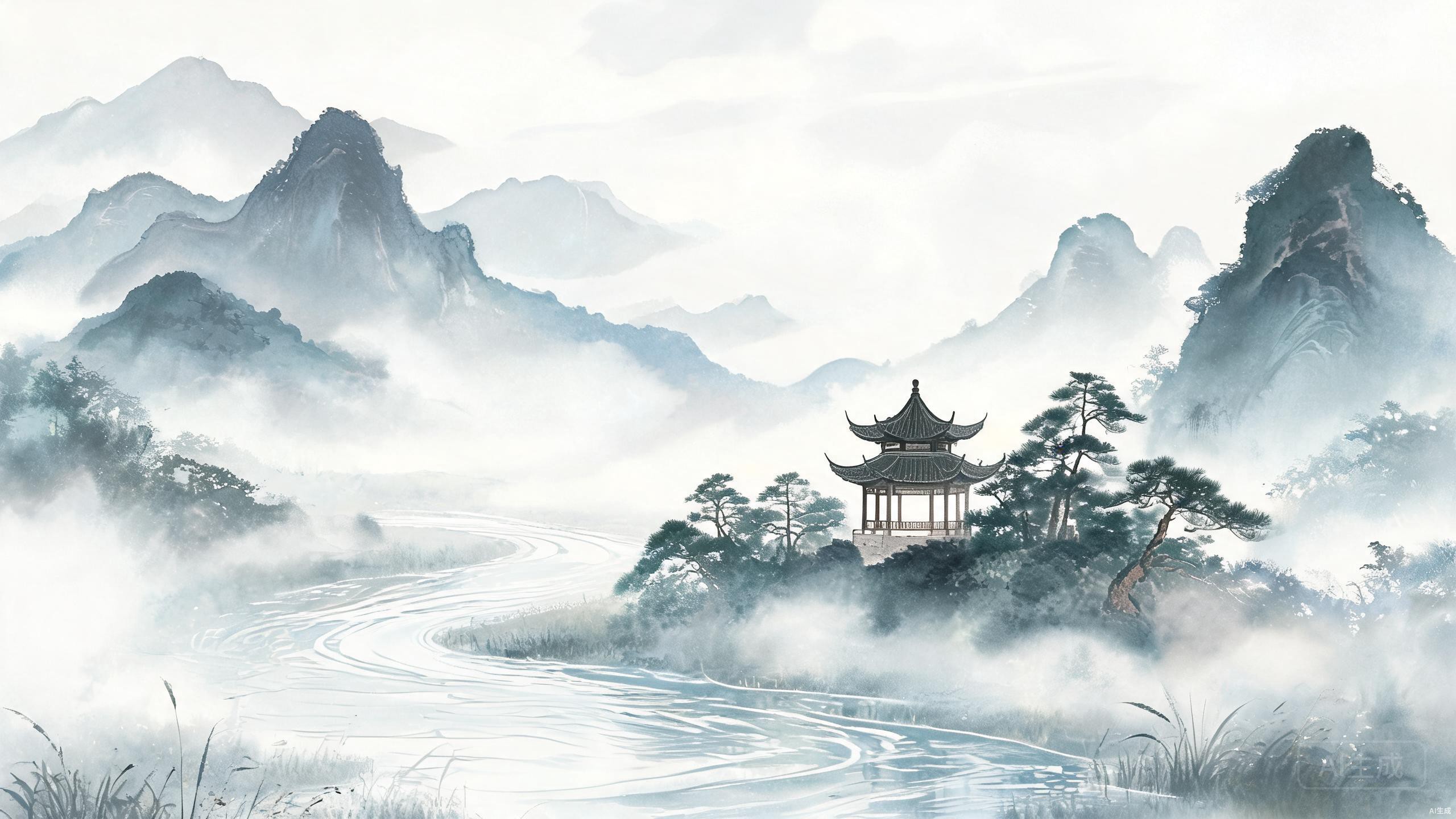
The most ideal Feng Shui pattern is "Mountains Embracing and Water Surrounding" (山环水抱) — backing onto mountains, facing water, with protective hills on both sides. From a modern ecological standpoint, this configuration offers several significant benefits:
First, climate regulation. Mountains behind the site block cold winter winds, while water in front provides cooling breezes during summer. This arrangement helps regulate the local microclimate, creating a living environment that is warm in winter and cool in summer.
Second, water security. Proximity to water sources facilitates daily household use and agricultural production. Additionally, water evaporation increases air humidity, improving the local microclimate.
Third, drainage and flood prevention. Sites with mountains in the back typically sit at higher elevations, which aids natural drainage and prevents flooding. The mountain mass also absorbs and stores rainwater, reducing surface runoff and serving as a natural water reservoir.
The Environmental Meaning of "Storing Wind and Gathering Qi"
The Feng Shui concept of "Storing Wind and Gathering Qi" (藏风聚气), viewed through the lens of modern environmental science, essentially describes selecting locations that are sheltered from wind while maintaining good air circulation.
Cultural Context: In Feng Shui theory, Qi (气) is the vital life force believed to flow through landscapes and living spaces. While modern science doesn't recognize Qi as a measurable energy, the environmental principles behind "storing and gathering" Qi — such as wind protection, humidity balance, and gentle air circulation — align closely with what environmental scientists call "microclimate optimization."
"Storing Wind" does not mean eliminating wind entirely — it means avoiding the direct impact of strong winds. Powerful winds bring cold and dryness, accelerate soil erosion, and increase moisture evaporation, all of which are detrimental to agriculture and human habitation. By choosing sheltered locations or using terrain and vegetation to block harsh winds, an ideal living microclimate can be created.
"Gathering Qi" does not simply mean collecting stagnant Qi — it means creating an environment that promotes healthy Qi exchange. In a "Mountains Embracing and Water Surrounding" pattern, Qi naturally circulates between mountains and water, allowing fresh air to enter while drawing stale Qi away.
Protecting Biodiversity
The Feng Shui concept of "Dragon Vein" (龙脉, long mai) actually reflects ancient understanding of ecosystem integrity. Feng Shui teaches that a Dragon Vein cannot be "broken" — the continuity of mountain ranges must be preserved. If a Dragon Vein is severed, Qi will disperse and the Feng Shui pattern will be destroyed.
Cultural Context: The Dragon Vein is one of Feng Shui's most poetic metaphors — describing the vital energy that flows through mountain ranges like blood through arteries. While the language is symbolic, the underlying principle points to something scientifically real: habitat connectivity. Fragmented landscapes lose their ability to support wildlife and healthy ecosystems.
From a modern ecological perspective, protecting the continuity of mountain ranges actually preserves ecological corridors — pathways that allow plants and animals to migrate, breed, and maintain genetic diversity. Similarly, the Feng Shui concept of "Protecting Sand" (护砂), which emphasizes preserving vegetation on hillsides, supports soil retention and biodiversity conservation.
Ecological Wisdom in Feng Shui Practice
Protecting and Using Water Systems
Feng Shui places great importance on the protection and wise use of water systems. The "Water Methods" (水法) of Feng Shui emphasize safeguarding water sources, purifying water quality, and utilizing water resources rationally.
In traditional villages, Feng Shui practitioners typically guided residents to protect the water source forests at the village entrance, prohibiting tree cutting to prevent soil erosion. Practitioners also advised the construction of irrigation channels and ponds to make rational use of water — meeting both production and domestic needs while beautifying the environment.
This philosophy of "protecting water sources and using them wisely" is fully consistent with modern water conservation principles. In traditional society, Feng Shui actually served as a practical framework for protecting water resources and maintaining ecological balance.
Protecting and Planting Vegetation
Feng Shui also places strong emphasis on protecting and cultivating vegetation. Practitioners believe that vegetation is the "hair of the Dragon Vein" and the outward manifestation of Vital Qi (生气, sheng qi); places with lush vegetation are generally considered to have good Feng Shui.
In traditional villages, Feng Shui practitioners typically guided villagers to plant trees at strategic locations — the village entrance, behind the village, and near the Water Mouth (水口, shui kou) — creating what became known as "Feng Shui Forests" (风水林). These forests served multiple functions: windbreak, sand fixation, water conservation, environmental beautification, and climate regulation.
In some traditional villages in southern China, Feng Shui forests were strictly protected and harvesting was forbidden. Although this custom carried superstitious overtones, it objectively served to protect forests and maintain ecological balance for generations.
Ecological Considerations in Building Site Selection
Feng Shui principles for building site selection incorporate numerous ecological considerations. For example, the emphasis on "Back to Mountain Facing Water" (背山面水, bei shan mian shui) is essentially about selecting building locations that optimize sunlight, ventilation, and warmth.
"Backing to a mountain" blocks cold winter winds and reduces the energy needed for heating. "Facing water" provides cooling summer breezes and lowers cooling demands. This "passive" energy-efficient design philosophy aligns directly with modern "green building" principles.
Feng Shui also emphasizes "Facing South" (朝阳) — buildings should face southward to receive ample sunlight. Abundant sunshine benefits occupant health while reducing the energy needed for lighting and heating.
How to Apply These Ecological Principles Today
Even in modern apartments and suburban homes, you can incorporate Feng Shui's ecological wisdom:
- Maximize natural light: Position your main living areas and desk to receive southern or southeastern sunlight whenever possible
- Manage airflow: Use furniture, screens, and plants to slow harsh drafts while maintaining gentle air circulation
- Protect and add greenery: Preserve existing mature trees around your home and add plants that improve air quality
- Conserve water mindfully: Choose drought-tolerant landscaping and consider rainwater collection features
- Respect natural topography: When renovating or landscaping, work with the natural slope of your land rather than against it
Quick Tips:
- A south-facing window is Feng Shui's and energy efficiency's best friend — capture free solar warmth in winter
- Houseplants in groups of three or more create a "mini forest" that improves air quality and adds life energy to your space
- Avoid removing large mature trees without careful thought — they take decades to replace and provide irreplaceable ecological benefits
Mutual Validation: Feng Shui and Ecology
Landscape Ecology and Feng Shui Patterns
Landscape ecology studies the relationship between landscape patterns and ecological processes. From this perspective, the Feng Shui "Four Symbols" (四象, si xiang) arrangement — Azure Dragon on the left, White Tiger on the right, Vermilion Bird in front, Black Tortoise behind — represents an ideal landscape configuration.
Cultural Context: The Four Symbols (青龙、白虎、朱雀、玄武) are the four celestial guardians of Chinese cosmology, each associated with a direction, season, and element. In Feng Shui, they represent the protective energies that should surround an ideal dwelling — a balanced harmony of all natural forces.
Ecologists call this kind of configuration an "edge effect" zone — the transitional area between different ecosystems. Edge zones typically support higher biodiversity and richer resources, making them ideal locations for human settlement. The Feng Shui "Four Symbols" pattern deliberately selects these edge zones, demonstrating ancient people's sophisticated understanding of landscape ecology.
Environmental Psychology and Feng Shui
Environmental psychology studies the relationship between environments and human psychological behavior. From this perspective, many Feng Shui principles help create comfortable, safe, and aesthetically pleasing living environments.
The "Storing Wind and Gathering Qi" arrangement evokes feelings of safety and belonging. A mountain at the back provides security; water in front creates openness; protective hills on both sides offer a sense of shelter. Environmental psychologists call this a "prospect and refuge" configuration — the dwelling pattern most preferred by humans across cultures.
The Feng Shui principle of "Central Axis Symmetry" (中轴对称) creates feelings of order and stability. Buildings along the central axis rise gradually from low to high, producing a psychological impression of "rising step by step" — a subtle influence that benefits occupants' mental well-being.
Quick Tip: To apply "prospect and refuge" in your home, arrange your bedroom or home office with a solid wall behind you and a view of the room or a window in front. This subconscious arrangement helps you feel both safe and alert — ideal for rest and focused work.
The Modern Value of Feng Shui's Ecological Wisdom
Insights for Eco-City Development
The ecological wisdom embedded in Feng Shui offers important insights for modern eco-city construction. Principles such as "Mountains Embracing and Water Surrounding," "Storing Wind and Gathering Qi," and "Adapting to Local Conditions" resonate with contemporary concepts like "ecological corridors," "green infrastructure," and "low-carbon cities."
In urban planning, drawing on Feng Shui's ecological wisdom to preserve natural mountain-water patterns, build ecological corridors, and create livable microclimates represents a vital direction for modern eco-city development.
Significance for Traditional Village Preservation
The ecological wisdom of Feng Shui also holds significant value for preserving traditional villages. Many traditional villages were sited and laid out according to Feng Shui principles, representing generations of accumulated experience in adapting to natural environments.
When protecting traditional villages, it is essential to preserve not only the buildings themselves but also the surrounding mountain-water patterns and ecological environment — maintaining the harmony between the village and its natural setting. Only in this way can we truly safeguard both the historical and ecological value of traditional settlements.
Conclusion
The relationship between Feng Shui and ecology provides an important window for dialogue between traditional Chinese culture and modern science. Although the ecological wisdom embedded in Feng Shui is expressed in a simple, unscientific form, its rational components offer meaningful insights for modern environmental protection and sustainable development.
In contemporary society, we should reexamine Feng Shui's ecological wisdom with a scientific attitude — extracting its essence and discarding its dross — so that this ancient cultural heritage can play a positive role in the modern world. This represents both ainheritance of traditional culture and a contribution to modern ecological civilization.
Quick Tips:
- Study the Feng Shui layout of traditional villages you visit — their siting often reveals brilliant environmental adaptations
- When planning new construction or landscaping, ask: where does the wind come from? Where does water naturally flow? Where does sunlight fall? These three questions echo Feng Shui's most ancient principles
- Remember that Feng Shui's ecological wisdom is a dialogue between past and present — not superstition to be dismissed, nor dogma to be followed blindly
Related Articles
- [[../06-风水文化与历史/60-风水学的未来展望.md|The Future of Feng Shui Studies]]
- [[../06-风水文化与历史/08-风水与科学的关系.md|Feng Shui and Science: Exploring Geography, Meteorology, and Ecology in Feng Shui]]
- [[../01-风水入门/10-风水常见误区澄清.md|Feng Shui Myths Debunked: Separating Superstition from Science]]
- [[../01-风水入门/51-风水测量工具大全.md|Complete Guide to Feng Shui Tools: From Traditional to Modern Equipment]]