Feng Shui and Science: Geography, Meteorology, and Ecology Principles Behind Ancient Practice
## I. The Ongoing Debate: Feng Shui and Science The relationship between Feng Shui and modern science has been debated in academic circles for nearly a century. One camp dismisses Feng Shui as mere "s
Feng Shui and Science: The Geography, Meteorology, and Ecology Principles Hidden in Ancient Wisdom
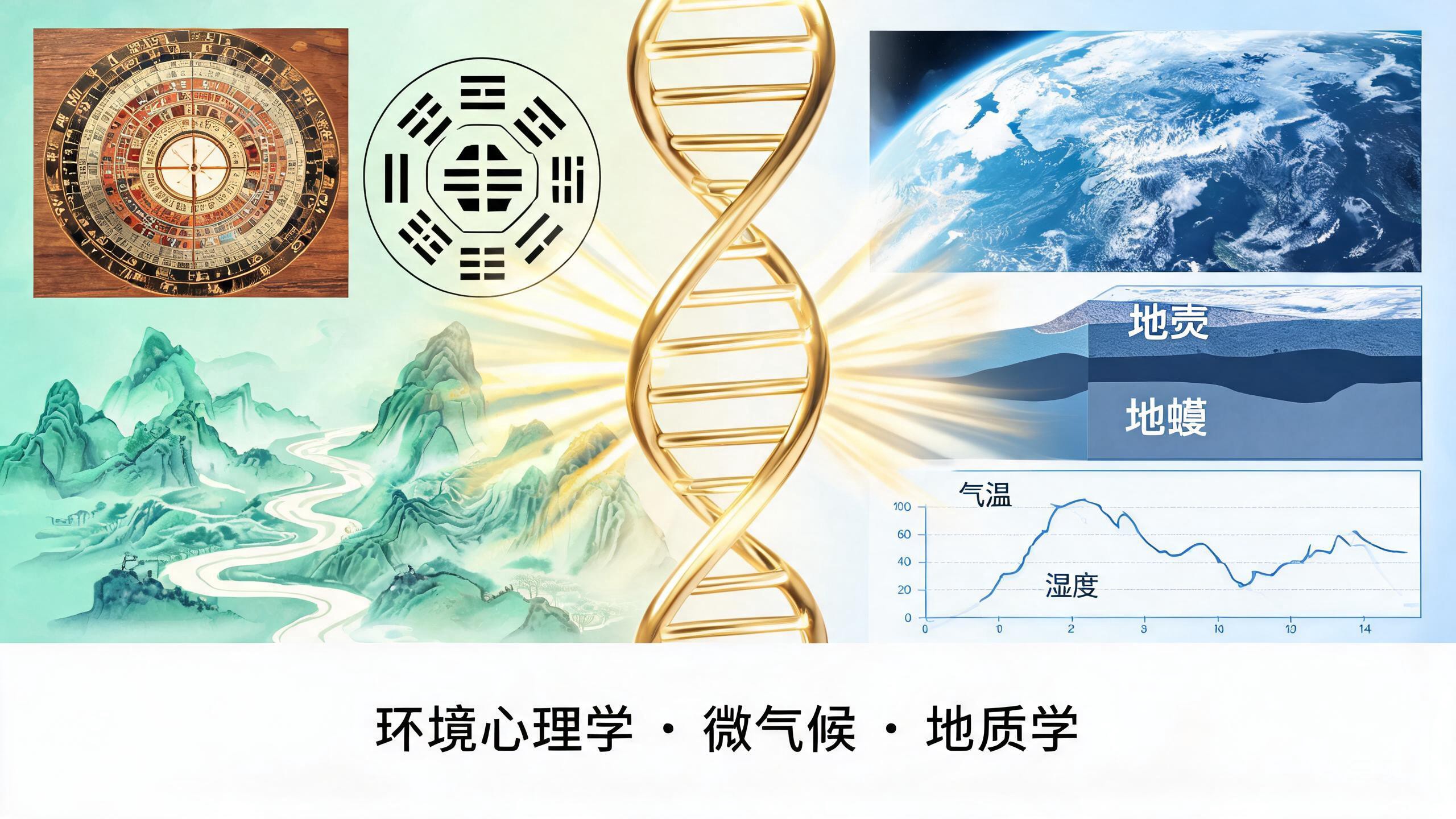
I. The Ongoing Debate: Feng Shui and Science
The relationship between Feng Shui and modern science has been debated in academic circles for nearly a century. One camp dismisses Feng Shui as mere "superstition" with no scientific value. The other elevates it as "ancient environmental science," rich with principles that align remarkably with modern disciplines.
Taking an objective view, while Feng Shui does contain elements that cannot be verified by contemporary science, its core — the selection and optimization of living environments — genuinely incorporates principles from geography, meteorology, ecology, architecture, and other scientific fields. These principles represent thousands of years of accumulated human experience and hold significant practical value.
Cultural Context: Modern researchers increasingly recognize that traditional Chinese practices often encoded sophisticated environmental observations long before modern instruments existed. What ancient Feng Shui masters identified empirically, modern science can now explain through physics, geology, and climatology.
II. Geographic Principles in Feng Shui
1. Terrain Selection and Geological Safety
Feng Shui emphasizes terrain configurations like "Back to Mountain Facing Water" and "Mountains Embracing and Water Surrounding." These recommendations rest on solid geographic reasoning:
| Feng Shui Principle | Geographic Principle | Scientific Explanation |
|---|---|---|
| Backing onto a mountain | Geological stability | Mountain bases have more stable geological structures and lower landslide risk |
| Facing open plains | Wide field of view | Open sightlines aid observation, defense, and agricultural production |
| Protection on both sides | Micro-terrain shelter | Hills on either side block wind, prevent floods, and stop landslides |
| Avoiding fault zones | Geological safety | Fault zones are earthquake-prone; Feng Shui calls this "Dragon Vein severance" |
| Choosing high ground | Flood and moisture prevention | Elevated sites avoid flooding and groundwater intrusion |
2. Soil Quality Testing
Feng Shui places great importance on "xiang tu" (examining soil) — literally assessing the quality of the land. Ancient Feng Shui masters would dig test pits and even taste the soil to judge its quality, a method strikingly similar to modern geological soil testing:
- Soil color assessment: Feng Shui considers yellow, moist earth to be excellent, while black, foul-smelling soil is inauspicious. Modern soil science confirms that fertile soil appears yellowish-brown, while soil contaminated with excess organic matter or pollutants turns dark and emits odors.
- Soil compaction: Feng Shui holds that soil that is too loose or too compact is unsuitable for building. Modern geotechnical engineering likewise requires foundation soils to have appropriate bearing capacity.
- Water table assessment: Feng Shui emphasizes that groundwater levels should not be too high. Modern architecture similarly recognizes that high water tables undermine foundation stability and cause indoor dampness.
3. Water Quality Analysis
Feng Shui's assessment of water quality also has scientific foundations:
| Feng Shui Judgment | Scientific Basis |
|---|---|
| Clear water is auspicious | Clear water indicates an unpolluted source |
| Murky water is inauspicious | Turbid water may contain sediment or pollutants |
| Sweet water is auspicious | Pleasant-tasting water has balanced mineral content |
| Bitter water is inauspicious | Bitter water may contain harmful minerals |
| Moderate water temperature is auspicious | Water that is too cold or too hot is unsuitable for drinking and daily life |
III. Meteorological Principles in Feng Shui
1. Wind Direction and Sunlight Exposure
One of Feng Shui's most fundamental principles — "Sitting North Facing South" — aligns perfectly with meteorological science:
Wind Protection:
- In most of China, cold northerly winds prevail during winter
- A mountain barrier to the north effectively blocks winter's harsh winds
- The essence of "Storing Wind and Gathering Qi" is creating a sheltered microclimate
Solar Gain:
- A south-facing orientation maximizes winter sunlight absorption
- South-facing homes stay warm in winter while deep eaves block the high summer sun
- Abundant sunlight kills bacteria, reduces moisture, and supports occupant health
2. Microclimate Regulation
Feng Shui's ideal of "Mountains Embracing and Water Surrounding" creates favorable microclimates through measurable meteorological effects:
| Feng Shui Configuration | Meteorological Effect |
|---|---|
| Mountain backing | Blocks winter winds and reduces wind speed |
| Water in front | Water bodies moderate temperature — cooling in summer, insulating in winter |
| Protection on both sides | Reduces wind damage and forms a warm microclimate zone |
| Surrounding vegetation | Purifies air, regulates humidity, and dampens noise |
3. The Scientific Interpretation of "Storing Wind and Gathering Qi"
What Feng Shui calls "Qi" can be understood through meteorological parameters:
- Temperature: Comfortable temperature is the expression of "gathered Qi"
- Humidity: Moderate humidity is the expression of "moist Qi"
- Airflow: Gentle airflow is the expression of "flowing Qi"
- Light: Abundant light is the expression of "prosperous Qi"
"Storing Wind and Gathering Qi" therefore means creating a microclimate with comfortable temperature, moderate humidity, gentle airflow, and abundant light.
Quick Tips:
- Stand in your home during different seasons and notice how temperature, humidity, and airflow feel — these are your Qi
- If you feel drafts in winter, you may be missing the "mountain" protection principle
- Rooms with little natural light often feel energetically "stagnant" — the same warning Feng Shui gives
IV. Ecological Principles in Feng Shui
1. Ecosystem Balance
Feng Shui's emphasis on coordinating "Dragon, Acupoint, Sand, and Water" describes what is essentially a complete ecosystem:
- Dragon (mountain ranges): Provides geological foundation and conserves water sources
- Sand (surrounding hills): Forms ecological buffer zones that protect the core area
- Water (rivers and streams): Maintains the water cycle within the ecosystem
- Acupoint (building site): The dwelling point within the larger ecological system
The interplay of these four elements forms a mountain–water–forest–dwelling ecological chain, reflecting the systems-thinking and holistic perspective of modern ecology.
2. Vegetation Protection
Feng Shui places significant importance on preserving vegetation:
- The mountain forest behind must not be cut: The woodland behind a home is the protective layer of the "Dragon Vein" and must not be logged. Ecologically, this preserves watershed forests and prevents soil erosion.
- No large trees directly in front of the door: Large trees block sunlight and sightlines, degrading the living environment. Ecologically, this reflects sensible management of vegetation density around buildings.
- Water Mouth forests act as locks: The forests at the Water Mouth (river outlet) are called "shui kou lin." Feng Shui considers them capable of "locking in wealth." Ecologically, these forests prevent erosion and protect riverbanks.
3. Soil and Water Conservation
Many Feng Shui practices are essentially soil and water conservation measures in disguise:
- No construction on steep slopes — prevents landslides
- Protection of water sources — maintains the water cycle
- Building bridges or pagodas at Water Mouths — stabilizes riverbanks
- Planting "Feng Shui forests" — conserves soil and water
How to Apply Ecological Feng Shui in Modern Homes
- Preserve mature trees: Keep large, healthy trees on your property — they function as your private "Dragon Vein protection"
- Create layered vegetation: Combine tall trees, shrubs, and ground cover to mimic natural mountain ecosystems
- Protect water features: Maintain any ponds, streams, or rain gardens with vegetated buffer zones
- Avoid hard surfaces near water: Allow permeable ground around water features to filter runoff naturally
V. Architectural Principles in Feng Shui
1. Spatial Organization
Feng Shui offers systematic principles for organizing architectural space:
| Feng Shui Principle | Architectural Principle |
|---|---|
| Front low, back high | Aids drainage and daylighting; respects terrain |
| Central Axis Symmetry | Creates order and hierarchy; improves spatial efficiency |
| Courtyard enclosure | Forms private space and moderates microclimate |
| Front hall, rear chambers | Clear functional zoning; separates public from private |
| Doors not aligned | Avoids Piercing Hall Sha (穿堂风); protects privacy |
2. Daylighting and Ventilation
Feng Shui's requirements for light and air align with modern architectural standards:
- South-facing windows: Maximize winter solar gain
- Fewer north-facing windows: Reduce winter heat loss
- Avoiding Piercing Hall Sha: Feng Shui considers "direct rushes" inauspicious; architecture agrees that strong through-drafts are uncomfortable
- Courtyard (天井) design: In southern Chinese architecture, courtyards serve as both light wells and ventilation shafts — a configuration Feng Shui celebrates as "Four Waters Returning to the Hall"
3. Drainage Design
Feng Shui attaches great importance to "water methods" (水法), which contain genuine drainage wisdom:
- Water entering from the northwest, exiting to the southeast: Leverages China's general topography (high in the northwest, low in the southeast) for natural drainage
- Curved waterways are auspicious: Curved channels slow water velocity and prevent erosion
- Water Mouth containment: Placing barriers at drainage outlets slows flow and prevents soil loss
VI. Psychological Principles in Feng Shui
1. Environmental Psychology
Many of Feng Shui's environmental judgments align closely with environmental psychology:
- Backing onto a solid wall or mountain: Generates a sense of security (the famous "having a backing mountain" feeling)
- Open space in front: Creates feelings of expansiveness and control
- Protection on both sides: Produces feelings of being protected and belonging
- Avoiding sharp corners aimed at you: Prevents visual oppression and unease
2. Psychological Suggestion
Some Feng Shui practices work through psychological suggestion:
- Auspicious numbers and colors can boost occupant confidence and positive emotion
- A clean, orderly environment supports mental health
- The "good Feng Shui" mindset itself can strengthen motivation and optimism
Cultural Context: Placebo effects are well-documented in modern medicine, and similar mechanisms may operate in Feng Shui. When people believe their environment is harmonious and supportive, they often behave more confidently — which can itself produce better outcomes.
VII. A Rational View of Feng Shui and Science
The Reasonable Components of Feng Shui
The valid elements of Feng Shui are primarily found in:
- Intuitive judgments about terrain, geology, hydrology, and climate
- Hard-won experience in optimizing living environments
- The pursuit of harmony between humans and nature
- Principles of spatial order and aesthetics
The Limitations of Feng Shui
Feng Shui also has clear limitations:
- Some theories lack verifiability
- Certain claims have become overly mystical and esoteric
- Different schools contradict each other
- Some practitioners exploit the system for superstition-based profit
A Scientific Attitude Toward Feng Shui
A scientifically responsible approach to Feng Shui should include:
- Take the essence: Absorb the environmental science principles embedded in Feng Shui
- Discard the dross: Reject unverifiable mystical content
- Research objectively: Study the history and cultural value of Feng Shui with academic rigor
- Test in practice: Verify Feng Shui theories through real-world results
Quick Tips for Applying Feng Shui Scientifically:
- Use Feng Shui's terrain and orientation advice as practical design guidelines, not mystical commands
- When choosing a home or office, apply the "backing, facing, embracing" logic literally — it leads to better comfort and energy efficiency
- Separate the verifiable environmental principles from the symbolic rituals; both have their place, but for different reasons
This article draws from "Ten Principles of Modern Feng Shui Studies" and aims to examine Feng Shui culture through a scientific lens for cultural research purposes.
Related Articles
- [[../01-风水入门/21-风水中的气场与磁场.md|Feng Shui Qi Fields and Magnetic Energy]]
- [[../01-风水入门/18-风水中的藏风聚气.md|The Principle of "Storing Wind and Gathering Qi"]]
- [[../08-百科问答库/01-什么是风水?风水的科学依据是什么?.md|What Is Feng Shui? What Is the Scientific Basis of Feng Shui?]]
- [[../08-百科问答库/59-什么是风水中的'气'?气如何影响人的运势?.md|What Is 'Qi' in Feng Shui? How Does Qi Influence Personal Fortune?]]