Feng Shui Classic: Qing Nang Xu — Zeng Wendan's Introduction to Xuan Kong
*Qing Nang Xu* (青囊序, Preface to the Green Satchel) is an important Feng Shui classic authored by Zeng Wendan (曾文辿), the great Tang Dynasty Feng Shui master. It serves as the introductory text of the X
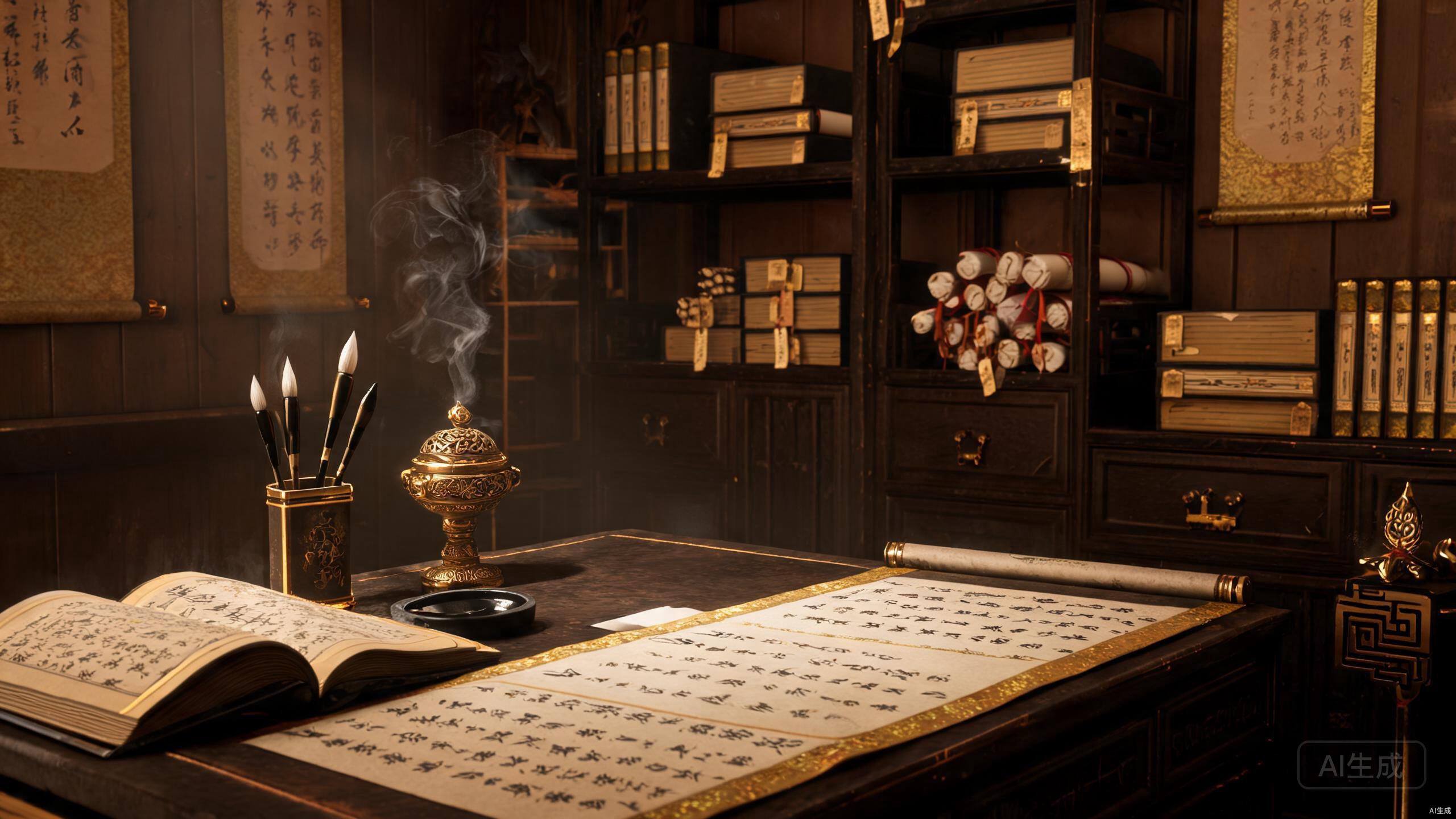
Introduction: The Place of Qing Nang Xu in Xuan Kong Feng Shui
Qing Nang Xu (青囊序, Preface to the Green Satchel) is an important Feng Shui classic authored by Zeng Wendan (曾文辿), the great Tang Dynasty Feng Shui master. It serves as the introductory text of the Xuan Kong Feng Shui school — an essential primer for anyone studying this sophisticated system.
Cultural Context: Xuan Kong Flying Stars (玄空飞星, xuán kōng fēi xīng) is one of the most technically advanced branches of Feng Shui. Unlike the Form School (Luan Tou), which focuses on visible terrain, Xuan Kong analyzes how Qi (气) shifts through time and space using a mathematical framework based on the Lo Shu square and the Three Cycles and Nine Periods.
As its title suggests, Qing Nang Xu was originally written as a preface or commentary to the Qing Nang Jing (Green Satchel Classic). However, its value far exceeds that of an ordinary preface — it is, in fact, a complete and independent theoretical treatise on Feng Shui.
In the history of Feng Shui scholarship, Qing Nang Xu is regarded as required reading for anyone seeking to master Xuan Kong Feng Shui. In concise yet powerful language, it distills the core principles of Xuan Kong theory, exerting a profound influence on the development of Xuan Kong studies in later centuries. Jiang Dahong (蒋大鸿), the great Xuan Kong master of the Qing Dynasty, elevated Qing Nang Xu alongside Qing Nang Jing and Tian Yu Jing (Classic of Heavenly Jade) as foundational Xuan Kong classics in his Di Li Bian Zheng (Correcting Geography).
The Life and Scholarly Lineage of Zeng Wendan
Who Was Zeng Wendan?
Zeng Wendan (854–916 AD), courtesy name Wentan, literary name Ruru, was a native of Yudu in Jiangxi Province during the Tang Dynasty. He was a direct disciple of Yang Yunsong (杨筠松) and an important representative of the Jiangxi Form School (Luan Tou School). According to the Ganzhou Fuzhi (Ganzhou Prefecture Gazetteer), Zeng Wendan was bright and studious from a young age, well-versed in the classics and histories. He later became a student of Yang Yunsong, studying the art of Feng Shui under him and receiving the true transmission of Yang's teachings.
Zeng Wendan's mastery in Feng Shui was extraordinary. Not only did he inherit the Luan Tou School theories of Yang Yunsong, but he also conducted deep research into the Compass School (Li Qi School, 理气派). He excelled at combining Luan Tou with Li Qi, forming his own unique scholarly style. Zeng Wendan's major works include Qing Nang Xu, the preface to Tian Yu Jing, and Xuan Nü Jing, among which Qing Nang Xu is the most celebrated.
Master-Disciple Lineage
The relationship between Zeng Wendan and Yang Yunsong represents one of the most celebrated transmission lineages in the history of Chinese Feng Shui. According to tradition, when Yang Yunsong was living in seclusion in Ganzhou, Jiangxi, Zeng Wendan heard of his reputation and traveled to become his student. Recognizing Zeng Wendan's intelligence and eagerness to learn, Yang Yunsong taught him everything he knew, passing down his lifetime of accumulated knowledge.
Zeng Wendan not only inherited Yang Yunsong's theories but also expanded upon them. He took on disciples and trained a new generation of Feng Shui practitioners, greatly extending the influence of the Jiangxi Luan Tou School. Among Zeng Wendan's disciples, the most famous was Liao Yu (廖禹), also known as Liao Jinjing (廖金精), who later became a Feng Shui master in his own right and authored works such as Xie Tian Ji (Revealing Heaven's Secrets).
Core Content of Qing Nang Xu
The Theoretical Foundation of Xuan Kong Feng Shui
Qing Nang Xu opens by laying out the theoretical foundation of Xuan Kong Feng Shui, emphasizing the temporal and spatial patterns of Qi. Zeng Wendan declared: "Xuan Kong is the pivot of heaven and earth, the mechanism of Yin and Yang's transformation." He believed that the central concern of Xuan Kong Feng Shui is the pattern of Qi across two dimensions — time and space.
On the temporal dimension, Zeng Wendan inherited and expanded the theory of Three Cycles and Nine Periods (三元九运) found in the Qing Nang Jing. He divided time into three great cycles — the Upper Cycle (上元), Middle Cycle (中元), and Lower Cycle (下元) — with each great cycle containing three smaller periods of twenty years each, for a total of nine periods. Each period carries its own Five Elements attribute and produces different auspicious or inauspicious effects. A Feng Shui practitioner must determine which period governs a building to assess the quality of its Feng Shui configuration.
On the spatial dimension, Zeng Wendan introduced the Nine Palace (九宫) directional framework, dividing space into nine regions, each associated with a number and a color. The numerical arrangement of the Nine Palaces follows the Lo Shu magic square: "Nine on top, one at the bottom, three on the left, seven on the right, two and four as shoulders, six and eight as feet, with five at the center" (戴九履一,左三右七,二四为肩,六八为足,五居中央).
Cultural Context: The Lo Shu square is one of the most ancient number patterns in Chinese cosmology. This 3×3 grid, where every row, column, and diagonal adds up to 15, was considered a map of cosmic order. Xuan Kong Feng Shui uses this pattern as the foundation for tracking how Qi moves through space and time.
The Application of Yin and Yang and Five Elements in Xuan Kong
Qing Nang Xu provides a detailed discussion of how Yin and Yang and the Five Elements are applied within Xuan Kong Feng Shui. Zeng Wendan introduced the concept of "Reversed Five Elements" (五行颠倒), arguing that the Five Elements are not applied through simple one-to-one correspondence in Feng Shui but must be "reversed" and "transformed" according to specific circumstances.
Zeng Wendan also introduced the method of "Star Sequencing" (挨星), which uses the flying star trajectories of the Nine Palaces to calculate the auspiciousness or inauspiciousness of different directions at different times. Star Sequencing is the core technique of Xuan Kong Feng Shui. It tracks how nine stars — One White, Two Black, Three Jade, Four Green, Five Yellow, Six White, Seven Red, Eight White, and Nine Purple — move through the Nine Palaces to determine the changing fortune of each direction.
The Application of Water Methods
Qing Nang Xu also offers incisive insights into the application of Water Methods (水法). Zeng Wendan viewed water as the carrier of Qi, arguing that the flow direction and form of water directly determine the gathering or dispersal of Qi. He declared: "Water methods are the essential secrets of Xuan Kong. Obtaining water is paramount; storing wind comes second."
In his specific application of water methods, Zeng Wendan emphasized the importance of the Water Mouth (水口) — the critical location where Qi enters and exits. He pointed out that the shape and direction of the Water Mouth directly affect the fortune of the Feng Shui configuration. An ideal Water Mouth should be "tightly sealed" (水口紧闭), meaning the channels through which water flows in and out are constrained by mountains or terrain, preventing Qi from dispersing easily.
Essential Chapters of Qing Nang Xu
The Xuan Kong General Formula
The most famous section of Qing Nang Xu is the "Xuan Kong General Formula" (玄空总诀), a highly condensed poetic passage that summarizes the core essence of Xuan Kong Feng Shui. The formula opens with: "The great Xuan Kong Gua arises from Xuan Kong. Yin and Yang's forward and reverse paths create infinite transformations." (玄空大卦,卦起玄空。阴阳顺逆,颠倒无穷。) This passage explains the fundamental principle of Xuan Kong Feng Shui — it is built upon the Bagua (Eight Trigrams), and fortune is calculated through the forward and reverse movements of Yin and Yang.
The formula also contains a celebrated line: "The mountain Dragon Spirit does not descend into water; the water Dragon Spirit does not ascend onto the mountain." (山上龙神不下水,水里龙神不上山。) This means that the mountain Dragon (Dragon Vein of the land) and the water Dragon (Dragon Vein of waterways) each have their own domain and must not be confused. In Feng Shui practice, the mountain Dragon and water Dragon require separate treatment — the auspicious judgments used for mountains cannot be directly applied to water, and vice versa.
On the Forward and Reverse of Yin and Yang
The discussion of Yin and Yang's forward and reverse movements in Qing Nang Xu is key to understanding Xuan Kong Feng Shui. Zeng Wendan stated: "Yang moves forward; Yin moves reverse — their directions are never the same." (阳顺阴逆,顺逆不同。) He believed that Yang Qi and Yin Qi travel in opposite directions: Yang Qi moves forward, while Yin Qi moves in reverse. In the Nine Palace Flying Stars system, Yang Stars travel in the forward direction, and Yin Stars travel in the reverse direction. Only by correctly understanding this principle of Yin-Yang forward and reverse can one accurately calculate fortune in Feng Shui.
Zeng Wendan further pointed out that the forward-reverse pattern of Yin and Yang applies not only to directions but also to time. In different periods (运), the forward-reverse relationship of Yin and Yang changes, which adds complexity to Feng Shui calculations but also makes the results more precise.
The Influence of Qing Nang Xu on Later Generations
Impact on the Xuan Kong Flying Star School
Qing Nang Xu is one of the most important classics of the Xuan Kong Flying Star School (玄空飞星派). The theoretical foundations of this school — the Three Cycles and Nine Periods, Nine Palace Flying Stars, and Star Sequencing methods — can all be traced back to Qing Nang Xu. Jiang Dahong, the great Qing Dynasty Xuan Kong master, held Qing Nang Xu in the highest regard and devoted extensive passages in his Di Li Bian Zheng to explicating its content.
Jiang Dahong's disciple Jiang Yao (姜垚), also known as Jiang Rugao (姜汝皋), provided a line-by-line interpretation of Qing Nang Xu in his commentary Qing Nang Xu Zhu (Notes on the Preface to the Green Satchel), making this classic far more accessible. Jiang Yao's commentary became an essential reference for later students of Xuan Kong Feng Shui.
Impact on the Jiangxi School
Although Qing Nang Xu leans toward the Compass School (Li Qi School), it also had a deep influence on the Jiangxi Form School (Luan Tou School). As Yang Yunsong's disciple, Zeng Wendan fully embodied the philosophy of "Luan Tou as the body, Li Qi as the function" (形势为体,理气为用) in Qing Nang Xu, organically integrating Luan Tou and Li Qi.
This "form-compass integration" became one of the defining features of the Jiangxi School. Jiangxi School Feng Shui practitioners, when conducting site surveys, place equal emphasis on observing the physical Luan Tou of mountains and rivers and on calculating directions and time periods. This dual approach greatly improved the accuracy of Feng Shui assessments.
Impact on Folk Feng Shui Practice
Qing Nang Xu also had a wide-reaching influence on folk Feng Shui practice. The "Xuan Kong General Formula" was memorized by many practitioners and became a fundamental tool in their daily work. Zeng Wendan's principle of "obtaining water is paramount; storing wind comes second" also became an important standard by which folk practitioners judged auspiciousness.
Editions and Transmission of Qing Nang Xu
Surviving Editions
The earliest surviving editions of Qing Nang Xu are preserved in the Yongle Dadian (Yongle Encyclopedia) and the Siku Quanshu (Complete Library of the Four Treasuries). Among these, the Siku Quanshu edition became the most widely circulated. Additionally, numerous Ming and Qing Dynasty woodblock-printed and handwritten copies survive, with slight variations between editions.
Historical Commentaries
Qing Nang Xu has been the subject of many commentaries. The most influential include Jiang Dahong's exposition within Di Li Bian Zheng, Jiang Yao's Qing Nang Xu Zhu, and Shen Zhuqi's (沈竹祁) interpretation within Shen's Xuan Kong Study (《沈氏玄空学》) by the modern Xuan Kong master. These commentaries illuminate Qing Nang Xu from different angles, enriching and perfecting the theory of this classic.
Conclusion
Qing Nang Xu, as Zeng Wendan's masterwork, stands as one of the most important classics of Chinese Xuan Kong Feng Shui. In concise language, it distills the core principles of Xuan Kong Feng Shui and provides an introductory guide for later students of the art. Although certain theoretical elements carry traces of mysticism, the framework of temporal-spatial analysis and the systematic calculation methods it presents reflect the profound thinking of ancient Chinese scholars about the patterns of nature. In contemporary society, we should approach Qing Nang Xu with a scientific attitude — extracting its essence and discarding the dross — so that this ancient cultural heritage continues to play its role in the modern world.
How to Apply Xuan Kong Principles in Modern Life
Even without formal training in Xuan Kong Flying Stars, you can apply its core wisdom in everyday decisions:
- Track time cycles: Recognize that energy patterns shift over roughly 20-year periods. If your home or business is struggling, consider whether the "period" energy aligns with your space
- Balance Yin and Yang: Create harmony between active and quiet areas in your home — a bedroom should be more Yin (calm, restful), while a home office should be more Yang (bright, stimulating)
- Value water placement: Whether it's an aquarium, fountain, or simply a clear glass of water on your desk, water features can activate wealth energy in your space
- Mind your "water mouth": Ensure the entry and exit points of your home have gentle, indirect flow — avoid sharp, direct pathways that drain energy
Quick Tips:
- The "Xuan Kong General Formula" emphasizes that mountain and water energies must be assessed separately — apply this by treating your bedroom (more "mountain," stable and protected) and your living areas (more "water," social and flowing) differently
- "Obtaining water is paramount" remains one of Feng Shui's most enduring principles — even a small water feature near your entrance can dramatically shift the energy of your home
- When studying any Feng Shui classic, always read at least two commentaries — Zeng Wendan's meaning, like all classical texts, reveals new layers through different interpreters' perspectives
Related Articles
- [[../01-风水入门/32-理气派详解.md|Compass School Explained: Decoding the Directional and Temporal Secrets of Feng Shui]]
- [[../01-风水入门/39-Feng Shui Schools Comparison and Selection.md|Feng Shui Schools Compared: Finding the Path That Suits You Best]]
- [[../03-财运风水/11-横财风水局布局.md|Windfall Wealth Layout: Three Xuan Kong Techniques for Modern Yang Dwellings]]
- [[../06-风水文化与历史/16-风水典籍解析:《青囊经》——理气派的理论源头.md|Feng Shui Classic: Qing Nang Jing — The Theoretical Source of the Compass School]]