Feng Shui in Korea: Local Evolution and Cultural Adaptation
The spread and development of Feng Shui on the Korean Peninsula (Korea and North Korea) represents an important chapter in the cultural exchange of East Asian Feng Shui traditions. Korea has been deep
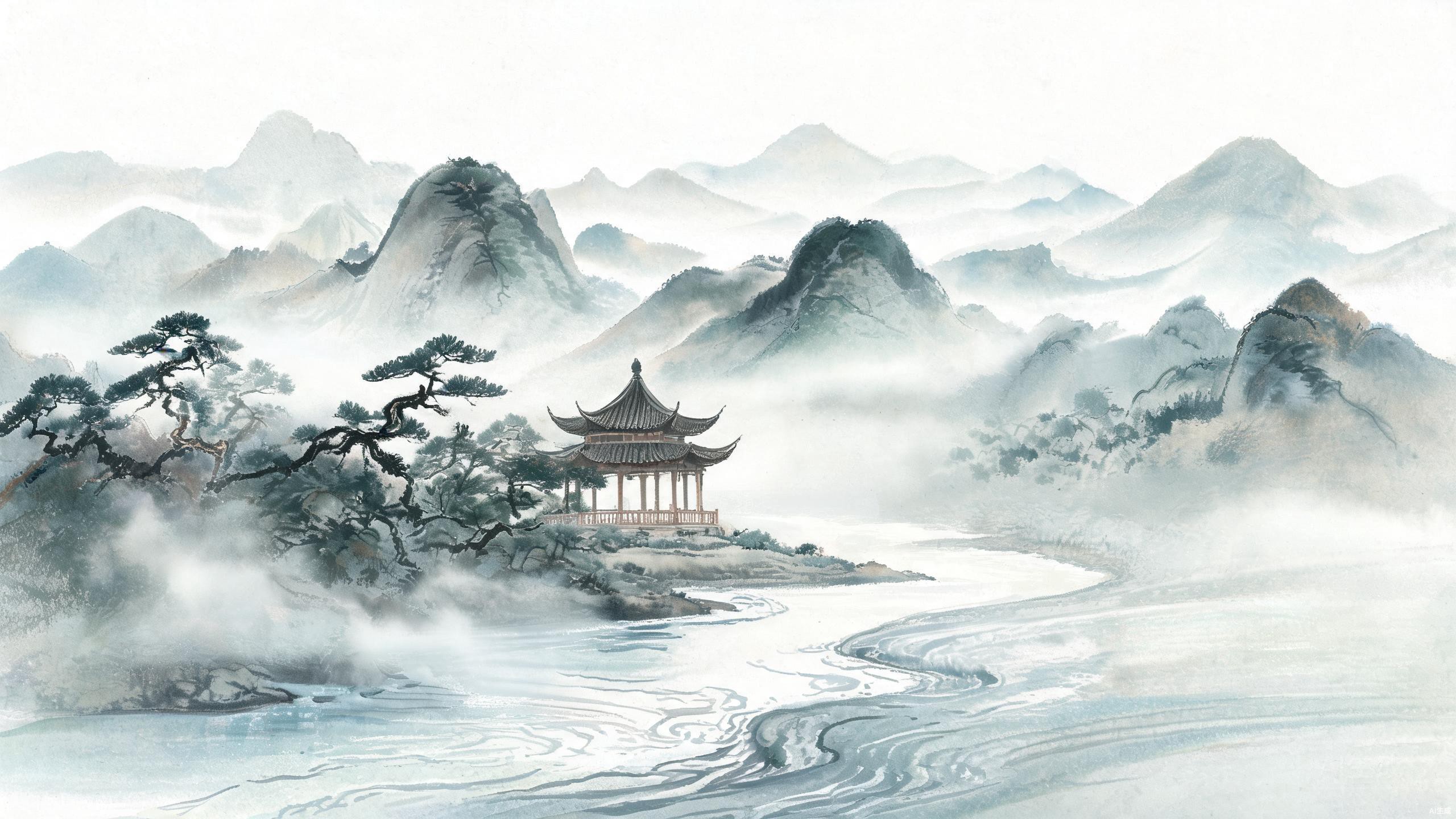
Introduction: The Spread of Feng Shui on the Korean Peninsula
The spread and development of Feng Shui on the Korean Peninsula (Korea and North Korea) represents an important chapter in the cultural exchange of East Asian Feng Shui traditions. Korea has been deeply influenced by Chinese culture since ancient times, and Feng Shui — as an integral part of traditional Chinese culture — was introduced to the peninsula early on, leaving profound imprints on Korean culture.
In Korea, Feng Shui is called "Feng Shui Geography" (풍수지리) or simply "Geography" (지리), and it remains a vital component of Korean traditional culture. From the selection of ancient capital sites to the layout of modern buildings, from the choice of ancestral graves to home interior design, Feng Shui exerts a wide-ranging and deep influence throughout Korean society.
The Historical Transmission of Feng Shui to the Korean Peninsula
Introduction During the Three Kingdoms Period
The introduction of Feng Shui to the Korean Peninsula can be traced back to the Three Kingdoms Period (Goguryeo, Baekje, and Silla). According to Korean historical records, Chinese Feng Shui texts began arriving on the peninsula around the 7th century AD, attracting the attention of local rulers.
During this period, rulers across the peninsula began applying Feng Shui principles to capital site selection and palace construction. Silla's capital, Gyeongju, embodies several core Feng Shui principles. With mountains behind and water in front, the city's layout is orderly and reflects the classic "Mountains Embracing and Water Surrounding" (山环水抱) Feng Shui configuration.
Development During the Goryeo Dynasty
The Goryeo Period (918–1392 AD) was a critical era for Feng Shui development on the Korean Peninsula. Wang Geon, the founder of the Goryeo Dynasty, was deeply influenced by Feng Shui during the establishment of his kingdom. According to the Goryeosa (History of Goryeo), Wang Geon consulted Feng Shui masters when selecting Kaegyŏng (modern-day Kaesŏng) as his capital, applying fundamental Feng Shui principles to the decision.
During the Goryeo period, Feng Shui spread widely throughout the peninsula. Many Chinese Feng Shui classics were translated into Korean and circulated across the land. At the same time, indigenous Feng Shui masters began to emerge, combining Chinese Feng Shui theory with local conditions to form a distinctly Korean Feng Shui system.
Flourishing During the Joseon Dynasty
The Joseon Period (1392–1910 AD) represented the golden age of Feng Shui on the Korean Peninsula. Yi Seong-gye, founder of the Joseon Dynasty, placed great importance on Feng Shui when selecting Hanyang (modern-day Seoul) as his capital.
According to the Joseon Wangjo Sillok (Veritable Records of the Joseon Dynasty), after deciding to move the capital to Hanyang, Yi Seong-gye dispatched Feng Shui masters to conduct a thorough investigation of the area's Feng Shui configuration. The masters determined that Hanyang — backed by Bukhansan and Bugaksan mountains to the north, facing the Han River to the south, and flanked by protective mountain ranges — was an exceptional Feng Shui site. Yi Seong-gye accepted their recommendation and established his capital there.
During the Joseon period, Feng Shui was applied not only to capital site selection but also to urban planning, architectural layout, and burial site selection. Many famous structures from this era — including Gyeongbokgung Palace, Changdeokgung Palace, and Jongmyo Shrine — all reflect Feng Shui principles.
Cultural Context: The Joseon Dynasty's reverence for Feng Shui was so profound that royal site selection became a state ritual. The Joseon Wangjo Sillok contains detailed records of geomantic consultations, demonstrating how Feng Shui was institutionalized as a tool of governance — not merely personal belief.
Main Characteristics of Korean Feng Shui
Integration with Indigenous Beliefs
A defining characteristic of Korean Feng Shui is its deep fusion with indigenous Korean "Mu-sok" (shamanic) beliefs and "Seon" (Zen) Buddhism. In Korean Feng Shui practice, one can often see elements of native spiritual traditions woven throughout.
Korean shamanic belief holds that spirits reside in natural objects — mountains, trees, and stones. This worldview naturally aligns with Feng Shui's reverence for natural landscapes. In Korean Feng Shui practice, people frequently construct "spirit halls" or "altars" at locations where mountains and waters converge their Qi, seeking divine protection.
Cultural Context: The Korean shamanic tradition, known as Mu-sok (무속), is one of the oldest spiritual practices in Korea. Its integration with Feng Shui created a uniquely Korean practice where geomantic analysis and spiritual ritual coexist — something rarely seen in Chinese Feng Shui traditions.
Emphasis on "Form Configuration" (형국) Theory
Korean Feng Shui places particular emphasis on "Form Configuration" (형국, hyeongguk) theory. This refers to the overall configuration of mountain and water forms, including the direction of mountain ranges, the flow of water, and the elevation of terrain. Korean Feng Shui masters believe that Form Configuration is the primary factor in determining auspicious and inauspicious outcomes — more important than directional calculations.
This emphasis on Form Configuration is closely related to China's Form School (形势派, Xing Shi Pai). In practice, Korean Feng Shui masters typically begin by observing the Form Configuration of mountains and waters, then integrate directional and temporal factors for a comprehensive assessment.
Careful Selection of the "Bright Hall" (명당)
The "Bright Hall" (明堂, myeongdang in Korean) is a crucial concept in Korean Feng Shui, referring to the open space in front of a building. Korean practitioners believe that the size and shape of the Bright Hall directly influence the auspiciousness of the overall Feng Shui configuration.
In traditional Korean architecture, the design of the Bright Hall is highly refined. The ideal Bright Hall should be expansive, level, and square — capable of "gathering Qi" (聚气) and "receiving fortune" (纳福). If the Bright Hall is too narrow or irregularly shaped, it is considered inauspicious.
Differences Between Korean and Chinese Feng Shui
Simplified Theoretical System
Compared to Chinese Feng Shui, Korean Feng Shui features a more streamlined theoretical framework. Complex Chinese theories such as the Three Cycles and Nine Periods (三元九运) and Nine Palace Flying Stars (九宫飞星) are used less frequently in Korean practice. Korean Feng Shui masters tend to focus more on intuitive assessment of Form Configuration and direction.
Korea's directional system is also simplified compared to China's. Korean practitioners typically use the Twelve Earthly Branches (十二地支) to determine direction rather than the more complex Twenty-Four Mountains (二十四山) system. This simplification makes Korean Feng Shui easier to learn and apply.
Strengthened Feng Shui Ethics
Korean Feng Shui places strong emphasis on "Feng Shui ethics" — the moral standards governing Feng Shui practice. Korean practitioners believe that Feng Shui is not only a technical discipline but also a moral one. A good Feng Shui master must possess not only refined technical skills but also noble character.
Korean Feng Shui ethics include: respecting nature, not damaging the environment, not deceiving clients, and not seeking improper profit. This emphasis on professional ethics has earned Korean Feng Shui masters a strong social reputation.
Quick Tips: Understanding Korean Feng Shui ethics can enhance your own practice:
- Always respect the natural environment when making recommendations
- Be honest with clients about what Feng Shui can and cannot achieve
- Never exploit people's fears for financial gain
Higher Female Participation
A notable phenomenon in Korean Feng Shui is the relatively high participation of female practitioners. In traditional Chinese society, Feng Shui masters were almost exclusively male, but Korea has a significant number of female Feng Shui practitioners.
This phenomenon is connected to Korea's shamanic tradition. In Korean Mu-sok, female shamans known as "Mudang" (무당) play important roles — communicating with spirits and leading ritual ceremonies. The emergence of female Feng Shui practitioners is closely linked to this shamanic heritage.
Modern Development of Korean Feng Shui
Contemporary Influence in Korean Society
Feng Shui continues to exert wide influence in contemporary Korea. According to surveys by Korean institutions, over 70% of Koreans consider Feng Shui factors when building or purchasing a home. Feng Shui in Korea is not only a traditional cultural practice but also an active modern one.
In Korea's real estate market, properties with good Feng Shui typically command higher prices and sell faster. Many real estate developers invite Feng Shui masters to participate in project planning to ensure favorable Feng Shui configurations.
Academic Research on Korean Feng Shui
Academic research on Feng Shui is remarkably active in Korea. Several Korean universities host research institutions dedicated to Feng Shui studies, regularly publishing research papers. Korean Feng Shui scholars cover a broad range of fields including Feng Shui history, theory, practice, architectural relationships, and urban planning applications.
Korean scholars emphasize empirical and interdisciplinary research methods. Through fieldwork, data analysis, and case studies, they have conducted systematic investigations of Feng Shui theory and practice. These research efforts provide important references for the scientific development of Feng Shui studies.
The Korean Feng Shui Industry
Feng Shui has become a sizable industry in Korea. The Korean Feng Shui Masters Association (한국풍수마스터협회) is the country's largest professional Feng Shui organization, with thousands of members. The association handles practitioner certification and professional ethics oversight, promoting standardization within the industry.
Korea's Feng Shui industry has also expanded into publishing, education, consulting, and interior decoration. Feng Shui books remain perennial bestsellers in Korean bookstores, and Feng Shui training courses are widely popular. Korea has even developed "Feng Shui tourism" programs, offering visitors specialized experiential and consulting services.
Representative Cases of Korean Feng Shui Culture
The Feng Shui Configuration of Seoul
Seoul stands as the quintessential representative of Korean Feng Shui culture. Backing onto Bukhansan and Bugaksan mountains, facing the Han River to the south, and flanked by protective mountain ranges, Seoul forms an ideal Feng Shui configuration of "Mountains and Waters Converging" (山水交会).
Seoul's urban planning centers on Gyeongbokgung Palace, which sits in the classic Sitting North Facing South orientation, backed by Bugaksan and facing the Han River — embodying the principle of "Back to Mountain Facing Water" (背山面水). The palace's central axis — Gwanghwamun Gate, Geunjeongmun Gate, Geunjeongjeon Hall, Sajeongjeon Hall, Gangnyeongjeon Hall, and Gyeongjeongjeon Hall — runs sequentially from south to north, forming a perfectly centered and balanced configuration.
Cultural Context: Seoul's status as a "Feng Shui capital" has been officially recognized for over 600 years. Modern Seoul preserves much of its original geomantic layout, and contemporary urban planners still consult Feng Shui principles when making major development decisions — a testament to the enduring influence of this ancient art.
Feng Shui of the Joseon Royal Tombs
The Joseon Dynasty's forty-plus royal tombs represent another important expression of Korean Feng Shui culture. The site selection and layout of these tombs strictly adhere to Feng Shui principles.
Joseon royal tombs are typically situated in locations featuring "Back to Mountain Facing Water" and "Mountains Embracing and Water Surrounding" configurations. The orientation and form of the tombs follow strict regulations. Their Bright Halls are expansive and level, their Water Mouths (水口) are tightly sealed, and their Dragon Veins (龙脉) are robust — all demonstrating the masterful skill of Korean Feng Shui practitioners.
How to Apply Korean Feng Shui Insights in Your Home
You can draw inspiration from Korean Feng Shui principles without living near Seoul:
- Mountain Backing: Ensure your home has solid support behind it — tall buildings, a hillside, or even a substantial piece of furniture against the main wall
- Water in Front: Position your main living areas where you can see open space or a symbolic water feature (fountain, aquarium)
- Protective Flanks: Notice whether your home has "guardian" features on either side — neighboring buildings, trees, or walls
- Bright Hall: Keep the area in front of your entrance open, clean, and well-lit to gather Qi
- Central Axis: Arrange your most important rooms along a clear central line for harmony and balance
Quick Tips:
- Even apartment dwellers can apply these principles by using furniture placement to simulate mountain backing and water-front positioning
- A clean, uncluttered entrance area amplifies the "Bright Hall" effect in any home
- Avoid placing mirrors directly facing your front door — this bounces incoming Qi back outside
Conclusion
The localization of Feng Shui in Korea represents another classic example of Chinese cultural transmission abroad. After being introduced to the Korean Peninsula, Feng Shui underwent a long process of localization, fusing with indigenous Korean beliefs, cultural traditions, and social needs to form a distinctly Korean system.
Korean Feng Shui features a more streamlined and practical theoretical framework, places greater emphasis on Form Configuration and Bright Hall selection in practice, and demonstrates remarkable adaptability in modernization. Studying Korean Feng Shui not only helps us understand the transmission and evolution of Feng Shui across East Asia, but also illuminates the broader history and current state of Sino-Korean cultural exchange.
Related Articles
- [[../08-百科问答库/28-什么是龙脉?如何寻找龙脉?.md|What is a Dragon Vein? How to Find One]]
- [[../06-风水文化与历史/34-风水在日本的传播与发展.md|Feng Shui in Japan: Transmission and Development]]
- [[../06-风水文化与历史/36-风水在东南亚的传播与发展.md|Feng Shui in Southeast Asia: Transmission and Development]]
- [[../01-风水入门/10-风水常见误区澄清.md|Feng Shui Myths Debunked: Separating Superstition from Science]]