Feng Shui Masters Through History: The Evolution of Social Status and Cultural Identity
Feng Shui masters — a professional group that has existed in Chinese history for over two thousand years — have experienced a complex and winding evolution in social standing. From the mysterious "div
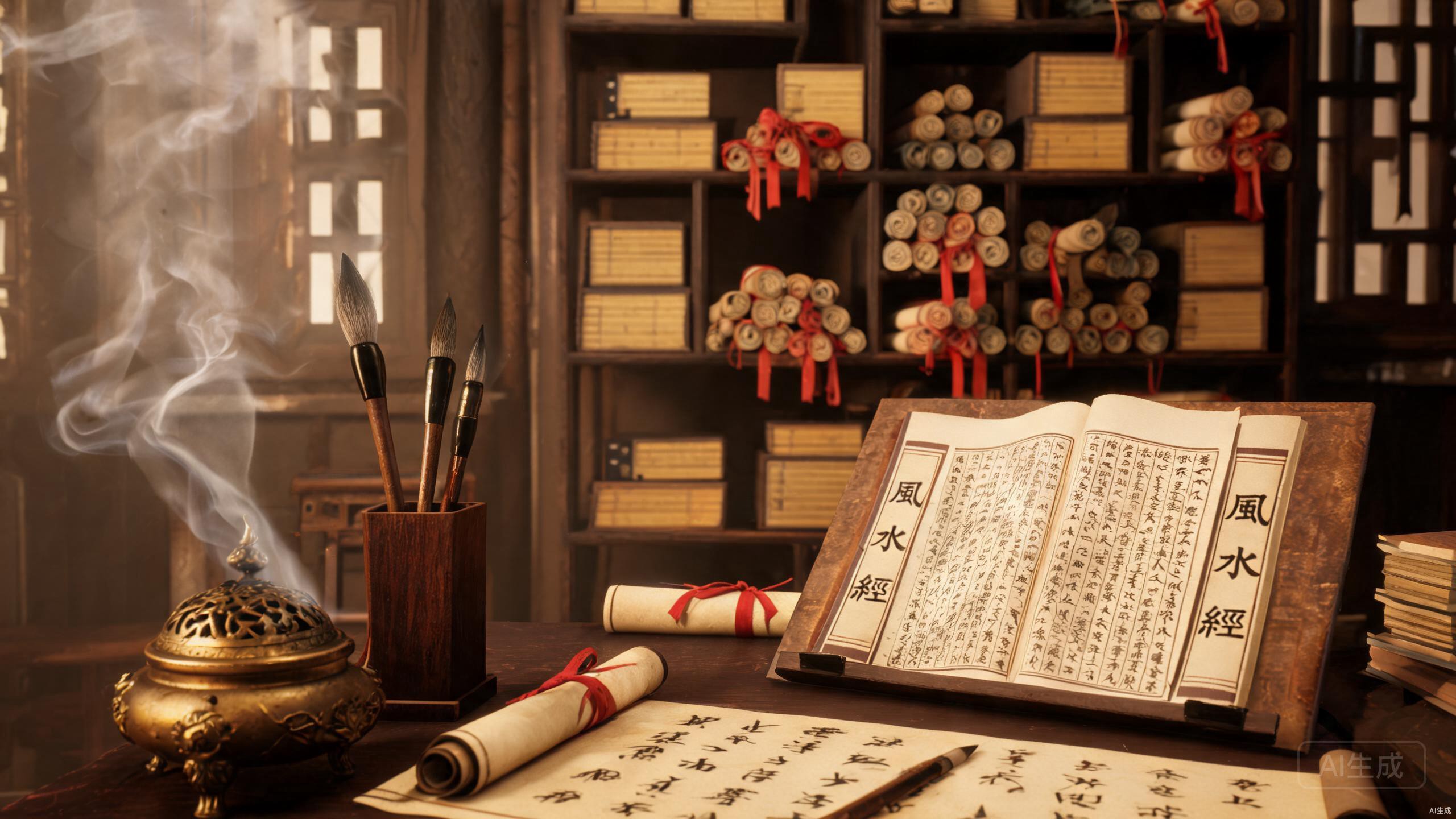
Introduction: The Changing Social Status of Feng Shui Masters
Feng Shui masters — a professional group that has existed in Chinese history for over two thousand years — have experienced a complex and winding evolution in social standing. From the mysterious "diviners" (卜人) of the pre-Qin era, to the learned "day-selectors" (日者) of the Qin and Han dynasties; from the "metaphysical scholars" (玄学名士) of the Wei-Jin period, to the "court geomancers" (朝廷术士) of the Tang and Song dynasties; from the "folk earth masters" (民间地师) of the Ming and Qing, to the "feudal superstitious professionals" of the Republican era, and finally to today's "cultural inheritors" (文化传承人) — the social status of Feng Shui masters serves as a mirror reflecting each period's cultural values, political institutions, and philosophical orientations.
This article examines the transformation of Feng Shui masters' social standing from a historical-sociological perspective, revealing the patterns and deeper causes behind these shifts.
Pre-Qin to Han: From Priests to Practitioners
The Prestigious Diviners of the Pre-Qin Era
During the pre-Qin period, the "diviners" (卜人) responsible for divination and Kanyu (堪舆, Feng Shui) held a remarkably high social position. In Shang Dynasty society, these diviners were important figures who wielded religious authority — communicating with spirits through divination to counsel kings on major state decisions. During the Western Zhou, diviners remained important court officials participating in national affairs. Their prestigious status stemmed from society's reverence for the divine and worship of mystical knowledge.
Cultural Context: In ancient China, divination was not considered superstition but rather a sacred practice bridging the human and spirit worlds. The diviners' authority came from their perceived ability to interpret cosmic will — making them indispensable advisors to rulers.
The Intellectual Standing of Qin-Han "Day-Selectors"
As rationalist thought rose during the Qin and Han dynasties, the status of diviners declined somewhat. However, the "day-selectors" (日者) — practitioners skilled in Yin and Yang, the Five Elements (Wu Xing, 五行), astronomy, and calendrical sciences — maintained their standing as intellectuals. Sima Qian (司马迁) devoted a chapter of the Shiji (Records of the Grand Historian) to these practitioners, placing them alongside "merchants" and "wandering knights" — a testament to their social influence. Yet compared to their pre-Qin predecessors, the Qin-Han day-selectors had shifted from being "representatives of divine authority" to "knowledge service providers." They offered society date-selection and site-evaluation services, but the aura of sacred power had faded.
Wei-Jin to Tang: From Metaphysical Scholars to Court Officials
The Cultural Image of Wei-Jin Feng Shui Masters
During the Wei, Jin, and Northern-Southern Dynasties, the rise of Xuanxue (玄学, "mysterious learning" or Neo-Daoism) profoundly transformed the cultural image of Feng Shui masters. Influenced by this philosophical movement, practitioners were no longer merely "technicians" but acquired the cultural cachet of "scholar-gentlemen" (名士). Guo Pu (郭璞) exemplifies this perfectly — he was simultaneously a Feng Shui practitioner, a learned scholar, and a literary figure of considerable talent. This composite identity of "practitioner-scholar" earned Wei-Jin Feng Shui masters considerable respect in intellectual circles.
Tang Dynasty: Peak Status Through Court Recognition
The Tang Dynasty saw Feng Shui masters reach new heights of social prestige. The imperial court established the Bureau of Astrology (司天监), incorporating Feng Shui practitioners into the official bureaucratic system and granting them the status of "state officials." The renowned Tang master Yang Yunsong (杨筠松) — known as "Yang Gong" — served in this bureau, overseeing astronomical and geomatic affairs. During the Tang, Feng Shui masters served both commoners and the imperial family alike, reaching a historical peak in social standing. Importantly, however, this elevated status depended primarily on imperial recognition rather than independent public evaluation.
Cultural Context: The Tang Dynasty's openness to diverse spiritual and philosophical traditions created a fertile environment for Feng Shui to flourish at the highest levels of society. This contrasts sharply with later dynasties, where such practices often faced suspicion or outright persecution.
Song and Yuan: Professionalization and Folk Diversification
Professionalization in the Song Dynasty
With the development of a commodity economy and increasing social specialization during the Song Dynasty, Feng Shui practice became further professionalized. Song-era masters were no longer confined to court service — they actively engaged with ordinary citizens, providing Feng Shui consultations across society. Their incomes rose significantly, and some famous practitioners accumulated considerable wealth. However, professionalization also brought social "stratification": a handful of elite masters enjoyed high prestige and income, while the majority remained at the lower rungs of society.
The Rise of Scholar-Practitioners
A notable Song-era phenomenon was the emergence of "scholar-practitioners" — literati such as Zhu Xi (朱熹), Cheng Yi (程颐), and Cheng Hao (程颢) who, though not professional Feng Shui masters, took deep interest in Feng Shui theory and offered unique insights. This "literati Feng Shui" (文人风水) trend elevated the practice's standing in intellectual circles and granted it greater "cultural legitimacy."
Pluralistic Development in the Yuan Dynasty
Under the Yuan Dynasty's multicultural conditions, Feng Shui practice developed along diverse lines. Han Chinese, Mongol, and Semu (Central Asian) practitioners coexisted, each preserving distinct traditions. Social status varied according to ethnic policies — Han Chinese practitioners saw their standing decline somewhat, yet overall, Feng Shui masters maintained meaningful social influence throughout Yuan society.
Ming and Qing: Flourishing and Fragmentation of Folk Masters
The Golden Age of Ming Dynasty Feng Shui
The Ming Dynasty witnessed an unprecedented flourishing of Feng Shui as a profession. In folk society, masters — popularly called "earth teachers" (地师) or "Kanyu specialists" (堪舆家) — were active in cities and countryside alike, providing services ranging from residence selection and burial site evaluation to architectural layout. Ming-era practitioners commanded relatively high fees and enjoyed elevated social standing. Some famous masters were even summoned by the court to participate in imperial projects. For instance, Liao Junqing (廖均卿) and You Chaozong (游朝宗) participated in the selection and planning of the Ming Tombs (明十三陵).
Professional Refinement in the Qing Dynasty
Qing-era Feng Shui practice became increasingly specialized. Influenced by the rigorous evidential scholarship (考据学) of the Qianlong-Jiaqing era, some practitioners devoted themselves to collating and researching classical Feng Shui texts — shifting the field's identity from "craft" toward "scholarship." Yet overall, Qing-era masters saw a decline in social standing compared to their Ming predecessors. As Western knowledge ("Western Learning," 西学) spread eastward through Jesuit missionaries and traders, traditional knowledge systems faced challenges — and Feng Shui practitioners felt the impact.
Social Stratification and Conflicting Evaluations
A defining feature of Ming-Qing Feng Shui masters' social position was "stratification." Among common folk, masters were still widely respected and addressed as "teacher" (先生) or "sir." Among the literati class, however, they faced increasing criticism and skepticism. Some scholar-officials attacked the "superstitious" behaviors of practitioners, equating them with "charlatans." This divided evaluation reflects the complex attitude Ming-Qing society held toward the Feng Shui profession.
Cultural Context: This tension between popular reverence and intellectual skepticism remains a defining feature of how Feng Shui is perceived today. Even modern practitioners must navigate between folk tradition and academic critique.
Modern Era: From Persecution to Revival
Marginalization During the Republican Period
During the Republican era (1912–1949), the New Culture Movement dealt a severe blow to Feng Shui masters' social standing. Practitioners were labeled "feudal superstition professionals" and subjected to both public criticism and government restriction. In cities, their influence plummeted; in rural areas, though they continued operating, their activities shifted from open practice to hidden consultation. The social position of Feng Shui masters fell from the traditional "respected teacher" to that of "marginal figure."
Fate Under the New China
After the founding of the People's Republic in 1949, under the dominance of socialist ideology, Feng Shui masters became targets for "ideological reform." During the "Destroy the Four Olds" campaign (破四旧运动), practitioners suffered severe persecution: Feng Shui books were burned, ritual tools destroyed, and masters forced to change professions. The profession nearly vanished, and knowledge transmission was severed. This period represents the lowest point in Feng Shui masters' social status throughout history.
Revival After Reform and Opening
Following China's Reform and Opening Up (改革开放) beginning in 1978, the Feng Shui profession gradually revived. In the 1980s, practitioners reappeared in social life, offering consultations to the public. By the 1990s, amid a nationwide "traditional culture fever," their social standing began to recover. Entering the 21st century, the profession has trended toward "high-end" practice — some masters now serve corporations and wealthy individuals, commanding premium fees and wielding considerable social influence. Yet controversy persists: caught between "science" and "superstition," the modern Feng Shui master's identity remains ambiguous.
Quick Tips: Understanding this historical context helps explain why Feng Shui today occupies such a unique cultural position in Chinese-speaking communities — simultaneously respected, commercialized, debated, and quietly practiced.
Conclusion: Lessons from the Evolution of Feng Shui Masters
The historical evolution of Feng Shui masters' social status reveals the fate of traditional cultural professions in modern society. Their standing has been shaped by political systems, ideologies, cultural values, social needs, market forces, and professional development alike. From a historical perspective, the rise and fall of Feng Shui masters' status mirrors the broader interaction between traditional culture and modernity.
For contemporary practitioners, the path forward requires both respect for tradition and adaptation to modern realities — a return to cultural roots combined with creative transformation. The historical journey of Feng Shui masters provides valuable perspective for anyone considering the role and positioning of traditional culture in our modern world.
Related Articles
- [[../07-风水故事/50-蒋大鸿传奇.md|The Legend of Jiang Dahong — The Xuan Kong Master of Late Ming and Early Qing]]
- [[../07-风水故事/28-风水师斗法.md|Feng Shui Masters in Rivalry — The Secret Battles of Kanyu Experts]]
- [[../01-风水入门/10-风水常见误区澄清.md|Feng Shui Myths Debunked: Distinguishing Superstition from Science]]
- [[../01-风水入门/51-风水测量工具大全.md|Complete Guide to Feng Shui Tools: From Traditional to Modern]]