Jiang Dahong: The Great Master of Xuan Kong Flying Stars in Feng Shui History
Jiang Dahong (蒋大鸿, 1620–1714 AD), also known as Jiang Pingjie (平阶), courtesy name Dahong, and styled himself Zongyangzi (宗阳子), was a renowned Feng Shui master of the late Ming and early Qing dynasties
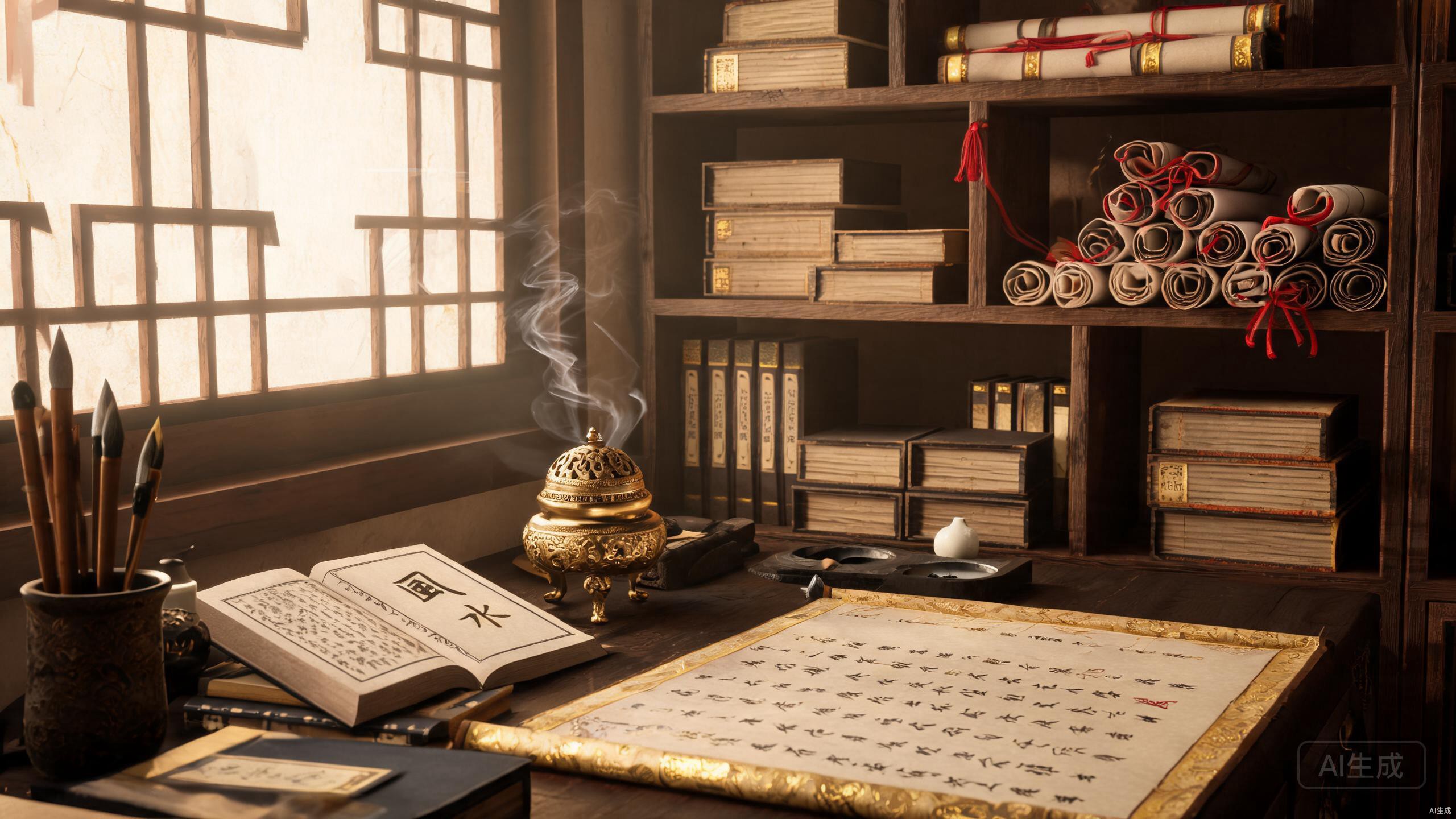
Introduction: Jiang Dahong's Place in Xuan Kong Feng Shui History
Jiang Dahong (蒋大鸿, 1620–1714 AD), also known as Jiang Pingjie (平阶), courtesy name Dahong, and styled himself Zongyangzi (宗阳子), was a renowned Feng Shui master of the late Ming and early Qing dynasties. He is honored by later generations as the "Great Synthesizer of the Xuan Kong Flying Stars School" (玄空飞星派). In the history of Chinese Feng Shui, Jiang Dahong holds an exceptionally important position: he systematically organized the theories of Xuan Kong Feng Shui that had developed since the Tang Dynasty, separating authentic knowledge from misinformation, and authored the landmark text Di Li Bian Zheng (Correcting Geography), elevating Xuan Kong Feng Shui into a rigorous discipline.
Jiang Dahong's scholarly achievements profoundly influenced the development of Feng Shui from the Ming and Qing dynasties onward. Before his time, Xuan Kong Feng Shui existed as scattered theories across numerous competing schools — a mix of brilliance and nonsense. After his work, Xuan Kong Feng Shui possessed a unified classic and a systematic theoretical framework. For these contributions, later Xuan Kong scholars venerated him as the "Ancestral Master of Xuan Kong" (玄空祖师), placing him alongside Guo Pu (郭璞) and Yang Yunsong (杨筠松) as the three milestone figures in the history of Feng Shui.
The Life of Jiang Dahong
Family Background and Early Years
Jiang Dahong was born in 1620 AD during the reign of Emperor Taichang of the Ming Dynasty, in Huating, Songjiang Prefecture, Jiangsu Province (present-day Songjiang, Shanghai). He came from an official family — his father Jiang Ruqi (蒋如奇) had served as a Ming Dynasty official — and the household possessed an extensive library. From childhood, Jiang Dahong displayed exceptional intelligence and a passion for learning, mastering the Confucian classics, history, and literature with remarkable depth.
Jiang Dahong's youth coincided with the turbulent final years of the Ming Dynasty. He witnessed the corruption and fall of the Ming, as well as the dramatic social upheaval following the Manchu conquest — experiences that profoundly shaped his worldview. After the Ming Dynasty collapsed, Jiang Dahong refused to serve the new Qing government and chose to retreat into the mountains, devoting himself entirely to the study of Feng Shui.
Scholarly Path
Jiang Dahong's research into Feng Shui began with the study of foundational classics such as the Qing Nang Jing (Green Satchel Classic) and Tian Yu Jing (Classic of Heavenly Jade). He spent decades deeply studying these texts, yet found much of their content obscure and contradictory, with later commentaries offering wildly conflicting interpretations.
To uncover the true essence of Xuan Kong Feng Shui, Jiang Dahong embarked on extensive travels across China, seeking out reclusive masters. He journeyed throughout the entire country, visiting numerous hidden Feng Shui experts, but most encounters ended in disappointment. His breakthrough came when he met a mysterious figure known only as "Wuji Zi" (无极子), from whom he finally received the authentic transmission of Xuan Kong Feng Shui.
Cultural Context: In the Chinese metaphysical tradition, the concept of a "hidden transmission" (秘传) refers to the passing of esoteric knowledge directly from master to disciple, often through a moment of profound revelation. This lineage-based transmission was considered the only legitimate way to receive certain advanced teachings, distinguishing true inheritors from casual students.
According to tradition, Wuji Zi was a reclusive sage who had mastered Feng Shui, astronomy, mathematics, and numerous other disciplines. He transmitted the core secrets of Xuan Kong Feng Shui to Jiang Dahong, urging him to treasure this knowledge and not pass it lightly to others. After receiving this genuine transmission, Jiang Dahong experienced a sudden awakening, and his understanding of Xuan Kong Feng Shui reached an entirely new level.
Reclusion and Writing
After receiving the authentic transmission, Jiang Dahong did not immediately publicize Xuan Kong Feng Shui. Instead, he continued his reclusive research, repeatedly verifying and testing his understanding. For decades, he cross-referenced Xuan Kong Feng Shui theories against actual case studies, constantly refining and correcting his interpretations.
During the Kangxi reign (1662–1722 AD), Jiang Dahong felt the time was ripe and began composing Di Li Bian Zheng (Correcting Geography), publishing his decades of research to the world. Upon its release, the book caused a sensation in the Feng Shui community and was hailed as the "First Book of Xuan Kong Feng Shui" (玄空风水第一书). Jiang Dahong subsequently authored additional works, including Shui Long Jing (Water Dragon Classic) and Tian Yuan Ge (Song of the Heavenly Origin), further enriching and perfecting the Xuan Kong Feng Shui theoretical system.
Later Years and Legacy
In his later years, Jiang Dahong lived in seclusion around Shaoxing, Zhejiang Province, continuing his research into Feng Shui theory while accepting disciples. His most famous student was Jiang Yao (姜垚), also known as Jiang Rugao (姜汝皋), who later became a great Xuan Kong master himself and authored works such as Annotations to the Preface of the Green Satchel (Qing Nang Xu Zhu).
Jiang Dahong passed away in 1714 AD (the 53rd year of the Kangxi reign) at the age of 95. Having lived through both the Ming and Qing dynasties and witnessed tremendous social transformation, he remained steadfast in his scholarly pursuits throughout, making indelible contributions to the development of Feng Shui.
Jiang Dahong's Scholarly Contributions
The Theoretical System of Di Li Bian Zheng
Di Li Bian Zheng (Correcting Geography) is Jiang Dahong's masterwork and one of the most important texts in the history of Xuan Kong Feng Shui. The book systematically organizes the Xuan Kong Feng Shui theories developed since the Tang Dynasty, providing profound exegesis and corrections to earlier classics including Qing Nang Jing (Green Satchel Classic), Tian Yu Jing (Classic of Heavenly Jade), and Qing Nang Xu (Preface to Green Satchel).
The core contribution of Di Li Bian Zheng lies in its clarification and organization of Xuan Kong Feng Shui theory. Within its pages, Jiang Dahong introduced the concept of the "Three Great Xuan Kong Trigrams" (玄空三大卦), condensing the calculation methods of Xuan Kong Feng Shui into several core elements: "Mountain and Water Dragon Spirits" (山水龙神), "Yin and Yang Following and Reversing" (阴阳顺逆), and "Star Sequencing" (挨星). This systematization transformed Xuan Kong Feng Shui from scattered fragments into a discipline with a rigorous logical framework.
Quick Tip: When studying historical Feng Shui texts like Di Li Bian Zheng, focus on understanding the underlying logic rather than memorizing specific calculations. The brilliance of Jiang Dahong's contribution was his ability to impose clear structure on previously chaotic knowledge.
Perfecting the Xuan Kong Flying Stars Method
Jiang Dahong systematically perfected the Xuan Kong Flying Stars Method (玄空飞星法). This method uses the movement of nine stars across nine palaces to calculate the auspicious and inauspicious qualities of different directions during different time periods. Building upon the theoretical foundations of his predecessors, Jiang Dahong clarified the precise movement patterns and calculation methods of the Flying Stars.
Jiang Dahong introduced the concepts of "Zheng Shen" (正神, "Upright Spirit") and "Ling Shen" (零神, "Zero Spirit"). The "Upright Spirit" refers to the Current Period Star (当运星) that brings prosperity, while the "Zero Spirit" refers to the Lost Period Star (失运星) associated with decline. In Feng Shui layout, the "Upright Spirit" should be placed in important locations, while the "Zero Spirit" should occupy less significant positions — thereby achieving the effect of pursuing auspiciousness and avoiding inauspiciousness.
Founding Water Dragon Theory
Another major contribution Jiang Dahong made to Feng Shui was the founding of "Water Dragon" (水龙) theory. Traditional Feng Shui primarily focused on "Mountain Dragons" (山龙) — the flow patterns and forms of mountain ranges. Jiang Dahong recognized that in flat plains where no prominent mountain ranges exist, water itself should serve as the "Dragon" — meaning that one should observe the direction and form of waterways to determine Feng Shui patterns.
In his Shui Long Jing (Water Dragon Classic), Jiang Dahong systematically expounded Water Dragon theory. He classified water flows into five forms corresponding to the Five Elements (Wu Xing): Metal, Wood, Water, Fire, and Earth — each form associated with different auspicious and inauspicious qualities. The creation of Water Dragon theory made Feng Shui applicable to plains regions, dramatically expanding the practical scope of the discipline.
How to Appreciate Jiang Dahong's Contributions Today
- Understand his systematizing role: Jiang Dahong didn't invent Xuan Kong Feng Shui — he organized scattered knowledge into a coherent framework
- Study his "Upright Spirit" principle: Place active energy (where you spend most time) in prosperous directions, and passive storage in less favorable ones
- Apply Water Dragon thinking to modern spaces: In flat environments without mountains, focus on water features and pathways as energy carriers
Jiang Dahong's Scholarly Characteristics
Reverence for Classics, Opposition to Baseless Theories
Jiang Dahong possessed a distinctive scholarly trait: he deeply revered the foundational classics while firmly opposing baseless speculation. He believed that the pre-Tang Dynasty classics — particularly Qing Nang Jing and Tian Yu Jing — represented the authentic source of Xuan Kong Feng Shui. Many later interpretations, he argued, were misunderstandings and distortions of these original texts.
In Di Li Bian Zheng, Jiang Dahong systematically refuted numerous erroneous claims that had circulated in later periods. He particularly criticized the San He (Three Harmony) School of Feng Shui that was popular during his time, arguing that it had departed from the spirit of the classics and constituted "pseudo-art" (伪术). This rigorous scholarly attitude earned Jiang Dahong the reputation of being the "Master of Corrections" (辨正大师) in the Feng Shui community.
Close Integration of Theory and Practice
Jiang Dahong valued not only theoretical research but also practical application. Throughout his life, he performed Feng Shui consultations for countless individuals, accumulating vast practical experience. In Di Li Bian Zheng, he cited numerous real-world case studies, using practice to verify theory and theory to guide practice.
Jiang Dahong particularly emphasized that Feng Shui masters must possess the ability to conduct on-site surveys (实地勘察). He believed that Feng Shui cannot be reduced to calculations on paper — it must integrate the specific features of actual mountains and waters for comprehensive judgment. This "theory linked to practice" (理论联系实际) scholarly style had a positive influence on the subsequent development of Feng Shui studies.
Historical Evaluation of Jiang Dahong
His Status as the Ancestral Master of Xuan Kong
In the Feng Shui community, Jiang Dahong is venerated as the "Ancestral Master of Xuan Kong" (玄空祖师), placed alongside Guo Pu (郭璞, the Founding Father of Feng Shui) and Yang Yunsong (杨筠松, the Ancestral Master of the Form School) as the three milestone figures in the history of Feng Shui. Jiang Dahong's Di Li Bian Zheng is regarded by Xuan Kong scholars as the foundational classic, with his theories and methods enjoying broad recognition for their authority.
Controversies and Criticisms
Jiang Dahong has also faced historical criticism. Some scholars argued that his Xuan Kong theories were excessively complex for ordinary people to master. Others noted that his criticisms of San He Feng Shui were overly aggressive, betraying a possible sectarian bias.
Additionally, certain works attributed to Jiang Dahong — such as Tian Yuan Ge — employed language that was excessively obscure, making extensive use of coded language and hidden references that later generations found difficult to interpret. This tendency toward deliberate mystification also generated some controversy in academic circles.
Influence on Later Generations
Jiang Dahong's influence on later Feng Shui scholarship has been profound and far-reaching. His disciples, including Jiang Yao (姜垚) and Zhang Xinyan (张心言), propagated Jiang Dahong's teachings throughout China, forming the influential "Jiang School Xuan Kong" (蒋氏玄空) system. The modern Xuan Kong master Shen Zhuqi (沈竹祁), to a large extent, inherited Jiang Dahong's theories and developed his own framework — known as "Shen's Xuan Kong Study" (Shen Shi Xuan Kong Xue) — upon that foundation.
The Modern Significance of Jiang Dahong
Academic Research Value
Jiang Dahong's works, including Di Li Bian Zheng, provide invaluable materials for studying ancient Chinese Feng Shui. His Xuan Kong Flying Stars theory still offers meaningful reference value for modern urban planning, architectural design, and environmental science.
Methodological Insights
Jiang Dahong's rigorous scholarly attitude and his approach of "theory linked to practice" offer important lessons for modern scholars. He revered the classics without blindly following them, valued practice without neglecting theory — embodying a dialectical scholarly approach worth studying and emulating today.
Conclusion
As a renowned Feng Shui master of the late Ming and early Qing dynasties, Jiang Dahong's scholarly contributions and historical status are beyond dispute. Through his masterwork Di Li Bian Zheng, he systematically organized the theoretical framework of Xuan Kong Feng Shui, transforming it from scattered fragments into a rigorous discipline. He founded Water Dragon theory, expanding the practical scope of Feng Shui to new environments. His rigorous scholarly attitude and commitment to integrating theory with practice set an enduring example for later scholars.
In contemporary society, we should approach Jiang Dahong's scholarly legacy with a scientific attitude — extracting its essence and discarding its dross — allowing this ancient cultural heritage to continue serving a meaningful purpose in the modern world.
Quick Tip: When exploring historical Feng Shui masters like Jiang Dahong, remember that their enduring relevance lies not in literal application of ancient formulas, but in the methodology and scholarly rigor they brought to a complex field — principles that remain valuable for any serious study of traditional knowledge.
Related Articles
- [[../01-风水入门/34-玄空飞星派完整教程.md|Xuan Kong Flying Stars School Complete Tutorial: The Mysteries of Time-Space Feng Shui]]
- [[../01-风水入门/17-玄空飞星与八宅风水的区别.md|Differences Between Xuan Kong Flying Stars and Eight Mansions Feng Shui]]
- [[../03-财运风水/24-流年财运调整.md|Annual Wealth Fortune Adjustment: Yearly Feng Shui for Wealth Activation and Sha Removal]]
- [[../03-财运风水/18-玄空飞星催财法.md|Xuan Kong Flying Stars Wealth Enhancement Method: Annual Wealth Star Directions and Activation Layout]]