Liu Bowen: The Legendary Ming Dynasty Military Strategist Who Cut the Dragon Vein
Liu Bowen (刘伯温), whose given name was Ji (基), courtesy name Bowen, and pen name Limei (犁眉), was a founding meritorious official of the Ming Dynasty, a celebrated statesman, military strategist, litera
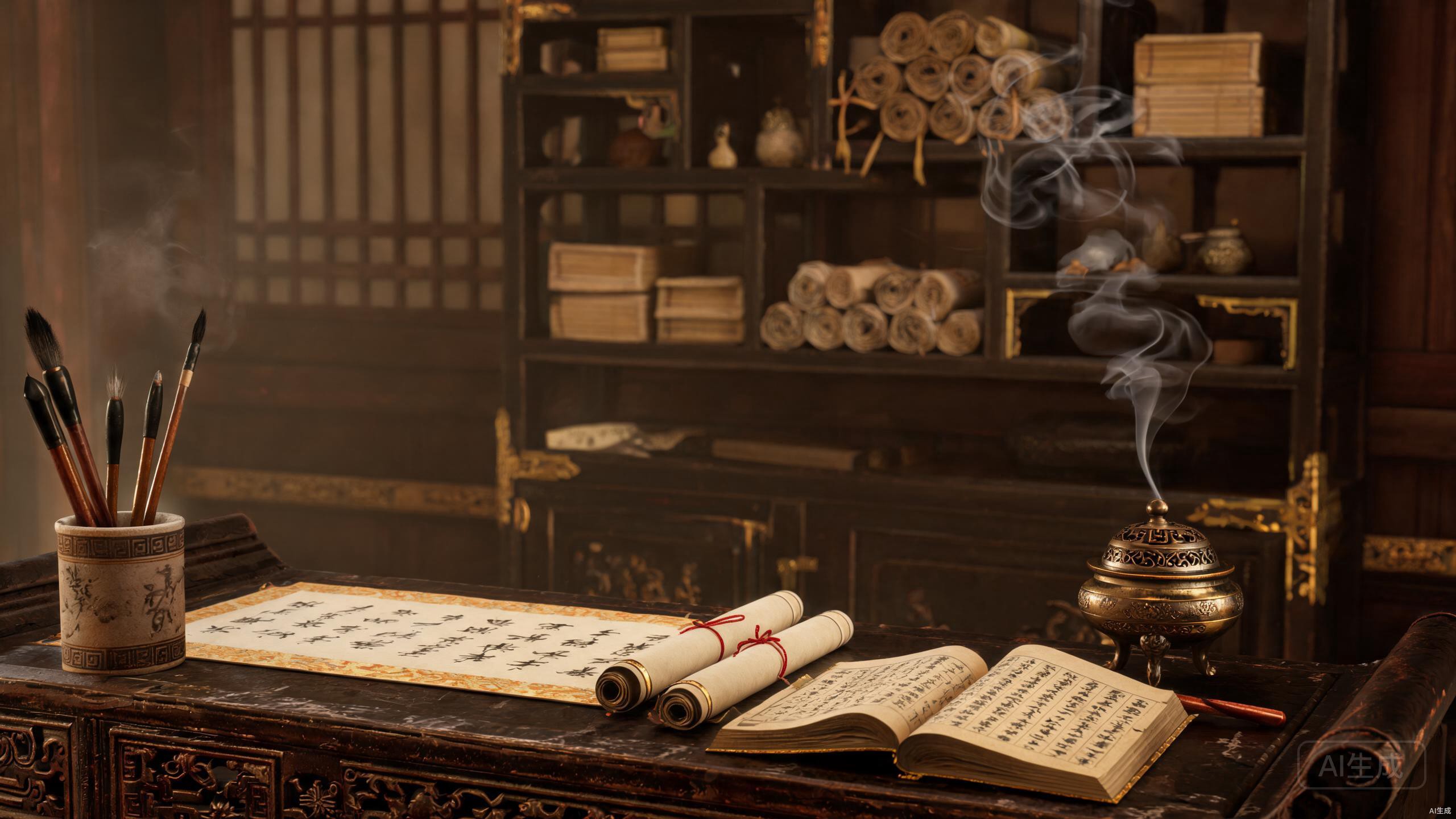
Introduction: The Mystical Image of Liu Bowen
Liu Bowen (刘伯温), whose given name was Ji (基), courtesy name Bowen, and pen name Limei (犁眉), was a founding meritorious official of the Ming Dynasty, a celebrated statesman, military strategist, literary figure, and Feng Shui master. In Chinese folklore, Liu Bowen's image has been highly mythologized — he is portrayed as a mysterious figure capable of summoning wind and rain and foreseeing the future. His legendary tale of "cutting the Dragon Vein" is known to virtually every household.
In history, Liu Bowen was one of the most important advisors to Ming Taizu Zhu Yuanzhang (朱元璋), earning the reputation as "the foremost strategist of early Ming." He assisted Zhu Yuanzhang in overthrowing the Yuan Dynasty and founding the Ming Dynasty, making monumental contributions to its establishment and consolidation. Liu Bowen was also a Feng Shui master — tradition holds that he possessed deep knowledge of astronomy, geography, Yin and Yang, and the Five Elements (Wu Xing), with extensive research and practice in Feng Shui.
The Life of Liu Bowen
Family Background and Early Years
Liu Ji (1311–1375 AD), courtesy name Bowen, was a native of Qingtian in Chuzhou Prefecture (present-day Wencheng, Zhejiang). Liu Bowen was born into a scholarly family — both his grandfather Liu Hao (刘濠) and father Liu Qiang (刘炝) were renowned local scholars. Liu Bowen was exceptionally brilliant from childhood, reading widely across all subjects. He passed the xiucai examination at twelve, entered the prefectural school at fourteen, and earned his jinshi degree at twenty-three — truly a youth who achieved success early.
Liu Bowen initially served as an official under the Yuan Dynasty, holding positions including Assistant Magistrate of Gao'an County and Deputy Superintendent of Confucian Schools in Jiangzhe. However, because of his upright character and refusal to collude with corrupt officials, he was repeatedly marginalized and suppressed. Failing to achieve his ambitions in Yuan officialdom, Liu Bowen eventually resigned and returned to his hometown of Qingtian to live in seclusion and pursue his studies.
Advising Zhu Yuanzhang
In the late Yuan period, chaos engulfed the realm as uprisings erupted across the land. After Zhu Yuanzhang captured Yingtian (present-day Nanjing), he sought talented individuals to join his cause. Upon hearing of Liu Bowen's abilities, he sent envoys bearing generous gifts to invite him out of retirement. After careful consideration, Liu Bowen agreed to emerge from seclusion and serve Zhu Yuanzhang.
Upon joining Zhu Yuanzhang's ranks, Liu Bowen immediately demonstrated outstanding military acumen and political wisdom. He presented Zhu with the "Eighteen Strategies for Current Affairs" (时务十八策), formulating the strategic blueprint for unifying the realm. During the pivotal Battle of Lake Poyang, Liu Bowen's masterful strategies enabled Zhu Yuanzhang to defeat Chen Youliang's superior forces against the odds — laying the foundation for Ming Dynasty unification.
Founding Merit of the Ming Dynasty
After the Ming Dynasty was established, Liu Bowen was appointed as Imperial Censor-in-Chief and Grand Historian, responsible for national supervision and astronomical-calendar affairs. He participated in drafting the legal framework of the Ming Dynasty and presided over the compilation of the Da Ming Lü (大明律, Great Ming Code), making significant contributions to the dynasty's legal foundations.
However, Liu Bowen's political career did not flourish smoothly after the founding of Ming. His upright character earned him many powerful enemies, and combined with Zhu Yuanzhang's suspicious nature, Liu Bowen gradually lost the emperor's trust. In the fourth year of Hongwu (1371), Liu Bowen resigned and returned to his hometown of Qingtian in retirement.
Final Years and Death
After retiring, Liu Bowen lived a reclusive life, distancing himself from worldly affairs. Yet Zhu Yuanzhang remained distrustful and secretly dispatched agents to monitor him. In the eighth year of Hongwu (1375), Liu Bowen fell ill and passed away at the age of sixty-five. The cause of his death remains historically contested — some accounts suggest he was poisoned by Hu Weiyong (胡惟庸).
Posthumously, Liu Bowen was granted the title of Grand Preceptor and the posthumous name Wencheng (文成). His writings were later compiled by descendants into the Chengyi Bo Wenji (诚意伯文集, Collected Writings of the Earl of Sincerity).
Liu Bowen's Feng Shui Legends
The Legend of Cutting the Dragon Vein
Liu Bowen's most celebrated Feng Shui legend is "cutting the Dragon Vein" (斩龙脉). According to folklore, after founding the Ming Dynasty, Zhu Yuanzhang feared that other regions might produce "true Dragon Sons of Heaven" who would threaten Ming rule. He therefore dispatched Liu Bowen across the land to "sever the Dragon Vein," eliminating potential threats to the dynasty.
Upon receiving this mission, Liu Bowen traveled throughout the country bearing his Luopan (Feng Shui Compass) and tools. Wherever he went, he carefully surveyed the local mountains and rivers. Whenever he discovered a place with vigorous Dragon Vein energy, he ordered workers to chisel through mountains and redirect waterways to destroy the Qi of the Dragon Vein. According to legend, Liu Bowen severed ninety-nine Dragon Veins across the land, securing the stability of Ming rule.
Cultural Context: In traditional Chinese cosmology, a Dragon Vein (龙脉) represents a vital energy line running through mountains — the energetic artery connecting heaven and earth. The belief that rulers could destroy a region's fortunes by severing its Dragon Vein reflects how deeply Feng Shui was woven into Chinese political consciousness.
Though steeped in myth, this legend reflects several important historical truths: First, Zhu Yuanzhang genuinely attached great importance to Feng Shui configurations across the realm and ordered modifications to places deemed to possess "royal Qi." Second, Liu Bowen, as Zhu's strategist, indeed participated in such activities. Third, the legend demonstrates how deeply the concept of Dragon Veins was embedded in ancient Chinese thought.
Feng Shui Planning of Jinling City
Another significant contribution Liu Bowen made to Feng Shui practice was his involvement in planning the construction of Ming-era Nanjing. According to tradition, after Zhu Yuanzhang established his capital at Nanjing, he ordered Liu Bowen to conduct a comprehensive Feng Shui assessment and renovation of the city's layout.
After surveying Nanjing's terrain, Liu Bowen determined that while the city's Dragon Vein was vigorous, the site suffered from "scattered water and leaking Qi." He advised Zhu Yuanzhang to construct tall, sturdy city walls incorporating Zhongshan (Purple Mountain), the Qinhuai River, and Xuanwu Lake into the city's defensive system. Liu Bowen also recommended building the "Jubao Gate" (聚宝门, present-day Zhonghua Gate) in the southeast of the city to gather wealth energy.
These recommendations had a profound influence on Nanjing's urban planning and construction. The "Four-Layer Enclosure" (四重城垣) structure and the water gate system of Ming-era Nanjing both reflect Liu Bowen's Feng Shui philosophy.
Divining the Site of Ming Xiaoling Mausoleum
According to legend, Liu Bowen also participated in selecting the site for Ming Xiaoling Mausoleum (明孝陵) — the tomb of Zhu Yuanzhang. Located on the southern slope of Zhongshan in Nanjing, the mausoleum backs onto Purple Mountain and faces Meihua Mountain, flanked by the Azure Dragon (青龙) and White Tiger (白虎) hills — an exceptionally auspicious burial site.
In selecting this location, Liu Bowen fully harnessed the Dragon Vein Qi of Purple Mountain. He designed the tomb's spirit path to curve deliberately, avoiding direct assault by Sha Qi (harmful energy) on the burial chamber while allowing Vital Qi (Sheng Qi) to flow smoothly into the tomb. The site selection and design of Ming Xiaoling Mausoleum demonstrate Liu Bowen's profound mastery of Feng Shui.
Quick Tips:
- Dragon Vein recognition: Even today, when choosing a home, look for "mountain support" behind you — tall structures, hills, or solid walls that channel protective Qi
- Avoiding harmful energy: Note any sharp angles, roads pointing directly at your entrance, or tall narrow gaps between buildings — these create Form Sha (形煞) that disrupt prosperity
- Curved pathways: In Feng Shui, gentle curves are preferred over straight lines for walkways and spirit paths because they allow Qi to meander and gather
Liu Bowen's Scholarly Contributions
Philosophical Thought of Yu Li Zi
Liu Bowen's principal work, Yu Li Zi (《郁离予》), is a philosophical treatise reflecting his political thought and worldview. Through allegories, Liu Bowen expounded his profound insights on governance and personal conduct.
Although Yu Li Zi is not exclusively a Feng Shui text, its ideas deeply influenced Liu Bowen's Feng Shui practice. He emphasized the concept of "Unity of Heaven and Humanity" (天人合一, Tian Ren He Yi), holding that humans and nature should exist in harmony — a principle directly aligned with the core philosophy of Feng Shui.
Cultural Context: The concept of Unity of Heaven and Humanity represents one of the deepest principles in Chinese cosmology. It suggests that human wellbeing is inseparable from natural harmony — the same foundational idea behind Feng Shui's emphasis on aligning buildings and spaces with environmental energy.
Ling Qi Jing and Divination
Liu Bowen also annotated and elaborated upon the Ling Qi Jing (《灵棋经》, Classic of Spirit Divination), an ancient divination text. His commentary made this classic more accessible to later generations. Liu Bowen's deep study of divination reflects his belief in "Heaven-Human Resonance" (天人感应) — an important theoretical foundation for his Feng Shui practice.
Liu Bowen's Image in Folk Culture
Embodiment of Wisdom
In folklore, Liu Bowen is portrayed as the very embodiment of wisdom, standing alongside Zhuge Liang (诸葛亮) with the saying: "Zhuge Liang divided the realm into three; Liu Bowen unified the empire." Liu Bowen's image captures the classical Chinese ideal of the scholar-strategist who "wins battles from behind a command tent, triumphing over thousands of miles away."
A Founding Patriarch of Feng Shui
Although Liu Bowen did not formally establish a distinct Feng Shui school, his Feng Shui practice and legends exerted wide influence on later generations. Many Feng Shui masters regard Liu Bowen as one of the ancestral patriarchs of the art, honoring his methods and principles in their own practice.
Historical Evaluation of Liu Bowen
Scholarly Assessments
Historical assessments of Liu Bowen have been consistently elevated. Ming Taizu Zhu Yuanzhang praised him: "He is my Zhang Liang" (吾子房也), comparing him to the legendary Han Dynasty strategist. Qing Dynasty scholar Ji Xiaolan (纪晓岚) wrote in the Siku Quanshu Zongmu Tiyao (《四库全书总目提要》, General Catalog of the Complete Library in Four Sections) that Liu Bowen "was broadly versed in classics and history, read every book he encountered, and was especially expert in astronomy and military strategy." Modern scholars generally regard Liu Bowen as one of the most outstanding statesmen, military strategists, and literary figures of the Ming Dynasty.
Liu Bowen in Folk Legend
In popular legend, Liu Bowen's image has been highly mythologized. He is depicted as a mysterious figure capable of summoning wind and rain and foreseeing the future, possessing extraordinary abilities such as "cutting the Dragon Vein" and "establishing Feng Shui." Though steeped in myth, these legends reflect Liu Bowen's lofty stature in the hearts of common people.
Conclusion
As a founding meritorious official of the Ming Dynasty and a Feng Shui master, Liu Bowen's legendary life and scholarly contributions have left an indelible mark on Chinese history. His achievements in assisting Zhu Yuanzhang in founding the Ming Dynasty made him a celebrated statesman and military strategist; his legendary involvement in Feng Shui practice made him a mystical figure in folk tradition; and his story of "cutting the Dragon Vein" stands as one of the most famous legends in Chinese Feng Shui culture. Though Liu Bowen's Feng Shui legends are saturated with mythological color, the underlying philosophy of "Unity of Heaven and Humanity" — the ideal of harmonious coexistence between humanity and nature — remains worthy of our deep reflection and continued study.
How to Apply Liu Bowen's Feng Shui Wisdom Today
Although we cannot literally "cut Dragon Veins," the principles Liu Bowen embodied can guide modern home and workspace decisions:
- Protect your backing: Like Liu Bowen's mausoleum design, ensure your home has solid "mountain" support behind it — tall trees, neighboring buildings, or substantial walls that shield you from harsh incoming energy
- Curve your pathways: Following the Ming Xiaoling Mausoleum model, avoid long straight walkways or sightlines that let Qi rush through unimpeded; introduce gentle curves, plants, or decorative screens
- Address "water leaking Qi": If your home suffers from energy that flows in one door and out another (Piercing Hall Sha, 穿堂煞), install a Folding Screen (屏风) or entryway cabinet to slow and gather the flow
- Honor the Four Celestial Animals: When possible, position your space with backing support (Black Tortoise 玄武), protective flanks (Azure Dragon 青龙 on the left, White Tiger 白虎 on the right), and an open vista in front (Vermilion Bird 朱雀)
Related Articles
- [[../07-风水故事/16-刘伯温斩龙脉.md|Liu Bowen Cuts the Dragon Vein — The Feng Shui Conquest of Ming's Grand Strategist]]
- [[../07-风水故事/49-刘伯温传奇.md|The Legend of Liu Bowen — The Kanyu Chronicles of Ming's Grand Strategist]]
- [[../06-风水文化与历史/22-Feng Shui Masters Through History:赖布衣——断地如神的风水大师.md|Masters of Feng Shui Through History: Lai Buyi — The Diviner Who Read the Earth Like a God]]
- [[../06-风水文化与历史/25-Feng Shui Masters Through History:沈竹祁——沈氏玄空学的奠基人.md|Masters of Feng Shui Through History: Shen Zhuqi — The Founder of Shen's Xuan Kong Study]]