Nanjing Feng Shui: Decoding the Golden Dynasty Qi of an Ancient Capital
Nanjing (南京), historically known as Jinling (金陵), Jiankang (建康), Moling (秣陵), and Shitou Cheng (石头城, Stone City), stands as one of China's most celebrated ancient capitals. Since the Eastern Wu dynast
Introduction: The Legend of Golden Dynasty Qi
Nanjing (南京), historically known as Jinling (金陵), Jiankang (建康), Moling (秣陵), and Shitou Cheng (石头城, Stone City), stands as one of China's most celebrated ancient capitals. Since the Eastern Wu dynasty established its seat here, Nanjing has served as the imperial capital for the Eastern Jin, the four Southern Dynasties (Liu Song, Southern Qi, Liang, and Chen), Southern Tang, Ming (under Hongwu), Taiping Heavenly Kingdom, and the Republic of China — earning it the titles "Capital of Six Dynasties" and "Metropolis of Ten Dynasties."
Among Nanjing's many historical fascinations, none captivates the imagination quite like the legend of "Jinling Wang Qi" (金陵王气, the Royal Qi of Jinling). First recorded in the Records of the Three Kingdoms (《三国志》) and the Jiankang Shilu (《建康实录》, Records of Jiankang), this legend tells how Qin Shi Huang — during his eastern inspection tour — was warned by court diviners that Jinling possessed "the Qi of a Son of Heaven" (天子之气). Alarmed, the emperor ordered Fangshan Mountain to be cut through and the Huai River diverted to disperse this threatening energy. Though steeped in mythology, the story reveals profound Feng Shui principles worth examining.
Nanjing's Geographic Layout: Mountains Embracing and Water Surrounding
Zhongshan Dragon Vein and the City's Backing Mountain
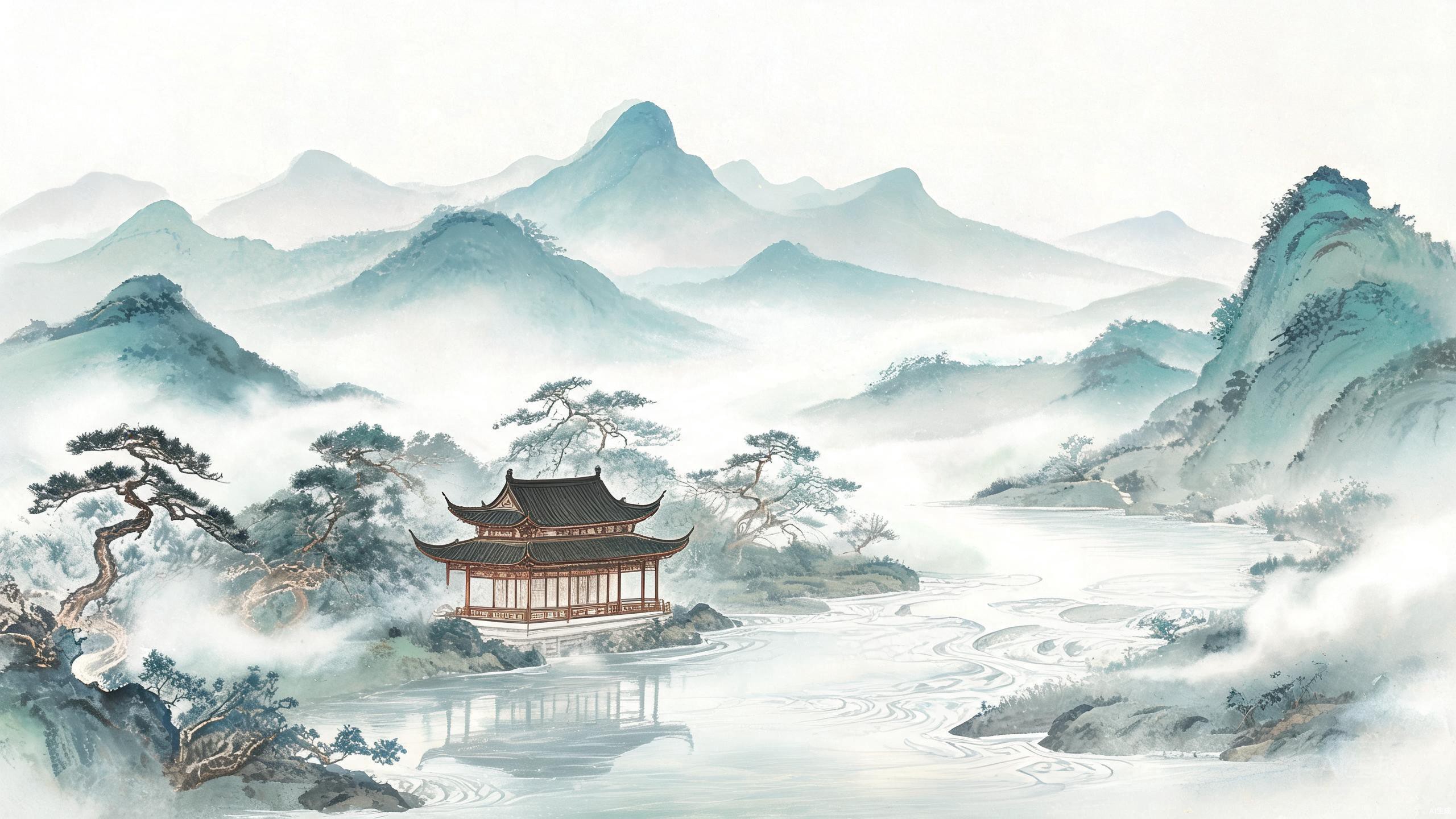
At the heart of Nanjing's topography lies Zhongshan (钟山), also called Purple Gold Mountain (紫金山). Located east of the old city, it stretches roughly seven kilometers east to west and three kilometers north to south, with its main peak reaching approximately 450 meters in elevation. With its imposing profile resembling a massive screen, Zhongshan serves as Nanjing's primary "host mountain" (主山) and "backing mountain" (靠山). From a Feng Shui perspective, Zhongshan forms part of the Ningzhen Mountain Range and represents a vital node of the Southern Dragon Vein in the Jiangnan region.
The mountain earned its name "Purple Gold" from the violet-golden hues that bathe its slopes in sunlight. In traditional Chinese culture, purple signifies supreme auspiciousness and imperial authority. Zhongshan's ridgelines extend from southeast to northwest, cradling Nanjing in their embrace — creating what practitioners call an "Azure Dragon meandering" pattern. Its subsidiary ridges stretch northwestward, forming Mounts Fugui (富贵山), Fuzhou (覆舟山), and Jilong (鸡笼山), eventually reaching the Yangtze River and constructing the skeletal Dragon Vein that defines Nanjing.
Cultural Context: In classical Feng Shui, the Dragon Vein (龙脉) represents the flowing channel of Qi through mountain ranges — like arteries carrying life force across the landscape. A site cradled by strong dragon formations is believed to receive concentrated, nourishing energy.
The Yangtze River System and Qinhuai River
The Yangtze River (长江) constitutes Nanjing's most significant waterway and a central element of its Feng Shui configuration. In the Nanjing section, the river widens considerably and flows with calm dignity, creating the formidable natural barrier historically called "Heaven's Moat" (天堑). From a Feng Shui standpoint, the Yangtze functions as "boundary water" (界水) — blocking harmful Sha Qi (煞气) from the north while gathering the vital energies of the Jiangnan region southward.
The Qinhuai River (秦淮河), Nanjing's beloved mother river, completes this water configuration. Originating in Lishui and Jurong to the south, it splits into inner and outer channels that meander gracefully through the city before joining the Yangtze at its western edge. The Qinhuai's arc-shaped flow pattern holds special significance in Feng Shui: it exemplifies "Jade Belt Water" (玉带水), where a river wraps around a city like a jade sash tied at the waist — one of the most auspicious water formations in classical theory.
The Ningzhen Mountains and Nanjing's Four Symbols Configuration
At a grand scale, Nanjing's Feng Shui layout achieves a textbook-perfect Four Symbols (四象) configuration — a rarity among ancient Chinese capitals and the foundation of its status as an imperial seat:
- East (青龙, Azure Dragon): Zhongshan
- West (白虎, White Tiger): The Yangtze River
- South (朱雀, Vermilion Bird): Fangshan and Niushou Mountains
- North (玄武, Black Tortoise): Mufu and Qixia Mountains
Twenty kilometers south of Nanjing stands Fangshan (方山, Square Mountain) — a flat-topped, square-shaped extinct volcano rising about 200 meters. Its significance lies in its position directly facing Nanjing's southern gate, where it functions as a "Desk Mountain" (案山) — a low, table-like hill that "presents offerings" to the city. Legend holds that Qin Shi Huang ordered Fangshan cut through precisely to destroy this imperial "presenting" formation and drain the threatening Royal Qi. While historically unverifiable, the story reflects the ancient understanding that specific mountain relationships define a capital's Feng Shui authority.
Cultural Context: The Four Symbols (四象) represent the four celestial guardians in Chinese cosmology — Azure Dragon of the East, White Tiger of the West, Vermilion Bird of the South, and Black Tortoise of the North. When a city achieves all four in correct placement and proportion, it inherits cosmic favor and political legitimacy.
A Feng Shui Reading of Jinling's Royal Qi
Understanding "Royal Qi" and Its Criteria
In Feng Shui theory, "Royal Qi" (王气) represents a complex phenomenon: the Vital Qi (生气, sheng qi) or Earth Qi (地气, di qi) concentrated in a location capable of nurturing imperial destiny. Determining whether a site possesses Royal Qi requires evaluating several interconnected factors: the vigor of its Dragon Vein, the completeness of its mountain-water configuration, the position and form of its Water Mouth (水口), and the relationship between facing and desk mountains.
Nanjing qualifies on multiple fronts. First, its Dragon Vein radiates tremendous strength — Zhongshan, as a major node of the Southern Dragon, channels powerful mountain Qi into the region. Second, the surrounding mountains and waters (Yangtze, Qinhuai, Xuanwu Lake) form an exceptionally complete "Qi-gathering" environment. Third, the system of facing and desk mountains remains intact, with Fangshan and Niushou Mountain arranged in a reverential "presenting" orientation toward the city.
Analyzing the Qin Shi Huang Legend
The tale of Qin Shi Huang's attempt to drain Jinling's Royal Qi first appears in annotations to the Records of the Three Kingdoms. According to this account, when the First Emperor passed through Jinling during his inspection of Kuaiji, his accompanying diviners detected "the Qi of a Son of Heaven" rising from the city. Believing this presaged a future ruler who would threaten the Qin dynasty, the alarmed emperor ordered Fangshan cut through and the Qinhuai River redirected northward to disperse the threatening energy.
From a Feng Shui perspective, this legend encapsulates three foundational principles:
- Mountains as Dragon Vein carriers: Severing a mountain interrupts the Dragon Vein's continuity and damages the entire Feng Shui configuration
- Water as Qi's transport medium: Redirecting waterways redistributes the flow of Qi across the landscape
- Royal Qi as influenceable force: Though invisible and intangible, ancient practitioners believed Qi could be actively manipulated through physical intervention
The Six Dynasties' Short Reigns: A Feng Shui Explanation
Despite its imperial pedigree, Nanjing's dynastic history reveals a striking pattern: most regimes based here ruled briefly. Eastern Wu lasted only 51 years; Eastern Jin, 103 years; the four Southern Dynasties combined, merely 169 years; Southern Tang, just 39 years. This phenomenon earned Nanjing the epithet "Insufficient Jinling Qi" and "Six Dynasties' Brief Destiny."
Feng Shui analysis suggests several contributing factors:
- Unfavorable Water Mouth configuration: While the Yangtze widens impressively at Nanjing, its flow direction (southwest to northeast) does not align perfectly with the city's central axis, resulting in "water not returning to the hall" (水不归堂) — a condition that disperses rather than gathers Qi
- Weak Northern Tortoise formation: The Black Tortoise position (north) lacks towering mountain barriers. Mufu and Qixia Mountains, while present, lack the height and grandeur to balance Zhongshan — creating an "undermined Tortoise" (玄武低陷) pattern
- Excessive internal waterways: The city's dense network of canals provides the "Jade Belt Water" benefit but also risks "scattered Qi through excessive water" (水散气泄)
Ming Dynasty Nanjing: A Feng Shui Masterpiece
Zhu Yuanzhang's Capital Decision
When Ming Taizu Zhu Yuanzhang (朱元璋) established the Ming Dynasty, he carefully weighed his options before selecting Nanjing as the imperial seat. Recognizing the city's exceptional Feng Shui foundations, he commissioned Liu Ji (刘基), better known as Liu Bowen (刘伯温), to conduct a comprehensive Feng Shui assessment that would guide massive urban construction efforts.
Zhu's design was meticulous. He designated Zhongshan as the city's "Guardian Mountain" (镇山) and constructed the Ming Xiaoling Mausoleum (明孝陵) on its southern slopes — symbolically merging his own tomb with the capital's Dragon Vein. He further reinforced the city with imposing walls that integrated Shitou Cheng, the Qinhuai River, and Xuanwu Lake into a unified defensive and energetic system.
The Four-Layered City Wall Configuration
Ming-era Nanjing employed a sophisticated "Four-Layered City Wall" (四重城垣) system: the Outer Walled City (外郭城), the Capital City (京城), the Imperial City (皇城), and the Palace City (宫城). This nested design served multiple Feng Shui purposes:
- Enhanced Qi containment: Multiple walls strengthened the "Storing Wind and Gathering Qi" (藏风聚气) effect, preventing the city's Vital Qi from dispersing
- Directional precision: Wall alignments and gate positions followed strict Feng Shui principles — for instance, the southern gate (Zhonghua Gate, 中华门) maintains a direct correspondence with Fangshan and Niushou Mountains
- Optimal Dragon Vein positioning: The Imperial and Palace cities occupy the eastern portion of the capital, nestled against Zhongshan to absorb maximum Dragon Vein nourishment
Cultural Context: The Four-Layered Wall system of Ming Nanjing represents one of history's most ambitious attempts to physically manifest Feng Shui principles at urban scale. Few capitals in world history have so thoroughly integrated metaphysical geography with military defense and political symbolism.
Modern Lessons from Nanjing's Feng Shui Legacy
Harmony Between City and Nature
Nanjing's historical Feng Shui patterns embody the ancient Chinese ideal of harmony between human settlement and natural environment. The preservation of Zhongshan Scenic Area, the rehabilitation of the Qinhuai River, and the protection of Xuanwu Lake all reflect this enduring philosophy. Contemporary urban planning in Nanjing continues to safeguard these natural elements as integral components of the city's ecological fabric.
Feng Shui Theory and Modern Science
Though often veiled in mystery, Nanjing's Feng Shui configuration shares remarkable common ground with modern scientific principles. The mountain-backed, water-fronted (依山傍水) layout supports favorable microclimate regulation and air circulation. The mountains-embracing, water-surrounding (山环水抱) pattern enhances natural defenses against both environmental hazards and external threats. These traditional insights align with contemporary urban planning and environmental science in ways that modern researchers continue to explore.
Quick Tips for Applying Nanjing's Principles:
- Mountain backing: Position your most important room (bedroom or office) against a solid wall — preferably with a tall structure or hillside beyond it for energetic support
- Water in front: If possible, orient your main entrance to face a gentle water feature, open vista, or meandering pathway rather than a harsh, straight road
- Four-direction balance: Evaluate your home's exposure — ensure adequate "support" on all four sides (taller structures, walls, or trees) without harsh confrontations
Conclusion
As the "Capital of Six Dynasties" and "Metropolis of Ten Dynasties," Nanjing's Feng Shui configuration represents a masterwork of ancient Chinese urban planning theory. While the legend of "Jinling Wang Qi" carries mythic overtones, the Feng Shui principles embedded within it reveal profound cultural sophistication. Studying Nanjing's layout deepens our understanding of how ancient Chinese conceived their cities — and offers valuable historical insights for modern urban design and environmental stewardship. Nanjing's distinctive geography and timeless Feng Shui patterns make it an irreplaceable case study for anyone seeking to understand the depth and enduring relevance of Chinese metaphysical geography.
Related Articles
- [[../06-风水文化与历史/14-古代都城风水:北京——燕京龙脉与紫禁城.md|Ancient Capital Feng Shui: Beijing — The Yan Capital Dragon Vein and the Forbidden City]]
- [[../06-风水文化与历史/11-古代都城风水:西安——十三朝古都的风水energy pattern.md|Ancient Capital Feng Shui: Xi'an — Feng Shui Patterns of the Thirteen-Dynasty Capital]]
- [[../01-风水入门/10-风水常见误区澄清.md|Feng Shui Myths Clarified: Distinguishing Superstition from Science]]
- [[../01-风水入门/51-风水测量工具大全.md|Complete Guide to Feng Shui Measurement Tools: From Traditional to Modern Equipment]]