Qin Shi Huang's Eastern Tour to Suppress Emperor Qi: Royal Feng Shui Sabotage
## I. Historical Background After unifying the six warring states in 221 BC, Qin Shi Huang (秦始皇) established China's first centralized imperial dynasty. To consolidate his rule and intimidate the real
Qin Shi Huang's Eastern Tour to Suppress Emperor Qi: Royal Feng Shui Sabotage — Lucky Energy & Wisdom
I. Historical Background
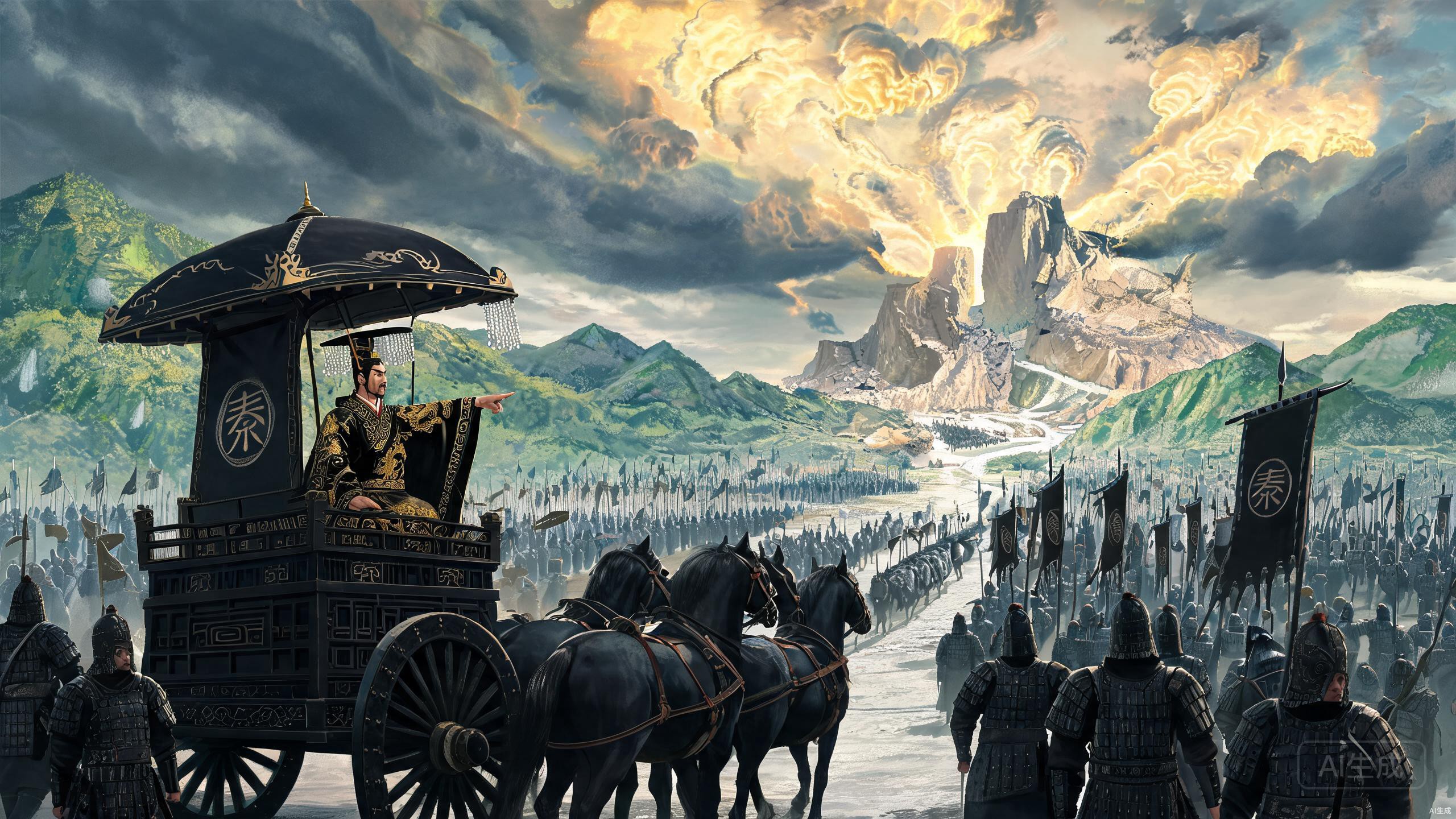
After unifying the six warring states in 221 BC, Qin Shi Huang (秦始皇) established China's first centralized imperial dynasty. To consolidate his rule and intimidate the realm, he embarked on multiple inspection tours — and one key purpose of his eastern expeditions was to suppress the "Emperor Qi" (天子气) rising in various regions.
Qin Shi Huang attached great importance to Feng Shui and the art of "Qi observation" (望气). According to the Records of the Grand Historian (《史记》), he frequently dispatched fangshi (方士) — esoteric specialists — to observe the skies and landscapes, searching for any "Emperor Qi" that might threaten the Qin dynasty. This obsession with detecting and neutralizing Emperor Qi became the very root of the Feng Shui sabotage events attributed to his reign.
II. The Jinling Emperor Qi Incident
The Qi Observer's Report
In 210 BC, during Qin Shi Huang's fifth inspection tour, the accompanying Qi observers reported to the emperor: "Emperor Qi rises in the southeast" — specifically pointing toward the Jinling (金陵) region, modern-day Nanjing.
This was not the first time Jinling had been flagged for Emperor Qi. Nearly a century earlier, King Wei of Chu (楚威王) had taken action against the same omen, reportedly "burying gold to suppress the royal Qi" (埋金镇王气) in this area. Yet Qin Shi Huang evidently considered Chu's suppression incomplete — the Emperor Qi of Jinling still lingered.
Qin Shi Huang's Sabotage Measures
Qin Shi Huang adopted the fangshi's recommendations and carried out a systematic destruction of Jinling's Feng Shui:
1. Excavating the Qinhuai River — Severing the Dragon Vein
The emperor ordered the excavation (or dredging) of a waterway channeling Huai River water through the city and into the Yangtze — the river later known as the Qinhuai River (秦淮河). From a Feng Shui perspective, the purpose of this excavation was to "drain" (泄) the Earth Qi (地气) — by threading water through the Dragon Vein (龙脉), the Emperor Qi buried beneath Jinling would be released and dispersed.
Cultural Context: In Feng Shui, a Dragon Vein represents the underground channel through which Earth Qi flows. Severing it is like cutting the circulatory system of the land — disrupting the energy patterns that would otherwise nurture a capital city. The Qinhuai River carving straight through the city created what Feng Shui masters call a "Dragon body pierced" (龙身被穿) configuration.
2. Renaming the City "Moling" — Degrading the Land's Status
Qin Shi Huang renamed Jinling to "Moling" (秣陵). The character "秣" (mò) means animal fodder, while "陵" refers to a hill or mound. Naming the imperial seat with "fodder" carried the symbolic intent of degrading a kingly land into a pasture — lowering the city's prestige through its very name.
In ancient Chinese belief, place names held powerful symbolic meaning. Choosing an auspicious name could elevate a location's energy field, while assigning a demeaning name could diminish it. Renaming Jinling to Moling was a deliberate application of this principle.
3. Banishing Criminals to Defile the Land
Historical records indicate that Qin Shi Huang also exiled convicts to Moling in order to "defile" (污) the land. Within Feng Shui thinking, a place harboring criminals generates "turbid Qi" (浊气) that can dilute and counteract Emperor Qi.
III. Other Feng Shui Sabotage Events
Qin Shi Huang's suppression of Emperor Qi was not limited to Jinling. Similar measures were taken elsewhere:
The Yunmeng Marsh Incident
Legend has it that during his southern tour to the Yunmeng Marsh (云梦泽), Qi observers reported Emperor Qi rising there as well. The emperor ordered waterways excavated to drain the land's energy.
Empire-Wide Precautions
Across the empire, Qin Shi Huang implemented multiple far-reaching measures to guard against Emperor Qi:
- Frequent capital relocations and inspection tours: Using imperial presence to overwhelm local royal Qi
- Confiscating all weapons: Melting them down into twelve bronze giants, materially eliminating the means of rebellion
- Burning books and burying scholars: Destroying texts and silencing fangshi who might spread prophecies of "the rise of a new king"
IV. Feng Shui Principles Behind the Sabotage
The Principles of Qi Observation
The ancient art of "Qi observation" (望气) was a vital component of Feng Shui practice. Observers claimed to discern Emperor Qi by examining the colored auras above mountains and rivers:
- Purple Qi (紫气): The most noble, indicating the birth of an emperor
- Red Qi (赤气): Indicating generals and high ministers
- Yellow Qi (黄气): Indicating wealthy merchants and tycoons
- Green/Blue Qi (青气): Indicating scholars and literary figures
- White Qi (白气): Indicating military champions
- Black Qi (黑气): Indicating ominous Sha Qi (harmful energy)
Jinling was said to have Purple Qi gathering above it — hence the report of Emperor Qi.
The Methods of Feng Shui Destruction
The techniques Qin Shi Huang used against Jinling exemplify several classic Feng Shui sabotage methods:
Method 1: Severing the Dragon (断龙)
By excavating rivers or roads, the Dragon Vein's continuity is broken, preventing Earth Qi from accumulating. The Qinhuai River excavation is a textbook example of "Dragon-severing" (断龙).
Method 2: Draining Qi (泄气)
By channeling water through the land, the accumulated underground Qi flows away along the waterway. In Feng Shui, water is both a "Qi retainer" (界气) and a "Qi drainer" (泄气).
Method 3: Renaming (改名)
Altering a place's name changes its energetic signature. Changing "Jinling" (金陵, where "金" means "gold" — precious) to "Moling" (秣陵, where "秣" means "fodder" — lowly) symbolically diminished the land's status.
Method 4: Defiling the Land (污地)
By exiling criminals to the area or placing秽 objects at critical Feng Shui positions, "turbid Qi" dilutes and overwhelms "royal Qi."
V. Historical Impact of the Events
Impact on Nanjing's History
After Qin Shi Huang's sabotage of Jinling's Feng Shui, the city did not produce a unifying emperor for several hundred years. It was only during the Three Kingdoms period, when Sun Quan established his capital at Jianye (建业, modern Nanjing), that Nanjing first became a seat of imperial power. Yet as with King Wei of Chu's earlier gold-burying, most dynasties that made Nanjing their capital enjoyed relatively short reigns.
The Persistence of "Emperor Qi" Beliefs
The Qin Shi Huang episode further entrenched the notion of "Emperor Qi" in Chinese political culture. Subsequent emperors took Feng Shui and Qi observation seriously:
- Emperor Wu of Han repeatedly dispatched Qi observers
- The Tang Dynasty established a dedicated "Court of Celestial Observation" (司天台) for Qi observation
- After Ming Dynasty founder Zhu Yuanzhang (朱元璋) established his capital at Nanjing, Feng Shui masters advised relocating the capital to ensure dynastic longevity
The Cultural Significance of the Qinhuai River
The Qinhuai River that Qin Shi Huang excavated (or dredged) eventually became Nanjing's most important waterway and cultural symbol. The "Ten-Li Qinhuai" (十里秦淮) became synonymous with Nanjing itself, nurturing rich cultural traditions along its banks. This was perhaps the one outcome Qin Shi Huang never anticipated — his attempt to destroy Feng Shui inadvertently created a flourishing center of civilization.
VI. Historical Reflections
Feng Shui and Politics
The Qin Shi Huang sabotage events vividly illustrate the intimate relationship between Feng Shui and political power. In ancient China, Feng Shui was not merely a folk belief — it was an instrument of statecraft. Emperors used Feng Shui to legitimize their own rule and to neutralize threats to it.
The Duality of Destruction and Preservation
Ironically, by attempting to destroy Jinling's Feng Shui, Qin Shi Huang may have inadvertently shaped Nanjing's distinctive character. The Qinhuai River boosted transportation and commerce, transforming the city into a prosperous metropolis. This demonstrates that the consequences of Feng Shui sabotage can be complex and multi-layered.
Modern Lessons
Qin Shi Huang's fear of Emperor Qi reflects a universal reality of unified empires: the ruler's vigilance against regional power centers. Though cloaked in the language of Feng Shui, this vigilance was driven by the fundamental need for political control.
This article is compiled from sources including 《水三千年:中国古代帝王的风水事件》, presented as historical narrative for cultural research purposes.
Related Articles
- [[../07-风水故事/03-Qin Shi Huang Severing Jinling's Dragon Vein.md|Qin Shi Huang Severs Jinling's Dragon Vein: The Feng Shui Panic of the First Emperor]]
- [[../01-风水入门/42-皇家风水与民间风水.md|Royal Feng Shui vs. Folk Feng Shui: From the Forbidden City to Common Homes]]
- [[../07-风水故事/21-秦始皇骊山陵.md|Qin Shi Huang's Mausoleum at Lishan: The Underground Kingdom of the First Emperor]]
- [[../06-风水文化与历史/03-楚威王埋金镇王气.md|King Wei of Chu Buries Gold to Suppress Royal Qi: The Nanjing Feng Shui Legend]]
Remember: Feng Shui seeks to balance Yin and Yang energies — the dual forces that shape all existence.
How to Apply Historical Wisdom Today
- Study the classics: Read core texts like the Book of Burial to understand foundational principles
- Observe landscape patterns: Notice how natural landforms create different energy qualities
- Respect tradition: Honor the accumulated wisdom while adapting it to modern contexts
- Learn from masters: Study how historical Feng Shui experts applied principles in real cases
- Connect past to present: Use historical examples to inform your own space planning decisions
- Balance the Five Elements: Incorporate Wood, Fire, Earth, Metal, and Water in your décor for harmonious energy