Zang Shu (Book of Burial) by Guo Pu: The Essence of Feng Shui Theory
The *Zang Shu* (葬书, Book of Burial), also known as the *Zang Jing* (Classic of Burial), is the foundational Feng Shui classic authored by Guo Pu (郭璞), a scholar of the Eastern Jin Dynasty. It is unive
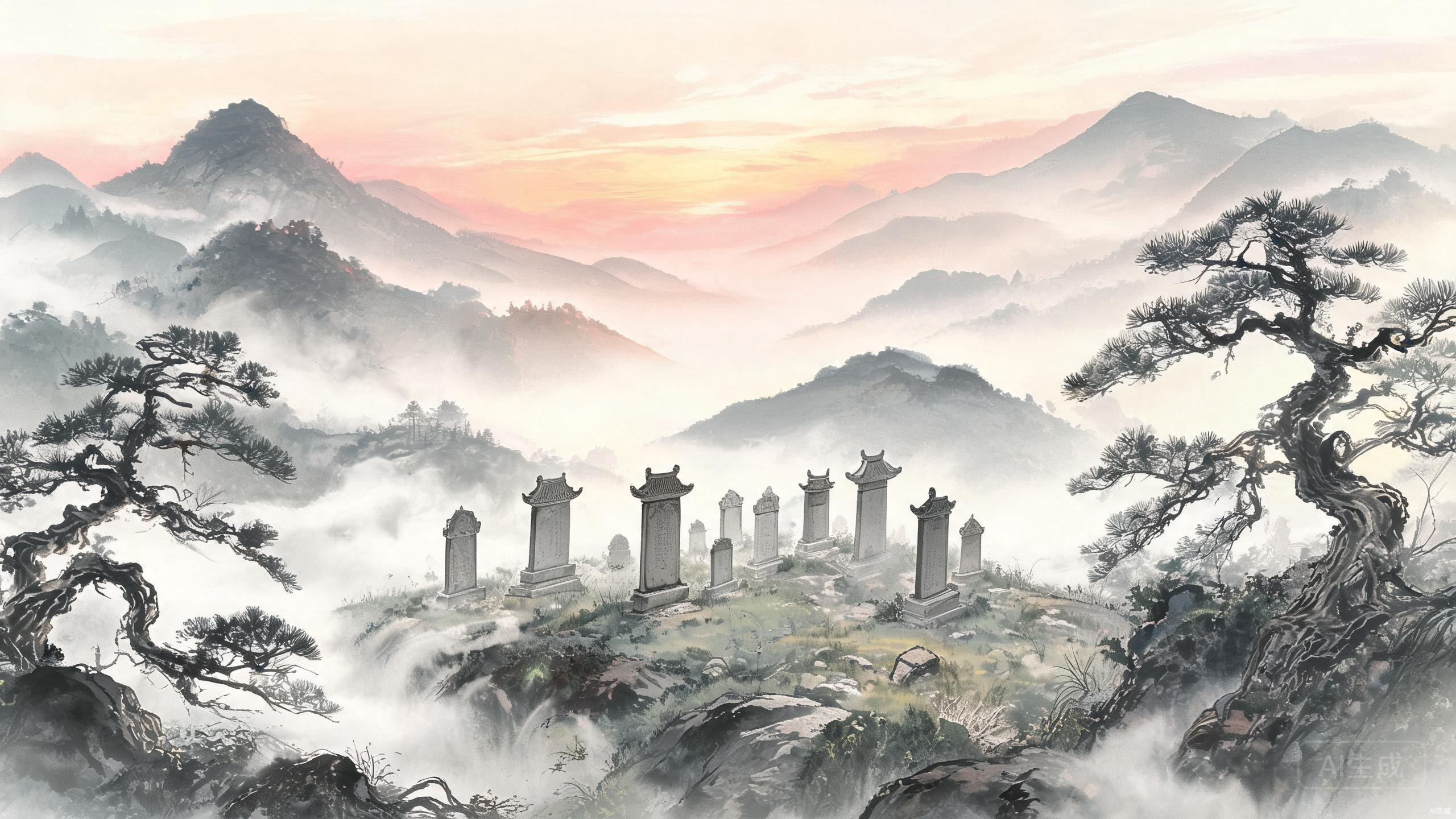
Introduction: The Status of Zang Shu in the History of Feng Shui
The Zang Shu (葬书, Book of Burial), also known as the Zang Jing (Classic of Burial), is the foundational Feng Shui classic authored by Guo Pu (郭璞), a scholar of the Eastern Jin Dynasty. It is universally recognized as the founding text of the Chinese Feng Shui theoretical system. In the history of Chinese Feng Shui, the Zang Shu holds an unparalleled position of reverence — virtually every Feng Shui scholar throughout the ages has regarded it as the ultimate authority.
The book's most celebrated assertion — "Qi rides the wind and scatters, but is retained when encountering water" — became the central proposition of all subsequent Feng Shui theory, and it is this very passage that established "Feng Shui" as the formal name of this discipline. Though the Zang Shu is relatively brief, its theoretical depth and systematic rigor reached unprecedented heights, exerting a profound and lasting influence on the development of Feng Shui for centuries to come.
Cultural Context: The Zang Shu is to Feng Shui what the I Ching is to Chinese philosophy — a foundational scripture from which countless schools and interpretations branched. When a Feng Shui master today references "the classics," this is the text they mean.
Guo Pu: Life and Scholarly Background
The Life of Guo Pu
Guo Pu (郭璞, 276–324 AD), courtesy name Jingchun (景纯), was a native of Wenxi in Hedong (present-day Wenxi County, Shanxi Province). During the Eastern Jin Dynasty, he was a renowned scholar, literary figure, etymologist, and Feng Shui master.
Born into an official family, Guo Pu was an avid reader from childhood, mastering the classics, astronomy, calendrical calculations, and divination. Yet he is best remembered for his extraordinary achievements in Feng Shui, a field in which he is honored as the founding father.
Cultural Context: In ancient China, "Kanyu" (堪舆, the formal name for Feng Shui) was a hereditary and closely guarded knowledge passed within elite circles. Guo Pu's contribution was not only theoretical — he was also one of the first to formally codify Feng Shui principles into a written system that could be studied and transmitted.
Guo Pu's life was filled with legendary episodes. According to the Book of Jin · Biography of Guo Pu (Jin Shu · Guo Pu Zhuan), he was extraordinarily skilled in divination, able to foresee fortune and misfortune with uncanny accuracy. He served as a diviner for many nobles and officials, and his predictions often proved true. Ironically, Guo Pu himself could not escape his own fate. In 324 AD, when the warlord Wang Dun plotted rebellion, Guo Pu boldly spoke against the plot and was executed for his defiance — at the age of forty-nine.
Though his life ended tragically, his intellectual legacy endured through the ages. The Zang Shu in particular secured his position as the founding patriarch of Chinese Feng Shui.
Guo Pu's Scholarly Contributions
Beyond the Zang Shu, Guo Pu made multifaceted contributions to scholarship. He was a major figure in Chinese etymology (xungu xue, 训诂学), authoring meticulous commentaries on ancient classics including the Er Ya (尔雅), Fang Yan (方言), Shan Hai Jing (山海经, Classic of Mountains and Seas), and the Mu Tianzi Zhuan (穆天子传). His annotations were so precise and thorough that they remain essential references for scholars studying these texts today.
Guo Pu was also an accomplished literary figure. His works You Xian Shi (游仙诗, Poems of Wandering Immortals) and Jiang Fu (江赋, Rhapsody on the River) occupy important places in the history of Chinese literature.
This diverse scholarly background enabled Guo Pu to synthesize multiple intellectual traditions when composing the Zang Shu. He wove together pre-Qin philosophical thought, geographical knowledge, and folk belief into a unified theoretical system. His etymological precision gave the Zang Shu its concise and accurate language; his literary talent lent it grandeur; and his philosophical depth rendered it systematically rigorous.
Core Content and Theories of the Zang Shu
The Theory of Vital Qi
The central theory of the Zang Shu is the concept of Vital Qi (生气, sheng qi). In its opening passage, Guo Pu declares: "Burial means riding upon Vital Qi" (葬者,乘生气也). This single statement encapsulates the fundamental purpose of burial practices: by selecting an appropriate site, the deceased's remains can receive the Vital Qi of heaven and earth, thereby blessing descendants with good fortune.
Guo Pu elaborates: "The Qi of Yin and Yang exhales as wind, rises as clouds, descends as rain, and flows within the earth as Vital Qi." (夫阴阳之气,噫而为风,升而为云,降而为雨,行乎地中而为生气。) He believed Vital Qi is the underground movement of Yin and Yang (阴阳, yin yang) energies — the force that nourishes all living things and enables life to flourish. In selecting a burial site, the key is to find locations where Vital Qi gathers and to avoid places where it disperses.
Guo Pu's understanding of Vital Qi represents an inheritance and development of the pre-Qin philosophy of Qi. In the I Ching (周易) and Daoist thought, Qi is the fundamental element constituting all things in the universe. By introducing this philosophical concept into Feng Shui, Guo Pu endowed the discipline with a solid philosophical foundation.
Cultural Context: The concept of "riding Vital Qi" (乘生气) was not mere superstition — it reflected an ancient Chinese worldview in which the living, the dead, and the natural environment remained in continuous energetic exchange. This idea of unbroken connection between generations is a cornerstone of Chinese ancestral culture.
The Classic Proposition: "Qi Rides the Wind and Scatters, but Is Retained When Encountering Water"
The most famous assertion in the Zang Shu reads:
"Qi rides the wind and scatters, but is retained when encountering water. The ancients gathered it so it would not disperse, and guided it so it would stay — thus they called it Feng Shui (Wind and Water)." (气乘风则散,界水则止。古人聚之使不散,行之使有止,故谓之风水。)
This passage brilliantly captures the essence of Feng Shui: wind causes Qi to scatter, while water causes Qi to settle. Therefore, the core of Feng Shui practice is to find a location that both avoids wind and accesses water.
This proposition established the two fundamental principles of Feng Shui theory: "Storing Wind" (藏风) and "Gaining Water" (得水). Storing Wind means choosing a sheltered location where Vital Qi will not be dispersed by wind; Gaining Water means positioning near water sources where Vital Qi can gather. This theoretical framework became the basic paradigm for all subsequent Feng Shui development — whether the Form School (形势派) or the Compass School (理气派, Li Qi Pai), neither deviated from this foundational model.
The "Five Unsuitable Burial Terrains" and the "Six Inauspicious Methods"
The Zang Shu establishes the principle of "Five Unsuitable Burial Terrains" — five types of terrain unsuitable for burial:
- Barren Mountain (童山): A barren hill devoid of vegetation
- Broken Mountain (断山): A location where the mountain's energy is fractured
- Rocky Mountain (石山): A mountain with excessive stone and insufficient soil
- Passing Mountain (过山): A mountain range that merely passes through without settling
- Isolated Hill (独山): A solitary mound unconnected to any mountain range
All five terrain types are considered unfavorable for the gathering of Vital Qi and therefore unsuitable as burial sites.
The text also presents the "Six Inauspicious Methods" (六凶) — six burial practices that bring disaster:
- Yin-Yang Mismatch (阴阳差错): Yin and Yang energies incompatible with the site
- Temporal Misalignment (岁时之乖): Poor timing in conducting the burial
- Overreaching Capacity (力小图大): Attempting more than one's resources or station allow
- Arrogant Appropriation (凭福恃势): Seizing auspicious sites through power or influence
- Ceremonial Violation (僭上逼下): Transgressing proper social and ritual hierarchies
- Anomalous Appearance (变应怪见): Strange, irregular, or unnatural formations
The "Six Inauspicious Methods" reveal that Guo Pu valued not only natural geographical factors but also social ethics in Feng Shui practice — a remarkably holistic vision for his time.
The Relationship Between Terrain and Burial Method
The Zang Shu systematically addresses the relationship between terrain and burial method. Guo Pu argued that selecting a burial site requires comprehensive consideration of the incoming Dragon (来龙), the Acupoint (穴场, xue chang), surrounding Sand (砂, sha), Water (水), and facing Direction (朝向). He introduced the concepts of "Momentum" (势, shi) and "Form" (形, xing): "A thousand feet determines momentum; a hundred feet determines form." Momentum refers to the macro-level flow of mountain ranges, while Form refers to the micro-level features of the terrain. In site selection, one must first observe the broad momentum, then examine the detailed form — achieving harmony between the two.
Guo Pu also articulated an important hierarchy: "Gaining Water is primary; Storing Wind is secondary" (得水为上,藏风次之). He considered water more important than wind among Feng Shui elements because water is both the carrier and the gatherer of Vital Qi. An ideal burial site must have abundant water while avoiding direct exposure to wind.
Quick Tips: You can apply Guo Pu's "water before wind" principle to modern home selection:
- Prioritize properties near flowing water (rivers, gentle streams) or accessible water infrastructure
- Avoid homes on exposed hilltops with no wind protection
- Look for locations where both conditions are satisfied — sheltered yet near water
Versions and Transmission of the Zang Shu
Historical Commentaries and Textual Evolution
Since its inception, the Zang Shu has received extensive commentary and interpretation across the centuries. The most notable annotated editions include:
- Zang Shu Zhu (葬书注, Commentary on the Book of Burial) by Yang Yunsong (杨筠松) of the Tang Dynasty
- Zang Shu Zheng Yi (葬书正义, Correct Meaning of the Book of Burial) by Cai Yuanding (蔡元定) of the Song Dynasty
- Zang Jing Yi (葬经翼, Wings of the Classic of Burial) by Miao Xiyong (缪希雍) of the Ming Dynasty
These commentaries not only explained the original text in detail but also supplemented and developed Guo Pu's theories by integrating the practical experience of various schools.
It is worth noting that multiple versions of the Zang Shu circulated historically, with variations in content among them. The earliest surviving edition is preserved in the Yongle Dadian (永乐大典), while the most widely transmitted version is the one included in the Siku Quanshu (四库全书, Complete Library of the Four Treasuries) of the Qing Dynasty. Scholars have determined that the existing Zang Shu likely does not represent Guo Pu's complete original work — it contains additions and modifications by later scholars. Nevertheless, its core theories and principal ideas remain authentically Guo Pu's.
The Zang Shu's Influence on Later Generations
The Zang Shu's influence on subsequent Feng Shui was comprehensive and profound. First, it established "Feng Shui" as the formal name of the discipline, elevating it into an independent field of study. Second, it constructed a theoretical system centered on Vital Qi, providing the framework for all later development. Third, it articulated the fundamental principle of "Storing Wind and Gaining Water" (藏风得水), which became the foundational standard of Feng Shui practice.
After the Tang Dynasty, Feng Shui gradually diverged into two major schools — the Form School (形势派) and the Compass School (理气派) — but both regarded the Zang Shu as their fundamental scripture. The Form School's emphasis on observing mountain terrain traces directly back to the "momentum and form" theories in the Zang Shu; the Compass School's focus on directional and temporal calculation is also deeply connected to the Zang Shu's ideas about Yin-Yang and the Five Elements (五行, Wu Xing).
Academic Value and Modern Significance of the Zang Shu
Philosophical Value
From a philosophical perspective, the Zang Shu constructs a theoretical system embodying "Unity of Heaven and Humanity" (天人合一). Guo Pu used Qi as the纽带 connecting heaven, earth, and humankind. He believed that through the ritual of burial, the deceased could merge with the Qi of heaven and earth, achieving a continuation and transformation of life. This thought exemplifies the fundamental characteristic of ancient Chinese philosophy — the view that humanity and nature form an organic, unified whole.
Scientific Value
From a scientific perspective, many of the Zang Shu's observations align with modern environmental science, geology, and ecology. For example, Guo Pu's "Five Unsuitable Burial Terrains" actually reflect ancient understanding of how geological conditions relate to human health and safety:
- Barren Mountains often indicate poor soil quality or harmful mineral content
- Broken Mountains and Passing Mountains frequently correspond to geological fault lines or landslide-prone zones
While these insights were expressed through the framework of Feng Shui theory, their underlying observations deserve serious study by modern science.
Quick Tip: When evaluating a property today, look for the modern equivalents of the "Five Unsuitable Terrains": avoid sites with poor soil, proximity to fault lines, unstable slopes, or contaminated land. Guo Pu's ancient warnings translate remarkably well into contemporary geological and environmental concerns.
Cultural Value
From a cultural perspective, the Zang Shu is a vital component of traditional Chinese culture, reflecting ancient people's profound reflections on death, life, nature, and society. Its "Five Unsuitable Terrains" and "Six Inauspicious Methods" embody ancient ethical concepts and social norms, making the text an invaluable resource for studying Chinese social thought and cultural psychology.
Conclusion
As the founding work of Chinese Feng Shui, the Zang Shu possesses inestimable theoretical value and historical significance. Through his profound scholarship and rich practical experience, Guo Pu constructed a complete Feng Shui theoretical system that laid a solid foundation for the discipline's later development. While certain perspectives in the Zang Shu bear the limitations of its era, the philosophical wisdom and cultural value it contains remain worthy of careful study andinheritance (inheritance).
In contemporary society, we should approach this cultural heritage with a scientific attitude — extracting its essence and discarding its dross — so that it may continue to play a constructive role in the modern world.
Related Articles
- [[../07-风水故事/13-郭璞择葬传说.md|The Legend of Guo Pu's Burial Site Selection — The Founding Father's Cemetery Secrets]]
- [[../07-风水故事/58-风水与丧葬.md|Feng Shui and Funeral Traditions — The Ancient Practice of Yin Dwelling Feng Shui]]
- [[../06-风水文化与历史/43-魏晋南北朝风水:玄学影响下的风水发展.md|Wei, Jin, and Northern & Southern Dynasties Feng Shui: Development Under Metaphysical Influence]]
- [[../06-风水文化与历史/20-Feng Shui Masters Through History:郭璞——风水鼻祖的生平与贡献.md|Masters of Feng Shui Through the Ages: Guo Pu — Life and Contributions of the Founding Father]]