Zeng Guofan's Feng Shui Philosophy: From Obsession to Trust in Destiny
## 1. Zeng Guofan and Feng Shui Zeng Guofan (曾国藩, 1811–1872), courtesy name Bohan (伯涵) and pseudonym Disheng (涤生), was a native of Xiangxiang (湘乡) in Hunan Province. He served as a prominent statesman
Zeng Guofan's Feng Shui Philosophy: From Obsession to Trust in Destiny — Lucky Energy & Wisdom
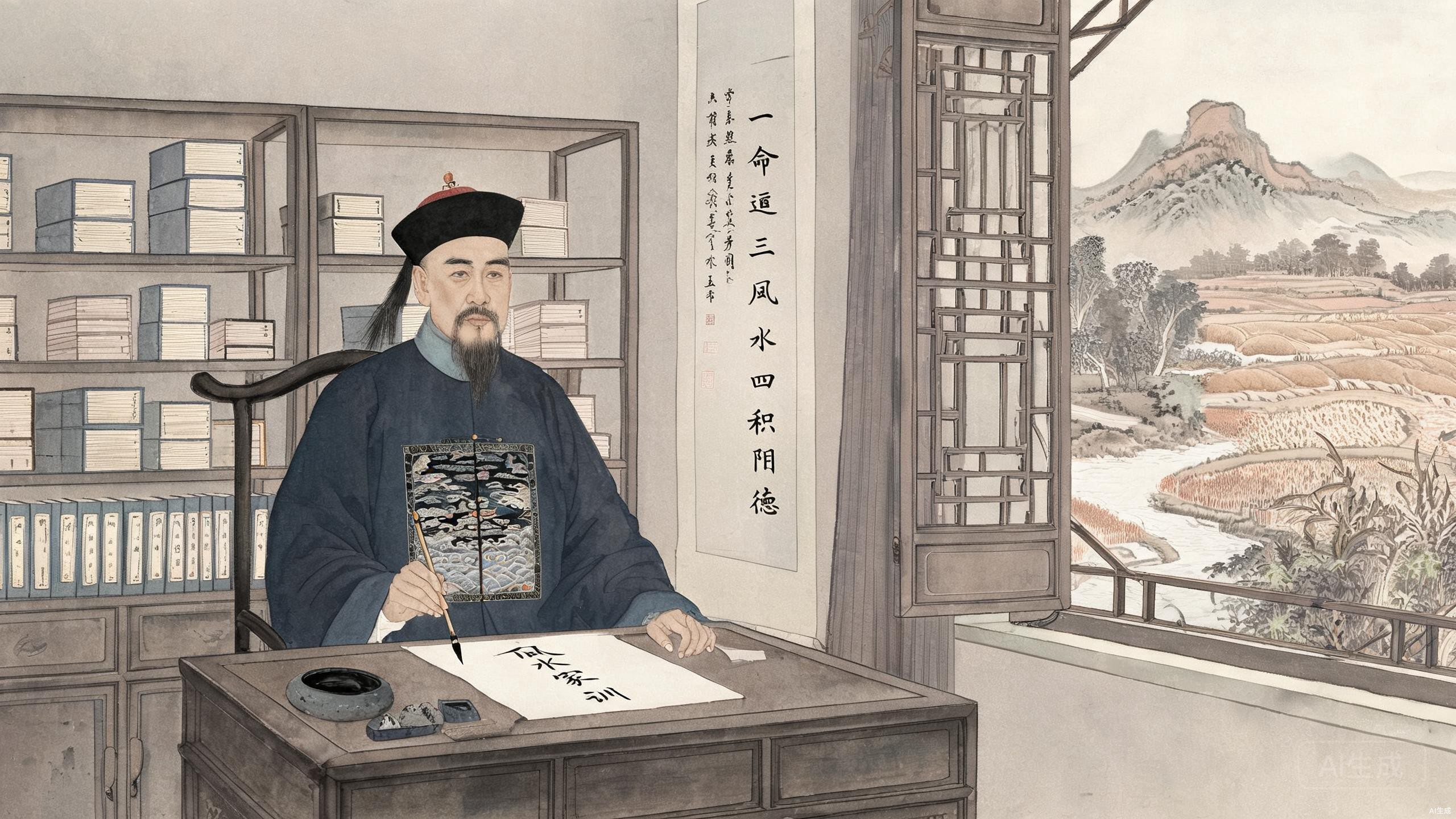
1. Zeng Guofan and Feng Shui
Zeng Guofan (曾国藩, 1811–1872), courtesy name Bohan (伯涵) and pseudonym Disheng (涤生), was a native of Xiangxiang (湘乡) in Hunan Province. He served as a prominent statesman of the late Qing Dynasty, a renowned Confucian scholar of the Cheng-Zhu School (理学), and the founder of the Xiang Army (湘军). As one of the most influential figures in modern Chinese history, Zeng Guofan shared a complex and profound relationship with Feng Shui throughout his life.
His views on Feng Shui evolved through three distinct stages: early-life obsessive exploration, middle-age rational examination, and later-life trust in destiny — a transformation that reflects the typical evolution of attitudes toward Feng Shui among traditional Chinese scholar-officials.
Cultural Context: Feng Shui's rich history spans over 3,000 years, evolving from practical landscape observation into a sophisticated system of environmental harmony. Understanding this heritage helps you appreciate why certain principles endure — they're rooted in deep observation of how natural forces shape human fortune. These ancient insights remain surprisingly applicable to modern spaces.
2. Early Years: Obsessive Exploration of Feng Shui
Family Feng Shui Tradition
Zeng Guofan was born into a farming-scholar family in Xiangxiang, Hunan. The Zeng family placed great importance on Feng Shui. His grandfather, Zeng Xinggang (曾星冈), was particularly meticulous about Yang Dwelling (阳宅) Feng Shui, and the site selection and layout of the family's ancestral home were carefully considered through a Feng Shui lens.
Zeng Xinggang (曾星冈) often said: "I don't trust books; I trust luck." This emphasis on "luck" and Feng Shui deeply influenced young Zeng Guofan.
Zeng Guofan's Early Feng Shui Practices
Zeng Guofan had a strong interest in Feng Shui in his early years, which manifested in several ways:
1. Selecting Burial Sites for Family Members
After his mother passed away, Zeng Guofan personally participated in the selection of her burial site. According to his diaries and family letters, he repeatedly invited Feng Shui masters to survey the terrain and studied Feng Shui classics himself, striving to find an auspicious burial site for his mother.
He wrote in a family letter: "The burial site for our late mother must be chosen with the utmost care; it cannot be handled carelessly." This reflects his deep respect for Yin Dwelling (阴宅) Feng Shui.
2. Attention to Yang Dwelling Feng Shui
Zeng Guofan was also highly attentive to the Feng Shui of his own residence and office. During his tenure in Beijing, he moved several times, and each relocation considered factors such as the house's orientation and surrounding environment.
3. Study of Feng Shui Classics
As a scholar of Neo-Confucianism, Zeng Guofan had considerable knowledge of Feng Shui theory. He studied classics such as Zang Shu (Book of Burial) and Han Long Jing (Classic of Shaking Dragon), recording his reflections in his diary.
3. Middle Years: Rational Examination of Feng Shui
Influence of Neo-Confucian Cultivation
As his Neo-Confucian cultivation deepened, Zeng Guofan's attitude toward Feng Shui began to shift. Neo-Confucianism emphasizes "preserving the principles of heaven and eliminating human desires," valuing virtue over technical calculations. Zeng Guofan gradually came to realize that over-reliance on Feng Shui was putting the cart before the horse.
"Virtue Outweighs Feng Shui"
Zeng Guofan repeatedly expressed the view that "virtue is more important than Feng Shui" in his diaries and family letters:
"Whether the burial site is good is certainly one matter, but the fundamental principle lies in the virtue of the descendants. If virtue is not cultivated, even an auspicious site will bring no benefit."
This view reflects his rational understanding of Feng Shui: Feng Shui has its merits, but it is by no means the fundamental determinant of fate. Personal virtue and effort are what truly matter.
Grave Selection Reflects Character
Zeng Guofan proposed a unique perspective: the way one selects a burial site reflects one's character.
He believed:
- Those who excessively pursue the perfect Feng Shui site often harbor aluck mentality and lack pragmatism
- Those who completely disregard Feng Shui appear unfilial and disrespectful
- Those who approach Feng Shui rationally and with restraint are true gentlemen
Zeng Guofan advised his children in family letters: "Site selection should not be too strict — being too strict is not the mindset of a gentleman. Yet it should not be careless either — being careless is unfilial." This Doctrine of the Mean (中庸之道) embodies his rational view of Feng Shui.
4. Later Years: Trust in Destiny
Maturation of His View on Destiny
In his later years, after experiencing major historical events such as the Taiping Rebellion and the Self-Strengthening Movement, Zeng Guofan gained deeper insights into the nature of human destiny. His Feng Shui philosophy ultimately evolved into a deep trust in destiny (笃信天命).
Zeng Guofan believed that all human encounters are ultimately determined by "destiny" (天命), and Feng Shui is merely one expression of it. He wrote in his diary:
"Whether one's achievements succeed or fail: human effort accounts for half, and destiny accounts for half."
"Trusting Destiny Over Feng Shui"
In his later years, Zeng Guofan gradually shifted from Feng Shui to a destiny-based worldview:
1. Destiny Supersedes Feng Shui
Zeng Guofan believed that Feng Shui is only one external factor influencing fate, while destiny is the fundamental principle. A favorable destiny is superior to favorable Feng Shui; with a good destiny, everything naturally falls into place.
2. Cultivating Virtue Can Transform Fate
Zeng Guofan believed that although destiny is difficult to defy, cultivating virtue can improve one's fate. In his family letters, he repeatedly emphasized virtues such as "diligence" (勤), "reverence" (敬), and "sincerity" (诚), considering these more important than Feng Shui.
3. Do Your Best, Accept Destiny
Zeng Guofan's life philosophy was "do your best, and accept destiny" (尽人事,听天命) — work diligently on what you can control, and leave the outcome to destiny. This attitude is neither passive nor blindly optimistic, reflecting the wisdom of a mature statesman.
5. Core Principles of Zeng Guofan's Feng Shui Philosophy
1. Feng Shui Has Merit but Should Not Be Superstitiously Followed
Zeng Guofan acknowledged that Feng Shui has its rationale, believing that the forms of mountains and rivers do indeed affect human psychology and life. However, he opposed excessive superstition, noting that "those who superstitiously follow Feng Shui often derail their affairs."
2. Virtue as the Root, Feng Shui as the Branch
Zeng Guofan consistently upheld the principle of "virtue as the foundation":
- Personal moral cultivation is more important than Feng Shui
- The prosperity of a family depends on the education of its children, not on the Feng Shui of ancestral graves
- "A family that accumulates goodness will have abundant blessings" (积善之家,必有余庆) is more reliable than any Feng Shui remedy
3. Filial Piety Supersedes Feng Shui
Zeng Guofan believed that when selecting a burial site for one's parents, the heart of filial piety matters more than Feng Shui:
- "Burial means concealment; it is meant to be unseen by others" — the essence of burial is to express filial devotion
- Excessively pursuing an auspicious burial site may actually delay the burial itself, violating filial duty
- "Sincere filial devotion is far better than wasting resources to seek an auspicious site"
4. The Doctrine of the Mean
Zeng Guofan's attitude toward Feng Shui embodied the Confucian Doctrine of the Mean (中庸之道):
- Neither completely rejecting Feng Shui nor blindly believing in it
- In practice, "site selection should not be too strict, nor should it be careless"
- Guided by rationality, pragmatism, and restraint
6. Historical Insights from Zeng Guofan's Feng Shui Philosophy
1. The Scholar-Official's Attitude Toward Feng Shui
Zeng Guofan's Feng Shui philosophy represents the typical attitude of late Qing scholar-officials: influenced by traditional culture to acknowledge Feng Shui, examined rationally through a Neo-Confucian lens, and ultimately returning to a belief in destiny. This approach is more mature than either complete superstition or outright rejection.
2. The Relationship Between Virtue and Fate
Zeng Guofan practiced the principle of "cultivating virtue to transform fate" throughout his life. Rising from an ordinary farmer's son to a prominent late Qing statesman, his success stemmed more from personal effort and moral cultivation than from Feng Shui protection — a profound lesson for posterity.
3. Embodiment of Pragmatic Spirit
Zeng Guofan's achievements in military and political affairs benefited from his pragmatic spirit — relying on solid work rather than supernatural forces. This spirit is also reflected in his attitude toward Feng Shui.
4. Lessons for Modern Times
Zeng Guofan's Feng Shui philosophy still offers insights for modern people:
- Respect traditional culture without blind superstition
- Focus on personal effort and establish oneself through virtue
- View environmental factors rationally, but never abandon personal agency
- Apply the Doctrine of the Mean to all forms of "technical calculations" in life
7. Zeng Guofan's Famous Sayings on Feng Shui
- "Whether the burial site is good is certainly one matter, but the fundamental principle lies in the virtue of the descendants."
- "Site selection should not be too strict — being too strict is not the mindset of a gentleman. Yet it should not be careless either — being careless is unfilial."
- "Whether one's achievements succeed or fail: human effort accounts for half, and destiny accounts for half."
- "A family that accumulates goodness will have abundant blessings; a family that accumulates evil will have abundant misfortune. This principle is more reliable than Feng Shui."
- "I don't trust books; I trust luck. But trusting luck is not as good as trusting virtue."
This article is compiled from materials including "emphasize Feng Shui,firmly believe in fate,Zeng Guofan's View on Feng Shui" and is provided for cultural research reference.
Related Articles
- [[../07-风水故事/01-曾国藩葬地择选记.md|Zeng Guofan's Grave Selection: The Feng Shui Wisdom of "Heaven Detests Cunning"]]
- [[../07-风水故事/51-沈竹祁传奇.md|The Legend of Shen Zhuqi: The Reviver of Xuan Kong Feng Shui in the Late Qing Dynasty]]
- [[../01-风水入门/10-风水常见误区澄清.md|Common Feng Shui Misconceptions: Distinguishing Superstition from Science]]
- [[../01-风水入门/51-风水测量工具大全.md|The Complete Feng Shui Measurement Toolkit: From Traditional to Modern Equipment]]
Remember: Feng Shui seeks to balance Yin and Yang energies — the dual forces that shape all existence.
How to Apply Historical Wisdom Today
- Study the classics: Read core texts like the Book of Burial to understand foundational principles
- Observe landscape patterns: Notice how natural landforms create different energy qualities
- Respect tradition: Honor the accumulated wisdom while adapting it to modern contexts
- Learn from masters: Study how historical Feng Shui experts applied principles in real cases
- Connect past to present: Use historical examples to inform your own space planning decisions
- Balance the Five Elements: Incorporate Wood, Fire, Earth, Metal, and Water in your décor for harmonious energy