Carp Feng Shui: The Lucky Carp Leaping Over Dragon Gate Legend
"The carp leaps over the Dragon Gate and transforms into a dragon." (鲤鱼跃龙门,过而为龙) This ancient legend embodies the timeless aspiration of "rising from humble origins to noble heights." In Feng Shui acu
Carp Feng Shui: The Legendary "Carp Leaping Over the Dragon Gate" Lucky Burial Site
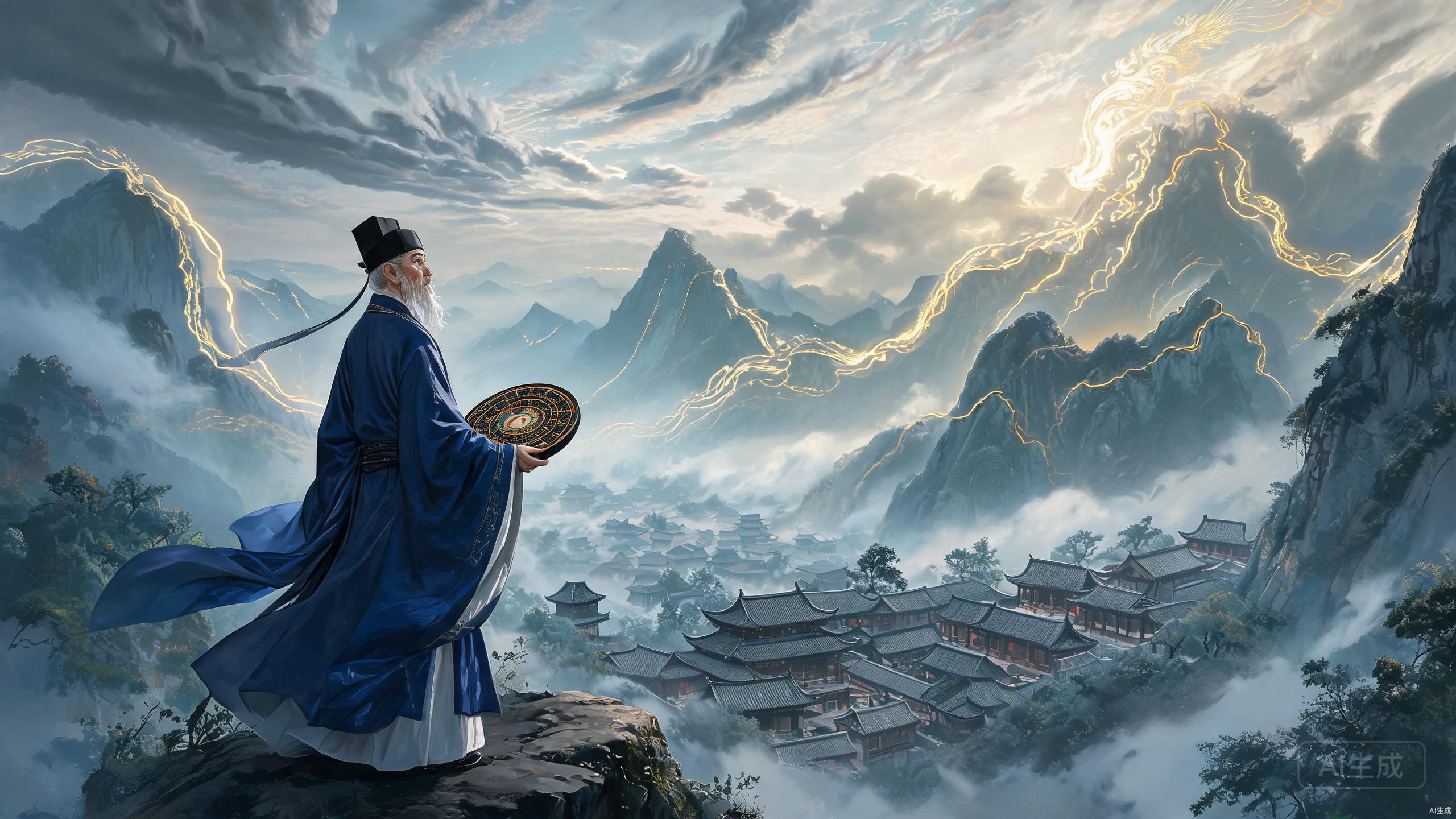
"The carp leaps over the Dragon Gate and transforms into a dragon." (鲤鱼跃龙门,过而为龙) This ancient legend embodies the timeless aspiration of "rising from humble origins to noble heights." In Feng Shui acupoint forms, the "Carp Land" (鲤鱼地) is among the most beloved auspicious burial sites in folk tradition — said to produce "scholars from poor families" (寒门贵子) who break through life's barriers.
The Carp in Feng Shui
The carp holds a uniquely honored position in Chinese culture. It symbolizes "abundance year after year" (年年有余, the word "fish" sounding like "surplus") and represents upward striving through the legend of leaping over the Dragon Gate. In Feng Shui, the carp belongs to the aquatic family and embodies the spirit of Water (水). Because of its dragon-transformation story, it also signifies "rising from low to noble status" (化贱为贵).
Carp Land refers to a Feng Shui acupoint whose mountain shape or terrain resembles a carp. Its defining characteristics include: a mountain body shaped like a fish, with the front tapering to a fish-head point and the tail descending low — the overall form appearing lively and dynamic, as if poised to leap.
| Carp Land Feature | Feng Shui Meaning |
|---|---|
| Mountain shaped like a fish body | Lively and active energy; signifies progress |
| Front end pointed like a fish head | Forward momentum; signifies standing out |
| Tail descending low like a fish tail | Built-in power reserve; signifies lasting strength |
| Nearby flowing water | "Carp gains water"; signifies vitality |
| Terrain rising from low to high | Image of leaping the Dragon Gate; signifies transcendence |
The most distinctive meaning of Carp Land is "scholars emerging from humble origins" (寒门出贵子). Unlike Dragon-form land — which signifies generations of nobility — Carp Land signifies "thunder from flat ground" (平地起雷): those born into modest circumstances who suddenly leap to greatness. This is why Carp Land is especially cherished by ordinary families.
The Legend of the Carp Leaping Over the Dragon Gate
A classic folk tale tells this story:
In a certain village lived a poor scholar surnamed Lin. His family was destitute, and he had failed the imperial examinations many times. One day, a Feng Shui master passed through and noticed a small hill beside the village stream. The hill was shaped like a carp, with its fish-head pointing toward a stone bridge across the river (which resembled a Dragon Gate). The master rejoiced: "This is a 'Carp Leaping the Dragon Gate' acupoint! Whoever is buried here will produce descendants capable of 'leaping the Dragon Gate.'"
Lin sold everything he owned and reburied his grandfather at this site. The master instructed: "At the time of burial, you must erect a stone tablet at the fish head with the characters 'Carp Leaps' (鲤跃) carved upon it. Then plant a willow tree at the fish tail to anchor it. Within three years, there will surely be a sign."
Three years later, Scholar Lin passed the imperial examination as Jinshi (进士, presented scholar) and was selected into the Hanlin Academy (翰林). The folk people took this as verification of the "Carp Leaping Over the Dragon Gate" prophecy.
| Carp Land Practice | Action | Meaning |
|---|---|---|
| Burial at the fish body | Acupoint at the fish's belly | The carp receives Qi |
| Tablet at the fish head | Carve "Carp Leaps" (鲤跃) | Fish head has direction; ready to leap the gate |
| Willow planted at the tail | Anchors the fish's tail | Sustained power for the leap |
| "Dragon Gate" ahead | Bridge or mountain pass before the site | There is a "gate" to leap through |
Variations of Carp Land
Carp Land is not limited to a single form. Based on its leaping posture, it can be divided into several variations:
1. Carp Leaping the Dragon Gate (鲤鱼跳龙门)
The most auspicious configuration. Before the Carp Land stands a "gate" — which may be a natural mountain pass, gorge, or a man-made bridge or ceremonial archway. The carp's fish-head faces this "gate" in a leaping posture, signifying "one leap and transformation into a dragon."
Cultural Context: In classical Feng Shui, a "gate" (门) represents a threshold or portal of transformation. Whether natural (a narrow gorge between mountains) or human-made (a bridge or memorial arch), it symbolizes the passage from one state of being to another — perfectly matching the carp's legendary metamorphosis. The interplay of Yin and Yang — the dual forces of dark/light, passive/active — governs all Feng Shui applications.
2. Carp Playing in Water (鲤鱼戏水)
The Carp Land sits by the water's edge, with the fish head facing the water in a playful posture. This configuration signifies "wealth" (富) — the carp has water, and wealth flows abundantly — though not necessarily "noble rank."
3. Carp Turning Over (鲤鱼翻身)
The Carp Land shows a "turning over" posture — the fish head points upward while the tail points down, like a carp flipping itself in mid-leap. This configuration signifies "comeback" (逆袭) — rising from low origins despite a difficult journey.
4. Stranded Carp (鲤鱼搁浅)
An inauspicious configuration. The Carp Land sits on dry ground with no water nearby — like a stranded carp. It signifies "being stuck" (困顿): talent without opportunity, ability unrecognized.
| Variation | Form | Main Outcome |
|---|---|---|
| Carp Leaping the Dragon Gate | Fish head faces "gate," leaping posture | Scholar from humble origins; transformation into dragon |
| Carp Playing in Water | Fish head faces water, playful posture | Wealth, but not necessarily rank |
| Carp Turning Over | Fish head up, flipping upward | Comeback through hardship |
| Stranded Carp | No water; fish on dry land | Talent unrecognized, stuck indifficulties |
Carp Land and the Imperial Examination Culture
The Carp Land legend is deeply connected to China's ancient imperial examination system (科举). "Carp Leaping the Dragon Gate" was already a metaphor for "passing the imperial exams" — humble scholars transforming their status through examination success, just as the carp transforms into a dragon.
During the imperial examination era, many families hoped to find "Carp Land" when choosing ancestral burial sites, praying that their descendants would "achieve distinction on the examination list" (金榜题名). In some regions, "Carp Land" was even directly called "Zhuangyuan Land" (状元地, the land that produces top scholars) or "Hanlin Land" (翰林地).
This cultural psychology reflects the common people's powerful yearning to "change their fate." In a rigidly hierarchical ancient society, "leaping the Dragon Gate" was virtually the only path for children of poor families to rise. The Feng Shui legend of "Carp Land" provided a spiritual anchor for this hope.
Taboos of Carp Land
Although Carp Land is auspicious, it carries certain taboos:
First Taboo: "Fish Without Water" (鱼无水). A carp dies without water. If there is no flowing water near the Carp Land, the carp becomes "stranded," bringing not good fortune but stagnation.
Second Taboo: "Net Sha" (网煞). If mountain shapes resembling fishing nets or crisscrossing roads surround the Carp Land, this is considered "Net Sha" — trapping the carp in a net, blocking its progress.
Third Taboo: "Fish Head Drooping" (鱼头低垂). The Carp Land's fish head should be held high. If it droops downward like a "dead fish," it signifies decay and decline.
Fourth Taboo: "Two Carps Contending" (双鲤相争). If two Carp Lands face each other like competing fish, this signifies "internal conflict" within the family or community.
| Taboo | Manifestation | Consequence |
|---|---|---|
| Fish without water | No flowing water nearby | Carp stranded; stagnation |
| Net Sha | Net-like mountain shapes or roads nearby | Fish trapped in net; progress blocked |
| Fish head drooping | Fish head pointing downward | Image of a dead fish; decline |
| Two Carps contending | Two Carp Lands facing each other | Internal conflict |
The Geographical Basis of Carp Land
From a geographical perspective, "Carp Land" typically refers to terrain with these features:
- Hills beside rivers or lakes: Low hills near water bodies, shaped like a fish body
- Alluvial fans or small delta formations: Small raised landforms created by river deposits, with rounded fish-like shapes
- Small islands or peninsulas in water: Land protruding above water, like a fish floating
These terrains are indeed well-suited for human habitation. Living near water provides access to drinking water, fishing, and transportation — an ideal settlement for ancient peoples. The ancients named these places "Carp" not only for their visual resemblance but also to express the dual aspirations of "prosperity" and "upward striving."
The Modern Meaning of Carp Culture
Although the Carp Land legend carries superstitious elements, the cultural spirit behind it still offers positive meaning:
First, the spirit of advancement. The carp fears no rushing currents and leapswith great effort over the Dragon Gate, symbolizing the courage to overcome hardship and reach new heights.
Second, the common people's dream. Carp Land produces "scholars from humble origins," embodying the longing for "equal opportunity" — no matter your birth, the possibility of "leaping the Dragon Gate" always exists.
Third, the importance of environment. The carp "lives with water and dies without it," reminding us that environment is crucial to development. A good environment helps people succeed; a poor one limits their potential.
How to Apply Carp Land Symbolism in Modern Life
Even though we no longer choose ancestral burial sites by Feng Shui principles, the wisdom behind Carp Land can guide us today:
- Seek your "water": Identify the resources, relationships, and opportunities that energize your life — and stay close to them
- Position yourself toward your "Dragon Gate": Set clear goals that represent transformation and growth, then orient your daily actions toward them
- Avoid "stranded carp" conditions: Don't isolate yourself from supportive communities or nourishing environments, even during difficult periods
- Watch for "Net Sha" obstacles: Recognize external patterns — toxic relationships, dead-end jobs, limiting beliefs — that may be trapping your progress
Quick Tips:
- Place a small water feature (fountain or aquarium) in your home's wealth area to activate the "carp with water" symbolism
- Display carp imagery (paintings, sculptures) facing your main entrance to invite upward-moving energy
- Avoid keeping dried fish decorations or stagnant water displays — they carry "stranded carp" energy
Feng Shui Knowledge Points
- Carp Land (鲤鱼地): A Feng Shui acupoint whose mountain shape or terrain resembles a carp; signifies scholars from humble origins and transformation from low to noble status.
- Carp Leaping Over the Dragon Gate (鲤鱼跃龙门): The most auspicious Carp Land configuration — with a "gate" (mountain pass, bridge, etc.) before it and the fish head facing the gate in leaping posture.
- Stranded Carp (鲤鱼搁浅): An inauspicious configuration where the Carp Land has no nearby water; signifies stagnation and unrecognized talent.
- Net Sha (网煞): Net-like mountain shapes or roads near the Carp Land; signifies blocked progress.
- Scholar from Humble Origins (寒门贵子): The core meaning of Carp Land — those born into modest circumstances who change their fate through effort.
Related Articles
- [[../09-Yin Dwelling风水/12-如何选择风水宝地安葬先人.md|How to Choose a Lucky Feng Shui Burial Site for Your Ancestors]]
- [[../07-风水故事/24-凤凰地传说.md|Phoenix Land Legend: The Feng Shui Treasure of "All Birds Paying Homage to the Phoenix"]]
- [[../07-风水故事/23-蛇形地传说.md|Snake Land Legend: The Feng Shui Mysteries of Winding Mountain Forms]]
- [[../01-风水入门/10-风水常见误区澄清.md|Feng Shui Myths Clarified: Distinguishing Superstition from Science]]
Note on the Five Elements: The Five Elements (Wu Xing) — Wood, Fire, Earth, Metal, and Water — form the foundation of Feng Shui energy theory. Each element interacts with the others in cycles of generation and control, influencing the Qi flow in your environment.