CITIC CLSA Feng Shui Index: The Wall Street Firm Using Feng Shui to Predict the Stock Market
In the global financial world, there exists an extraordinarily unique "research report" — one that ignores GDP growth, skips inflation data, and avoids corporate earnings entirely. Instead, it uses Fe
CITIC CLSA Feng Shui Index: The Wall Street Firm Using Feng Shui to Predict the Stock Market
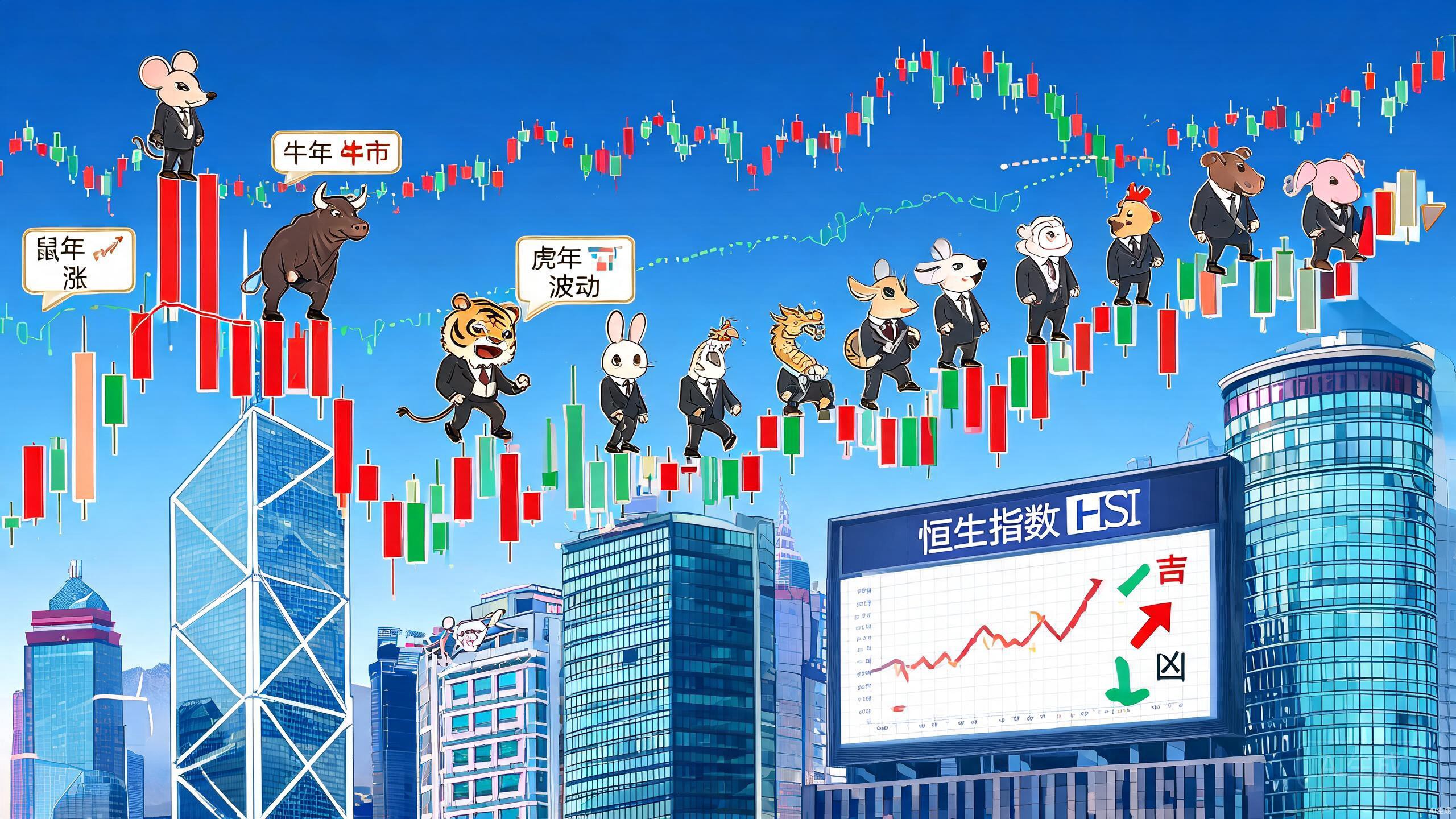
In the global financial world, there exists an extraordinarily unique "research report" — one that ignores GDP growth, skips inflation data, and avoids corporate earnings entirely. Instead, it uses Feng Shui to forecast stock market trends. This is the famed Feng Shui Index published annually by CITIC CLSA (中信里昂证券) — a report that Wall Street loves to hate and hates to love.
An Absurd Yet Genuine Prediction
The CLSA Feng Shui Index report was first published in 1992, making it a tradition now spanning over three decades. Released every Lunar New Year, this report applies traditional Feng Shui theories — including the Four Pillars (四柱), the Five Elements' Mutual Generation and Restriction (五行相生相克), and Flying Star Dissolving Sha techniques — to "predict" the Hang Seng Index's trajectory for the coming year.
What makes this report remarkable is the striking seriousness of its production. The 2025 edition credits its forecaster with the distinguished title of "James (PhD)" — complete with a ceremonial wand-bearer and editorial director. The report features professional layouts, polished design, and elegant illustrations, making it virtually indistinguishable from any other serious institutional research publication.
But what is the BaZi (八字, Eight Characters) of the Hang Seng Index itself? The report provides the answer: the index was "born" on November 24, 1969, yielding the Four Pillars of Geng-Hai (Year Pillar), Gui-Mao (Month Pillar), Wu-Yin (Day Pillar), and Gui-Si (Hour Pillar). According to this cosmic chart, the Hang Seng Index belongs to the Earth element in the Five Elements system, with a Rooster as its Chinese Zodiac sign.
Investment Guide for the Year of the Snake
Taking 2025 — the Yi Si (乙巳) Year of the Snake — as an example, the report offers detailed sector predictions:
Because Wood flourishes in a Snake year and generates Fire, combined with the influence of the Nine Purple Li Fire Period (九紫离火运) — a 20-year cycle currently underway as the ninth of nine major periods, corresponding to the Li Trigram and the Fire element — the report forecasts strong performance for Fire-related industries such as technology and energy. Water-related sectors like entertainment and media, as well as real estate (associated with Earth), are also expected to enjoy favorable conditions.
The report goes further to provide directional advice: "Invest southward or eastward for substantial returns. Southwest and north are viable alternatives, but avoid the northeast direction, where Sha Qi clusters and harmful energy gathers."
Even more entertainingly, the report maps out the monthly movements of the Hang Seng Index based on the fortunes of the Twelve Chinese Zodiac (十二生肖). Horse, Rabbit, and Rat are designated as "gloriously favored," while Ox, Dog, Dragon, and Monkey receive the more modest rating of "fortune acceptable."
But Does It Actually Work?
The most brilliant aspect of the CLSA Feng Shui Index is that it never claims to be a serious forecasting tool.
Each annual report opens with a quote attributed to American philosopher Yogi Berra: "It's tough to make predictions, especially about the future." This serves as both humorous self-deprecation and a gentle reminder to investors.
While most people treat the Feng Shui Index as light entertainment, the report has actually "guessed correctly" several times over its 30+ year history — its 2024 predictions for the Year of the Dragon came remarkably close to actual market performance. Of course, this could simply be coincidence.
The report's preface contains a particularly thought-provoking passage drawing on the classic Chinese idiom "Bēi Gōng Shé Yǐng" (杯弓蛇影, "Mistaking the Reflection of a Bow in a Cup for a Snake") — a story about a minor official who saw the shadow of a bow reflected in his wine cup, mistook it for a snake, and became so gripped by fear that he fell ill. Only after the illusion was revealed did his sickness vanish without medicine. The moral? "Even the most divinely gifted seers cannot know everything under heaven, nor can they calculate with flawless accuracy."
Where Ancient Wisdom Meets Modern Finance
The CLSA Feng Shui Index has endured for over three decades not merely because of its entertainment value, but because it represents a unique expression of Chinese traditional culture within modern finance. Every Lunar New Year, financial professionals across Hong Kong and Asia eagerly flip through this report. Whether they believe in it or not, it has become an unmistakable seasonal fixture of the financial calendar.
Cultural Context: The Hang Seng Index was launched on November 24, 1969 — a date deliberately assigned its own "birth chart" in the CLSA report. Treating financial markets as living entities with cosmic birthdays is a concept uniquely Western audiences may find charming or puzzling. But this practice reflects a deeper principle: in Feng Shui and Chinese metaphysics, every entity — a person, a building, even an institution — has a destiny that can be read through its birth moment. This is the same logic behind traditional Chinese BaZi astrology, applied here with characteristic irreverence to global capitalism.
Key Feng Shui Concepts Explained
-
Four Pillars BaZi (四柱八字): A destiny chart calculated from the Heavenly Stems and Earthly Branches of a birth moment (year, month, day, hour). In Feng Shui and Destiny Studies (命理), this serves as the fundamental tool for analyzing fortune and fate.
-
Mutual Generation and Restriction (五行生克): The Generative cycle — Metal generates Water, Water generates Wood, Wood generates Fire, Fire generates Earth, Earth generates Metal — paired with the Restriction cycle — Metal restricts Wood, Wood restricts Earth, Earth restricts Water, Water restricts Fire, Fire restricts Metal. This dynamic interplay forms the backbone of elemental harmony.
-
Nine Purple Li Fire Period (九运离火运): According to the Three Cycles and Nine Periods (三元九运) system in Feng Shui, time operates in 20-year periods spanning a 180-year cycle. We are currently in the ninth period (2024–2043), corresponding to the Li Trigram. Because Li is associated with Fire, industries linked to this element are considered favorably positioned during this era.
-
Flying Star Dissolving Sha (飞星化煞): The core technique of the Xuan Kong Flying Stars (玄空飞星) school. Practitioners track nine Flying Stars as they circulate through different sectors to determine auspicious and inauspicious energies in each direction, then apply specific remedies to neutralize harmful Sha Qi (煞气).
How to Approach Financial Feng Shui (For Curious Beginners)
Even if you don't work on Wall Street, you can appreciate how these principles connect to broader life decisions:
- Identify your personal "birth elements": Using your own birth date, calculate your dominant element through BaZi — understanding your elemental nature helps you choose compatible industries and environments
- Track cycles: Just as markets move in cycles, your personal energy flows in 20-year waves — long-term planning should account for these patterns
- Balance theory with reality: Feng Shui encourages reflection, but always pair metaphysical insights with practical research and sound judgment
- Embrace the humor: The CLSA report's longevity teaches us not to take life — or markets — too seriously
Quick Tips:
- Treat Feng Shui financial forecasts as conversation starters, not trading signals
- If you're curious about your own BaZi chart, many online calculators can introduce you to the basics
- Remember that no predictive system — Western or Eastern — can guarantee outcomes in complex markets
Related Articles
- [[../01-风水入门/09-Ten Principles of Modern Feng Shui.md|Top 10 Principles of Modern Feng Shui]]
- [[../05-命理与运势/02-十二生肖年度运势.md|2025 Year of the Snake: Complete Chinese Zodiac Forecast]]
- [[../07-风水故事/37-台北101.md|Taipei 101 — A Tower of Feng Shui Success in Taiwan]]
- [[../07-风水故事/33-上海东方明珠.md|Shanghai Oriental Pearl Tower — A Feng Shui Jewel Along the Bund]]