Emperor Huizong's Gen Yue Garden: How a Royal Garden Doomed the Song Dynasty
Throughout Chinese history, there are countless tales of dynasties that rose through Feng Shui and fell through its misuse. Yet if we were to name the most striking example of "a single garden that co
Emperor Huizong's Gen Yue Garden Feng Shui: How a Royal Garden Doomed the Song Dynasty — Lucky Energy & Wisdom
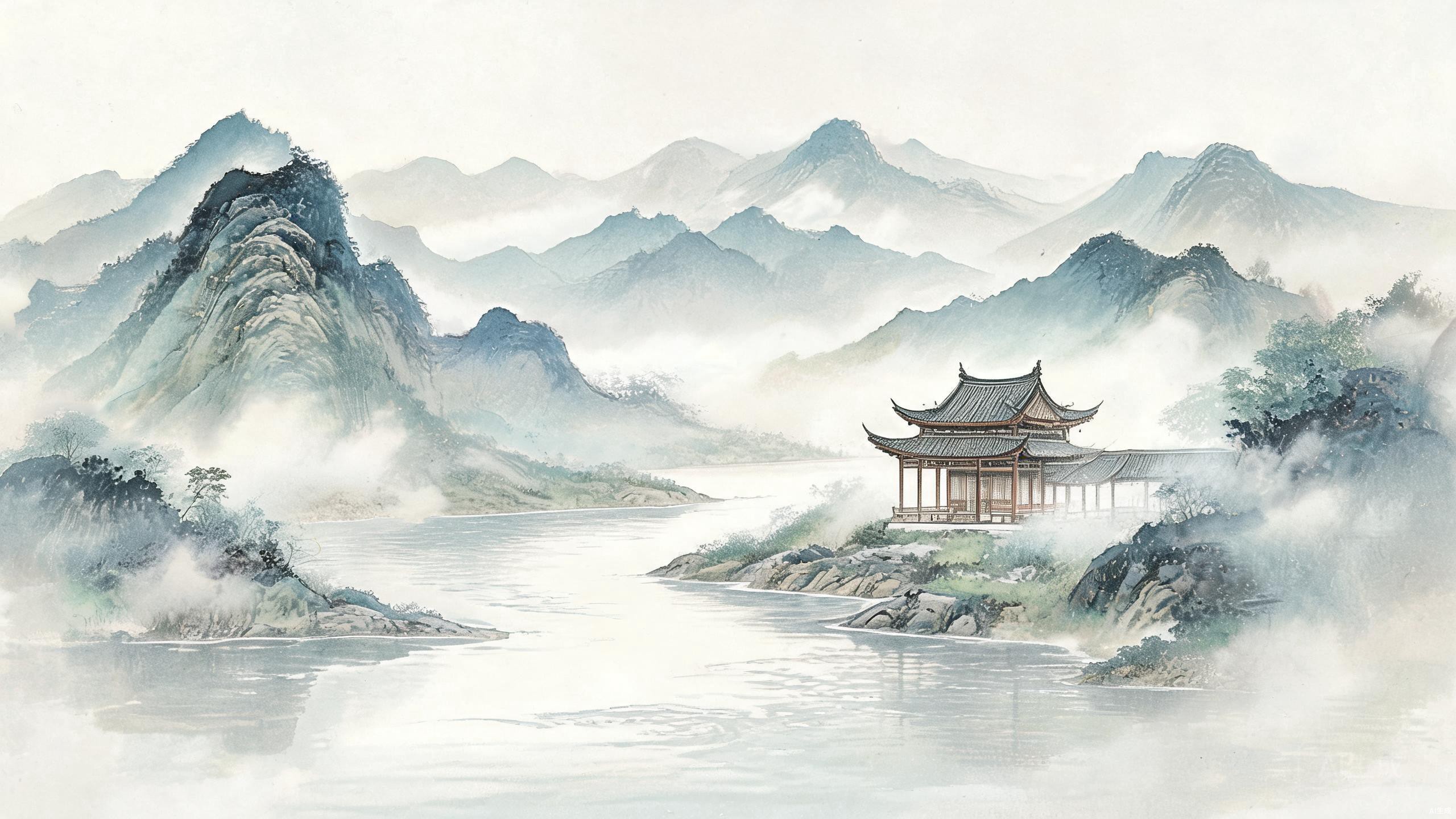
Throughout Chinese history, there are countless tales of dynasties that rose through Feng Shui and fell through its misuse. Yet if we were to name the most striking example of "a single garden that cost an empire," Emperor Huizong's Gen Yue Garden stands unrivaled. Built ostensibly to remedy a childlessness problem, this imperial garden drained the nation's wealth and ultimately crumbled with the catastrophe of the Jingkang Incident (靖康之变) — leaving behind one of the most sobering lessons on how greedy Feng Shui manipulation invites disaster.
Cultural Context: The Jingkang Incident of 1127 AD was one of the most traumatic events in Chinese history — the Jin Dynasty captured both Emperor Huizong and his son Emperor Qinzong, ending the Northern Song Dynasty. Many traditional historians cite the Gen Yue Garden as a symbol of imperial excess that weakened the state beyond recovery. The interplay of Yin and Yang — the dual forces of dark/light, passive/active — governs all Feng Shui applications.
Seeking an Heir and the Birth of Gen Yue Garden
Emperor Huizong (赵佶), the eighth sovereign of the Northern Song Dynasty (1100–1126 AD), is celebrated for his extraordinary talent in painting and calligraphy — yet condemned as one of the era's most incompetent rulers. After ascending the throne, he suffered a deeply personal misfortune: the imperial line produced no male heir for years. Court magicians and Feng Shui specialists offered a solution:
"The northeastern quadrant of the capital (the Gen position) lies too low and flat. This terrain deficiency harms the imperial succession. If Your Majesty builds an artificial mountain in the Gen position, you will reinforce the earth veins and awaken the dormant fertility Qi."
In the Bagua system, Gen (艮) represents the northeast and is associated with the "youngest son" archetype. The diviners argued that because Bianjing (汴京, modern-day Kaifeng) sat on flat ground to the northeast, "Gen Qi" was insufficient — and this deficiency explained Huizong's lack of heirs. By artificially raising a great mountain in the northeast, the emperor could "supplement Qi with Mountain" and restore his virility and lineage.
Convinced by this reasoning, Huizong decreed in 1117 AD (the seventh year of the Zhenghe reign) the construction of a royal garden on the northeastern outskirts of Bianjing. Because it occupied the Gen position and resembled a towering mountain — or "yue" (岳) — the garden became known as Gen Yue (艮岳), also called "Wansui Mountain" (万岁山, Mountain of Ten Thousand Years).
Cultural Context: In Feng Shui, "supplementing Qi through landform" (补气) is a legitimate technique — but classical texts warn repeatedly that excessive intervention violates the principle of working with nature rather than forcing it. The Gen Yue project crossed this line spectacularly. The interplay of Yin and Yang — the dual forces of dark/light, passive/active — governs all Feng Shui applications.
The Flower and Stone Convoy Catastrophe
The construction of Gen Yue triggered one of the most infamous resource-grabs in Chinese history — the Flower and Stone Convoys (花石纲).
To furnish his garden, Huizong commanded officials across the empire to collect exotic flowers, rare stones, precious trees, and unusual bamboos — all to be shipped by waterway to Bianjing. Each fleet of vessels was called a "gang" (纲), meaning a convoy or brigade. Among the most prized treasures were Taihu stones (太湖石) — the porous, wind-eroded limestone boulders prized for their sculptural, cloud-piercing shapes.
| Flower and Stone Convoy Overview | Details |
|---|---|
| Goods Collected | Exotic flowers, rare stones, precious trees, bamboos |
| Source Regions | Jiangnan (Taihu stones), Lingnan, Sichuan, and beyond |
| Transport Method | Waterways (Grand Canal); convoy units called "gang" |
| Financial Cost | Astronomical — bankrupted entire provinces |
| Human Cost | Mass impoverishment, triggering the Fang La Rebellion |
How devastating was this policy? A single large Taihu stone transported from Jiangnan to Bianjing could require hundreds of laborers and dozens of boats. Bridges were dismantled, dikes destroyed, and entire counties stripped to facilitate passage. Local chronicles record that "ten households out of eleven emptied" along the convoy routes. Families sold their children to pay the "Flower and Stone Tax," and countless homes were destroyed.
The breaking point came when Fang La (方腊) — a charismatic local leader — rallied a million followers in 1120 AD under the slogan "Execute the thieves who enforce the Flower and Stone Tax!" His rebellion swept across the entire southeast and nearly toppled the dynasty.
A garden built to "seek a son" had driven an empire into revolt. The irony could hardly be more bitter.
The Feng Shui Design of Gen Yue
Setting aside the human suffering, Gen Yue itself was a masterpiece of Feng Shui landscape architecture. Huizong poured the resources of an empire into creating an artificial landscape that appeared entirely natural:
1. The Central Peak — Wansui Mountain
The garden's main peak, Wansui Mountain (万岁山), was hand-piled with earth and stone to a height of roughly 100 meters. Its ridges and peaks rose in undulating waves — as a Song poet wrote, "though crafted by human hands, it seems opened by heaven itself." Positioned in the north (the Gen sector) of the garden, this peak served as the Black Tortoise (玄武) backing mountain — the most important protective feature in classical Feng Shui.
2. Left and Right Guardian Peaks
Flanking the central peak were smaller satellite mountains — Wanshou Mountain (万寿山) and Shou Mountain (寿山) — arranged in the classic Azure Dragon / White Tiger formation. Their lower stature respected the Feng Shui hierarchy of "tall central mountain, modest guardian peaks," creating an enclosed, sheltered atmosphere.
3. The Yan Pool — Bright Hall Water
At the garden's heart lay an expansive artificial lake called Yan Pool (雁池), fed by streams diverted from outside the capital. Lotus and carp filled its waters; pines and ornamental stones lined its banks. The water wound through the landscape "like a jade belt embracing the heart" — serving as the classical Bright Hall Water (明堂水), the vital pooling energy that gathers fortune.
4. Architectural Embellishments
Pavilions, towers, temples, and Taoist monasteries were scattered across the landscape like stars in the sky. Huizong, a devout Taoist, deliberately incorporated Taoist sacred architecture to echo the symbolism of Gen as "mountain of immortals."
| Gen Yue Feng Shui Element | Design Feature | Symbolic Meaning |
|---|---|---|
| Central Peak (Black Tortoise) | Wansui Mountain, artificially piled | Supplements Gen Qi, awakens heir-bearing energy |
| Guardian Peaks (Dragon & Tiger) | Wanshou Mountain, Shou Mountain | Left-right protection, complete Qi enclosure |
| Bright Hall Water | Yan Pool | Gathers wealth energy, "embracing water" |
| Taoist Monasteries | Scattered throughout | Reinforces "Gen as Mountain of Immortals" symbolism |
| Rare Stones & Trees | Taihu stones, exotic plants | Concentrates all natural beauty into one garden |
Did the Quest for an Heir "Succeed"?
Here lies the cruelest irony: after Gen Yue's completion, Huizong did see his progeny multiply. By the end of his life, he had fathered more than thirty sons and thirty daughters. The diviners' prophecy appeared to be vindicated.
But this "success" came at a catastrophic cost:
- The Flower and Stone Convoys drained the imperial treasury and impoverished the populace
- The Fang La Rebellion tied down massive military forces, leaving the northern border exposed
- Court corruption flourished under notorious ministers like Cai Jing (蔡京) and Tong Guan (童贯)
- The Jurchen Jin armies marched south, capturing the capital in the Jingkang Incident
In 1125 AD, Jin forces launched a full-scale invasion. By 1127 AD, Bianjing had fallen — both Huizong and his son Qinzong were seized and dragged into captivity in the frozen north. The Northern Song Dynasty ceased to exist. And Gen Yue, the garden that consumed a nation's wealth, was dismantled in the chaos: its precious Taihu stones hauled off by Jin victors to decorate their new capital Zhongdu (中都, modern Beijing), its palaces burned to the ground.
Huizong got his sons — and lost his empire. Perhaps this is Feng Shui's most painful lesson in "what greed invites, disaster returns."
The Principle of "Measure" in Feng Shui
The Gen Yue story reveals a core principle of authentic Feng Shui: moderation and moral restraint (适度与厚德).
True Feng Shui follows the philosophy of "working with nature's flow" (顺势而为) and "acting within one's means" (量力而行). Huizong violated both principles utterly. To gratify one man's private obsession, he forced an entire nation to "supplement" a single site's energy — a textbook example of forcibly overriding the natural order. Such defiance of cosmic balance inevitably invites ruin.
| Classical Feng Shui Principle | How Gen Yue Violated It |
|---|---|
| Work with nature's flow | Forcefully pursued heir-bearing energy against natural timing |
| Act within one's means | Conscripted the wealth of an entire empire |
| Unity of Heaven and Humanity | Served one man's ego while ignoring the people's suffering |
| Yin-Yang Balance | Excessive mountain construction upset elemental equilibrium |
| Virtue as the Foundation | Pursued fortune without the virtue to sustain it |
There is a folk saying that captures this truth perfectly: "A blessed site can only host a virtuous person; without virtue, even the best location brings no blessing." (福地福人居,无德求也虚.) The finest Feng Shui cannot protect those who lack the moral foundation to receive its gifts. Gen Yue stands as the ultimate cautionary monument.
Quick Tips: Three timeless Feng Shui principles you can apply today:
- Work with, not against, your space: Enhance what already exists rather than forcing radical change
- Keep your Feng Shui practice ethical: Never pursue fortune at others' expense
- Cultivate virtue first: A clear conscience is the most powerful prosperity magnet in any home
Traces of Gen Yue Today
After the garden's destruction, its treasures scattered across the empire. The Jin victors carried prized Taihu stones north to Beijing for use in their own imperial gardens. Some of these "Gen Yue legacy stones" survived subsequent dynasties and can still be seen today in Beijing's Beihai Park (北海) and the Forbidden City (故宫) — silent stone witnesses to that turbulent chapter of history.
Back in Kaifeng, however, the original Gen Yue site has vanished almost entirely. Only scattered documents and later poets' laments remain. A garden that once gathered all the beauty of an empire survives today only as "smoke and clouds on paper" — a haunting reminder of impermanence.
Feng Shui Knowledge Points
- Gen Position (艮位): The northeast sector in the Bagua, associated with the "youngest son" archetype. Classical Feng Shui links this direction to fertility and male heirs.
- Supplementing Qi (补气): The technique of improving a sector's energy through artificial landform — piling mountains, planting trees, or introducing water. Classical masters warn it must always respect the principle of moderation.
- Flower and Stone Convoys (花石纲): Imperial supply fleets organized under Huizong to collect exotic flora and stones for Gen Yue. A "gang" (纲) refers to one convoy of ships.
- Greed Invites Disaster (妄求反祸): A core Feng Shui warning — excessive pursuit of fortune attracts the opposite of what is sought. The principle embodies both the "moderation" doctrine and the "virtue as foundation" teaching.
- Blessed Sites for Virtuous People (福地福人居): A classical Feng Shui proverb emphasizing that virtue and fortune are inseparable — without moral cultivation, even the most auspicious location cannot bring lasting blessing.
Related Articles
- [[../07-风水故事/50-蒋大鸿传奇.md|The Legend of Jiang Dahong — Xuan Kong Master of the Late Ming and Early Qing]]
- [[../07-风水故事/58-风水与丧葬.md|Feng Shui and Burial — The Ancient Tradition of Yin Dwelling Feng Shui]]
- [[../01-风水入门/10-风水常见误区澄清.md|Common Feng Shui Misconceptions: Distinguishing Superstition from Science]]
- [[../01-风水入门/51-风水测量工具大全.md|Feng Shui Measurement Tools: From Traditional to Modern Complete Equipment]]