Empress Wu Zetian Qianling Mausoleum: The Only Empress Tomb Built on Liangshan Mountain
Among the imperial tombs throughout Chinese history, one stands uniquely apart — it is the only mausoleum in China that houses two emperors (Tang Gaozong Li Zhi and Empress Wu Zetian), and the only to
Empress Wu Zetian Qianling Mausoleum Feng Shui: The Only Empress Tomb Built on Liangshan Mountain — Lucky Energy & Wisdom
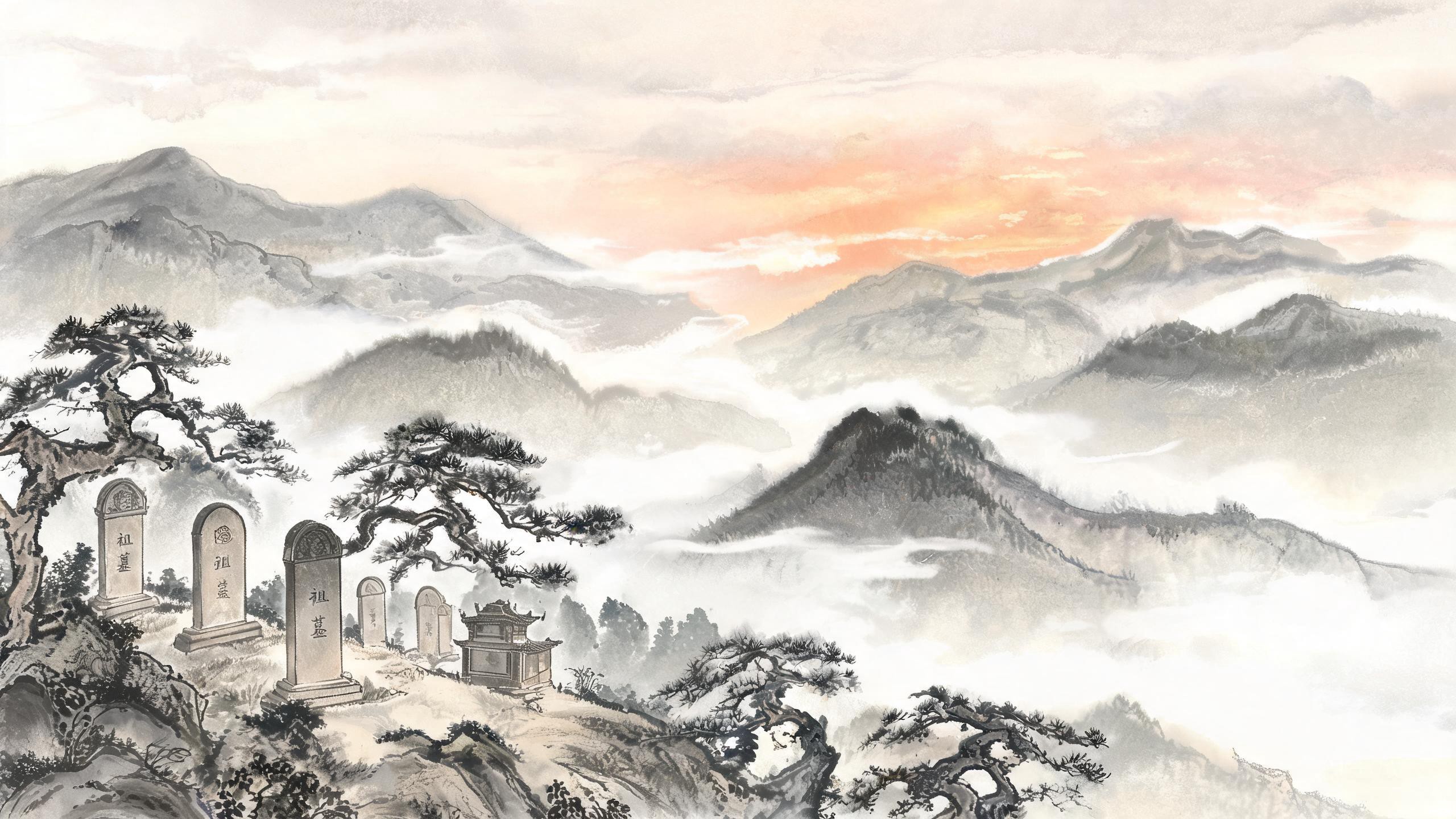
Among the imperial tombs throughout Chinese history, one stands uniquely apart — it is the only mausoleum in China that houses two emperors (Tang Gaozong Li Zhi and Empress Wu Zetian), and the only tomb of a female emperor. This is Qianling Mausoleum (乾陵), located in Qian County, Shaanxi Province. The site selection and Feng Shui of Qianling are equally steeped in legend.
One Tomb, Two Emperors
Qianling Mausoleum was first constructed in the first year of Hongdao during the Tang Dynasty (683 AD), originally built for Tang Gaozong Li Zhi. After Empress Wu Zetian took the throne and later passed away in the first year of Shenlong (705 AD), she left a final decree: "Remove the imperial title; be known as Empress Zetian Da Sheng," requesting burial alongside Emperor Gaozong in Qianling.
Thus, Qianling became the only mausoleum of its kind — "one tomb, two emperors." One was an officially recognized emperor (Gaozong); the other was a female sovereign who had proclaimed herself emperor but was ultimately interred with empress honors. This singular distinction makes Qianling stand alone among imperial tombs throughout the ages.
Yuan Tiangang and Li Chunfeng's Kanyu
Regarding the site selection of Qianling, a widely circulated legend goes:
After Tang Gaozong's death, Empress Wu Zetian commissioned the two most renowned diviners of the era — Yuan Tiangang (袁天罡) and Li Chunfeng (李淳风) — to separately select a burial site for her husband. The two set off independently, traversing the mountains and rivers of the Guanzhong region.
Months later, both returned to the capital to report. When Empress Wu asked where they had chosen, Yuan Tiangang said: "I discovered a treasure site on Liangshan Mountain (present-day Qian County, Shaanxi) and buried a copper coin as a marker." Li Chunfeng said: "I also found an auspicious site on Liangshan and drove an iron nail as my marker."
Empress Wu sent people to investigate — and discovered that Li Chunfeng's iron nail had driven precisely into the square hole of Yuan Tiangang's buried copper coin! The two had independently chosen the exact same spot. Empress Wu was overjoyed and designated Liangshan as the imperial burial site.
| Diviner | Identity | Site Chosen | Marker |
|---|---|---|---|
| Yuan Tiangang | Master of Physiognomy and Feng Shui | Liangshan | Buried copper coin |
| Li Chunfeng | Astronomer and Diviner | Liangshan | Iron nail |
| Result | Nail through coin's square hole | Independent agreement | Confirmed as tomb site |
Cultural Context: Kanyu (堪舆, kān yú) is the classical Chinese term for Feng Shui, literally meaning "investigating the earth's Qi." It reflects the ancient belief that a tomb's or home's location directly influences the fortune of descendants — making site selection a matter of dynastic importance. The interplay of Yin and Yang — the dual forces of dark/light, passive/active — governs all Feng Shui applications.
This legend undoubtedly contains dramatic embellishment, but it reflects the Tang Dynasty's profound emphasis on tomb Feng Shui, as well as the elevated status of Yuan Tiangang and Li Chunfeng in the world of metaphysical arts.
The Feng Shui Configuration of Liangshan
Liangshan (not to be confused with the famous Liangshan in Henan) is located north of Qian County in Shaanxi, at the border between the Guanzhong Plain and the Weibei Plateau. Its Feng Shui configuration has been praised by generations of Feng Shui masters as a top-tier choice:
1. The Incoming Dragon (来龙)
The Dragon Vein of Liangshan originates from the Qi Mountains (岐山) and is considered a branch of the Guanzhong region's larger "Dragon Vein." The mountain range rises and falls with measured grace — "undulating with proper transitions and transformations" — meeting the Feng Shui criteria of a "distant incoming dragon with well-paced undulations."
2. The Main Mountain (主山)
Liangshan has three peaks, with the northern peak being the highest, resembling a person sitting upright. This serves as the "Black Tortoise" main mountain for the tomb. The two flanking peaks stand lower, like arms hanging down, embracing the northern peak and forming a "chair-shaped" configuration. The underground palace of Qianling was carved directly into the northern peak.
3. Left and Right Guardians (左右护)
Liangshan's two side peaks — the Azure Dragon on the left and the White Tiger on the right — embrace the central peak like protective arms. The two peaks are symmetrical yet not rigid, staggered in height with natural elegance, fulfilling the ideal pattern of "Azure Dragon winding gracefully, White Tiger crouching gently."
4. The Facing Bright Hall (前朝明堂)
Before the tomb lies the vast Guanzhong Plain, with the distant Wei River winding across the landscape — embodying the classical vision of "a Bright Hall that can accommodate ten thousand horses." In front stand additional structures like the Platform and Twin Gate Towers, arranged in receding layers to guide Vital Qi (Sheng Qi) into the mausoleum.
5. The Water Mouth (水口)
The Mogo River flows near Liangshan, converging with a tributary of the Wei River in front of the tomb. At the water mouth, the mountain terrain narrows and "locks tightly," preventing Dragon Qi from escaping.
| Feng Shui Element | Liangshan Correspondence | Configuration Assessment |
|---|---|---|
| Incoming Dragon | Branch of Qi Mountains | Long-reaching, undulating with grace |
| Main Mountain (Black Tortoise) | Liangshan North Peak | Sitting upright, guarding the tomb |
| Azure Dragon (Left Guardian) | Liangshan East Peak | Winding embrace, protective presence |
| White Tiger (Right Guardian) | Liangshan West Peak | Crouching symmetry, balanced sides |
| Bright Hall (Vermilion Bird) | Guanzhong Plain | Vast and grand, accommodating all |
| Water Mouth | Mogo River | Tightly sealed, Qi retained within |
The Mystery of the Wordless Stele
The most striking feature of Qianling is undoubtedly the "Wordless Stele" (无字碑). This massive stone tablet stands before the tomb, its surface completely smooth and uncarved — forming a stark contrast with the "Stele Recording Sacred Merit" to its east, which is inscribed with Emperor Gaozong's achievements.
Over the centuries, multiple theories have emerged explaining why the stele bears no inscription:
| Theory | Explanation | Analysis |
|---|---|---|
| Wu Zetian's Humility | She left her merits and faults for posterity to judge | Reflects her breadth of spirit |
| Merit Too Great | Words are insufficient to record her achievements | Using "emptiness" to signify "infinity" |
| Expression of Regret | In later years, she recognized her faults and dared not speak | Echoes her decree to remove the imperial title |
| Posthumous Incompletion | Originally planned to be inscribed, but interrupted by political upheaval | A practical explanation |
From a Feng Shui perspective, the Wordless Stele stands beside the Bright Hall in front of the tomb. Its "wordlessness" is like an "empty Bright Hall" — using "emptiness" to embrace "being," using "nothing" to contain "everything." This wisdom of "leaving space" resonates deeply with traditional Chinese aesthetics and Feng Shui philosophy alike.
Quick Tips:
- In Feng Shui, empty space is never truly empty — it is receptive potential, ready to gather incoming Qi
- The concept of "留白" (liú bái, leaving space) is central to Chinese art, calligraphy, and interior design
- Avoid cluttering your home's entryway or Bright Hall area; openness invites prosperity
The Miracle of a Millennium Without Theft
Another remarkable fact about Qianling is that across 1,300 years, no one has ever successfully robbed it. At the end of the Tang Dynasty, Huang Chao led an army of 400,000 soldiers to excavate Qianling, digging for months but failing due to the mountain's solid rock and confusing layout. During the Five Dynasties period, Wen Tao systematically plundered Tang tombs across Guanzhong — yet Qianling alone was spared because, as recorded, "wind and rain forbade its violation." During the Republican era, Sun Lianzhong used military exercises as cover to deploy explosives, but sudden weather changes forced him to abort.
Folk tradition claims that Qianling has resisted tomb raiders because Liangshan's Feng Shui energy is too overwhelmingly powerful, and "resonance between heaven and humanity" (天人感应) has brought divine retribution upon would-be looters. While this is legend, the truth lies in Qianling's engineering: by using the entire mountain as its protective shell, with the tomb carved deep within solid rock, its structural integrity far surpasses that of earth-mound tombs built on flat ground.
| Qianling Tomb Robbery Attempts | Era | Outcome |
|---|---|---|
| Huang Chao's Excavation | Late Tang | Months of digging, no result |
| Wen Tao's Plundering | Five Dynasties | Halted by wind and rain |
| Sun Lianzhong's Bombing | Republican Era | Aborted by sudden weather change |
The Legacy of Qianling Mausoleum
Qianling represents the highest achievement of Tang Dynasty imperial tomb Feng Shui: mountain-as-tomb construction, all four celestial animals properly positioned, an expansive Bright Hall, and a tightly sealed water mouth. It is not only the resting place of Wu Zetian and Emperor Gaozong but also the pinnacle of Chinese imperial tomb Feng Shui culture.
The legends of the Wordless Stele and the millennium of unsuccessful robbery attempts add another layer of mystery — this, China's only female emperor, even in death, leaves behind "wordlessness" and "imperishability," offering posterity boundless room for imagination.
How to Apply These Feng Shui Lessons Today
Even though we cannot build our homes inside mountains, we can draw inspiration from Qianling's principles:
- Seek strong backing (靠山): Position your bed or desk against a solid wall — your "mountain" support for stability and protection
- Create balanced protection: Place substantial furniture or tall plants on both sides of your main seating area, mimicking the Azure Dragon and White Tiger guardians
- Keep your Bright Hall open: The space directly in front of your entrance should be uncluttered and welcoming, allowing Qi to flow in gently
- Seal your energy leaks: Check that doors and windows align properly to prevent Qi from rushing straight through your home (avoid Piercing Hall Sha)
- Embrace the power of emptiness: Avoid over-decorating key areas. Strategic emptiness, like the Wordless Stele, invites greater possibility
Quick Tips:
- A solid headboard and wall behind your bed provides "mountain support" for restful sleep and personal authority
- Symmetrical décor on both sides of a room creates the protective balance of Dragon and Tiger
- Leave some empty space on shelves and walls — the Chinese principle of 留白 allows energy to circulate freely
Feng Shui Knowledge Points
- Mountain-as-Tomb (以山为陵): Using an entire mountain as the tomb by carving the underground palace within it. Most Tang imperial tombs adopted this method for superior durability and anti-theft protection.
- Chair-Shaped Configuration (椅形格局): A central main mountain flanked by two embracing peaks resembling a chair — the ideal form for "complete four celestial animals" (四兽齐备).
- Sealed Water Mouth (水口关锁): Where water exits, mountain terrain narrows to lock in Dragon Qi, ensuring long-lasting prosperity.
- Wordless Stele (无字碑): A stone tablet deliberately left uncarved, using "emptiness" to represent "infinity" — embodying the Feng Shui and aesthetic philosophy of "leaving space."
- Heaven-Human Resonance (天人感应): A core Feng Shui concept proposing that human affairs and heavenly order resonate with one another. Qianling's resistance to robbery has been interpreted as an expression of this resonance.
Related Articles
- [[../06-风水文化与历史/10-古代帝王陵寝风水.md|Imperial Tomb Feng Shui: Site Selection Principles, Structural Evolution, and Grand Burial Culture]]
- [[../09-Yin Dwelling风水/59-历代帝王陵寝风水案例分析.md|Classic Case Studies of Imperial Tomb Feng Shui Through the Dynasties]]
- [[../07-风水故事/21-秦始皇骊山陵.md|Qin Shi Huang's Lishan Tomb: The Underground Kingdom of China's First Emperor]]
- [[../07-风水故事/50-蒋大鸿传奇.md|The Legend of Jiang Dahong: The Xuan Kong Master of the Late Ming and Early Qing]]
Note on the Five Elements: The Five Elements (Wu Xing) — Wood, Fire, Earth, Metal, and Water — form the foundation of Feng Shui energy theory. Each element interacts with the others in cycles of generation and control, influencing the Qi flow in your environment.