Feng Shui and Burial: The Ancient Tradition of Yin Dwelling Feng Shui
Feng Shui (风水, literally "Wind and Water") originated from burial practices — Guo Pu's (郭璞) *Zang Shu* (Book of Burial) laid the theoretical foundation for Yin Dwelling Feng Shui (阴宅风水). In Chinese tr
Feng Shui and Burial: The Ancient Tradition of Yin Dwelling Feng Shui
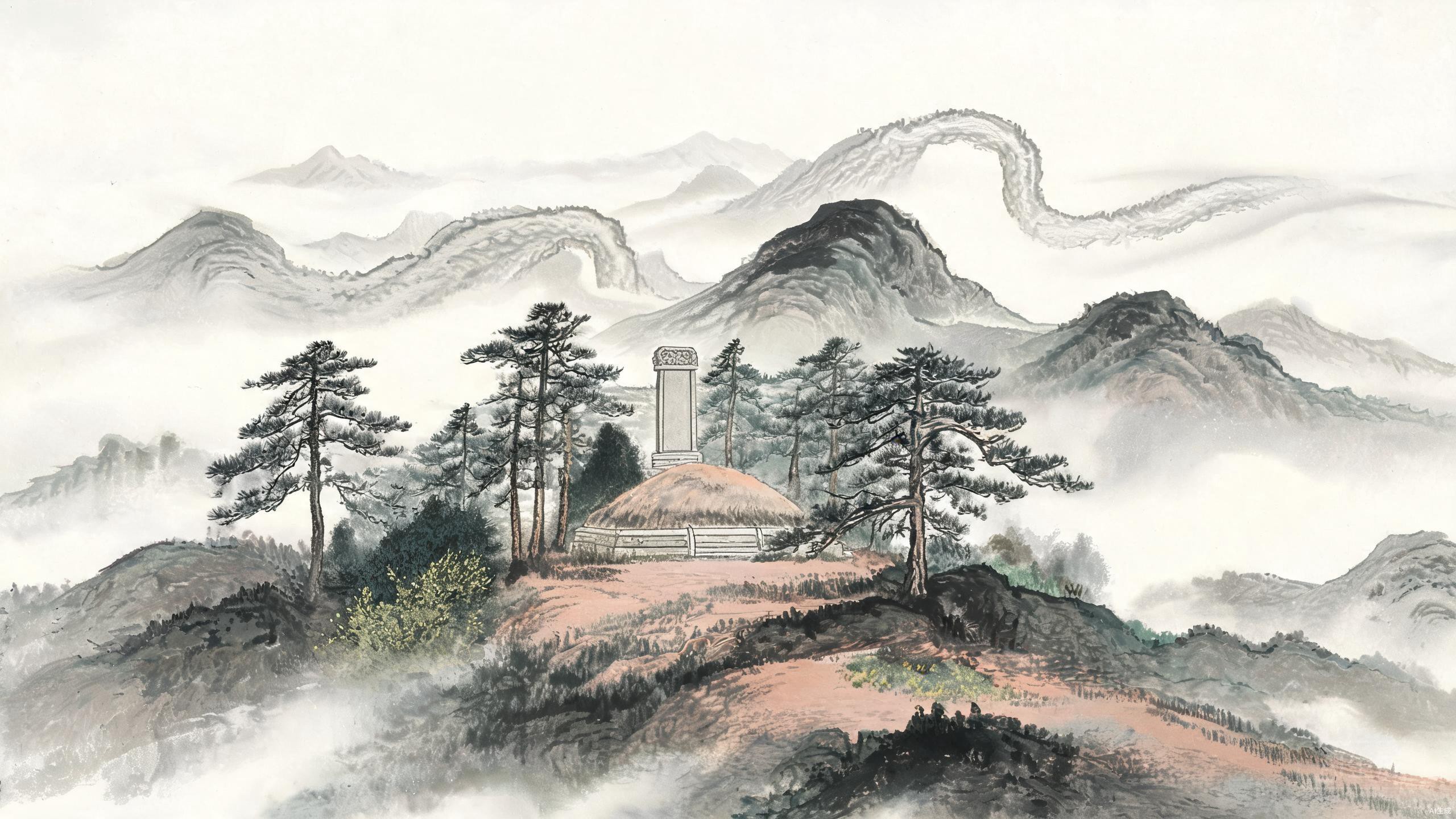
Feng Shui (风水, literally "Wind and Water") originated from burial practices — Guo Pu's (郭璞) Zang Shu (Book of Burial) laid the theoretical foundation for Yin Dwelling Feng Shui (阴宅风水). In Chinese tradition, burial was never simply about "returning to the earth for peace" (入土为安); it was believed to directly influence the fortune and fate of descendants. The stories connecting Feng Shui with burial customs form the oldest and most essential core of Feng Shui culture.
Cultural Context: Yin Dwelling Feng Shui refers to the practice of selecting auspicious burial sites for ancestors. Rooted in the Chinese belief in Bloodline Resonance (血脉感应) — that descendants remain energetically connected to their forebears — this practice holds that a well-sited grave channels Vital Qi to benefit living family members for generations.
The Core of Yin Dwelling Feng Shui
The essence of Yin Dwelling (阴宅, yīn zhái) Feng Shui is "Riding Vital Qi" (乘生气) — burying ancestors at locations where Sheng Qi (生气) converges, so that the bones "ride" this energy and transmit blessings to descendants.
| Yin Dwelling Element | Meaning |
|---|---|
| Dragon (龙) | The mountain range's momentum — the source of Vital Qi |
| Acupoint (穴) | The point where Vital Qi gathers — where the burial takes place |
| Sand (砂) | Protective hills on the left and right that Store Wind |
| Water (水) | Water flow in front that gathers and retains Qi |
| Direction (向) | The orientation of the tombstone — receiving auspicious energy |
Burial Feng Shui Stories
Story 1: Choosing an Auspicious Site for a Mother's Burial
A filial son lost his mother and invited a Feng Shui master to select a burial site. The master trekked across countless mountains until finding a piece of auspicious land described as "Storing Wind and Gathering Qi" (藏风聚气). Three years after the burial, the son passed the imperial examinations, and the family's fortunes rose steadily.
Story 2: Relocating the Tomb to Change Fate
A family's ancestral grave was located in a "dead ground" (绝地), causing their fortunes to decline. After a Feng Shui master selected an auspicious new site and the remains were relocated, the family's prosperity gradually recovered.
Story 3: Simple Burial to Prevent Tomb Robbers
Zhuge Liang (诸葛亮) instructed in his final testament to be buried simply, without burial objects. Because no valuables were interred, his tomb was never robbed for over a thousand years. Feng Shui masters have long remarked: using simplicity to deter grave robbers is the highest form of Feng Shui wisdom.
Story 4: The Mistake of Burying in Dead Ground
A wealthy family hired a Feng Shui master to select a burial site for the patriarch. However, the household steward — greedy for convenience — buried the coffin in a nearby low-lying area without consulting the master. From that moment, the family's fortunes plummeted: business suffered heavy losses, and descendants fell ill one after another.
When a renowned expert was finally called to investigate, he discovered the grave was situated in a "Water Rushing Dead Ground" (水冲绝地) — a low-lying area where mountain runoff directly strikes the front of the tomb every rainy season. After relocating the burial, the family's fortunes slowly recovered.
Quick Tips:
- Always have a qualified Feng Shui master personally verify the burial site — never delegate this critical decision to others
- Avoid low-lying areas where water naturally flows toward the site
- If your family has experienced unexplained misfortune, the ancestral grave's location may be worth re-examining
Burial Taboos and Traditions
| Taboo | Meaning |
|---|---|
| Grave not near roads | The tomb should not sit close to major roads, to avoid "Road Rushing" (路冲) harmful energy |
| Burial before noon | Tradition holds that interment should be completed before the midday hour |
| Tombstone must not fall | A toppled tombstone is considered a grave omen of family decline |
| Grave grass | A moderate covering of wild grass is ideal; complete barrenness signals decay |
Cultural Context: Many of these taboos stem from the same principle — maintaining an undisturbed environment for the ancestors' Qi to remain stable. A tomb that is too exposed (near roads), improperly oriented (wrong direction), or neglected (fallen stones, barren earth) is believed to disrupt this energetic connection with descendants.
Feng Shui Knowledge Points
-
Simple Burial (薄葬): A burial practice without elaborate grave goods. Both Zhuge Liang and Cao Cao advocated this approach — valuing peace and protection over display.
-
Water Rushing Dead Ground (水冲绝地): A low-lying area where mountain water or floods directly strike. This is one of the most serious taboos for Yin Dwelling Feng Shui.
-
Tomb Relocation (迁葬): The process of moving ancestral remains from one burial site to another. This must be performed on an auspicious date by a qualified Feng Shui master.
-
Three Years of Mourning (三年守孝): A traditional mourning custom requiring children to observe a three-year period of filial mourning, during which major construction or earth-moving projects should be avoided.
How to Honor These Traditions Today
Even in modern Western contexts where traditional Chinese burial customs may not apply directly, the underlying principles can guide family decisions:
- Choose permanent resting places carefully: Whether a traditional grave, a columbarium niche, or a memorial garden, the location matters — select sites that are stable, well-maintained, and not exposed to flooding or heavy traffic vibration
- Maintain the site regularly: Visit, clean, and tend to the memorial area. Neglected sites are believed to weaken the energetic connection with descendants
- Document family wishes clearly: To avoid situations like the "Mistake of Burying in Dead Ground" story, write down your burial preferences in advance and communicate them to family members
- Respect ancestral timing: Major life decisions (marriage, home purchase, relocation) are traditionally coordinated with respect for ancestral memory — even a moment of quiet acknowledgment can reinforce family harmony
Quick Tip: If you're researching your own family's ancestral practices, speak with elderly relatives before that knowledge is lost. The location and orientation of ancestral graves — along with any family stories about them — can offer surprising insights into your family's historical fortune patterns.
Related Articles
- [[../09-Yin Dwelling风水/46-下葬吉日的选择方法.md|How to Choose an Auspicious Burial Date]]
- [[../09-Yin Dwelling风水/50-Yin Dwelling风水中的祭品与供品讲究.md|Offerings and Sacrifices in Yin Dwelling Feng Shui]]
- [[../05-命理与运势/09-面相断Yin Dwelling风水.md|Face Reading for Yin Dwelling Feng Shui: The Nose and Burial Grounds]]
- [[../06-风水文化与历史/43-魏晋南北朝风水:玄学影响下的风水发展.md|Wei, Jin, and Northern-Southern Dynasties Feng Shui: Development Under Metaphysical Influence]]