Feng Shui and Fate: Legendary Stories of Changing Destiny Through Lucky Energy
"Fate is determined by heaven; luck is created by oneself." (命由天定,运由己造) In traditional Chinese culture, whether "destiny" can be changed has always been a profound question. Feng Shui is regarded as o
Feng Shui and Fate: Legendary Stories of Changing Destiny Through Lucky Energy
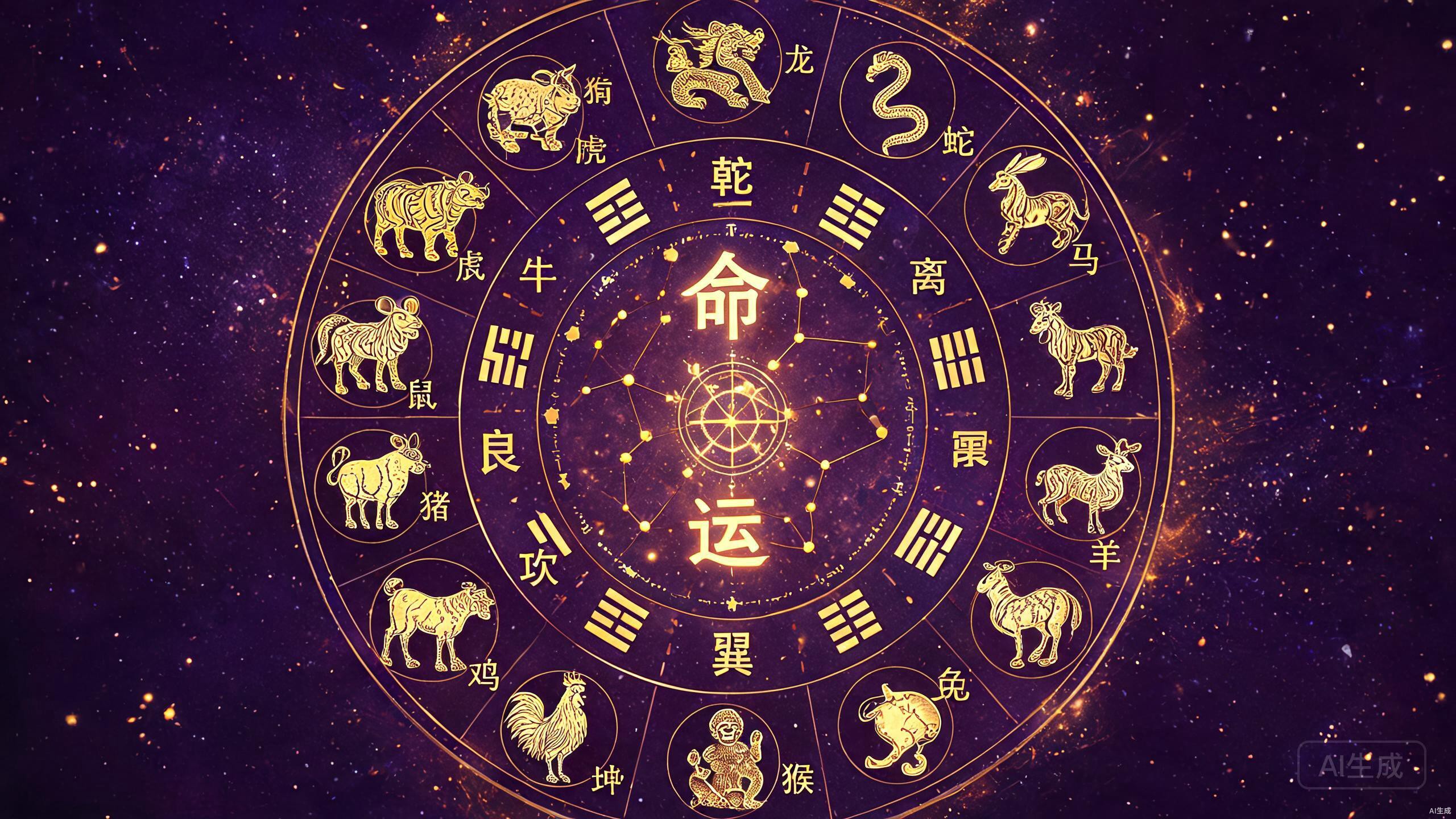
"Fate is determined by heaven; luck is created by oneself." (命由天定,运由己造) In traditional Chinese culture, whether "destiny" can be changed has always been a profound question. Feng Shui is regarded as one of the most important methods for "changing fate," and countless folk stories tell of families or individuals who transformed their life trajectory through environmental adjustments.
The Difference Between "Fate" (命) and "Luck" (运)
Before discussing "Feng Shui changing fate," we must first distinguish between Ming (命, fate) and Yun (运, luck):
| Concept | Meaning | Can It Be Changed? |
|---|---|---|
| Ming (命) | Predetermined at birth — family, innate talent | Difficult |
| Yun (运) | Post-birth trajectory — ups and downs | Adjustable |
| Feng Shui | Environmental factors | Adjustable |
| Virtue (德行) | Moral cultivation | Cultivatable |
Strictly speaking, what Feng Shui changes is Yun (luck), not Ming (fate). The inborn "fate" is difficult to alter, but the post-birth "luck" can be adjusted through Feng Shui, moral cultivation, and other means. What the common people call "changing fate through Feng Shui" is really "changing luck."
Legends of Feng Shui Changing Destiny
1. The Poor Scholar Who Reversed His Luck
A poor scholar had failed the imperial examinations repeatedly and lived in near destitution. When a Feng Shui master surveyed his home, he found that the front door faced the "Exhaustion Direction," the stove pressed on the "Vital Qi Position," and harmful taboos were everywhere.
The master made adjustments: redirected the door to the "Vital Qi Direction," moved the stove to the "Heavenly Physician Position," and established a study in the "Wenchang Position."
After these changes, the scholar's studies improved steadily. The following year he passed the provincial examination (举人), and the year after that he became a Jinshi (进士) — the highest academic degree. The common people celebrated this as a successful case of "changing luck through Feng Shui."
2. The Sick Old Man Who Extended His Life
An elderly man suffered from a prolonged illness; doctors predicted he had less than half a year to live. When a Feng Shui master examined his bedroom, he discovered that the headboard faced the "Death Direction" and the bed sat in the "Five Ghosts Position."
After adjusting the headboard to the "Longevity Direction" and moving the bed to the "Heavenly Physician Position," the old man's condition gradually improved — and he lived another ten years.
3. The Bankrupt Merchant Who Restored His Prosperity
A merchant suffered consecutive years of business losses. The Feng Shui master found that his cash register was placed in the "Wealth Recession Position" and that the road in front of his shop formed a "Reverse Bow Sha" (反弓煞) — a harmful curve of traffic rushing outward.
After relocating the cash register to the "Wealth Gathering Position" and planting a large tree in front to block the Reverse Bow Sha, the merchant's business gradually recovered.
| Case | Feng Shui Problem | Adjustment Method | Result |
|---|---|---|---|
| Poor Scholar | Door facing Exhaustion, stove pressing Vital Qi | Redirected door, moved stove, placed study in Wenchang | Passed highest exam |
| Sick Old Man | Headboard facing Death, bed in Five Ghosts | Moved bed to Longevity and Heavenly Physician | Recovered, lived longer |
| Bankrupt Merchant | Register in Recession, Reverse Bow Sha | Moved register, planted blocking tree | Business revived |
The "Fate-Changing" Directions in Eight Mansions Feng Shui
Terms like "Vital Qi," "Heavenly Physician," "Longevity," "Death," and "Five Ghosts" mentioned in the cases above are directional concepts from Eight Mansions Feng Shui (八宅风水). This school divides the eight cardinal and inter-cardinal directions into four auspicious and four inauspicious positions:
| Four Auspicious Directions | Meaning | Best For |
|---|---|---|
| Vital Qi (生气) | Vitality and new beginnings | Bedroom, study |
| Heavenly Physician (天医) | Health and healing | Bedroom, medicine cabinet |
| Longevity (延年) | Long life and harmony | Bedroom, living room |
| Stability (伏位) | Stability and steadiness | Bedroom, storage |
| Four Inauspicious Directions | Meaning | Avoid For |
|---|---|---|
| Death (绝命) | Ruin and injury | Bedroom, main door |
| Five Ghosts (五鬼) | Disaster and lawsuits | Bedroom, kitchen |
| Six Sha (六煞) | Quarrels and conflict | Bedroom, main door |
| Mishap (祸害) | Illness and loss | Bedroom, kitchen |
Cultural Context: Eight Mansions Feng Shui is one of the most popular classical systems used in homes today. It assigns each person an East Four Life or West Four Life type based on their birth year and gender, then matches their life type with compatible house directions — a process known as Life-Mansion Compatibility (命宅相配).
The core principle of "changing fate" in Eight Mansions is to relocate important functional areas (bedroom, main door, stove, etc.) into auspicious directions while avoiding the inauspicious ones.
Liaofan's Four Lessons and Feng Shui Fate-Changing
No discussion of "changing fate through Feng Shui" would be complete without mentioning Liao Fan Si Xun (了凡四训, Liaofan's Four Lessons), written by Ming Dynasty scholar Yuan Liaofan (袁了凡).
Cultural Context: Liaofan's Four Lessons is one of the most influential moral texts in East Asia. It bridges Chinese metaphysics with Confucian ethics, arguing that fate is not fixed but can be reshaped through virtuous action — a revolutionary idea in a tradition that often emphasized predetermined destiny.
A fortune-teller once calculated every detail of Yuan Liaofan's life: at what age he would pass the imperial exams, what rank he would achieve, at what age he would die, and that he would have no sons. Initially, every prediction came true, and Liaofan accepted the doctrine that "fate is determined by heaven."
Later, he met Chan Master Yungu (云谷禅师), who told him: "Fate is made by me; fortune is sought by oneself." (命由我作,福自己求) The master taught Liaofan to transform his destiny through accumulating virtue and good deeds. Liaofan followed this teaching — and indeed changed his "predetermined" fate: he not only had a son but also extended his lifespan by many years.
| Aspect of Liaofan's Change | Original Prediction | After the Change |
|---|---|---|
| Offspring | No children | Gained a son |
| Lifespan | 53 years | Lived to 74 |
| Official rank | Stopped at a certain rank | Promoted further |
The core message of Liaofan's Four Lessons is: Destiny can be changed through virtue. This complements the Feng Shui approach perfectly — Feng Shui changes Yun (luck), while virtue changes Ming (fate). The two together form a complete path.
The Three Essentials for Feng Shui Fate-Changing
Drawing together the patterns from these stories, three elements must be present for Feng Shui fate-changing to succeed:
1. Earth — Environment (地)
Feng Shui adjusts the Earth element: environmental factors. Which direction the door faces, where the stove sits, where the bed is placed — these are all "Earth" adjustments. This is the foundation of Feng Shui fate-changing.
2. Human — Virtue (人)
Environmental adjustments alone are not enough; the Human element must cooperate. If the householder does not cultivate virtue, even the most auspicious site will fail to bring benefit. "A blessed site needs a blessed dweller" (福地福人居) — virtue is the root that allows Feng Shui to bear fruit.
3. Timing — Opportunity (时)
Feng Shui fate-changing also depends on Timing — whether the moment is right. Adjustments made during a prosperous period yield twice the result with half the effort; adjustments during a declining period require patience. Forcing dramatic changes while "luck is declining" often backfires.
| Three Essentials | Content | Function |
|---|---|---|
| Earth (地) | Environmental adjustment | Feng Shui foundation |
| Human (人) | Moral cultivation | Fundamental guarantee |
| Timing (时) | Opportunity awareness | Synergistic boost |
The Limits of Feng Shui Fate-Changing
Although Feng Shui fate-changing has its effects, it also has clear limits:
First, it cannot reverse heaven's decree. Feng Shui changes Yun (luck), not Ming (fate). Factors like birth circumstances, innate talent, and the era one is born into are difficult for Feng Shui to alter.
Second, it cannot work without virtue. "Seeking without virtue is empty" (无德求也虚) — without moral cultivation, even the best Feng Shui is useless. Virtue is the root; Feng Shui is the branch.
Third, it cannot deliver instant results. Feng Shui adjustments take time to manifest. "Haste makes waste" (欲速则不达) — trying to force quick results usually produces the opposite outcome.
Fourth, it cannot replace personal effort. Feng Shui provides a "boost," but cannot substitute for hard work. The scholar must still study; the merchant must still run the business. Feng Shui is the "icing on the cake," not the "cake itself."
| Limit | Explanation |
|---|---|
| Cannot reverse heaven | Ming (fate) is hard to change — only Yun (luck) can be adjusted |
| Cannot work without virtue | Without virtue, Feng Shui has no effect |
| Cannot deliver instant results | Effects require time to manifest |
| Cannot replace effort | Feng Shui is an aid, not a substitute |
Modern Lessons from Feng Shui Fate-Changing
First, environment genuinely affects people. The lighting, ventilation, and layout of your living space genuinely influence physical and mental well-being. The rational core of "changing fate through Feng Shui" is simply this: improving your environment improves your state of being.
Second, the attitude of proactive change. The spirit of "Fate is made by me" — refusing to passively accept "destiny" and actively working to transform it — is itself a powerful and healthy mindset.
Third, virtue is the foundation. Whether through Feng Shui or any other method of changing one's luck, virtue remains the essential root. "A household that accumulates goodness will have abundant blessings" (积善之家必有余庆) — this is wisdom that transcends Feng Shui itself.
Remember: Feng Shui seeks to balance Yin and Yang energies — the dual forces that shape all existence.
How to Apply These Lessons Today
- Audit your living environment: Identify areas where light, air, or layout may be draining your energy — and make small, practical improvements
- Adopt a proactive mindset: Set clear intentions for what you want to change, rather than waiting for "luck" to arrive
- Anchor your actions in virtue: Let integrity, kindness, and responsibility guide your decisions — this is the "Human" element at work
- Be patient with timing: Allow changes to unfold naturally; resist the urge to force results
Quick Tips:
- Rearranging your desk to face an auspicious direction can sharpen your focus — a small change with real psychological impact
- Decluttering your home is one of the simplest "Feng Shui adjustments" — it instantly improves the feeling of your space
- Daily acts of kindness are the most reliable "fate-changing" practice — and they cost nothing
- Balance the Five Elements: Incorporate Wood, Fire, Earth, Metal, and Water in your décor for harmonious energy
Feng Shui Knowledge Points
- Ming vs. Yun (命与运): Ming (fate) is predetermined at birth; Yun (luck) is the post-birth trajectory. Feng Shui changes Yun, not Ming.
- Eight Mansions Feng Shui (八宅风水): A classical Feng Shui school built around auspicious and inauspicious directions, dividing them into four favorable positions (Vital Qi, Heavenly Physician, Longevity, Stability) and four unfavorable ones.
- Liaofan's Four Lessons (了凡四训): A Ming Dynasty text by Yuan Liaofan emphasizing "Fate is made by me; fortune is sought by oneself" — the principle that destiny can be transformed through virtue.
- Three Essentials for Fate-Changing: Earth (environment), Human (virtue), and Timing (opportunity) — all three must align for lasting change.
- "A blessed site needs a blessed dweller" (福地福人居): The core Feng Shui teaching that virtue is the true foundation; even the most auspicious land cannot bless those without moral grounding.
Related Articles
- [[../05-命理与运势/60-benefactors运与化煞改运.md|Nobleman Luck and Sha Dissolution Techniques]]
- [[../07-风水故事/50-蒋大鸿传奇.md|The Legend of Jiang Dahong: The Xuan Kong Master of the Late Ming and Early Qing]]
- [[../07-风水故事/58-风水与丧葬.md|Feng Shui and Burial: The Ancient Tradition of Yin Dwelling Feng Shui]]
- [[../01-风水入门/10-风水常见误区澄清.md|Common Feng Shui Misconceptions: Distinguishing Superstition from Science]]