Feng Shui Legends: Famous Masters and Their Mystical Stories
Across the more than two thousand years of Feng Shui history, countless extraordinary figures have emerged. Some were born with innate gifts, others achieved mastery through decades of disciplined stu
Feng Shui Legends: Famous Masters and Their Mystical Stories
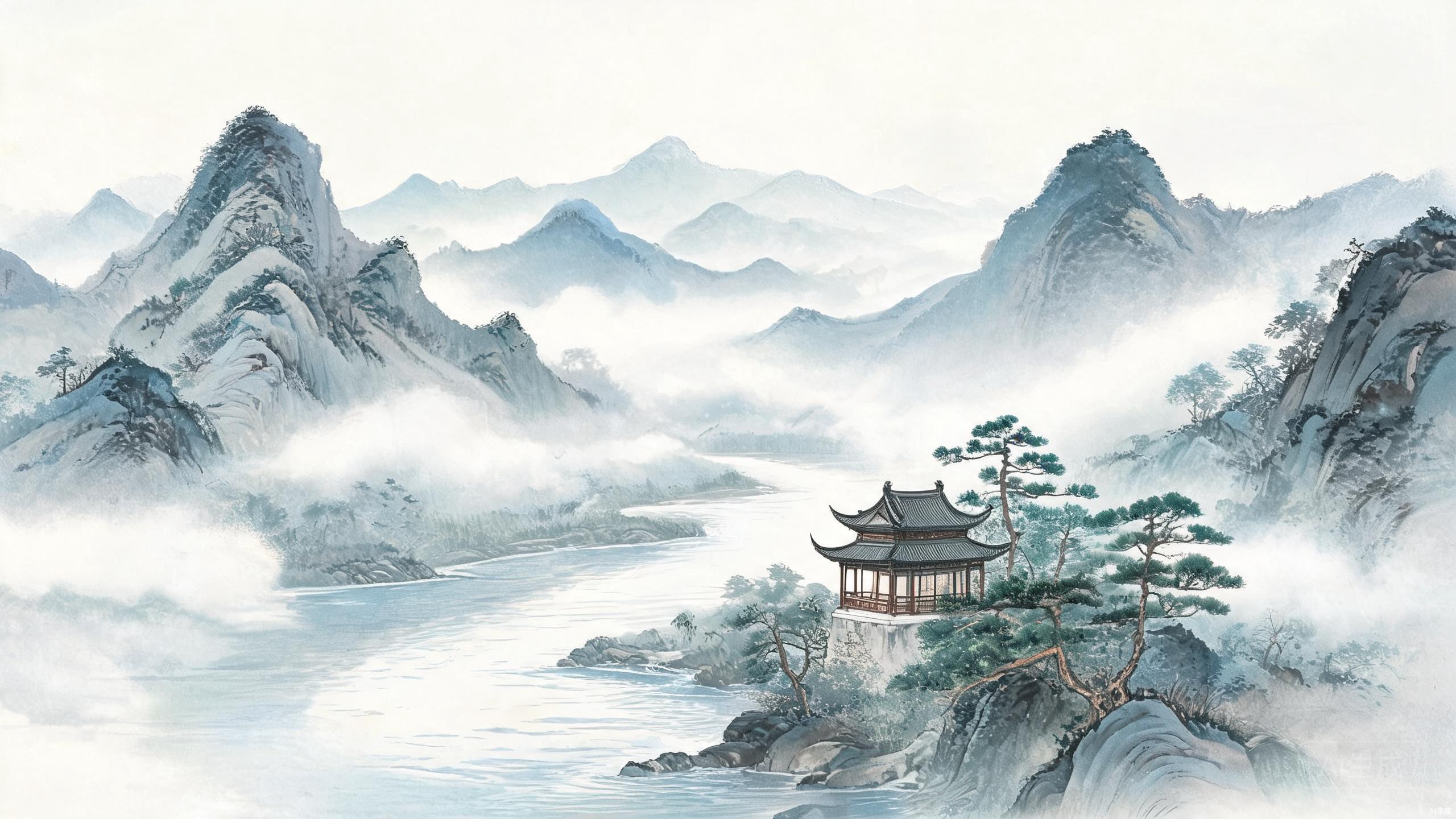
Across the more than two thousand years of Feng Shui history, countless extraordinary figures have emerged. Some were born with innate gifts, others achieved mastery through decades of disciplined study, and still others behaved in mysterious and unconventional ways — leaving behind legends that defy ordinary explanation. The stories of these "Feng Shui masters" form an essential chapter of Feng Shui culture and represent some of the most captivating pages in the broader tradition of Chinese metaphysical arts (术数, shù shù).
Cultural Context: In Chinese tradition, a true master of the metaphysical arts is expected to embody more than technical skill. Moral character, humility, and a sense of responsibility toward Heaven's secrets were considered inseparable from genuine expertise. This is why the most legendary Feng Shui figures are remembered not just for their abilities, but for their ethics and mystique.
Types of Feng Shui Masters
Throughout history, "Feng Shui masters" can generally be classified into several distinct types:
| Type | Characteristics | Examples |
|---|---|---|
| Gifted Type | Born with innate knowledge | Child prodigies who could "see Qi" |
| Self-Cultivated Type | Diligent study, master later in life | Those who practiced for decades without pause |
| Supernatural Encounter Type | Met immortals or received secret texts | Dream-received teachings |
| Reclusive Type | Lived in seclusion, indifferent to fame | Wanderers in plain cloth among common folk |
| Court Type | Served emperors, wielded great influence | Imperial Grand Advisors |
The Gifted Type: Masters Born with Extraordinary Talent
1. The Child Who Could See Qi
Legend tells of a Feng Shui master who could "see Qi" (望气) — actually perceiving the Qi flowing through mountains and rivers — from early childhood. As a boy, he once pointed to the mountain behind his village and declared: "That mountain radiates golden light — it is a treasure land." The adults dismissed his words, but years later, a gold mine was indeed discovered in that very spot.
This ability of "innate Qi-sight" is considered the highest natural gift of a Feng Shui master. Those who possessed it were said to need no Luopan (Feng Shui Compass) — a single glance was enough to determine auspicious and inauspicious energy.
2. The Blind Earth-Toucher
Another type of gifted master was the "blind Feng Shui practitioner" — though completely lacking eyesight, he could judge the quality of a site by touching the earth and listening to the wind and water. The belief holds that because "the eyes are blind, the heart sees clearly," the blind develop extraordinarily heightened senses that allow them to perceive Qi invisible to ordinary people.
| Gifted Master Type | Special Ability | Legendary Feat |
|---|---|---|
| Qi-Sighter | Can perceive Qi of mountains | Identified gold mountain in childhood |
| Blind Master | Touches earth, listens to wind | Perceives Qi without sight |
| Water-Listener | Judges fortune by water sound | Knows wealth source by listening |
The Supernatural Encounter Type: Masters Touched by the Extraordinary
1. Dream-Received Teachings from Immortals
One legend tells of an ordinary man who dreamed one night that an immortal bestowed upon him the secret arts of Feng Shui. Upon waking, he possessed complete mastery of Kanyu (Feng Shui). Such "dream-received transmission" stories add an aura of mystery to the practice.
2. Secret Texts Discovered in Ancient Tombs
A Feng Shui practitioner once discovered an ancient tomb in the mountains, within which lay a primordial Feng Shui manual. After years of devoted study, he became a master of the art. These "ancient tomb discoveries" reflect the traditional practice of secretly transmitting Feng Shui knowledge.
3. Guidance from a Mysterious Stranger
An ordinary person once encountered a mysterious figure in the mountains — sometimes described as an old man, sometimes as a Daoist priest — who transmitted the arts of Feng Shui before vanishing without a trace. Such stories attribute the ultimate source of Feng Shui to "extraordinary beings," deepening its mystique.
| Encounter Type | The Encounter | The Outcome |
|---|---|---|
| Dream Transmission | Immortal teaches in a dream | Awakens with complete mastery of Kanyu |
| Tomb Discovery | Secret manual found in ancient tomb | Years of study produce a master |
| Mysterious Stranger | Meeting a stranger in the mountains | Receives the Feng Shui arts |
The Reclusive Type: Masters Who Shunned the World
1. The Plain-Cloth Divine Calculator
Among reclusive masters, the most famous is Lai Buyi (赖布衣), mentioned in earlier chapters. He traveled among common folk in a simple robe, never bowing to the powerful, never charging the poor for his Feng Shui consultations. He was revered as the "Plain-Cloth Divine Calculator."
2. The Mountain Hermit
Legend speaks of a Feng Shui master who, having seen through the follies of the world, retreated into deep mountains for decades. He would occasionally descend to read a site for someone, then return immediately to his seclusion, never leaving his name. The people called him the "Mountain Hermit" — his site readings seemed supernaturally accurate, yet no one knew where he came from.
3. The Wandering Daoist
Some Feng Shui masters traveled the land disguised as "wandering Daoists" — appearing as ordinary priests but in fact being consummate practitioners. They would read sites for whomever fate placed in their path, never accepting payment, seeking only to "accumulate merit" (积德, jī dé).
| Reclusive Type | Identity | Defining Trait |
|---|---|---|
| Plain-Cloth Calculator | Commoner in plain clothes | Serves the people, no desire for wealth |
| Mountain Hermit | Hermit | Descends occasionally, leaves no name |
| Wandering Daoist | Daoist priest | Reads sites by fate, seeks only merit |
The Court Type: Masters in Service to Emperors
1. Grand Advisor Liu Bowen
The quintessential court-type master is Liu Bowen (刘伯温). He served as Zhu Yuanzhang's (朱元璋) chief strategist and also functioned as the imperial Feng Shui advisor, participating in the planning of capital cities and imperial tombs. Legend claims he "severed countless Dragon Veins" to protect the dynasty.
2. The Imperial Astronomical Bureau's Feng Shui Masters
During the Ming and Qing dynasties, the imperial court maintained an "Imperial Astronomical Bureau" (钦天监, Qīn Tiān Jiān) responsible for astronomy, calendar-making, and royal Feng Shui matters. The practitioners within this bureau, though not as legendary as Liu Bowen, were officially recognized authorities in charge of royal Feng Shui affairs.
3. Imperial Personal Feng Shui Masters
Beyond the Imperial Astronomical Bureau, emperors also privately retained "personal Feng Shui masters" to consult on major construction projects. These masters held exalted status but lived under constant peril — a single misreading could cost them their heads.
| Court Type | Identity | Responsibility |
|---|---|---|
| Grand Advisor | Like Liu Bowen | Statecraft + Feng Shui |
| Imperial Astronomical Bureau | Official Feng Shui masters | Royal Kanyu |
| Personal Imperial Master | Privately retained by emperor | Feng Shui for major projects |
The "Strange Conduct" of Feng Shui Masters
Feng Shui masters were often known for behaviors that ordinary people found difficult to comprehend:
1. Refusing Payment
Some masters would never charge for their work — figures like Yang Yunsong (杨筠松) and Lai Buyi. They believed that "using Feng Shui to help the world" was a duty, not a service to be sold.
2. Refusing to Teach the Unworthy
Feng Shui masters were extremely selective about accepting disciples. The principle of "not transmitting to the unworthy" (不传非人) meant that if a student's character was flawed, the master would rather withhold the teaching entirely. Some secret techniques were even restricted as "taught only to males, not females" or "transmitted only within the family, never outside."
3. Leaving No Trace
Some masters would read a site and then vanish, never leaving their name. They believed that "helping the world" was its own reward and required no memorial.
4. Refusing the Wicked
Some masters refused to read Feng Shui for evil people — Lai Buyi, for instance, rejected the request of a powerful provincial official.
5. Examining Character Before Land
Some masters would secretly investigate a client's moral character before agreeing to consult. Only those of good character were worth the master's time; the immoral were politely declined.
| Strange Conduct | Expression | Reason |
|---|---|---|
| No payment | Charges nothing | Helping the world is a duty |
| No unworthy students | Strict in accepting disciples | Prevents secret arts from falling to the wicked |
| No fame-seeking | Vanishes after the work | Helping the world needs no recognition |
| No wicked clients | Refuses the immoral | The wicked lack virtue; auspicious land brings them no blessing |
| Character first | Investigates virtue first | Virtue is the root; land is secondary |
The "Supernatural Powers" of Feng Shui Masters
According to legend, Feng Shui masters possessed various "supernatural abilities":
| Power | Ability | Legend |
|---|---|---|
| Seeing Qi | Can perceive Qi flowing through mountains and rivers | Knows fortune with a single glance |
| Seeking Dragon | Can track the movement of Dragon Veins | Finds dragons across a thousand miles without error |
| Pointing Acupoint | Pinpoints the true Feng Shui Point | Never misses by even a hair's breadth |
| Divining Events | Uses Feng Shui to foretell human affairs | Can predict three generations after a burial |
| Reshaping Fate | Uses Feng Shui to alter destiny | Fortune changes immediately after adjustment |
These "supernatural powers" are of course exaggerated, but they reflect the deep reverence the common people held for Feng Shui masters — elevating the art to a divine status to honor its extraordinary nature.
Modern Lessons from These Legendary Figures
Though many of these tales are embellished, their underlying spirit carries timeless value:
First, mastery above all. The reason these figures seemed "extraordinary" was fundamentally their consummate skill. This reminds us that reaching the pinnacle of any field requires relentless study.
Second, virtue as foundation. The practices of "examining character before consulting" and "refusing the wicked" embody the principle that "virtue is the root."
Third, indifference to fame and fortune. Their habits of "charging nothing" and "leaving no name" stand in sharp contrast to today's pursuit of profit, reminding us that skill should not be wielded only for wealth.
Fourth, reverence for Heaven's secrets. The legends of "not transmitting to the unworthy" and "leaking secrets shortens one's life" reflect the ancient respect for the "power of knowledge" — misused metaphysical knowledge carries serious consequences.
How to Apply These Lessons Today
Even in modern life, these legendary masters offer practical guidance:
- Master your craft: Whatever skill you pursue, commit to decades of disciplined study rather than seeking shortcuts
- Lead with integrity: Build your reputation on character first, competence second
- Stay humble: True expertise rarely needs self-promotion — let your work speak for itself
- Use knowledge responsibly: Respect the power of what you know and apply it ethically
Quick Tips:
- Treat your professional skills as a responsibility, not just a livelihood
- Choose mentors and teachers who demonstrate both skill AND strong character
- Remember that reputation built on virtue outlasts reputation built on results alone
Feng Shui Knowledge Points
- Seeing Qi (望气): The highest innate gift of a Feng Shui master — the ability to directly perceive the Qi flowing through mountains and rivers, knowing fortune without a Luopan.
- Not Transmitting to the Unworthy (不传非人): A traditional Feng Shui principle of rigorously screening disciples' character to prevent secret arts from falling into the hands of the wicked.
- Leaking Secrets Shortens Life (泄机折寿): The belief that a master who reveals a true Dragon Point "leaks Heaven's secrets" and thus shortens his own lifespan — reflecting ancient reverence for the "power of knowledge."
- Character Before Land (先看德后看地): The practice of investigating a client's virtue first; only the virtuous are deemed worthy of having their site read.
- Imperial Astronomical Bureau (钦天监): The Ming and Qing dynasty official institution responsible for astronomy, the calendar, and royal Kanyu affairs.
Related Articles
- [[../07-风水故事/49-刘伯温传奇.md|Liu Bowen's Legend: The Grand Advisor of the Ming Dynasty]]
- [[../07-风水故事/50-蒋大鸿传奇.md|Jiang Dahong's Legend: The Xuan Kong Master of Late Ming and Early Qing]]
- [[../01-风水入门/10-风水常见误区澄清.md|Feng Shui Myths Debunked: Distinguishing Superstition from Science]]
- [[../01-风水入门/51-风水测量工具大全.md|The Complete Feng Shui Measurement Toolkit: From Traditional to Modern]]