Feng Shui Masters' Duel: Legendary Rivalries Among Kanyu Masters
In Feng Shui folklore, the theme of "Feng Shui masters' duels" is endlessly fascinating. Two master practitioners deploy their finest skills against each other — competing over a prized Feng Shui Poin
Feng Shui Masters' Duel: Legendary Rivalries Among Kanyu (Feng Shui) Masters — Lucky Energy & Wisdom
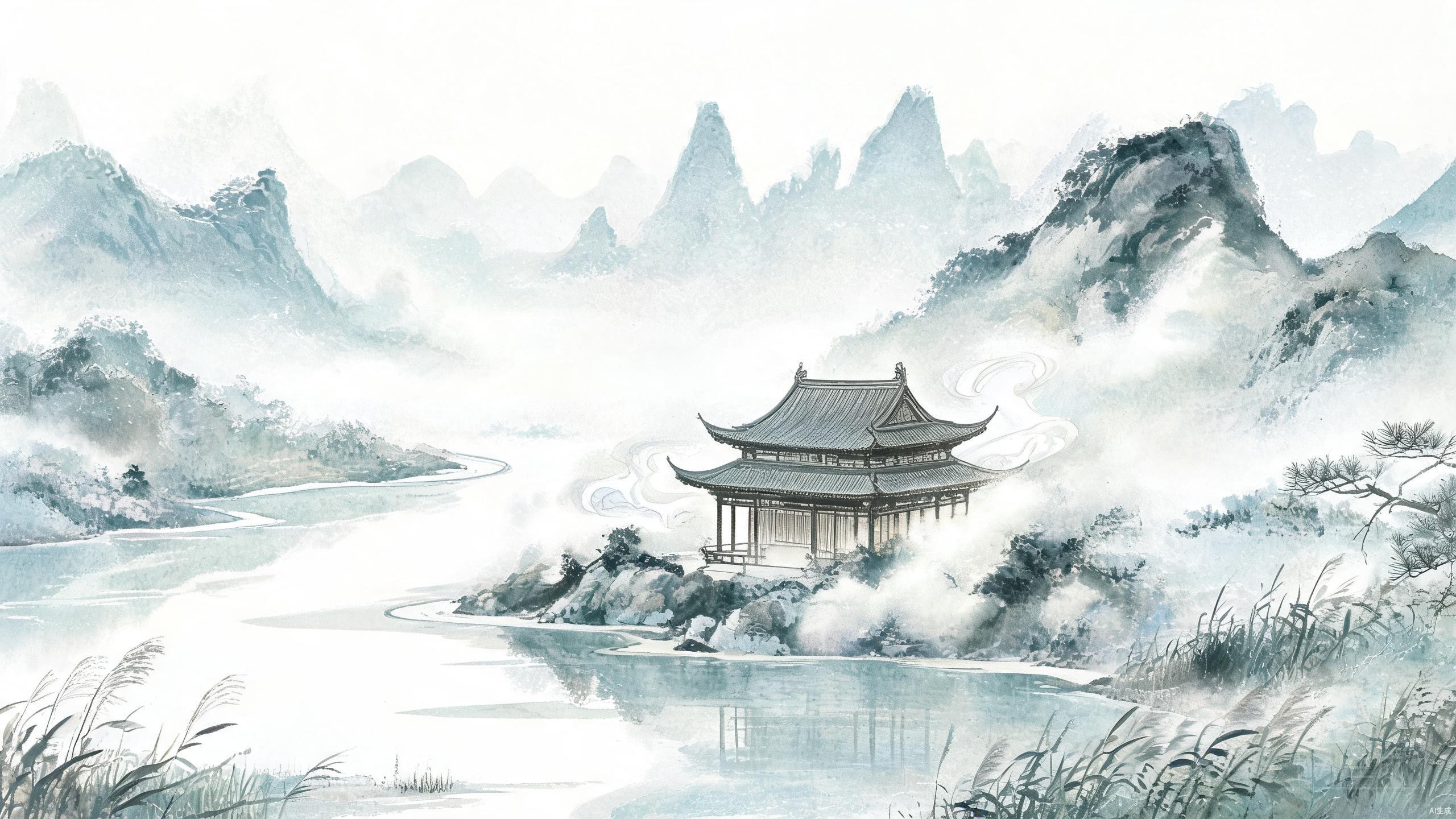
In Feng Shui folklore, the theme of "Feng Shui masters' duels" is endlessly fascinating. Two master practitioners deploy their finest skills against each other — competing over a prized Feng Shui Point (穴位), the fortunes of an entire city, or their own reputations. These tales of open rivalry and covert maneuvering are not only thrilling but also carry the deeper philosophical truths of Feng Shui itself.
The Origins of These Duels
Why do Feng Shui masters "duel"? The reasons can be grouped into several categories:
| Duel Type | Motivation | Typical Scenario |
|---|---|---|
| Competing for an Acupoint | Fighting over the same auspicious site | Two masters claiming land for different clients |
| Defending a City | Protecting or sabotaging a city's Feng Shui | Defending master versus attacking master |
| Skill Comparison | Testing one's abilities | Disciples or peers challenging each other |
| Personal Grudges | Settling old scores or vendettas | Long-standing feuds turned destructive |
| Serving Different Masters | Working for opposing patrons | Imperial Feng Shui advisors of rival rulers |
At its core, these duels represent Feng Shui being used for confrontation rather than harmonization. This directly contradicts the philosophy of Unity of Heaven and Humanity (天人合一) and going with the natural flow. As a result, duel stories almost always end in mutual destruction or self-harm.
Classic Duel Tale #1: The Battle for an Acupoint
The most widely circulated duel story involves two masters competing for the same auspicious site on behalf of their respective clients:
A certain location possessed a landscape formation known as "Golden Plate Bearing Pearls" — an extraordinarily auspicious site discovered simultaneously by two Feng Shui masters. Master A was reading the land for the wealthy Zhang family; Master B was reading it for the official Li family. Both determined that this site belonged to their own client.
Master A arrived first and buried a copper coin at the Feng Shui Point as his marker. Master B arrived later and hammered an iron nail into the same spot — which happened to drive perfectly through the square hole of the coin. When the two disputed, the matter was taken to court.
The magistrate, unable to decide, proposed: "Since both families have a claim, let heaven decide — tomorrow we will cast divination blocks (筊). Whoever receives a sacred result wins the land." That night, Master A secretly tampered with the site, while Master B covertly set up his own "arrangement" nearby.
The next day, when the divination was cast, neither family received a sacred result — the two masters' sabotage had transformed the "auspicious land" into "wasteland." The magistrate sighed: "Heaven's will is clear — fighting harms both; yielding benefits both."
| Duel Tactics | Master A's Actions | Master B's Actions |
|---|---|---|
| Marking the Acupoint | Buried a copper coin | Hammered an iron nail |
| Covert Manipulation | Tampered with the site | Set up an "arrangement" nearby |
| Outcome | Auspicious land became wasteland | Both parties suffered |
Classic Duel Tale #2: Defending a City
Another famous story involves a "defending" master versus an "attacking" master:
In a certain dynasty, City A possessed exceptional Feng Shui, destined to produce an emperor. The lord of City B, seeking to claim the throne, hired a "city-breaking" Feng Shui master to travel to City A and destroy its Feng Shui. Upon hearing the news, the defending general of City A summoned a "city-defending" master to counter the threat.
The "attacking master" discovered that behind the city stood a principal mountain (the Black Tortoise position) containing a powerful Dragon Vein (龙脉) with exceptionally strong Dragon Qi. He dug a trench at the Dragon's neck to "sever the Dragon Vein."
The "defending master" responded by building two small temples on either side of the trench, using them as "bridges" to catch and reconnect the Dragon Qi — though the Dragon Vein was cut in form, its energy passed secretly through the temples.
When severing the Dragon failed, the "attacking master" piled rocks at the city's Water Mouth (水口) to "block the water" and disperse the gathering Qi. The "defending master" then planted willows beside the rock pile — the willow roots penetrated the stones, and though the Water Mouth was blocked in form, the water continued to flow secretly through the roots as natural channels.
After several rounds, the "attacking master" finally exhausted his strength and withdrew. But before departing, he declared: "Though the Dragon Vein was not severed, its vital essence has been wounded. Within thirty years, although City A will still possess Dragon Qi, it will never reach full prosperity." True to his word, thirty years later City A produced a figure of "near-emperor" caliber — but who ultimately failed to claim the throne.
| Round | Attacking Master's Move | Defending Master's Response |
|---|---|---|
| Round One | Dug trench to sever Dragon Vein | Built temples to reconnect Qi |
| Round Two | Piled rocks to block Water Mouth | Planted willows to channel water |
| Outcome | Dragon Vein wounded but not severed | Thirty years of diminished prosperity |
Classic Duel Tale #3: Disciples Turned Rivals
A third type of story involves disciples of the same master who become adversaries:
A renowned Feng Shui master had two disciples — the elder was steady and methodical, the younger was sharp and cunning. On his deathbed, the master entrusted his secret manual to the elder disciple, which incensed the younger. The younger secretly stole half the manual, and the two became bitter enemies.
Years later, the elder disciple selected a site for a city using the classic configuration of "Sitting North Facing South, Back to Mountain Facing Water." The younger deliberately built a "Fire-shaped Pagoda" on the opposite riverbank, its spire pointing toward the city, attempting to use "Fire conquering Metal" todisrupt the city's fortune.
The elder, upon seeing this, built a "Water-shaped Pool" within the city to use "Water conquering Fire" as a remedy. The younger raised the pagoda taller; the elder then planted great trees beside the pool, employing the reverse cycle of "Wood generating Fire, Fire generating Earth" — converting the pagoda's Fire Qi into strengthening Earth Qi.
The two disciples dueled for ten years. Though the city's fortune was not destroyed, both exhausted their life force and died of illness within a short time. On his deathbed, the younger said to the elder: "Had we not fought all those years ago and worked together, this city would have become the greatest in the land." The elder sighed: "The master gave me the manual precisely because he knew your combative nature. The half-manual in your hands became your burden — this is the truth that fighting leads to loss; yielding leads to gain."
The "Rules" of Feng Shui Duels
According to legend, although Feng Shui duels could be fierce, they followed certain "rules":
| Rule | Content |
|---|---|
| No Harm to Innocents | Dueling affects only the two parties; never the common people |
| No Breaking Foundations | One may contest a single site or city, never the Dragon Veins of the world |
| No Dark Arts | Forbidden to use "curses," "poison sorcery," or other malevolent techniques |
| Diplomacy Before Force | Must first argue the case through reasoning; dueling only when reasoning fails |
| Know When to Stop | When one side concedes, the other must not pursue total destruction |
Cultural Context: These "rules," though legendary, reflect a core principle: Feng Shui is fundamentally about harmonization, not confrontation. Dueling is the measure of last resort, and even then must observe ethical boundaries.
The Lessons of These Duels
Across all varieties of duel stories, the endings consistently reveal mutual destruction or self-inflicted harm:
- Battles over Acupoints transform auspicious land into wasteland
- City defense battles wound the city's vital essence even when it survives
- Disciple rivalries waste ten years of effort and lives
Each ending delivers the same message: The way of Feng Shui values harmony over conflict. Dueling violates the principle of Unity of Heaven and Humanity, transforming a discipline meant for "harmonizing heaven and earth" into a weapon of mutual destruction — and inevitably invites retribution.
There is a folk saying: "When two Feng Shui masters duel, it is like two tigers fighting — one must be wounded, or both." This captures the deepest warning against such conflicts.
Modern Lessons from These Duel Tales
Though these tales carry a legendary flavor, their lessons remain meaningful today:
First, cooperation outperforms confrontation. The disciples' story — "united, they build a great city; divided, they both lose" — demonstrates that collaboration generally creates more value than antagonism.
Second, the importance of ethical底线. The duels' "rules" remind us that even in competition, we must maintain ethical limits — never using any means necessary, never harming the innocent.
Third, the wisdom of knowing when to stop. The "know when to stop" rule teaches us never to pursue things to their absolute extreme, but to recognize when it is time to yield.
Key Feng Shui Concepts
- Duel (斗法): When Feng Shui masters use their skills against one another, frequently appearing in legends, typically ending in mutual destruction.
- City-Breaking and City-Defending: A classic duel scenario where one master sabotages a city's Feng Shui while another defends it.
- Cursing Arts (厌胜之术): An ancient form of sorcery using curses or symbolic objects to harm others — occasionally invoked in Feng Shui duels, regarded as a dark art.
- Fighting Leads to Loss; Yielding Leads to Gain (争则失,让则得): The core lesson of duel stories, emphasizing that harmony surpasses conflict.
- Unity of Heaven and Humanity (天人合一): The fundamental principle of Feng Shui — dueling violates this principle and therefore invites retribution.
Related Articles
- [[../06-风水文化与历史/54-风水师的历史地位变迁.md|The Evolving Historical Status of Feng Shui Masters]]
- [[../07-风水故事/50-蒋大鸿传奇.md|Jiang Dahong's Legend: The Xuan Kong Master of Late Ming and Early Qing]]
- [[../07-风水故事/06-赖布衣断地如神.md|Lai Buyi's Miraculous Land Judgments: The Legendary Feng Shui Master of the Southern Song]]
- [[../01-风水入门/10-风水常见误区澄清.md|Feng Shui Myths Debunked: Distinguishing Superstition from Science]]
Remember: Feng Shui seeks to balance Yin and Yang energies — the dual forces that shape all existence.
How to Apply These Lessons
- Read for principles: Extract the Feng Shui rules embedded in each story
- Observe your environment: Like the masters in these tales, learn to "read" the energy of landscapes
- Respect natural forces: Understand that altering landforms can shift energy patterns
- Apply with ethics: Use Feng Shui knowledge to benefit, not harm, others
- Share the wisdom: Pass on these stories to keep the tradition alive and relevant
- Balance the Five Elements: Incorporate Wood, Fire, Earth, Metal, and Water in your décor for harmonious energy