Feng Shui Phoenix Land: The Legendary 'Hundred Birds Paying Homage to the Phoenix' Lucky Site
The Phoenix, king of all birds, is a symbol of auspiciousness and good fortune. In Feng Shui acupoint classification, the "Phoenix Land" (凤凰地) is regarded as one of the most noble and auspicious acupo
Phoenix Land Legend: The Auspicious Feng Shui Site of "Hundred Birds Paying Homage to the Phoenix"
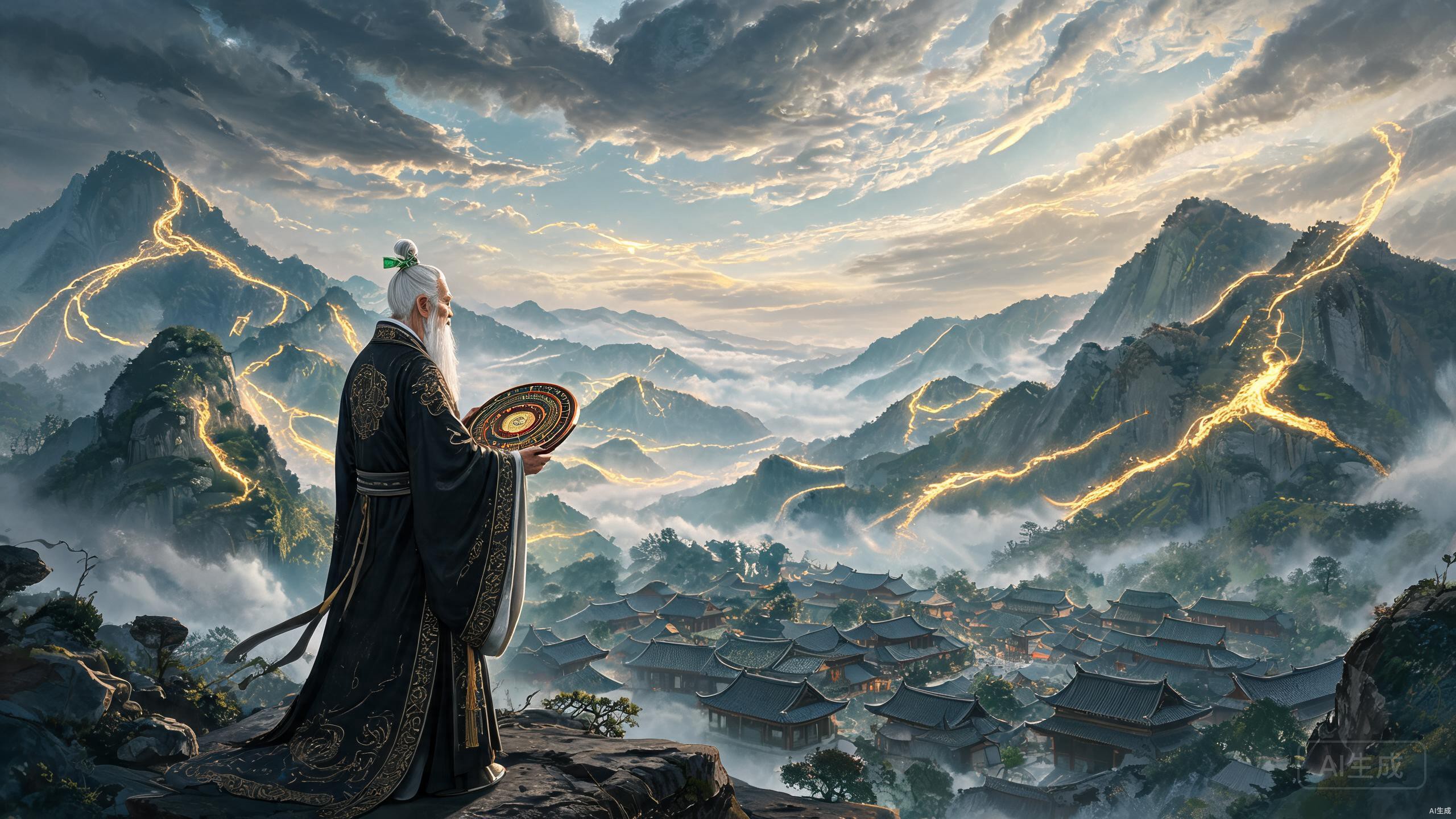
The Phoenix, king of all birds, is a symbol of auspiciousness and good fortune. In Feng Shui acupoint classification, the "Phoenix Land" (凤凰地) is regarded as one of the most noble and auspicious acupoints, believed to produce distinguished figures, powerful women, and brilliant literary talents. Legends about Phoenix Land have been widely circulated among the people, particularly tied to several remarkable women in Chinese history.
The Phoenix and Feng Shui
The Phoenix holds an exalted position in Chinese culture, paired with the Dragon as "Dragon and Phoenix" (龙凤). The male is called Feng (凤) and the female Huang (凰) — together known as "Phoenix" (凤凰). The Phoenix perches only on paulownia trees, drinks only sweet springs, and eats only bamboo seeds — symbols of nobility, purity, and rebirth.
In Feng Shui acupoint classification, "Phoenix Land" refers to terrain shaped like a Phoenix with wings spread. Its characteristics include: a central mountain rising like the Phoenix's proud head, two flanking ridges extending like outstretched wings, and an open Bright Hall in front resembling the lowered tail feathers — presenting an overall atmosphere of regal majesty.
| Phoenix Land Feature | Feng Shui Meaning |
|---|---|
| Central mountain like the Phoenix's head | Nobility, prominence |
| Wings spread to both sides | Strong protection, noble energy |
| Open Bright Hall in front | Grand atmosphere, capacity for greatness |
| Where the tail droops low | Qi gathers here — ideal for placing the acupoint |
| Water flowing in front | Phoenix drinks sweet spring — symbolizes noble purity |
The most distinctive feature of Phoenix Land is its frequent association with "distinguished women." Folk belief holds that Phoenix Land produces empresses, noble ladies, or female talents — consistent with the Phoenix's image as the "Queen of Birds" (ruled by the female).
The Legend of Phoenix Land Producing an Empress
One widely circulated legend tells of a Feng Shui master who discovered a Phoenix Land and declared: "Those buried here will produce an empress in a later generation." When the news spread, wealthy families in the vicinity competed fiercely to purchase the site.
In the end, a wealthy merchant surnamed Wang (王) bought it for a great sum and reburied his mother there. Indeed, several generations later, a Wang family daughter was selected for the imperial palace, rose steadily through the ranks, and was eventually crowned as Empress.
However, before departing, the Feng Shui master left these words: "Though Phoenix Land is noble, the Phoenix's head must not rise higher than the Dragon's head. If descendants recklessly add to the mound, causing the Phoenix's head to exceed the Dragon's head, the Phoenix will fly away and all noble energy will be lost."
True to the omen, Empress Wang's family was eventually punished for "imperial in-law interference in governance," and the family's fortunes collapsed. Only then did people recall the Feng Shui master's words — the Wang family had later built a tall platform before the grave, causing the "Phoenix's head" to rise too high, violating the taboo.
| Phoenix Land Taboo | Manifestation | Consequence |
|---|---|---|
| Phoenix head higher than Dragon head | Tall platform added before the grave | Phoenix flies away, noble energy scatters |
| Phoenix wings damaged | Mountains on either side excavated | Loses protection, noble energy leaks |
| Phoenix tail broken | Front Bright Hall blocked | Qi cannot gather, fortune does not last |
| Phoenix without water | No water flow in front | Phoenix thirsts and weakens, nobility fades |
Phoenix Land and Wu Zetian
According to a popular folk belief, the reason Wu Zetian (武则天) became the only female emperor in Chinese history is related to her ancestors being buried in "Phoenix Land."
Legend has it that Wu Zetian's father, Wu Shiyue (武士彟), was guided by a Feng Shui master in his early years to bury his ancestors in a Phoenix Land in Bingzhou (modern Wenshui, Shanxi). The terrain featured mountains shaped like a Phoenix with wings spread, with the Fen River flowing in front — a clear manifestation of "Phoenix drinking sweet spring."
The Feng Shui master declared: "This Phoenix Land has a proudly raised head and full wings, signifying a female ruler. Within three generations, a woman shall ascend to supreme power."
True to the prophecy, Wu Shiyue's daughter Wu Zetian eventually became the only female emperor in Chinese history. Of course, this attribution is a form of "post-hoc reasoning" — Wu Zetian's rise was the result of multiple historical factors — but the legend reflects the deep folk conviction that "Phoenix Land produces a female sovereign."
Phoenix Land and Female Talents
Beyond empresses, Phoenix Land is also believed to produce "talented women." In the Jiangnan region (江南), many tales of "Phoenix Land producing talented women" have been passed down:
In one area with a Phoenix-shaped mountain, a family living at its base produced three consecutive generations of talented women — all well-versed in poetry and literature, skilled in painting, and famous throughout the region. A Feng Shui master explained: "The Phoenix governs literary talent. The Phoenix's head resembles a brush tip, and its wings resemble scrolls — hence literary brilliance. Moreover, the Phoenix is Yin (feminine), so literary talent manifests primarily in women."
| Phoenix Land Manifestation | Corresponding Feature | Typical Legend |
|---|---|---|
| Produces empresses | Proud head, full wings | Wu Zetian, Empress of a certain dynasty |
| Produces talented women | Head like brush tip, water in front | Three generations of Jiangnan talents |
| Produces noble purity | Phoenix drinks sweet spring, open Bright Hall | Generations of scholarly families |
| Produces noble maidens | Tail droops low, Qi gathers and does not disperse | Daughters who marry into prominent families |
The "Hundred Birds Paying Homage to the Phoenix" Configuration
The most ideal Phoenix Land configuration is known as "Hundred Birds Paying Homage to the Phoenix" (百鸟朝凤) — the central mountain stands like the Phoenix at the center, while surrounding mountains resemble one hundred birds paying court, varying in size and posture, all "facing" the central mountain.
This configuration is extremely rare, said to occur "only once in a thousand years." A Feng Shui site with the "Hundred Birds Paying Homage" configuration symbolizes "commanding authority with wise counsel" and is often regarded as an "imperial-grade" or "empress dowager-grade" treasure site.
According to folk legend, Nanjing's Purple Mountain (紫金山) carries the residual energy of a "Hundred Birds Paying Homage" configuration — the main peak resembling the Phoenix's head, with surrounding mountains like one hundred birds. This is why Nanjing became a capital city multiple times and produced several "empress dowager and empress" figures. Of course, these attributions are largely speculative, but their cultural significance is worth contemplating.
Modern Interpretation of Phoenix Land
From a geographical perspective, "Phoenix Land" typically refers to terrain with the following features:
- Central Mountain: A prominent hill stands at the center, like the Phoenix's head
- Wings Spread: Ridges of lower elevation extend on both sides of the central mountain, like the Phoenix's wings
- Open Front: Plains or gentle slopes lie before the mountain, like the lowered tail feathers
- Water in Front: Rivers or lakes flow before the site, like the Phoenix drinking sweet spring
This terrain is indeed an ideal living environment — a mountain for backing, protection on both sides, open space and water in front — both secure and convenient. The ancients named it "Phoenix" to capture its beauty and to express their aspirations for an excellent life.
The Profound Influence of Phoenix Culture
The legend of Phoenix Land is not merely a Feng Shui topic — it is deeply woven into Chinese culture. From the wedding tradition of "Dragon and Phoenix Bringing Auspiciousness" (龙凤呈祥), to the ceremonial wedding attire "Phoenix Crown and Rainbow Skirt" (凤冠霞帔), from the musical piece "Hundred Birds Paying Homage to the Phoenix" (百鸟朝凤), to the philosophy of "Phoenix Nirvana" (凤凰涅槃), the Phoenix image is everywhere.
In the Feng Shui field, the Phoenix Land legend reminds us of several principles:
First, Yin and Yang balance. The Phoenix belongs to Yin, the Dragon belongs to Yang. The pairing of "Dragon and Phoenix" embodies Yin-Yang harmony. When selecting a Feng Shui site, one must not only seek the "Yang" energy of the Dragon but also value the "Yin" energy of the Phoenix.
Second, virtue is paramount. The Phoenix "perches only on paulownia trees," symbolizing purity. Even the best Feng Shui, if inhabited by those without virtue, is like "a Phoenix fallen among chickens" — unable to endure.
Third, do not overreach. Though Phoenix Land is noble, the taboo that "the Phoenix's head must not exceed the Dragon's head" warns us: noble energy cannot be forcibly seized. Otherwise, the "Phoenix flies away," and blessings are lost instead.
Feng Shui Knowledge Points
- Phoenix Land (凤凰地): A Feng Shui acupoint shape where the terrain resembles a Phoenix with wings spread. It produces distinguished figures, female rulers, and talented women — one of the most noble acupoint forms.
- Hundred Birds Paying Homage to the Phoenix (百鸟朝凤): The most ideal Phoenix Land configuration, with the central mountain at the heart and surrounding mountains paying homage. It symbolizes commanding authority and wise counsel.
- Phoenix Drinking Sweet Spring (凤饮醴泉): The image of clear streams flowing before Phoenix Land, signifying noble purity and literary talent.
- Phoenix's Head Must Not Exceed Dragon's Head (凤首不可高过龙首): A Phoenix Land taboo warning that noble energy cannot be forcibly seized — otherwise the "Phoenix flies away" and blessings are lost.
- Dragon and Phoenix Bringing Auspiciousness (龙凤呈祥): The pairing of Dragon (Yang) and Phoenix (Yin), embodying the Feng Shui principle of Yin and Yang balance.
Related Articles
- [[../09-Yin Dwelling风水/12-如何选择风水宝地安葬先人.md|How to Choose an Auspicious Feng Shui Site for Ancestral Burial]]
- [[../07-风水故事/25-鲤鱼地传说.md|Carp Land Legend: The Auspicious Feng Shui Acupoint of "Carp Leaping Over the Dragon Gate"]]
- [[../07-风水故事/23-蛇形地传说.md|Snake Land Legend: The Feng Shui Mysteries of Serpentine Mountain Terrain]]
- [[../01-风水入门/10-风水常见误区澄清.md|Common Feng Shui Misconceptions: Distinguishing Superstition from Science]]