Feng Shui Treasured Land: Legendary Blessed Places That Store Wind and Gather Qi
"Feng Shui Treasured Land" — these four words are almost synonymous with "earthly paradise" in the hearts of the Chinese people. From emperors and generals to ordinary folk, everyone has longed to fin
Feng Shui Treasured Land: Legendary Blessed Places That Store Wind and Gather Qi
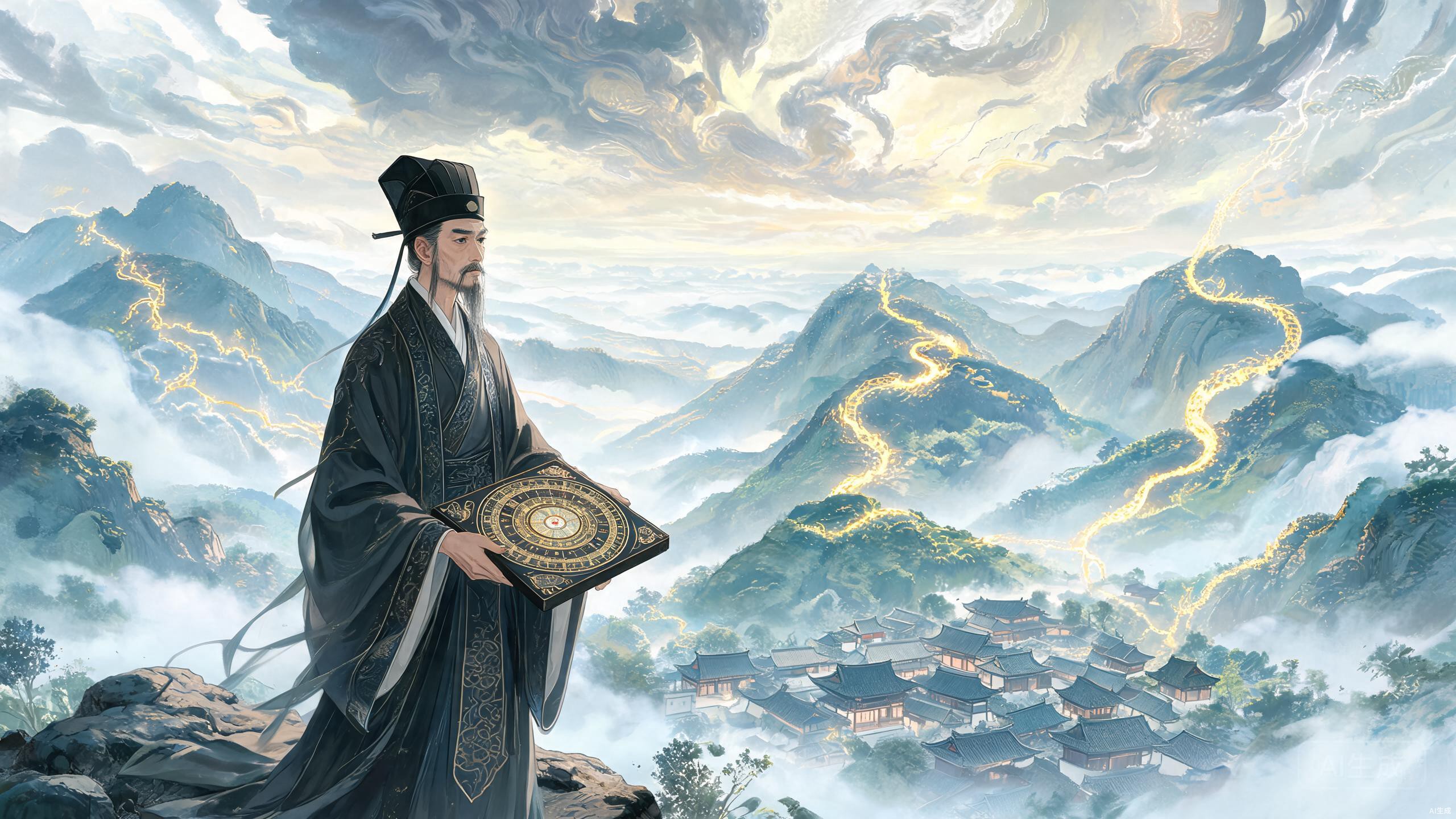
"Feng Shui Treasured Land" — these four words are almost synonymous with "earthly paradise" in the hearts of the Chinese people. From emperors and generals to ordinary folk, everyone has longed to find a blessed place that Stores Wind and Gathers Qi (藏风聚气, cáng fēng jù qì) — a sanctuary where one can settle, thrive, and pass good fortune to future generations. Legends about such treasured lands are countless in Chinese folk tradition, forming the most enchanting chapter of Feng Shui culture.
What Is a Feng Shui Treasured Land?
According to Guo Pu's (郭璞) Zang Shu (Book of Burial), the essence of a Feng Shui treasured land lies in Storing Wind and Gathering Qi: "Qi rides the wind and scatters, but is retained when encountering water. The ancients gathered it so it would not disperse and guided it so it would stay — thus they called it Feng Shui." (气乘风则散,界水则止。古人聚之使不散,行之使有止,故谓之风水。)
A true Feng Shui treasured land must possess the following essential elements:
| Element | Meaning | Function |
|---|---|---|
| Dragon | Incoming mountain range | Source of Vital Qi |
| Acupoint | Convergence point of Vital Qi | Spot where Qi is captured |
| Sand | Guarding hills on left and right | Store wind and protect Qi |
| Water | Flowing water in front | Define and gather Qi |
| Direction | Orientation of the structure | Receive auspicious energy, avoid harmful energy |
Together, these five elements are known as "Dragon, Acupoint, Sand, Water, Direction" (龙穴砂水向) — the fundamental framework for evaluating a Feng Shui treasured land. Only when all five are present and properly harmonized can a place truly be called a "treasured land."
"Azure Dragon on the Left, White Tiger on the Right, Vermilion Bird in Front, Black Tortoise Behind"
The most classic pattern of a Feng Shui treasured land is the "Four Celestial Animals in Formation" (四兽齐备) — Azure Dragon (青龙) on the left, White Tiger (白虎) on the right, Vermilion Bird (朱雀) in front, and Black Tortoise (玄武) behind:
| Celestial Animal | Direction | Landform Requirement | Symbolic Meaning |
|---|---|---|---|
| Black Tortoise | North (Behind) | Tall, sturdy mountain as backing | Solid foundation and support |
| Vermilion Bird | South (Front) | Water or open space in front | Bright Hall (明堂) openness |
| Azure Dragon | East (Left) | Hills or highlands, winding embrace | Support from noble helpers |
| White Tiger | West (Right) | Hills or highlands, subdued protection | Martial defense and guardianship |
Among the Four Animals, the Black Tortoise (rear mountain) is most important — with support, one is secure; without it, one is vulnerable. Next is the Vermilion Bird (front water or Bright Hall) — with water, Qi gathers; without water, Qi disperses. The Azure Dragon should rise higher than the White Tiger ("Dragon strong, Tiger weak"), signifying that culture and civility prevail over conflict and war, bringing peace and stability.
Cultural Context: The Four Celestial Animals (四象, Four Symbols) represent cosmic guardians from ancient Chinese astronomy. In Feng Shui, they are translated into landform features — mountains and water become living symbols of protection, opportunity, and balance. Think of them as the energy "bodyguards" of your home.
The ideal Four Animals formation resembles a "Grand Chair" (太师椅) — a high backrest (Black Tortoise), armrests on both sides (Azure Dragon and White Tiger), and open space in front (Vermilion Bird Bright Hall). Anyone seated within feels stable, comfortable, and secure.
Legends of Feng Shui Treasured Lands
Legend One: Fishing Village Becomes a Famous City
A Feng Shui master once passed through a coastal fishing village. He observed that the mountain behind the village resembled the backrest of a Grand Chair, the rolling hills on either side looked like armrests, and a bay in front served as a Bright Hall, with an island at the water mouth acting as a "seal star" (印星) guarding the exit. The master sighed: "This is a Grand Chair formation. If a city were built here, it would surely become famous."
Later, this place did indeed develop into an important port city, bustling with merchants and thriving with prosperity. The local people passed down the story as proof that a Feng Shui treasured land truly works.
Legend Two: A Desolate Mountain Produces a Noble Clan
In a certain region lay a stretch of barren hills, ignored and unclaimed. A Feng Shui master discovered within it a formation of Storing Wind and Gathering Qi — tall mountains to the rear, hills embracing the sides, and a clear spring flowing in front. He guided a poor refugee family to settle there.
Over the following generations, this family indeed flourished. They produced numerous scholars and officials, eventually becoming a prominent local clan. Only then did people realize that even a desolate mountain can harbor a "treasured land" — the key lies in whether one has the eye to recognize it.
Legend Three: Relocating a Grave Changes Fate
A certain household suffered continuous misfortune and invited a Feng Shui master to investigate. The master discovered that their ancestral grave was situated on a "wind mouth" — where "Qi rides the wind and scatters." As a result, the family's fortune could not accumulate. He advised them to relocate the grave to a nearby spot that "stored the wind" — a small hill behind to block the wind, and a pond in front to gather Qi.
After the relocation, the family's fortunes gradually improved. This story illustrates that "storing wind" is more fundamental than "gathering Qi" — if wind is not stored, Qi will surely scatter; once wind is stored, Qi can gather.
| Treasured Land Legend | Formation | Outcome |
|---|---|---|
| Fishing Village Becomes Famous City | Grand Chair formation, water mouth guarded | Developed into a major city |
| Desolate Mountain Produces Noble Clan | Storing Wind and Gathering Qi, rear mountain and front spring | Rose to prominence over generations |
| Relocating Grave Changes Fate | Moved from wind mouth to wind-storing site | Family fortune gradually restored |
"A Blessed Land for a Blessed Person"
There is a widely circulated saying about Feng Shui treasured lands: "A blessed land belongs to a blessed person; without virtue, seeking it is in vain." (福地福人居,无德求也虚) The meaning is clear: a true Feng Shui treasured land only belongs to those who are virtuous and blessed. Without moral character, even if one occupies a treasured land, one cannot enjoy its benefits — instead, it may bring disaster.
One story illustrates this principle vividly:
A wealthy merchant paid a fortune to purchase what was said to be a "Feng Shui treasured land" and built his residence there. Yet after moving in, misfortune struck one after another — business failed, family members fell ill, and lawsuits piled up. Furious, the merchant confronted the Feng Shui master: "You said this was a treasured land — why is this happening?"
After investigating the site, the master explained: "This land is indeed a treasured land, but when you built your house, you cut down the ancient tree on the rear mountain (injuring the Black Tortoise), filled in the pond in the front courtyard (destroying the Vermilion Bird), and built walls too high on both sides (oppressing the Dragon and Tiger). You destroyed the treasured land yourself — how can you blame anyone else?"
The merchant suddenly understood. Following the master's guidance, he restored the land to its original state, and his family's fortune gradually recovered.
This story teaches us: A Feng Shui treasured land is not something you "seize" — it is something you "nurture." Even if you occupy an auspicious site, if you do not cherish it and recklessly destroy it, a "treasured land" can become a "cursed land."
Distinguishing "Real" from "False" Treasured Lands
Among folk traditions, there are many cautionary tales about "false treasured lands." Some places may appear to be Feng Shui treasured lands on the surface, but hide hidden dangers within:
| Type of False Treasured Land | Appearance | Reality |
|---|---|---|
| "Beautiful Acupoint" without Qi | Pretty mountain shape, but Qi has already dispersed | Form without substance — empty appearance |
| "Grand Formation" without Water | Strong Dragon Vein, but no water to define Qi | Dragon moves without stopping, no acupoint can be found |
| "Bright Hall" too wide | Excessively open front | Qi cannot gather, disperses aimlessly |
| "Backing Mountain" too close | Rear mountain too near and too high | Oppressive feeling, causes psychological pressure |
| "Water Embrace" as Reverse Bow | Water curves, but bends outward | Reverse Bow Water, causes wealth loss |
Cultural Context: Reverse Bow Water (反弓水) refers to a river or road that curves like a bowstring facing away from the site — symbolically "shooting" wealth and opportunity away. This is why Feng Shui favors gently curving water that embraces the property rather than cutting away from it.
A true master can see through appearances to the essence, distinguishing a "real treasured land" from a "false treasured land." This is precisely why Feng Shui masters are so highly valued — ordinary people see only forms; a master can perceive Qi.
A Modern Perspective on Feng Shui Treasured Lands
From a modern viewpoint, what is called a "Feng Shui treasured land" is essentially a favorable environment suitable for human habitation:
- Backing mountain: Blocks cold winter winds and provides warmth
- Facing water: Provides convenient access to water for daily life and irrigation
- Sunny orientation: Ensures ample natural light, keeping spaces dry and sanitary
- Protection on both sides: Prevents wind and flood damage, enhancing safety
- Open Bright Hall: Offers good views and psychological comfort
These conditions align remarkably well with modern principles of architecture and environmental science. Though the ancients expressed this wisdom through the language of "Feng Shui" — with its mystical overtones — the core knowledge reflects sound environmental experience.
How to Identify a "Treasured Land" Quality Home
- Check your backing: Is there a tall building, hillside, or solid wall protecting the rear of your property?
- Assess your front view: Do you have an open vista with gentle, curving pathways or water features?
- Evaluate side protection: Are there balanced structures on your left and right offering shelter?
- Observe natural light: Does your home receive ample sunlight throughout the day?
- Notice the wind pattern: Walk around on a breezy day — does wind enter gently, or rush through harshly?
Quick Tips:
- A home with solid backing and gentle front opening naturally gathers and retains energy
- Avoid properties sandwiched between tall buildings with narrow gaps — this creates Heaven Chopping Sha
- Curved walkways and rounded garden features are always preferable to sharp, straight lines
The Spiritual Essence of Feng Shui Treasured Lands
Beyond environmental significance, legends of Feng Shui treasured lands carry profound spiritual meaning:
First, harmony between humanity and nature. Treasured lands emphasize "going with the flow" — not opposing nature, but finding a dwelling in harmony with it.
Second, the unity of virtue and blessing. The concept of "Blessed land for a blessed person" ties Feng Shui directly to morality — the virtuous gain blessed lands; the unvirtuous lose them.
Third, contentment and cherishing what you have. The teaching that "treasured lands must be nurtured" reminds us to appreciate good environments we already possess, rather than greedily seeking more or carelessly destroying what we have.
Feng Shui Knowledge Points
- Storing Wind and Gathering Qi (藏风聚气): The core standard of a Feng Shui treasured land, requiring a stable energy field and the convergence of Vital Qi (生气, sheng qi).
- Dragon, Acupoint, Sand, Water, Direction (龙穴砂水向): The five essential elements for evaluating a treasured land — all must be present.
- Four Celestial Animals Formation (四兽格局): Azure Dragon on the left, White Tiger on the right, Vermilion Bird in front, Black Tortoise behind — the classic configuration of a Feng Shui treasured land.
- "Blessed land for a blessed person" (福地福人居): A Feng Shui saying emphasizing the alignment of virtue and environment — without virtue, even an auspicious site brings no blessing.
- Grand Chair Formation (太师椅局): A vivid metaphor for a Feng Shui treasured land — with a high backrest behind, armrests on both sides, and open space in front.
Related Articles
- [[../01-风水入门/18-风水中的藏风聚气.md|The Principle of "Storing Wind and Gathering Qi" in Feng Shui]]
- [[../01-风水入门/09-Ten Principles of Modern Feng Shui.md|Top Ten Principles of Modern Feng Shui]]
- [[../08-百科问答库/30-什么是藏风聚气?好风水的标准是什么?.md|What Is Storing Wind and Gathering Qi? What Are the Standards of Good Feng Shui?]]
- [[../09-Yin Dwelling风水/12-如何选择风水宝地安葬先人.md|How to Choose a Feng Shui Treasured Land for Ancestral Burial]]