Good vs Evil in Feng Shui: How Virtue Shapes Your Luck and Prosperity
> "A house that accumulates virtue will surely have abundant blessings; a house that accumulates evil will surely have lingering misfortune." (积善之家,必有余庆;积不善之家,必有余殃。) In Feng Shui culture, one category
Good vs Evil in Feng Shui: How Virtue Shapes Your Luck and Prosperity
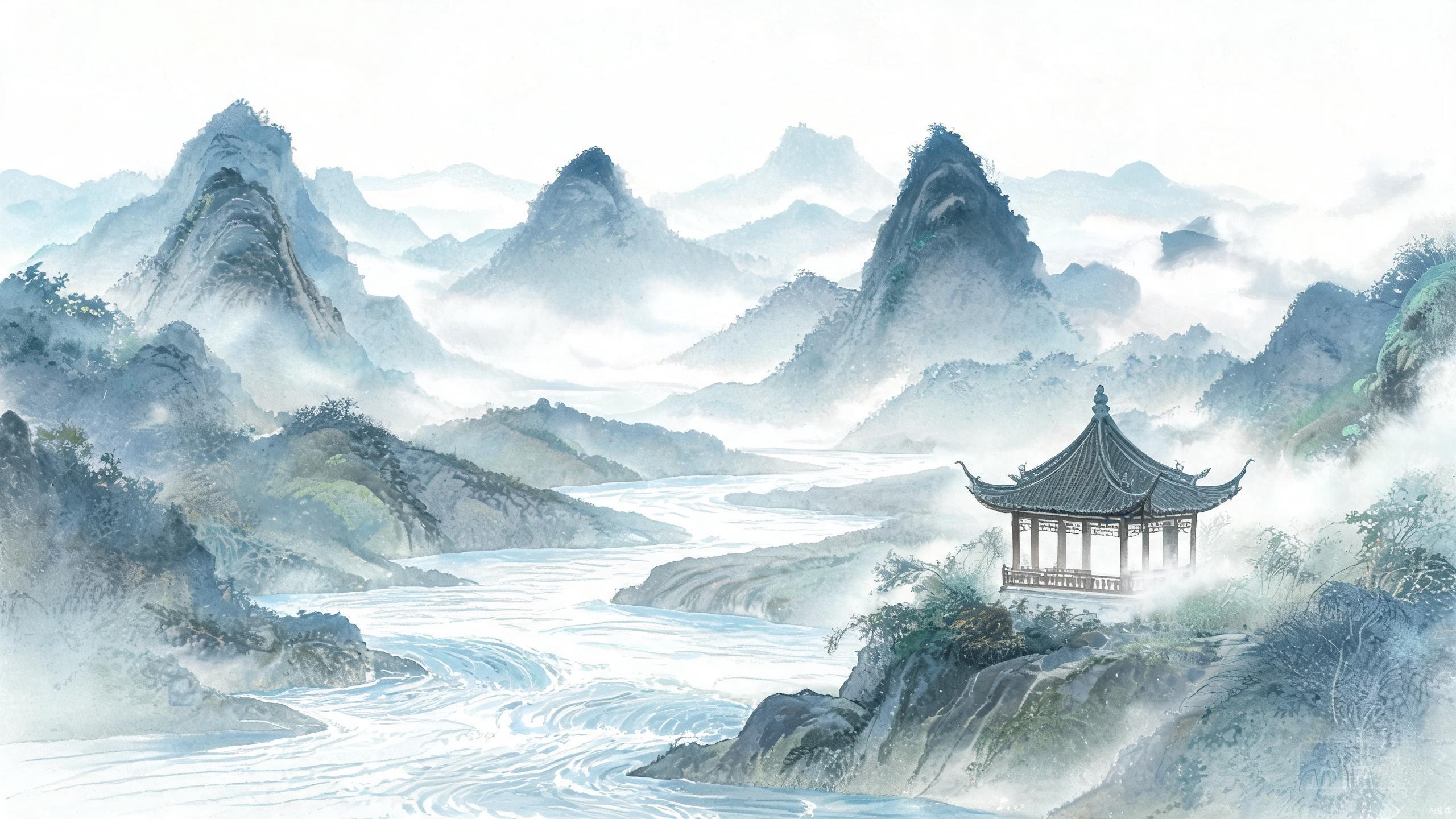
"A house that accumulates virtue will surely have abundant blessings; a house that accumulates evil will surely have lingering misfortune." (积善之家,必有余庆;积不善之家,必有余殃。)
In Feng Shui culture, one category of stories stands out as particularly thought-provoking — the relationship between good and evil in determining fortune. These tales share a common belief: Feng Shui luck depends not only on the landscape, but on the moral character of the people who live upon it. The virtuous find blessed ground; the wicked forfeit their lucky sites.
The Core Principle: "Blessed Ground for Blessed People"
Feng Shui holds an unwritten law: Virtue is the foundation of all Feng Shui. Even the most powerful auspicious location will turn unlucky if occupied by someone without virtue. Conversely, even a challenging site can transform into a blessing under a morally upright resident.
This principle appears throughout folk tales and can be summarized in several key concepts:
| Principle | Meaning |
|---|---|
| Blessed Ground for Blessed People | Auspicious land only blesses those with virtue |
| Seeking Without Virtue Is Futile | An immoral person gains nothing from good land |
| Goodness Dissolves Misfortune | Kind acts can neutralize harmful energy |
| Evil Corrupts Good Fortune | Wicked deeds destroy the Qi of blessed sites |
| Virtue First, Form Second | Character is primary; Feng Shui is supplementary |
Stories of the Virtuous Finding Blessed Ground
1. The Filial Son's Burial
In a certain place lived a filial son named Zhang, whose family was extremely poor. After his mother passed away, he had no money to buy burial land. He wept day and night until his tears touched the hearts of his neighbors. An elder finally pointed to a desolate hillside and said: "That plot is unwanted by anyone — if you don't mind, bury your mother there."
Grateful beyond words, Zhang hastily buried his mother on that barren slope. Years later, a Feng Shui master passed by and was astonished to discover that this neglected hillside was actually a powerful spot for Storing Wind and Gathering Qi — a truly blessed site. Upon learning that a filial son had buried his mother there, the master exclaimed:
"The surface appears barren, but within lies true fortune. The son's filial heart moved Heaven itself, and Heaven bestowed this land upon him — it was not the man who chose the land, but the land that chose the man."
Later, Zhang's son indeed achieved academic success, passed the imperial examinations, and the family prospered for generations. The folk saying became: "A filial heart moves Heaven; blessed ground comes on its own."
2. The Bridge Builder's Legacy
In another village lived a kind-hearted man named Li. Seeing how dangerous the rushing river was — people constantly drowning while trying to cross — Li poured his entire fortune into building a stone bridge, bankrupting himself in the process. He lived in poverty for the rest of his life.
After Li passed away, his family could not afford proper burial land and laid him to rest in the wasteland beside his own bridge. Years later, a Feng Shui master surveying the area discovered that the bridge sat precisely at the Water Mouth — the critical point where Qi exits a site. The bridge acted as a lock, preventing the Qi from dispersing. And Li's burial spot beside the bridge was the perfect location to "guard the Water Mouth and gather its energy."
Cultural Context: The Water Mouth (水口) is the point where a river or stream flows out of a property. In Feng Shui, this is both a place of energy exchange and potential energy loss. Structures that "lock" the Water Mouth — like Li's bridge — help retain prosperity energy on the site.
The master declared: "Good man Li built the bridge without realizing he was creating a blessed site for himself. The bridge locks the Water Mouth, and those buried beside it will enjoy generational fortune." Indeed, Li's descendants prospered for many generations, producing outstanding scholars and officials.
Summary Table: Stories of the Virtuous
| Story | Virtuous Act | Feng Shui Reward |
|---|---|---|
| Filial Son's Burial | Filial piety moved Heaven and Earth | Barren slope revealed as blessed ground |
| Bridge Builder's Legacy | Selfless bridge construction | Bridge locked the Water Mouth; burial site gained fortune |
| Righteous Rescuer | Sacrificed himself to save others | Noble sons emerged from his burial site |
Stories of the Wicked Losing Their Good Fortune
1. The Tyrant's Stolen Treasure Land
Just as the virtuous find fortune, tales of the wicked losing their luck are equally widespread.
A local tyrant named Zhao forcibly seized a prized Feng Shui site to build his mansion. A Feng Shui master had warned him: "This land is indeed auspicious, but only the virtuous may dwell here. Your wicked ways make you unworthy of such blessing."
Zhao ignored the warning and built anyway. After moving in, disaster struck repeatedly — business failures, family illnesses, endless lawsuits. Enraged, Zhao confronted the master, who replied: "I told you long ago — blessed ground requires a blessed person. Your countless evils mean you are 'unworthy of your position.' The lucky site has become a cursed one."
Still unrepentant, Zhao continued terrorizing the countryside. Three years later, the authorities raided his estate for his crimes, confiscated everything, and the property was seized. Eventually, this so-called "treasure land" was divided among law-abiding poor families — who gradually prospered.
2. The Corrupt Official's Relocated Tomb
A greedy official, desperate to elevate his family's fortunes, hired a Feng Shui master to relocate his ancestors' tombs onto a powerful Dragon Vein site. The master reluctantly complied but warned at departure: "This site is truly auspicious, but only an incorruptible family deserves it. If you persist in corruption, the Earth's Qi will surely disperse."
The official paid no heed and continued his corrupt ways. Initially, after the relocation, his son passed the imperial exams and enjoyed rapid career advancement. But years later, the official's crimes were exposed, his wealth confiscated, and his descendants exiled. The legendary Dragon Vein treasure land fell into ruin, abandoned by all who refused to tend it.
Cultural Context: Dragon Veins (龙脉) are the underground energy channels connecting mountain ranges. In Chinese Feng Shui, these are the most powerful sources of Qi on earth — but their energy is believed to respond only to those with pure intentions.
Summary Table: Stories of the Wicked
| Story | Evil Act | Feng Shui Consequence |
|---|---|---|
| Tyrant's Stolen Land | Forcibly seized a blessed site | Unworthy of his position; fortune turned to misfortune |
| Corrupt Official's Tomb | Corruption and bribery | Earth's Qi scattered; family destroyed |
| Dishonest Merchant's Fraud | Sold counterfeit goods | Ancestral tomb "leaked Qi"; bankruptcy followed |
Legends of "Goodness Dissolving Misfortune"
Beyond "the virtuous find fortune" and "the wicked lose their luck," there exists another category — stories where acts of kindness dissolve harmful energy from cursed sites.
One village family had ancestral tombs located beneath a White Tiger Sha — a formation shaped like a tiger clutching a corpse in its jaws. Their fortunes were perpetually troubled. A Feng Shui master recommended relocating the tombs, but the family was too poor. An elder master then advised: "Moving tombs costs money. Instead, try 'dissolving Sha through virtue' — perform good deeds in your village, accumulate merit, and the harmful energy will naturally dissipate."
The family followed this counsel — they built bridges, repaired roads, aided the poor, supported the weak, and lived harmoniously with neighbors. Within a few years, their fortunes gradually improved. Then a mountain flood partially collapsed the White Tiger hill, naturally altering the "tiger clutching a corpse" formation and dissolving the Sha.
The master sighed: "This was not human effort but Heaven's will — good deeds moved Heaven, and Heaven naturally dissolved the harmful energy."
Ways to Dissolve Sha
| Method | Action | Effect |
|---|---|---|
| Relocating Tombs | Choose a new auspicious site | Directly avoids harmful energy |
| Dissolving Through Virtue | Practice kindness and accumulate merit | Moves Heaven to dissolve Sha |
| Natural Dissolution | Geological changes reshape harmful forms | Heaven responds to good deeds |
Virtue as Foundation, Feng Shui as Supplement
Drawing together all these stories of good, evil, and Feng Shui, one central thread emerges: Virtue is the foundation; Feng Shui is the supplement.
| Relationship | Explanation |
|---|---|
| Virtue + Good Feng Shui | Best outcome — blessings flow long and deep |
| Virtue + Poor Feng Shui | Still viable — moral character sustains the family |
| No Virtue + Good Feng Shui | Dangerous — lucky ground turns cursed |
| No Virtue + Poor Feng Shui | Worst outcome — family downfall is certain |
This perspective tightly weaves Feng Shui with morality, reflecting the traditional Chinese cultural value of "virtue as root, talent as branch" (德本才末). No matter how excellent the Feng Shui, it remains the "branch"; moral cultivation is the "root." When the root is firmly established, the Way naturally follows — and so do all branches.
Quick Tips:
- Even with a perfect home layout, focus equally on personal integrity and daily conduct
- If you cannot afford ideal Feng Shui adjustments, invest in virtuous actions — they carry weight that no compass can measure
- Your mindset shapes your environment as much as your environment shapes your mindset
Modern Reflections on Feng Shui, Good, and Evil
From a contemporary perspective, these stories carry a karmic overtone, but their core contains genuine wisdom:
1. Good deeds improve relationships. Kind people attract help; with help, tasks succeed. This is not "Heaven's will" but a simple social law.
2. Evil deeds invite risk. Wicked people accumulate enemies; with many enemies, failure follows. "Evil begets evil retribution" is largely social feedback.
3. Mindset shapes fortune. The virtuous feel at peace; peace brings clarity and success. The wicked live in fear; fear clouds judgment and invites failure. The psychological dimension of fortune should never be underestimated.
4. Environment and behavior interact. Those who practice good deeds often improve their surroundings — building bridges, planting trees — and a better environment nurtures better lives. Those who act wickedly often degrade their environment, and a degraded environment perpetuates decline.
Key Feng Shui Concepts
- Blessed Ground for Blessed People (福地福人居): A core Feng Shui principle stating that auspicious land only blesses those with virtue; the immoral gain nothing from good ground.
- Unworthy of One's Position (德不配位): When one's moral character does not match one's status or fortune, even auspicious ground becomes inauspicious.
- Dissolving Sha Through Virtue (以德化煞): Resolving harmful energy through accumulated good deeds — an alternative to physically relocating tombs or sites.
- Virtue as Root, Talent as Branch (德本才末): A traditional Chinese cultural value placing moral cultivation above all else, with talent and external aids (including Feng Shui) as secondary.
- Accumulated Virtue Brings Blessings (积善余庆): A phrase from the I Ching (Book of Changes) — families that practice goodness will inevitably receive abundant fortune, forming the theoretical bridge between Feng Shui and morality.
Related Articles
- [[../01-风水入门/21-风水中的气场与磁场.md|Feng Shui Qi Fields and Magnetic Fields]]
- [[../01-风水入门/18-风水中的藏风聚气.md|The Principle of "Storing Wind and Gathering Qi" in Feng Shui]]
- [[../02-家居风水/33-阳台风水植物.md|Balcony Feng Shui Plants: Greenery for Wealth and Sha Dissolution]]
- [[../02-家居风水/37-植物与风水.md|Plants and Feng Shui: Five Elements Harmony and Wealth Activation Through Greenery]]