Guo Pu's Burial Site Legend: The Feng Shui Secrets of the Founding Master
In the history of Chinese Feng Shui, if one were to crown a "founding father," it would undoubtedly be Guo Pu (郭璞) of the Jin Dynasty. His *Zhai Jing* (Classic of Dwelling), also known as *Zang Shu* (
Guo Pu's Burial Site Legend: The Feng Shui Secrets of the Founding Master
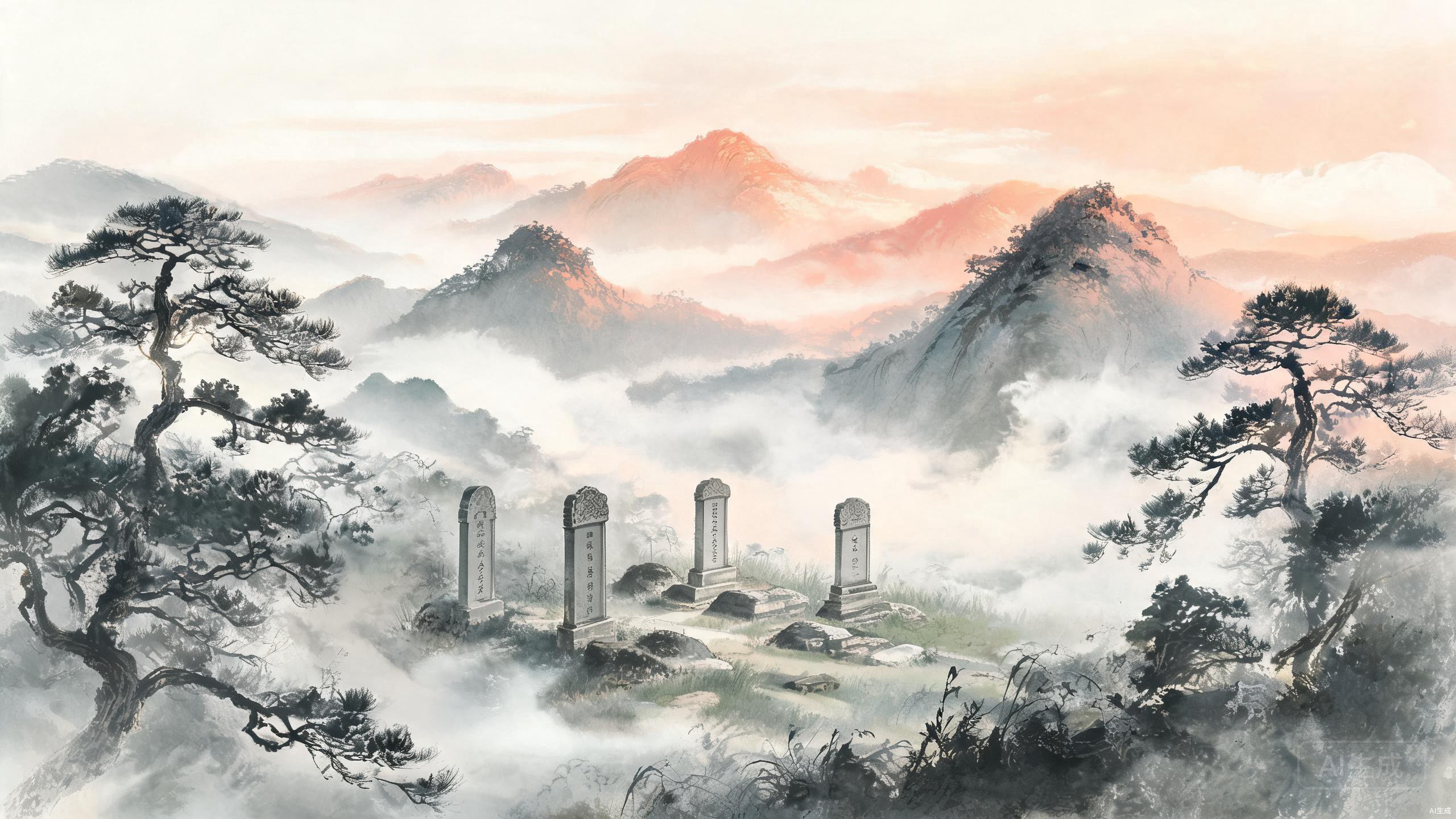
In the history of Chinese Feng Shui, if one were to crown a "founding father," it would undoubtedly be Guo Pu (郭璞) of the Jin Dynasty. His Zhai Jing (Classic of Dwelling), also known as Zang Shu (Book of Burial), is considered the foundational text of Feng Shui. The very term "Feng Shui" (Wind and Water) was first systematically explained by him. Yet the legend of how he chose his own burial site has captivated Feng Shui practitioners for over a thousand years.
A Genius of His Age: Guo Pu
Guo Pu (郭璞), courtesy name Jingchun (景纯), was born in 276 AD in Wenxi, Hedong (present-day Wenxi, Shanxi) and died in 324 AD. He was far more than a Feng Shui scholar — he was also a renowned literary figure, philologist, and master of divination arts. His breadth of knowledge earned him the reputation as "the foremost scholar of the revival era."
Guo Pu lived through the turbulent final years of the Western Jin Dynasty, marked by the "Rebellion of the Eight Princes" and the "Disaster of Yongjia." As central China descended into chaos, aristocratic families fled southward. Guo Pu followed the Jin court in its migration to the south, eventually settling in the Jiangnan region and serving successive Eastern Jin rulers. During this period, he annotated classical texts such as Er Ya, Shan Hai Jing, and Mu Tian Zi Zhuan, while also mastering divination, Kanyu (Feng Shui), and astronomy.
Cultural Context: Guo Pu was a rare polymath who bridged literature, philosophy, and metaphysical sciences. In traditional China, scholars were expected to master multiple disciplines — his ability to excel in both literary scholarship and practical arts like Feng Shui made him legendary.
It was Guo Pu who synthesized the ancient land-assessment practices and Yin and Yang Five Elements theories from the pre-Qin through Han-Wei periods, culminating in his Zhai Jing (Classic of Dwelling). In this work, he first articulated the seminal definition:
"Qi rides the wind and scatters, but is retained when encountering water. The ancients gathered it so it would not disperse and guided it so it would stay — thus they called it Feng Shui (Wind and Water)."
From this moment forward, "Feng Shui" became an established term in Chinese history.
The Mystery of Choosing a Riverside Burial
The most widely circulated story about Guo Pu concerns the selection of his own burial site. According to legend, in his later years Guo Pu settled in Jiyang (present-day Jiangyin, Jiangsu). After extensively surveying the mountains and rivers, he ultimately chose a low-lying spot along the Yangtze River — an area frequently flooded by tidal waters — as his final resting place.
His friends and relatives were astonished and tried to dissuade him: "This place sits right beside the great river. When the tides rise and fall, won't your tomb be submerged? How can such a burial site be considered auspicious?"
Guo Pu replied with quiet confidence: "You see only the present, not the future. Within a few decades, this place will transform into fertile fields. The river will shift north, and my burial ground will become elevated land. Future generations will know my words were true."
Remarkably, several decades later, the Yangtze River's course did indeed shift northward. Sediment accumulated around Guo Pu's burial site, raising it into dry, elevated ground — free from any further flooding. People marveled at Guo Pu's extraordinary foresight.
The Core Principles of Zhai Jing
The theory of "Riding Vital Qi" (乘生气) that Guo Pu proposed in Zhai Jing remains the fundamental principle of Yin Dwelling Feng Shui to this day. He believed that a life-giving Vital Qi (生气, sheng qi) flows through the earth, and that when the deceased are buried at locations where this Vital Qi converges, their remains can "ride" this energy — thereby blessing their descendants with prosperity and protection.
| Core Concept | Meaning | Application |
|---|---|---|
| Vital Qi (生气) | The life-giving energy flowing through the earth | Burial sites must be located where Vital Qi gathers |
| Wind Scatters (风散) | Qi disperses when exposed to wind | Storing Wind and Gathering Qi creates auspiciousness; avoid direct wind exposure |
| Water Stops (水止) | Qi halts when encountering water | Curved water retains Qi; ideal burial sites are near water bends |
| Riding Qi (乘气) | Bones and remains receive Vital Qi | The Feng Shui Point must sit precisely on Vital Qi convergence |
| Blessing Effect (荫应) | Burial site influences descendants | Auspicious sites bless offspring; inauspicious sites bring misfortune |
Guo Pu's Death and What Followed
Guo Pu's fate was tragically heroic. Wang Dun (王敦), a powerful Eastern Jin official, was plotting rebellion and demanded that Guo Pu divine its outcome through divination. Guo Pu answered bluntly: "It will not succeed," urging Wang Dun to abandon his plans. Enraged, Wang Dun then asked: "How long will you live?"
Guo Pu replied calmly: "My life ends at noon today."
True to his words, Wang Dun executed Guo Pu that very day at the age of forty-nine. Later legends claimed Guo Pu had foreseen his own death and had chosen his riverside burial site specifically for his posthumous transformation. Others said that days after his execution, people reportedly saw him dressed in full robes, bidding farewell to old friends as if walking into immortality — known as "Shijie" (尸解, body liberation). While certainly embellishment, such stories reflect the mystical image Guo Pu held in popular imagination.
The Feng Shui Secrets of Guo Pu's Burial Site
Later generations have analyzed Guo Pu's chosen burial site and identified several layers of hidden wisdom:
First, the riverside lowland that appeared inauspicious actually conformed to the pattern of "Dragon's End and Water Convergence" (龙尽水汇). Where the Dragon Vein (龙脉) comes to rest and the river wraps around it, Vital Qi gathers in the lower terrain — perfectly embodying the principle that "Qi is retained when encountering water."
Second, the eventual northward shift of the river channel demonstrated Guo Pu's precise understanding of geological transformation. True Feng Shui mastery involves reading not only the current "form" (形) of a landscape but its underlying "momentum" (势); not only the present, but the future.
Third, being buried near water carries the symbolism of "a pavilion closest to the water enjoys moonlight first." Water governs both wealth and wisdom. Given that Guo Pu built his life upon intellectual brilliance, a waterside burial harmonized with his inherent destiny.
| Burial Selection Point | Surface Appearance | Underlying Reality |
|---|---|---|
| Low-lying site | Seemed prone to flooding | Actually a convergence point for Vital Qi |
| Close to great river | Seemed vulnerable to water damage | Formed the pattern of "Dragon's End, Water Convergence" |
| River's northward shift | Seemed unpredictable | Proof of his ability to read large-scale natural trends |
A Legacy Across the Millennia
After Guo Pu, Feng Shui divided into two major branches — the Form School (形势派, Xing Shi Pai) and the Compass School (理气派, Li Qi Pai). Yet regardless of school, all practitioners revere Zhai Jing as the ultimate root text. The principles Guo Pu established — "Storing Wind and Gathering Qi," "Riding Vital Qi," and "Blessing Descendants Through Burial" — have shaped Chinese funerary culture for nearly two thousand years.
Cultural Context: The Form School emphasizes the physical observation of mountains, rivers, and terrain features, while the Compass School focuses on precise directional calculations using the Luopan (Feng Shui Compass). Despite their different methods, both trace their philosophical lineage back to Guo Pu's foundational writings.
Today, in places like Jiangyin in Jiangsu and Wenxi in Shanxi, memorial halls and historical sites dedicated to Guo Pu still stand. Every Qingming Festival, Feng Shui practitioners make pilgrimages to pay respects to this founding master.
Quick Knowledge Points
- Zhai Jing (Classic of Dwelling): Written by Guo Pu, this foundational text of Chinese Feng Shui first systematically defined the concept of "Feng Shui" and introduced the theory of "Riding Vital Qi."
- Storing Wind and Gathering Qi (藏风聚气): The core principle of Feng Shui site selection, requiring sites that are sheltered from harsh winds and enjoy stable Qi fields, allowing Vital Qi to gather without dispersing.
- Qi Stops at Water (界水则止): Because Vital Qi halts when it meets water, locations such as water mouths and river bends are typically sites where Vital Qi concentrates — ideal for burial.
- Form School and Compass School (形势与理气): The Form School emphasizes the physical splendor of mountains and rivers, while the Compass School prioritizes directional calculations. Both trace their origins to Guo Pu's Zhai Jing.
- Shijie (尸解): A Daoist term referring to a cultivator's body being shed like a cicada's shell at death, with the true spirit ascending to immortality. The legend of Guo Pu's "Shijie" reflects his deification in folk tradition.
Related Articles
- [[../06-风水文化与历史/20-Feng Shui Masters Through History:郭璞——风水鼻祖的生平与贡献.md|Feng Shui Masters Through History: Guo Pu — Life and Contributions of the Founding Father]]
- [[../06-风水文化与历史/43-魏晋南北朝风水:玄学影响下的风水发展.md|Feng Shui in the Wei-Jin and Northern-Southern Dynasties: Development Under Metaphysical Influence]]
- [[../07-风水故事/58-风水与丧葬.md|Feng Shui and Burial: The Ancient Tradition of Yin Dwelling Feng Shui]]
- [[../07-风水故事/50-蒋大鸿传奇.md|The Legend of Jiang Dahong: The Xuan Kong Master of Late Ming and Early Qing]]