Lai Buyi: The Legendary Feng Shui Master of the Southern Song Dynasty
In Chinese folklore, one Feng Shui master's name is known to virtually every household — Lai Buyi (赖布衣), a legendary figure from the Southern Song Dynasty. Tales say he could "assess a site in a singl
Lai Buyi: The Legendary Feng Shui Master of the Southern Song Dynasty
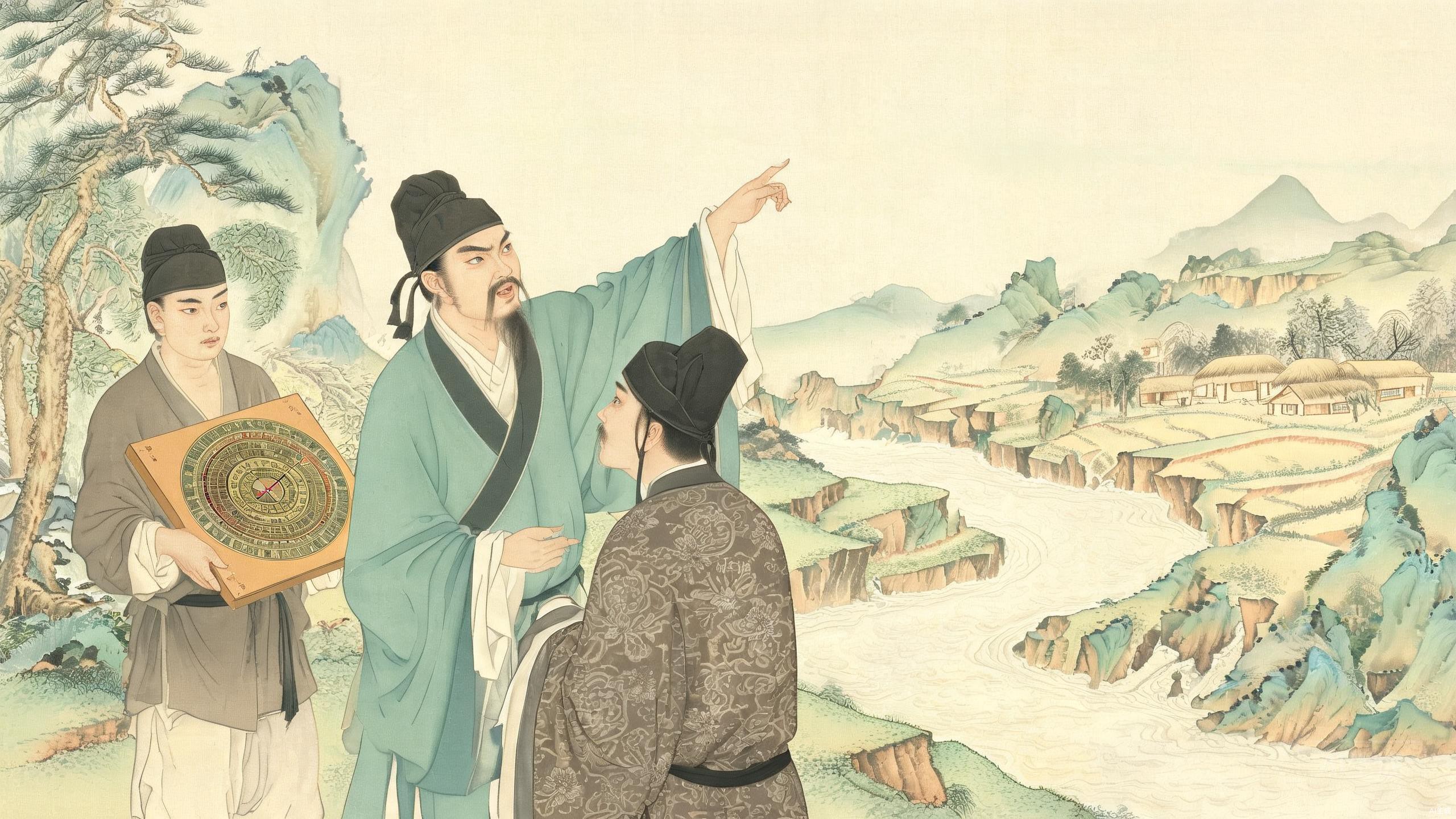
In Chinese folklore, one Feng Shui master's name is known to virtually every household — Lai Buyi (赖布衣), a legendary figure from the Southern Song Dynasty. Tales say he could "assess a site in a single step and locate an acupoint in ten," instantly understanding the fortune and misfortune of any place he visited.
A Single Cloth Robe Across the Land
Lai Buyi, whose original name was Lai Wenjun (赖文俊), lived during the Southern Song Dynasty. Born into a family of Feng Shui practitioners, he studied Kanyu (堪舆, Feng Shui) from his father as a child. Gifted with exceptional talent, he could independently assess sites for others by his teenage years.
Lai Buyi was said to have a free-spirited personality and paid no attention to worldly formalities. Year-round, he wore only a coarse cloth robe, traveling tirelessly through mountains and rivers. Regardless of season, he was always dressed in that faded, washed-white cloth garment, with a Luopan (罗盘, Feng Shui Compass) tucked at his waist and an old cloth bag slung over his shoulder. Because of this, the local villagers affectionately called him "Lai Bu Yi" — literally "Lai in Cloth."
Cultural Context: The nickname "Bù Yī" (布衣, "cloth robe") in ancient China referred to commoners who wore plain garments — as opposed to officials in silk robes. It symbolized humility, detachment from wealth, and dedication to one's craft. Many legendary sages and hermits were known by such humble monikers.
Lai Buyi had a distinctive approach to his practice — he disliked accepting payment. When wealthy families arrived with lavish gifts to request his services, he would often refuse to see them. Yet when poor villagers sought his help, he would come without being asked. This unwavering principle — "neither swayed by riches nor shaken by poverty" — earned him immense respect among the common people.
Reading Fate in a Single Glance
Stories of Lai Buyi's seemingly supernatural ability to "assess land as if by divine insight" are widespread in folk tradition.
One year, Lai Buyi was traveling through the Guangdong region. A wealthy local had just built a grand mansion and invited several geomancers to evaluate its Feng Shui — all declared it auspicious. When Lai Buyi happened to pass by, he glanced at the house from the gate alone and shook his head: "This residence is extremely inauspicious. Within three years, the family fortune will collapse."
The wealthy man flew into a rage, convinced Lai Buyi was deliberately trying to cause trouble. Lai Buyi did not argue. He simply pointed at the property and said: "Your residence has a cramped Bright Hall in front, Reverse Bow Water behind, a road rushing toward the left, and low陷 sand on the right. Most critically, your front door directly faces a straight road — this is called 'One Arrow Piercing the Heart,' the most severe form of Road Rushing Sha. If you don't believe me, look again in three years."
True to his prediction, within two years the wealthy man's business suffered repeated failures, his home was struck by fire, and he was ultimately forced to sell the property. From that point on, the local people held Lai Buyi's abilities in unwavering reverence.
How to Identify the Sha Qi in This Story
The classic warnings Lai Buyi identified still apply to modern homes:
- One Arrow Piercing the Heart: Check whether your front door aligns directly with a long, straight road. If so, you may have severe Road Rushing Sha affecting your finances and safety.
- Reverse Bow Sha: Examine roads or waterways near your home. If they curve away from your property like the back of a bow, wealth energy may be draining outward.
- Cramped Bright Hall: Stand at your entrance and look at the open space directly in front. A narrow, compressed Bright Hall restricts the flow of auspicious Qi into your home.
Quick Tips:
- If your front door faces a straight road, place a Bagua Mirror, tall plant, or screen between the door and the road to block the rushing energy
- For Reverse Bow Sha, install water features or landscaping on the outside curve to redirect the energy back toward your home
- Keep your Bright Hall area open, well-lit, and uncluttered to welcome prosperous Qi
Pointing Acupoints to Save the Poor
Like Yang Yunsong (杨筠松), Lai Buyi also left behind stories of "relieving the poor" through his Feng Shui expertise.
According to legend, he once arrived at a mountain village where all the residents lived in low-lying, damp areas, and illness plagued the community continuously. After surveying the land, Lai Buyi discovered that the village's water source was incorrectly positioned — the water flowed in from the northwest at the "White Tiger position," forming a harmful water pattern known as "White Tiger Holding a Corpse."
Cultural Context: The Four Symbols — Azure Dragon (left/east), White Tiger (right/west), Vermilion Bird (front/south), and Black Tortoise (back/north) — are directional guardians in Feng Shui. Water flowing in from the White Tiger side is considered particularly harmful, as the Tiger is meant to protect rather than attack. When water "attacks" from the Tiger's position, it signals incoming misfortune.
He advised the villagers to open a new water source on the east side of the village and recommended relocating the main buildings to a small hill with higher elevation. After the villagers followed his instructions, illness dramatically decreased and their lives steadily improved.
When the villagers tearfully saw Lai Buyi off as he departed, he smiled and waved his hand: "Don't thank me. The mountains and rivers of the earth already possess their own spiritual Qi — I merely helped you find it."
Leaving Behind Feng Shui Masterpieces
Lai Buyi was not only a practitioner but also a theorist. He is said to have authored works including the Cui Guan Pian (Essay on Promoting Officials), which systematically explains the calculation methods of Compass School (理气派, Li Qi Pai) Feng Shui. The Cui Guan Pian is built upon the foundation of the Twenty-Four Mountains and Directions, providing detailed analysis of the auspicious and inauspicious qualities of different orientations and their corresponding layout methods. It remains an important reference text for the Compass School of Feng Shui.
Cultural Context: The Cui Guan Pian belongs to the tradition of "promoting officials" — using Feng Shui to enhance career advancement, scholarly success, and social status. This reflects the Confucian ideal that proper environmental harmony supports not just wealth, but virtuous achievement and contribution to society.
While many of Lai Buyi's stories carry the color of folk legend, his position in Chinese Feng Shui culture is undeniably real. His name appears in official histories and local gazetteers, and has been celebrated in countless folk tales for over a thousand years.
Key Feng Shui Concepts
- Road Rushing Sha (One Arrow Piercing the Heart): When a front door directly faces a long, straight road — like an arrow shooting toward the heart of the home — this is one of the most common Form Sha patterns, believed to cause accidents and misfortune.
- Reverse Bow Water (反弓水): When a river or road curves into an arc, but the arc faces away from the house (like the back of a bow), it creates the "Reverse Bow" pattern, considered unfavorable for accumulating wealth.
- White Tiger Holding a Corpse (白虎衔尸): When water flows in from the White Tiger position (the right side) with a turbulent current or poor quality, this forms an inauspicious water pattern.
- Promoting Officials (催官): A Feng Shui term referring to specific layout methods used to activate career luck and professional advancement — the central focus of Lai Buyi's Cui Guan Pian.
How to Apply Lai Buyi's Wisdom Today
You don't need mountains and rivers to benefit from Lai Buyi's insights. Here's how to translate his ancient methods into modern home and office practice:
- Survey your surroundings honestly: Walk around your property and identify any external features that match the Sha patterns described above
- Address the most severe Sha first: The "One Arrow Piercing the Heart" pattern takes priority — remedy this before tackling minor issues
- Adjust water and light placement: Position water features, lighting, and reflective surfaces to support, not attack, your home's orientation
- Consult the Twenty-Four Mountains: For deeper practice, study how the Twenty-Four Mountains and Directions affect each sector of your home
- Maintain the spirit of service: Like Lai Buyi, approach Feng Shui as a means to help others — the practice rewards genuine intention
Quick Tips:
- A Folding Screen placed inside your front door can buffer most rushing energy before it enters your home
- Position your desk or bed so you can see the door without being directly in line with it — this gives you command over incoming energy
- Regularly cleanse your space of clutter — stagnant objects block Qi just as much as rushing roads do
Related Articles
- [[../01-风水入门/08-风水勘察十法.md|Feng Shui Survey Methods: Ten Techniques for Field Assessment]]
- [[../06-风水文化与历史/54-风水师的历史地位变迁.md|The Evolving Historical Status of Feng Shui Masters]]
- [[../06-风水文化与历史/22-Feng Shui Masters Through History:赖布衣——断地如神的风水大师.md|Masters Through the Ages: Lai Buyi — The Feng Shui Sage Who Read Land Like a God]]
- [[../07-风水故事/15-赖布衣点穴传说.md|The Acupoint Legends of Lai Buyi — Miraculous Tales of the Cloth-Robed Sage]]