Lai Buyi: The Legendary Feng Shui Master Who Wandered in Coarse Cloth
Lai Buyi (赖布衣), who styled himself "Master of Coarse Cloth" (布衣子), was a Song Dynasty Feng Shui master. Together with Yang Yunsong (杨筠松), he is celebrated as one of the two great "cloth-clothed" legen
Lai Buyi: The Legendary Feng Shui Master Who Wandered in Coarse Cloth — Lucky Energy & Wisdom
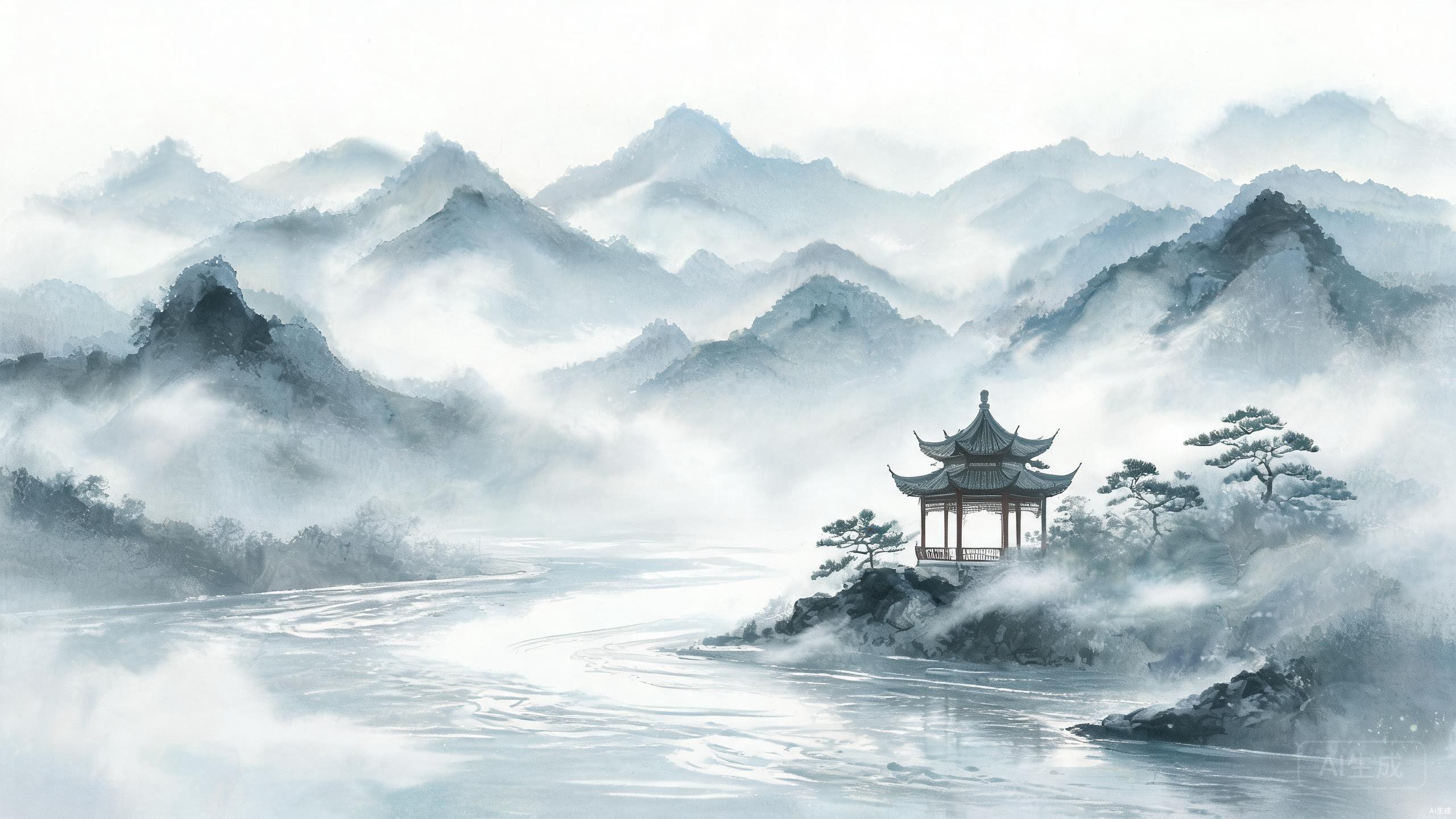
Lai Buyi (赖布衣), who styled himself "Master of Coarse Cloth" (布衣子), was a Song Dynasty Feng Shui master. Together with Yang Yunsong (杨筠松), he is celebrated as one of the two great "cloth-clothed" legends of the Feng Shui world. Throughout his life, he wandered the land, never seeking fame or fortune, wearing simple coarse cloth while selecting auspicious burial sites for the poor. Across the Lingnan region, he left behind countless beloved tales.
After the Failed Examination
Lai Buyi, originally named Lai Fenggang (赖凤岗) with the courtesy name Wenjun (文俊), was a native of Dingnan, Jiangxi Province (some say Henan) during the Song Dynasty. He was born around 1101 AD during the reign of Emperor Huizong.
From his youth, Lai Buyi was widely read and exceptionally talented. He once traveled to the capital for the imperial examinations and seemed destined for success — yet, unwilling to flatter the powerful, he failed. After this defeat, he saw through the coldness of the world and grew disillusioned with fame and fortune.
One day, while staying at an inn, Lai Buyi met a wandering Daoist priest. The priest observed his extraordinary bearing and asked: "Would you like to learn the art of Kanyu (堪舆, Feng Shui) — to travel the world and help those in need?" Having already abandoned hope for an official career, Lai Buyi's heart stirred. He took the priest as his master and began studying Feng Shui.
After several years of study, Lai Buyi completed his training. At their parting, his master said: "You have no destiny for official rank, but you carry the blessing of 'coarse cloth.' To wander among common folk in simple garments and save the world through your skill — this is your heavenly mandate."
Lai Buyi thereupon styled himself "Master of Coarse Cloth" (布衣子), beginning the second half of his life: wandering the four directions and saving people through Feng Shui.
| Lai Buyi's Turning Point | Details |
|---|---|
| Failed Examination | Refused to flatter the powerful; failed the civil service exam |
| Meeting the Master | Encountered a Daoist priest who taught him Feng Shui |
| Self-Styled Name | "Master of Coarse Cloth" — symbolizing rejection of fame |
| Heavenly Mandate | Saving the world through skill while dressed as a commoner |
Cultural Context: Feng Shui legends and stories are more than folklore — they preserve centuries of practical wisdom about how environmental energy shapes destiny. These tales often contain real Feng Shui principles disguised as narrative, teaching readers about Qi flow, Dragon Veins, and the connection between landscape and fortune. Use these stories as teaching tools to deepen your understanding of energy dynamics. The interplay of Yin and Yang — the dual forces of dark/light, passive/active — governs all Feng Shui applications.
Wandering Through Lingnan
After completing his training, Lai Buyi traveled south from Jiangxi, passing through Hunan, Guangdong, Guangxi, Fujian, and beyond — his footsteps covering the entire Lingnan region. He chose Lingnan because the area's "mountains and rivers are wonderfully beautiful, with many Dragon Veins (龙脉, long mai) converging" — ideal for Feng Shui practice. He was also drawn to the simple, honest people of Lingnan, who especially needed guidance in the art of placement.
Throughout Lingnan, Lai Buyi left behind a rich legacy of legends:
1. Selecting a Burial Site That Produced a Champion Scholar
While traveling through a certain county in Guangdong, Lai Buyi met a poor scholar surnamed Li, who had repeatedly failed the examinations. Lai Buyi examined his ancestral grave and discovered it had been placed on a "dead dragon" — a landform with no living Qi. After surveying the land, he found a small hill outside the city featuring an auspicious formation called "Golden Chicken Embracing the Egg" (金鸡抱卵). He advised the Li family to relocate the burial.
Three years after the reburial, Li achieved the rare feat of winning first place in all three levels of the imperial examinations, becoming the top scholar (Zhuangyuan, 状元). The Li family wanted to reward him handsomely, but Lai Buyi accepted only a single piece of coarse cloth and a jug of clear wine — and departed with a great laugh.
2. Building a Pagoda to Dissolve Sha
Lai Buyi once passed through a village plagued by unrest among its animals and recurring plagues of disease. Climbing a nearby hill for a distant view, he saw that the mountain behind the village formed the shape of a "White Tiger Carrying a Corpse" (白虎衔尸). He advised the villagers to build a stone pagoda at the village entrance to suppress the Sha, and to dig a pool on the mountainside to release the stagnant Qi. Within six months, the plagues ceased.
3. Reading the Land Like a God
A landowner once invited Lai Buyi to assess a site. After merely one look from the mountaintop, Lai Buyi declared: "The Dragon Vein of this mountain is already broken; Qi cannot gather here. Whoever is buried in this place will see their lineage end within three generations."
The landowner did not believe him and insisted on burying his ancestors there. Sure enough, three generations later, the family line was extinguished. As word of this spread, Lai Buyi's reputation as one who could "read the land like a god" reached far and wide.
| Lingnan Deeds | Details | Outcome |
|---|---|---|
| Burial Site Produces a Scholar | Advised relocation to "Golden Chicken Embracing the Egg" site | Became top scholar within three years |
| Pagoda Dissolves Sha | Built stone pagoda at village entrance, pool on mountainside | Plague ceased |
| Reading Land Like a God | Declared the Dragon Vein was broken at first glance | Lineage extinct after three generations |
Authoring the Qing Wu Xu
In addition to his travels, Lai Buyi devoted himself to writing. His representative work, the Qing Wu Xu (青乌序, "Preface of the Green Crow"), also known as the Cui Guan Pian (Essay on Promoting Officials), specifically discusses the relationship between Dragon, Acupoint, Sand, Water, and official fortune. It has been regarded by later generations as an important classic of the Form School (形势派, Xing Shi Pai).
| Lai Buyi's Works | Content | Current Status |
|---|---|---|
| Qing Wu Xu | On Dragon-Acupoint relations and official fortune | Still circulated today |
| Cui Guan Pian | Methods for promoting official rank and nobility | Often published together with the Qing Wu Xu |
| Lai Buyi Zhen Zhuan | Direct lineage teachings of Feng Shui practice | Partially preserved |
Coarse Cloth and the Powerful
Although Lai Buyi styled himself a man of humble cloth, he repeatedly crossed paths with the powerful. His refusal to "bow for five pecks of rice" — meaning his unwillingness to compromise his principles for material gain — earned him the love of common people but also the resentment of many high officials.
According to legend, during the Southern Song Dynasty, a powerful frontier governor wished to select a "princely burial site" for his father and invited Lai Buyi to perform the assessment. Lai Buyi found a true Dragon acupoint but told the governor: "The Qi vein here is too powerful. If you bury your father here, the family's fortune may become excessively yang, inviting disaster instead. It would be wiser to choose a site of peace and stability."
The governor refused to listen and forced Lai Buyi to reveal the true acupoint. With no choice, Lai Buyi pointed it out and sighed as he departed: "Within three years, you will see the result." Sure enough, three years later, the governor was executed for treason, and his entire family was confiscated and destroyed.
Legacy Sites of the Master
Lai Buyi left behind numerous historic sites and legends throughout Lingnan. The "Lai Buyi Well" (赖布衣井) in Guangzhou, "Cloth Master Mountain" (布衣山) in Zhaoqing, and the "Cloth Master Shrine" (布衣祠) in Wuzhou, Guangxi, are all important cultural landmarks. To this day, during traditional festivals, local people still visit these sites to pay their respects.
Key Feng Shui Concepts
- Master of Coarse Cloth (布衣子): Lai Buyi's self-chosen title, symbolizing his rejection of fame and his choice to wander among common folk in plain garments.
- Qing Wu Xu (青乌序): Lai Buyi's representative work, discussing the relationship between Dragon, Acupoint, and official fortune — an important classic of the Form School.
- Reading the Land Like a God: Lai Buyi's legendary ability to judge Feng Shui auspiciousness at a glance, exemplifying the Form School's mastery of "observing forms and sensing Qi."
- The Spirit of Coarse Cloth: The tradition of the Feng Shui practitioner who saves the world through skill and refuses to be swayed by wealth or status.
- Lingnan Feng Shui: Through Lai Buyi's work spreading the Form School throughout Lingnan, the Feng Shui culture of Guangdong and Guangxi flourished especially brightly.
How the Form School Legacy Applies Today
Lai Buyi's Form School teachings remain highly relevant for modern practitioners:
- Observe before you calculate: The land itself tells its story — walk the site and read its shapes before consulting any compass
- Seek living Qi, not dead ground: An active Dragon Vein with gathering water matters more than any theoretical calculation
- Serve with humility, not ambition: True Feng Shui mastery comes from helping others, not from accumulating fees or fame
- Honor the principle of balance: Even powerful sites carry warnings — excessive yang energy can invite disaster, not blessing
Quick Tips:
- When assessing a property, take a long view from a distance before examining details up close — the overall landform shapes the energy
- In Feng Shui consultation, prioritize your client's well-being over payment — this is the spirit of the "coarse cloth" master
- Study both classical texts (like the Qing Wu Xu) and direct land observation — theory and practice must work together
Related Articles
- [[../06-风水文化与历史/22-Feng Shui Masters Through History:赖布衣——断地如神的风水大师.md|Lai Buyi: The Feng Shui Master Who Read the Land Like a God]]
- [[../07-风水故事/06-赖布衣断地如神.md|Lai Buyi Reading Land Like a God — The Story of a Southern Song Feng Shui Legend]]
- [[../07-风水故事/15-赖布衣点穴传说.md|Lai Buyi's Acupoint Selection — Strange Tales of the Coarse-Cloth Fortune Teller]]
- [[../01-风水入门/10-风水常见误区澄清.md|Feng Shui Myths vs. Facts: Distinguishing Superstition from Science]]
Note on the Five Elements: The Five Elements (Wu Xing) — Wood, Fire, Earth, Metal, and Water — form the foundation of Feng Shui energy theory. Each element interacts with the others in cycles of generation and control, influencing the Qi flow in your environment.