Liu Bowen Dragon Vein Slaying: The Feng Shui Conquest of the Ming Dynasty's Grand Advisor
In Feng Shui folklore, "Dragon Vein Slaying" (斩龙脉) is a dramatic theme — to protect one dynasty's rule, one must destroy the Dragon Veins across the land. And the protagonist of this legend, without e
Liu Bowen Dragon Vein Slaying: The Feng Shui Conquest of the Ming Dynasty's Grand Advisor
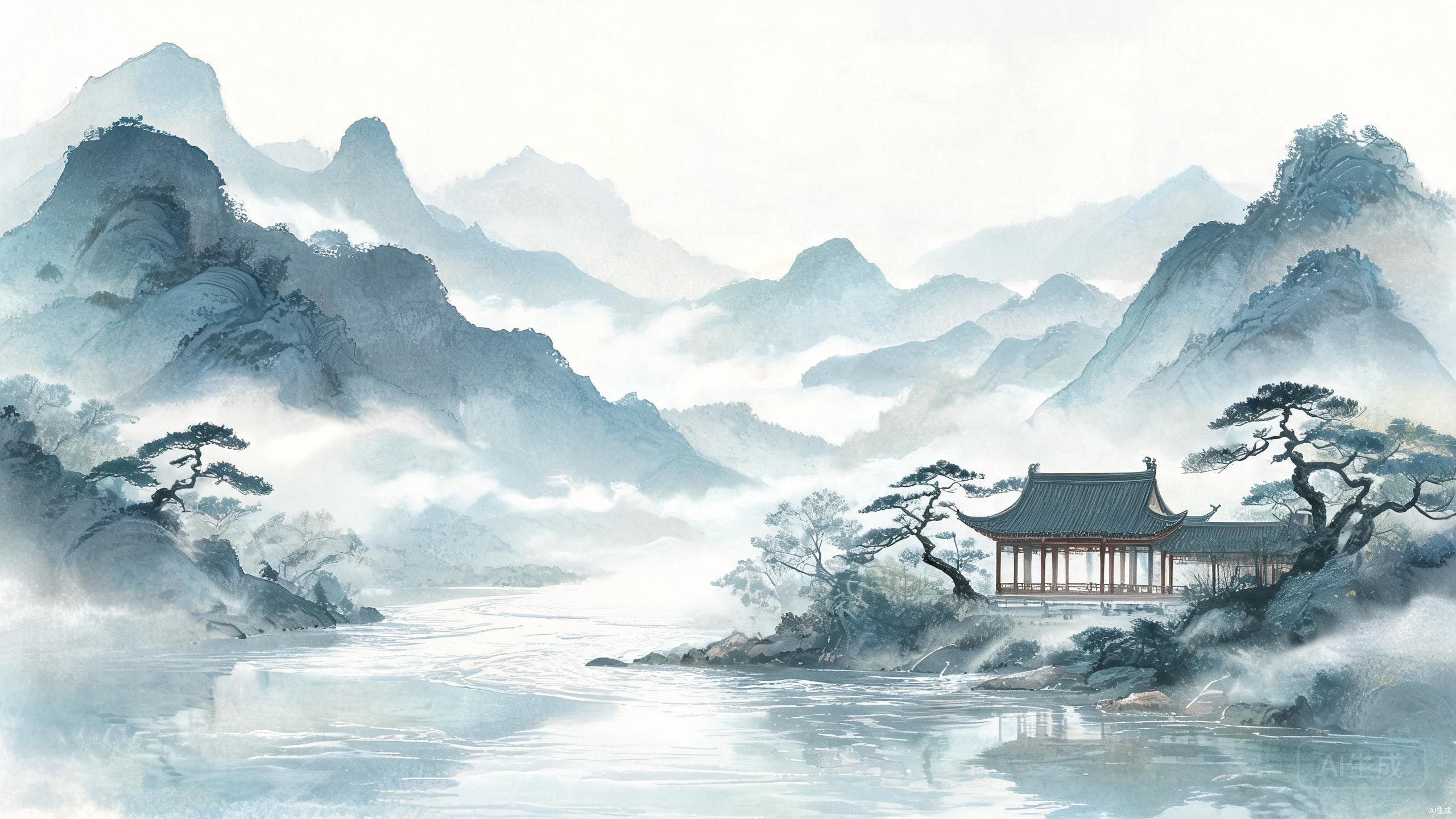
In Feng Shui folklore, "Dragon Vein Slaying" (斩龙脉) is a dramatic theme — to protect one dynasty's rule, one must destroy the Dragon Veins across the land. And the protagonist of this legend, without exception, points to the same person: Liu Bowen (刘伯温), the founding hero and Grand Advisor of the Ming Dynasty.
The Man: Liu Bowen
Liu Ji (刘基), courtesy name Bowen (伯温), posthumous title Wencheng (文成), was a native of Qingtian, Zhejiang. Born in the fourth year of the Zhizhi era of the Yuan Dynasty (1311 AD) and passing away in the eighth year of the Hongwu era of the Ming Dynasty (1375 AD), he served as Zhu Yuanzhang's (朱元璋) chief strategist. He helped the founder pacify the realm and establish the Ming Dynasty, and together with Xu Da (徐达) and Li Shanchang (李善长), he was celebrated as one of the "Three Heroes of the Founding" (开国三杰).
Cultural Context: In Chinese tradition, a dynasty's stability is believed to be tied to the land's natural energy. This concept — that mountains and rivers carry the life force that can raise (or threaten) a ruling house — is what makes the notion of "slaying Dragon Veins" not just a story, but a profound political metaphor.
Liu Bowen was not only a statesman and military strategist, but also a "wonder-worker" well-versed in astronomy, divination, and Kanyu (堪舆, Feng Shui). Folk legend holds that he "knew five hundred years before and five hundred years after," and he was compared to Zhuge Liang (诸葛亮) reborn. In the realm of Feng Shui, he served as both planner of capital cities and imperial tombs, and as the "conqueror" of Dragon Veins.
Why Slay Dragon Veins?
According to Feng Shui theory, all mountains and rivers across the land contain Dragon Veins (龙脉, long mai), and where these veins converge in strength, they may give rise to a new emperor. After a new dynasty is established, to prevent others from "riding the Dragon" (乘龙而起) and overthrowing the throne, the Feng Shui Grand Advisor would be sent across the realm to identify and destroy any "potential Dragon Veins" that might threaten imperial power — this practice is known as "Dragon Vein Slaying."
Legend has it that after Zhu Yuanzhang ascended the throne, he dreamed one night of countless true dragons soaring into the sky, scrambling for the realm. He awoke drenched in cold sweat and summoned Liu Bowen to the palace to interpret the dream. Liu Bowen replied: "Your Majesty, the Dragon Veins across the land are many and powerful. If we do not sever them soon, I fear true dragons will rise in later generations, and the Ming Dynasty's rule will be hard to secure."
Zhu Yuanzhang thus appointed Liu Bowen as the "Dragon Vein Slayer" (斩龙使), tasking him with leading a group of Feng Shui masters and craftsmen to travel across all famous mountains. Any Dragon Vein that might give birth to an emperor was to be "severed, broken, and suppressed."
Legends of Dragon Vein Slaying
Liu Bowen's "Journey of Dragon Slaying" has left behind a wealth of folk legends. Here are some of the most widely circulated:
1. Slaying the Wuxi Dragon Mountain
Legend says Liu Bowen came to Wuxi and saw the mountain range around Hui Mountain winding like a dragon, with extraordinarily powerful Dragon Qi. He determined that this place "would give birth to a true dragon emperor in three hundred years." He ordered a deep trench to be dug at the dragon's neck — called the "Dragon Slaying Ditch" (斩龙沟) — and a pagoda built at the dragon's head to suppress it, named "Longguang Pagoda" (龙光塔).
Cultural Context: This blend of dramatic geography and local culture is typical of Chinese Feng Shui folklore — a legendary explanation that weaves supernatural events into everyday local identity, in this case the famous Huishan clay figurines.
Interestingly, the clay soil of Wuxi's Hui Mountain is particularly well-suited for making clay figurines. Folk legend explains this by saying that after the Dragon Vein was severed, dragon blood transformed into red earth, which the locals took up and shaped — giving birth to the world-famous "Huishan Clay Figurines" (惠山泥人). Although this explanation is fanciful embellishment, it adds a touch of humanity to the Dragon Vein Slaying legend.
2. Slaying the Fengyang Dragon Mountain
Zhu Yuanzhang's hometown of Fengyang was where his fortune first rose. But after Liu Bowen surveyed the area, he discovered that the Dragon Vein in Fengyang was overwhelmingly strong, with the "Host Qi" (主气) and "Guest Qi" (客气) in conflict, which he feared might eventually breed trouble. He advised digging a river channel outside Fengyang's walls to redirect the waters of the Huai River around the city — using "water" to control the "dragon" — so that the Dragon Qi would be channeled toward the imperial tomb.
3. Slaying the Twin Dragons of Lanzhou
Lanzhou sits along the Yellow River, with great mountains to both the north and south, shaped like two dragons playing with a pearl. Liu Bowen determined that the Dragon Qi here was far too strong, fearing it might give birth to a contender for the throne. He ordered a city built between the two mountains, using the city's "fire" to overcome the Dragon Vein's "water," and had wells dug at the dragon's neck on each mountain to "drain the Qi."
| Liu Bowen's Dragon Vein Slaying Cases | Location | Method of Slaying | Folk Explanation |
|---|---|---|---|
| Slaying Wuxi Dragon Mountain | Wuxi, Jiangsu | Ditched Dragon Slaying Ditch, built Longguang Pagoda | Dragon blood became Huishan's red clay |
| Slaying Fengyang Dragon Mountain | Fengyang, Anhui | Channeled river around the city | Dragon Qi returned to imperial tomb |
| Slaying Lanzhou Twin Dragons | Lanzhou, Gansu | Drilled wells to drain Qi, used city's fire to overcome water | Both mountains "bowed their heads" ever after |
| Slaying Kunlun Branch Dragon | Somewhere in the northwest | Cut through the mountain to break the vein | The mountain range became discontinuous |
The Price of Dragon Vein Slaying
Legend has it that although Liu Bowen severed countless Dragon Veins, he sowed karmic consequences in doing so. The way of Feng Shui emphasizes the "Resonance Between Heaven and Humanity" (天人感应), and wantonly destroying the mountains and Dragon Veins of the land was seen as "acting against heaven."
It is said that for every Dragon Vein Liu Bowen severed, his lifespan was shortened by one cycle (十二年, twelve years). Although he should have lived to a hundred, he had slain so many dragons that he passed away at only sixty-four. There are even rumors that Liu Bowen's death was not natural — that he was poisoned by Hu Weiyong (胡惟庸), who chose his moment precisely because Liu Bowen's "dragon-slaying life-shortening" had left his vital essence severely depleted.
Quick Tips: The notion that disrupting nature carries consequences is a universal wisdom. In Feng Shui practice today, even small changes to your environment — moving furniture, renovating, planting trees — are thought to shift the energy of your space. Move mindfully and observe how the energy responds.
There is an even more cautionary telling: Liu Bowen supposedly severed all the Dragon Veins across the land, but missed one — the "Dragon Beyond the Pass" (关外龙), the Dragon Vein of the Changbai Mountains in the northeast. Three hundred years later, this Dragon Vein "rose through the gap," giving birth to a dynasty that entered the pass and claimed the throne — the Qing Dynasty — which ultimately ended the Ming Dynasty's rule. Although this legend amounts to hindsight storytelling, it conveys the deeper meaning: "Heaven's cycles cannot be stopped by the sword."
Truth and Fiction in Dragon Vein Slaying
From a historical perspective, most "Liu Bowen Dragon Vein Slaying" stories are folk legend and dramatization, with no clear records in official histories. But the wide circulation of these tales has deep cultural roots:
First, they reflect rulers' anxiety about Feng Shui. Successive dynasties did indeed engage in protecting or disrupting specific Dragon Veins, though never quite as dramatically as legend suggests.
Second, they mirror the folk "political view of Feng Shui." Common people believed that the rise and fall of dynasties was intimately tied to the prosperity or decline of Dragon Veins, making Dragon Vein Slaying a symbolic narrative of "preserving the throne."
Third, they carry a warning against "acting against heaven." The motifs of life-shortening for dragon-slaying and dynastic downfall for missing a Dragon Vein both embody the simple philosophy that "heaven's way cannot be defied."
| Dragon Vein Slaying Legend Element | Surface Meaning | Deeper Symbolism |
|---|---|---|
| Slaying dragons by imperial decree | Protecting the Ming Dynasty | Rulers' fear of Feng Shui's power |
| Shortened lifespan by one cycle | The practitioner's price | Acting against heaven invites retribution |
| Missing the Dragon Beyond the Pass | The Qing replacing the Ming | Heaven's cycles cannot be stopped |
| Dragon blood becoming red clay | Supernatural coloring | Folk reinvention of legend |
Liu Bowen's Feng Shui Legacy
Setting aside the Dragon Vein Slaying legends, Liu Bowen's contributions to Feng Shui scholarship are real and substantial. He participated in selecting the site for the Ming Xiaoling Mausoleum (明孝陵, the tomb of Zhu Yuanzhang), established the Feng Shui layout of Nanjing City, and authored important works such as Kan Yu Man Xing (堪舆漫兴) and Pi Gan Lu Dan Jing (披肝露胆经).
His proposal of the "Dulong Mound Burial" (独龙阜葬陵) — placing the Ming Xiaoling Mausoleum on Dulong Mound of Purple Gold Mountain (紫金山), exploiting the principle that "a lone dragon has no companion, suitable for Yin but not Yang" — both honored the founding emperor and avoided the worry of "excessive Dragon Qi." This is considered a classic case study in Yin Dwelling (阴宅) Feng Shui.
Cultural Context: Yin Dwelling Feng Shui (阴宅风水) refers to the practice of selecting burial sites for ancestors. Traditional Chinese belief holds that a properly placed grave channels beneficial Qi to descendants — making imperial tomb placement a matter of dynastic survival, not just sentiment.
Key Feng Shui Concepts
- Dragon Vein Slaying (斩龙脉): The act of destroying potential emperor-bearing Dragon Veins to protect a dynasty's rule — mostly legend, reflecting rulers' anxiety about Feng Shui power.
- Dragon Neck (龙颈): The constricted point in a Dragon Vein's mountain formation, considered the "vital point" of the vein; dragon-slaying typically involved excavation here.
- Dragon-Suppressing Pagoda (镇龙塔): A pagoda built at a dragon's head or neck to suppress Dragon Qi — a common method of "Sha-suppression" (镇煞).
- Dulong Mound (独龙阜): A peak of Nanjing's Purple Gold Mountain, named for its dragon-like solitary shape; the Ming Xiaoling Mausoleum was sited here.
- Resonance Between Heaven and Humanity (天人感应): A core Feng Shui concept holding that human affairs and heavenly principles resonate with one another — acting against heaven invites backlash.
Related Articles
- [[../06-风水文化与历史/23-Feng Shui Masters Through History:刘伯温——the Legendary Military Strategist Who Severed Dragon Veins.md|Masters of Feng Shui Through the Ages: Liu Bowen — The Legendary Strategist Who Slew Dragon Veins]]
- [[../07-风水故事/49-刘伯温传奇.md|The Liu Bowen Legend — Kanyu Tales of the Ming Dynasty's Grand Advisor]]
- [[../07-风水故事/50-蒋大鸿传奇.md|The Jiang Dahong Legend — The Xuan Kong Master of Late Ming and Early Qing]]
- [[../01-风水入门/10-风水常见误区澄清.md|Feng Shui Myths Debunked: Distinguishing Superstition from Science]]