Qin Shi Huang Breaks Jinling's Dragon Vein: The First Emperor's Feng Shui Panic
If King Wei of Chu burying gold to suppress royal Qi was merely a "preventive measure," then Qin Shi Huang's handling of the Jinling Dragon Vein was a true act of "Feng Shui destruction." ## The Qi Ob
Qin Shi Huang Breaks Jinling's Dragon Vein: The First Emperor's Feng Shui Panic — Lucky Energy & Wisdom
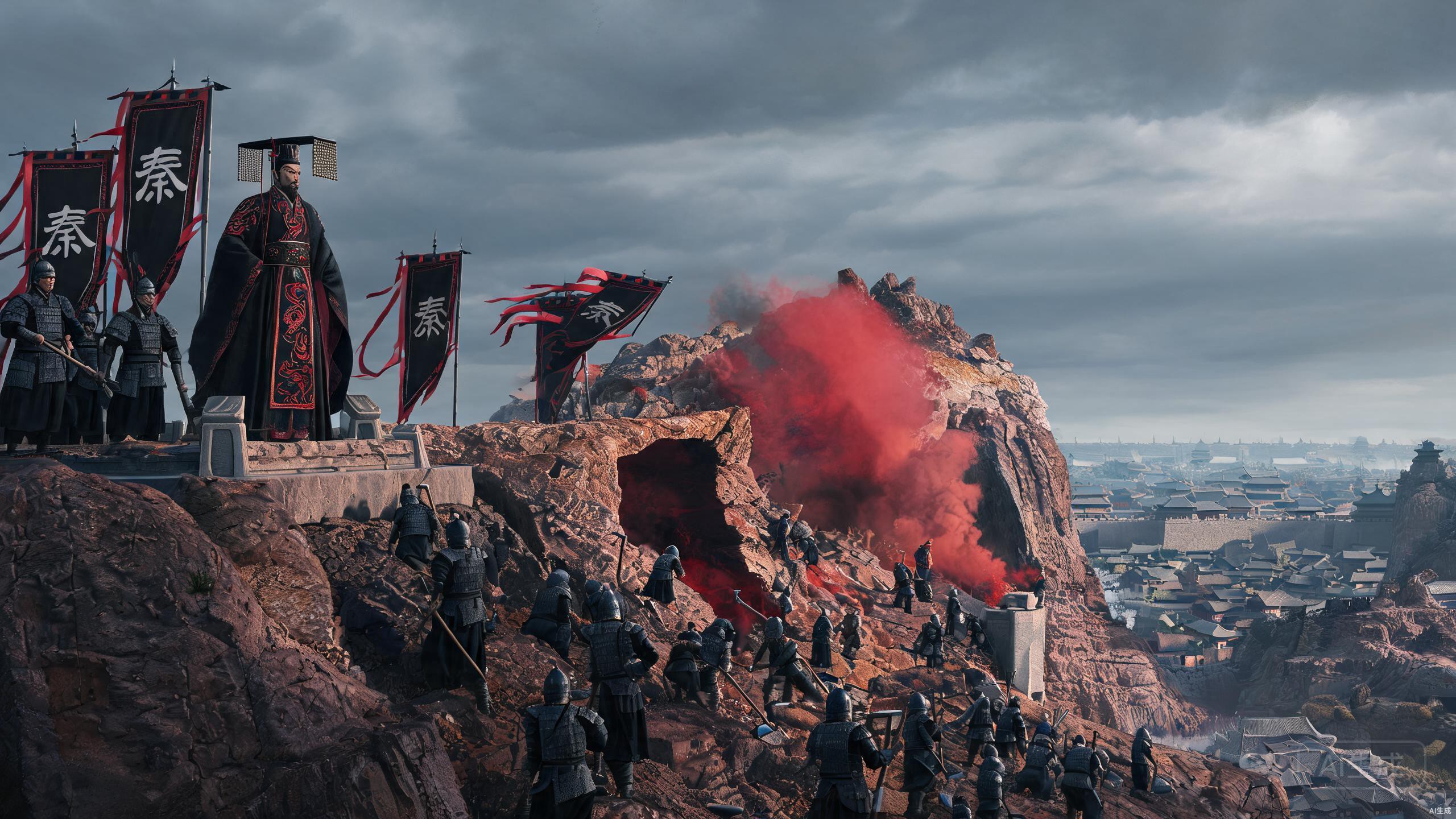
If King Wei of Chu burying gold to suppress royal Qi was merely a "preventive measure," then Qin Shi Huang's handling of the Jinling Dragon Vein was a true act of "Feng Shui destruction."
The Qi Observation That Shook the Emperor
In 210 BC, Qin Shi Huang (秦始皇, Ying Zheng) embarked on his final eastern inspection tour. This unifier of six kingdoms, who proclaimed himself "First Emperor," had already conquered the entire realm — yet one persistent worry haunted him. Someone told him that to the southeast, the Qi of a future Son of Heaven was rising.
According to historical records, when Qin Shi Huang's entourage reached the Jinling area, accompanying fangshi (alchemists and occult specialists) observed the Qi and reported: "To the southeast there is the Qi of a Son of Heaven, rising at Jinling. This Qi begins at Zhongshan (Purple Mountain), winds down along the mountain range, and flows directly into the Yangtze River. If it is not severed, within five hundred years a new Son of Heaven will arise here to contend with Qin for the empire."
Qin Shi Huang was furious. He had spent his entire life unifying the six kingdoms — how could he tolerate someone rising from this land five centuries later to challenge the great Qin dynasty?
Cultural Context: In ancient Chinese political cosmology, the Qi (vital life force) of a region was believed to directly influence who would rise to power there. A new "Son of Heaven" emerging from a rival territory threatened not just military defeat but cosmic legitimacy — making Feng Shui intervention a matter of imperial survival, not superstition.
Breaking the Mountain, Severing the Vein
To completely destroy the royal Qi of Jinling, Qin Shi Huang ordered a series of ruthless "vein-severing" measures:
First, he ordered Fangshan Mountain excavated to break the Dragon Vein. Fangshan (方山) lies southeast of Jinling, at the critical junction where the Zhongshan Dragon Vein extends into the Yangtze River. Qin Shi Huang commanded a massive excavation of Fangshan, cutting a broad trench through what had been a continuous mountain body, intending to sever the Dragon Vein's course. According to legend, a distinct mountain pass remains visible at the excavation site to this day.
Second, he redirected waterways to drain the Earth Qi. The ancients believed water is the carrier of Qi — "Qi follows water." Qin Shi Huang ordered new channels dug to alter the flow of the Qinhuai River, redirecting the waterways that had originally converged within Jinling city elsewhere, attempting to "drain the Qi" by "draining the water."
Third, he renamed the city "Moling" to degrade its status. The character "秣" (mò) means horse fodder, and "陵" (líng) means a large earthen mound. By renaming Jinling to "Moling" — meaning nothing more than a small mound fit only for feeding horses — Qin Shi Huang delivered a "dimensional downgrade" to the city through its very name. This was a deliberate psychological and Feng Shui attack, stripping the city of its prestige.
Quick Tips:
- In Feng Shui history, renaming places was a common psychological warfare tactic to weaken a location's perceived power
- "Qi follows water" remains a core diagnostic principle: where water flows, Qi flows
- Mountain passes and narrow gaps were considered especially potent Feng Shui locations — and equally vulnerable to disruption
The Irony of History
The greatest irony? Despite Qin Shi Huang's elaborate efforts to destroy Jinling's Feng Shui, the Qin dynasty collapsed within just a few years. Qin Shi Huang himself died on the return journey from his eastern tour, and the great Qin empire fell after just two generations.
Meanwhile, Jinling — the city he had demoted to "Moling" — did not decline. Instead, centuries later, it became one of the most important capitals in Chinese history. When Sun Quan of the Three Kingdoms period established his capital there to found Eastern Wu, his builders seemed to completely ignore Qin Shi Huang's "Feng Shui curse."
The Eastern Jin and the successive Southern Dynasties of Liu Song, Southern Qi, Liang, and Chen all made Jinling their capital. By the reign of Emperor Wu of Liang, Jinling had become one of the largest cities in the world, with over a million residents, throngs of merchants, and countless Buddhist temples — as the famous poem captures: "Four hundred and eighty temples of the Southern Dynasties, how many towers amid the misty rain." (南朝四百八十寺,多少楼台烟雨中)
When Zhu Yuanzhang (朱元璋) founded the Ming Dynasty, he built the magnificent Nanjing city walls and the Ming Xiaoling Mausoleum there, elevating Jinling's Feng Shuienergy pattern to unprecedented heights.
Cultural Context: The historical pattern of conquering dynasties claiming legitimacy through Feng Shui is striking. By building imperial tombs and walls on the very sites their predecessors tried to "curse," new rulers broadcast their confidence that cosmic favor had shifted to them.
Remember: Feng Shui seeks to balance Yin and Yang energies — the dual forces that shape all existence.
How to Apply This Historical Lesson Today
- Don't fear place-based superstitions: Whether buying a home or opening a business, focus on practical factors (light, ventilation, structure) before Feng Shui — anxiety about "cursed" locations rarely serves you
- Respect historical sites: Many cities carry layered Feng Shui history; understanding why certain locations were prized helps you appreciate real estate value and cultural heritage
- Use the "Qi follows water" principle positively: In your own home, ensure good water flow (working faucets, clean drains, gentle water features) to keep Qi circulating smoothly
- Balance the Five Elements: Incorporate Wood, Fire, Earth, Metal, and Water in your décor for harmonious energy
Feng Shui Knowledge Points
-
Vein-Breaking Technique (断脉术): A form of Feng Shui sabotage involving the artificial alteration of mountain terrain to sever a Dragon Vein's course. The ancients believed this could destroy a location's Feng Shuienergy pattern.
-
Qi Follows Water (气随水行): A core Feng Shui theory holding that the Qi within Earth's veins flows along the direction of water. Changing a waterway's course was thought to affect the gathering and dispersal of Qi.
-
Renaming to Degrade (改名贬地): A common ancient tactic combining Feng Shui and psychological warfare — renaming a place to lower its Feng Shui status and people's expectations of it.
-
Dragon Vein Critical Nodes (龙脉关键节点): Dragon Veins are not simple lines but feature "Acupoints" (结穴) at key turning points — these nodes are where Qi concentrates most densely and represent the most crucial positions in Feng Shui practice.
Related Articles
- [[../06-风水文化与历史/03-楚威王埋金镇王气.md|King Wei of Chu Buries Gold to Suppress Royal Qi: A Jinling Feng Shui Story]]
- [[../06-风水文化与历史/04-秦始皇东游压天子气.md|Qin Shi Huang's Eastern Tour to Suppress Son of Heaven Qi: Imperial Feng Shui Sabotage]]
- [[../01-风水入门/06-风水基础概念词典.md|Feng Shui Glossary: 18 Core Terms Explained]]
- [[../01-风水入门/31-Xing Shi School (Luan Tou School) Detailed Guide.md|The Form School (Luan Tou School): The Millennium Legacy of Dragon Vein, Sand, and Water]]