Qin Shi Huang's Lishan Tomb: The Underground Kingdom of China's First Emperor — A Feng Shui Story
"The King of Qin swept through the six kingdoms — how mighty his tiger-like gaze!" Qin Shi Huang (秦始皇) unified the six warring states and established China's first centralized dynasty. Yet the tomb he
Qin Shi Huang's Lishan Tomb Feng Shui: The Underground Kingdom of China's First Emperor — Lucky Energy & Wisdom
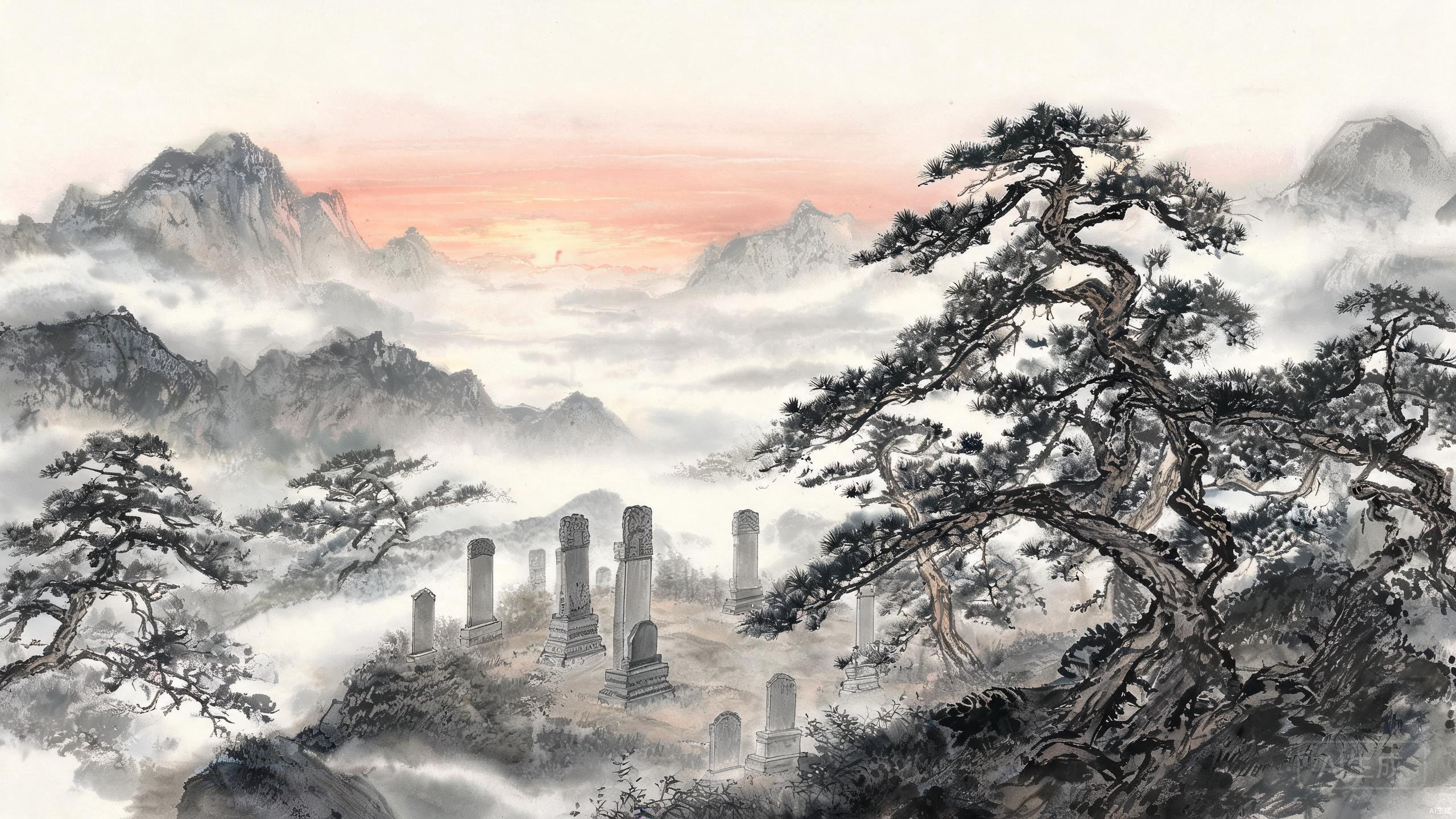
"The King of Qin swept through the six kingdoms — how mighty his tiger-like gaze!" Qin Shi Huang (秦始皇) unified the six warring states and established China's first centralized dynasty. Yet the tomb he built for himself at Lishan (骊山) was an even greater marvel — and the Terracotta Warriors (兵马俑), hailed as the "Eighth Wonder of the World," are merely the "guardian sentinels" of this vast underground kingdom.
The Site Selection at Lishan
The Mausoleum of Qin Shi Huang sits at the northern foot of Mount Li (骊山) in modern-day Lintong, Shaanxi — backed by Mount Li to the south and facing the Wei River (渭河) to the north. This location was no accident; it was the result of meticulous Kanyu (Feng Shui) analysis.
Mount Li is a branch range of the Qinling Mountains (秦岭), renowned for its graceful slopes and lush forests — a celebrated scenic region of the Guanzhong plain since ancient times. From a Feng Shui perspective, the layout of the Lishan Tomb is nothing short of extraordinary:
| Feng Shui Element | Lishan Tomb Equivalent | Configuration Assessment |
|---|---|---|
| Coming Dragon (来龙) | Qinling — Mount Li | Trunk Dragon (大干龙) forming a Feng Shui Point — deep and powerful foundation |
| Main Mountain (Black Tortoise / 玄武) | Mount Li | Beautiful and majestic, providing a stable backing |
| Bright Hall (Vermilion Bird / 朱雀) | Wei River Plain | Vast and flat — magnificent and expansive |
| Water Flow | Wei River | Great river encircling — boundary water gathering Qi |
| Sand and Water | Lin River, Sha River | Water flows left and right like jade belts |
Mount Li stands like an emerald screen across the south, while the Wei River winds like a silver ribbon through the north — the classic Back to Mountain Facing Water (背山面水) configuration in its most perfect form. Qin Shi Huang chose this site precisely because of its deep Dragon Vein and expansive Bright Hall — the unmistakable aura of a royal mausoleum.
Cultural Context: In classical Feng Shui, the "Coming Dragon" represents the mountain range that channels Qi toward your site, while the "Main Mountain" provides protective backing. When a major mountain range (a "Trunk Dragon") terminates in a specific spot where energy naturally pools, that location becomes an ideal "Feng Shui Point" — historically reserved for capital cities and imperial tombs.
Why Lishan Was Chosen
Several explanations have been offered over the centuries for Qin Shi Huang's choice of Mount Li:
1. The Feng Shui Theory. The Lishan site possesses exceptional Feng Shui characteristics — backed by the great Trunk Dragon of the Qinling Mountains and fronting the vast Wei River plain. It is one of the rare "grand configuration" sites in the Guanzhong region, ideally suited for an imperial tomb.
2. The Political Symbolism Theory. Mount Li lies not far from the Qin capital of Xianyang. By building his tomb here, Qin Shi Huang could "guard the capital even after death," symbolizing the eternal permanence of imperial authority.
3. The Geographic Practicality Theory. The northern foothills of Mount Li offer wide, open terrain suitable for large-scale construction, with abundant stone and timber resources nearby for easy procurement.
4. The Personal Preference Theory. Legend has it that Qin Shi Huang frequently visited the hot springs at Mount Li during his lifetime — the site later known as Huaqing Pool (华清池). Deeply attached to the mountain, he chose it as his final resting place.
The Construction of the Tomb
The construction of the Qin Shi Huang Mausoleum stands as one of the most ambitious engineering feats in human history. According to the Shiji (Records of the Grand Historian), construction began in 246 BC — the year Qin Shi Huang ascended the throne — and was not essentially completed until the second year of Emperor Qin's successor (208 BC). The project spanned 38 years and employed as many as 700,000 workers at its peak.
The core structure of the tomb can be summarized as follows:
| Tomb Component | Description | Current Status |
|---|---|---|
| Burial Mound (封土) | Inverted-pyramid shaped rammed earth, originally ~115m high | Currently ~50m high |
| Underground Palace (地宫) | "Pierced through three springs, with copper coffin beneath" | Unexcavated |
| Palace Interior | Mercury simulating rivers, seas, and oceans | Mercury anomalies confirmed by survey |
| Sacrificial Pits | Terracotta Warriors, bronze chariots and horses | Partially excavated |
| Walls | Inner and outer enclosure walls | Ruins still visible |
The Shiji's description of the underground palace is particularly astonishing:
"Mercury was used to simulate the hundred rivers, the Yangtze, the Yellow Sea, and the great oceans; mechanical devices made it flow in circulation. Above were representations of the heavens; below, the geography of the earth. Lamps were fueled with the oil of giant fish, so they would burn for the longest time without extinguishing." (以水银为百川江河大海,机相灌输,上具天文,下具地理。以人鱼膏为烛,度不灭者久之。)
Modern geophysical surveys have confirmed the presence of a large-scale "mercury anomaly zone" beneath the tomb mound — remarkably consistent with the Shiji account. This proves that descriptions written over two thousand years ago were not mere embellishment.
The Terracotta Warriors: An Underground Army
In 1974, farmers digging a well stumbled upon the Terracotta Warriors pits, stunning the world. These life-sized ceramic soldiers stand in formation on the eastern side of the tomb, facing east — as if perpetually ready to "sweep the six kingdoms" on behalf of the First Emperor.
| Pit | Contents | Approximate Quantity |
|---|---|---|
| Pit 1 | Infantry and chariot rectangular formation | 6,000+ figures |
| Pit 2 | Mixed cavalry, archers, and chariot units | 1,400+ figures |
| Pit 3 | Command headquarters | 68 figures |
| Pit 4 | Unfinished (empty pit) | — |
From a Feng Shui perspective, the location of the warriors east of the tomb, facing east, carries deep significance. The direction of Qin Shi Huang's unification was "from west to east." By having the warriors face east, the arrangement serves both as a symbolic "guard post" and as a declaration of imperial might over the eastern lands — even in death, the First Emperor commanded his armies to defend his empire.
The Feng Shui Mystery of "Mercury Rivers and Seas"
The use of mercury to simulate rivers and oceans in the underground palace was far more than extravagant decoration — it embodied a profound Feng Shui philosophy:
In Feng Shui, "water is the mother of Qi." Where water gathers, Qi gathers; where water flows, Qi flows. By using mercury to represent the rivers and seas of the empire, Qin Shi Huang essentially created a miniature replica of China's entire water system beneath the earth. The Yangtze, the Yellow River, and the great oceans were all contained within, with mechanical devices keeping the mercury in perpetual circulation — symbolizing Vital Qi flowing endlessly through his underground kingdom.
The principle of "above representing the heavens, below representing the earth" brought the starry sky and the mountains of the realm into the tomb, forming a complete "cosmic model." This design philosophy of Unity of Heaven and Humanity (天人合一) and cosmic correspondence represents the highest expression of Feng Shui thought.
| Underground Palace Design | Representation | Feng Shui Meaning |
|---|---|---|
| Mercury rivers and seas | All rivers and oceans of the realm | Vital Qi flows without ceasing |
| Heavens above | Stars, sun, and moon | The celestial order turns |
| Geography below | Mountains and terrain | The Earth's veins bear all |
| Giant fish oil lamps | Eternal, never-extinguishing light | Yin and Yang endure forever |
| Warriors facing east | Guarding the eastern direction | Imperial might over the six directions |
An Enduring Mystery
The Qin Shi Huang Mausoleum has never been fully excavated, and the true face of the underground palace remains one of history's greatest mysteries. What has prevented archaeologists from "making their move"?
| Reason for Non-Excavation | Explanation |
|---|---|
| Inadequate preservation technology | Fear that artifacts would oxidize and deteriorate rapidly upon exposure |
| Enormous engineering scale | Excavation and preservation costs are virtually incalculable |
| Unknown underground structure | Premature excavation could damage the tomb's integrity |
| Mercury contamination risk | Large quantities of vaporized mercury could endanger personnel |
| Cultural and ethical considerations | Reverence for the tomb of the "Eternal First Emperor" |
This state of "knowing where it lies, yet daring not to touch it" constitutes a unique form of "Feng Shui" in itself — using reverence as protection, using stillness as guardianship. Perhaps this resonates deeply with the ancient Feng Shui principle of "acting in accordance with heaven, never rashly disturbing what should remain still."
Quick Tip: The principle of "non-disturbance" applies even to modern homes. If a particular area of your home has felt energetically stable for years, avoid unnecessary renovations there — sometimes the energy of a space needs time to mature, and disruption can disturb carefully balanced Qi.
Lessons from the Emperor's Tomb
The Qin Shi Huang Mausoleum represents the culmination of ancient Chinese Feng Shui, engineering, art, and political ambition. It is more than a tomb — it is an "underground universe," embodying the First Emperor's aspiration for "ten thousand generations of succession."
Over two thousand years have passed. The Qin dynasty long ago crumbled into dust, and the dream of "ten thousand generations" ended with just the second emperor. Yet the underground kingdom beneath Mount Li has achieved a different kind of immortality — it has become a cultural heritage of all humanity, telling the world of that age of clashing arms and clattering hooves.
This may well be the paradox of the Feng Shui way: the more one seeks to make things "eternally imperishable," the more swiftly they may vanish; while what truly endures are often the culture and wisdom that transcend personal ambition.
Feng Shui Knowledge Points
- Trunk Dragon Forming a Feng Shui Point (大干龙结穴): Where a great Dragon Vein comes to rest — a configuration of grand scale, suitable for capital cities or imperial tombs.
- Back to Mountain Facing Water (背山面水): The fundamental Feng Shui site selection pattern — mountains to the north for support, water to the south as a belt. The Lishan Tomb is a textbook example.
- Water as the Mother of Qi (水主气): Feng Shui holds that water is the carrier of Qi — where water gathers, Qi gathers; where water flows, Qi flows. The mercury rivers represent this principle taken to its ultimate expression.
- Unity of Heaven and Humanity (天人合一): The highest philosophy of Feng Shui, viewing heaven, earth, and humanity as an integrated whole. The underground palace's "heavens above, geography below" embodies this concept perfectly.
- Reverence as Guardianship (以敬畏为守陵): The decision not to excavate constitutes its own form of "protection" — in harmony with the Feng Shui teaching that one should "follow heaven and never act rashly."
Related Articles
- [[../06-风水文化与历史/04-秦始皇东游压天子气.md|Qin Shi Huang's Eastern Tour to Suppress the Emperor's Qi — The First Emperor's Feng Shui Disruption]]
- [[../06-风水文化与历史/10-古代帝王陵寝风水.md|Feng Shui of Ancient Imperial Mausoleums — Site Selection Principles, Structural Evolution, and the Culture of Grand Burials]]
- [[../09-Yin Dwelling风水/59-历代帝王陵寝风水案例分析.md|Feng Shui Case Studies of Imperial Mausoleums Through the Ages]]
- [[../07-风水故事/20-武则天乾陵.md|Empress Wu Zetian's Qianling Tomb — The Only Empress's Mausoleum Above Mount Liang]]
Note on the Five Elements: The Five Elements (Wu Xing) — Wood, Fire, Earth, Metal, and Water — form the foundation of Feng Shui energy theory. Each element interacts with the others in cycles of generation and control, influencing the Qi flow in your environment.