Shenzhen Feng Shui: The Hidden Secrets Behind the 'Peng City' Miracle
From a small fishing village to a global metropolis, Shenzhen's rise is hailed as a "miracle." In the Feng Shui world, this miracle is also interpreted through the lens of Feng Shui — does the layout
Shenzhen Feng Shui: The Hidden Secrets Behind the "Peng City" Miracle
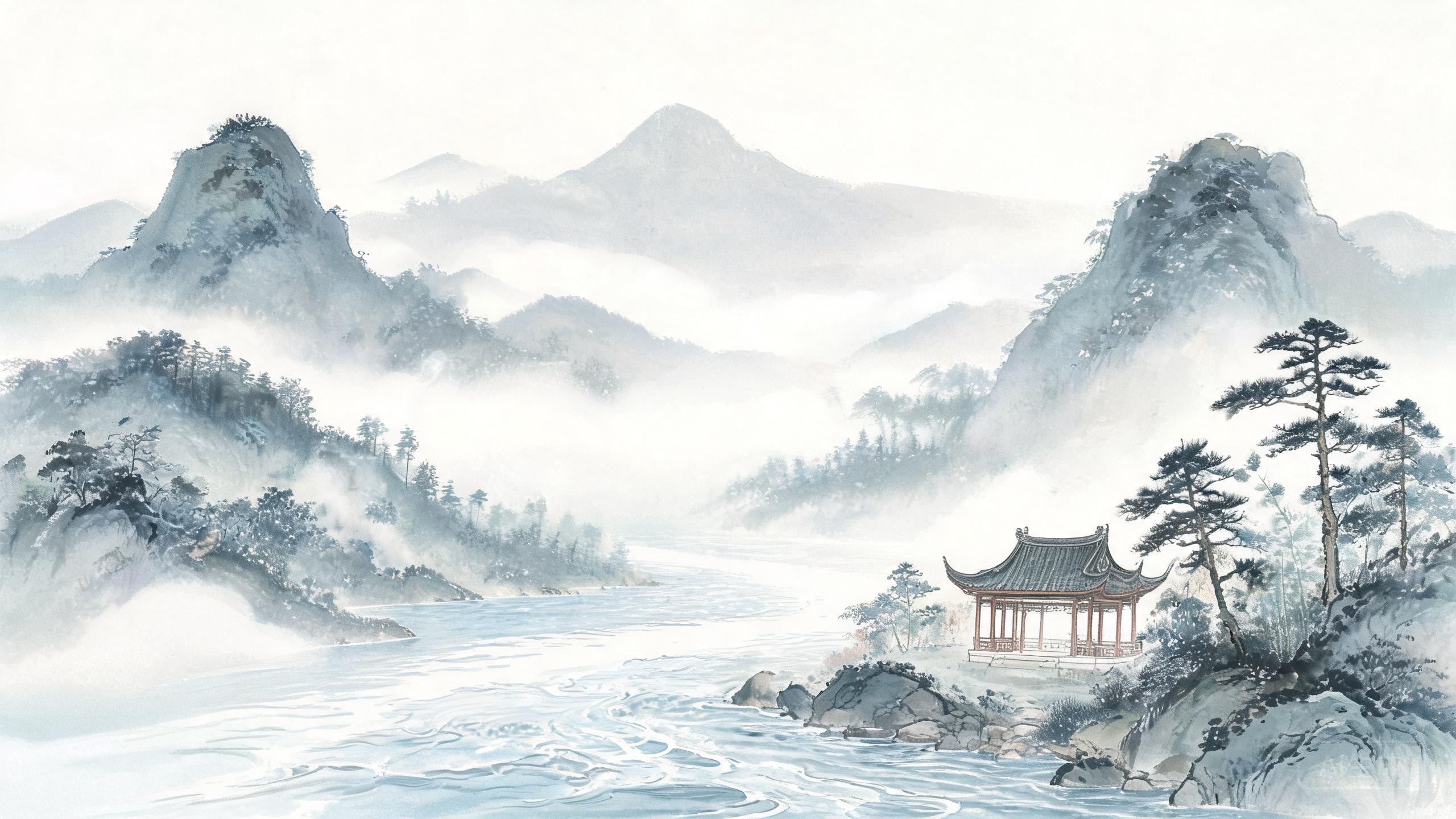
From a small fishing village to a global metropolis, Shenzhen's rise is hailed as a "miracle." In the Feng Shui world, this miracle is also interpreted through the lens of Feng Shui — does the layout of Shenzhen's mountains and waters harbor the secret code for "Peng City taking flight"?
Shenzhen's Feng Shui Landscape
Shenzhen sits on the eastern bank of the Pearl River estuary, facing Hong Kong to the south, backed by Wutong Mountain to the north, opening to Daya Bay in the east, and connecting to the Pearl River mouth in the west. From a Feng Shui perspective, several striking features define Shenzhen's layout:
| Feng Shui Element | Shenzhen Correspondence | Evaluation |
|---|---|---|
| Ancestral Dragon | Wutong Mountain — Lianhua Mountain | Steady incoming Dragon |
| Main Mountain (Black Tortoise) | Wutong Mountain | Tall and protective backing |
| Bright Hall Water | Shenzhen Bay, Pearl River Mouth | Wide Bright Hall, great water gathers wealth |
| Left Guardian (Azure Dragon) | Yantian & Dapeng in the east | Azure Dragon reaching the sea |
| Right Guardian (White Tiger) | Nanshan & Qianhai in the west | White Tiger subdued |
| Water Mouth | Strait toward Hong Kong | Water Mouth with a "lock" |
Shenzhen's most prominent Feng Shui feature is "Back to Mountain, Facing the Sea" — Wutong Mountain to the north as backing, Shenzhen Bay and the Pearl River mouth to the south as the Bright Hall. This "Mountain in the South, Water in the North" (Sitting North Facing South) pattern is the most revered "proper direction" in Chinese Feng Shui.
Cultural Context: In Feng Shui, the Four Symbols — Azure Dragon, White Tiger, Vermilion Bird, and Black Tortoise — represent ideal protective formations around a site. The Black Tortoise (玄武) protects from behind (north), the Azure Dragon (青龙) rises on the left (east), the White Tiger (白虎) crouches on the right (west), and the Vermilion Bird (朱雀) opens the view ahead (south). When all four align properly, the site is said to hold powerful, stable Qi.
The Feng Shui Meaning of "Peng City"
Shenzhen's nickname "Peng City" (鹏城) originates from Dapeng Fortress (大鹏所城), a Ming Dynasty coastal defense stronghold. The "Peng" refers to the mythical Peng bird, referenced in Zhuangzi's Xiaoyao You (Free and Easy Wandering): "When the Peng migrates to the Southern Sea, it stirs the water for three thousand li and rises ninety thousand li on a whirlwind."
From a Feng Shui perspective, "Peng" carries special symbolism:
First, the Peng soars. The mighty Peng bird spreads its wings and flies ninety thousand li — symbolizing "soaring ascent." With Shenzhen named "Peng City," its Feng Shui layout is also interpreted as the "Peng bird spreading its wings" — Wutong Mountain as the back, the eastern and western wings as the wings, and Shenzhen Bay as the water before the bird.
Second, the Peng rules the south. The Peng migrates to the "Southern Sea," ruling the south. Located in southern China, Shenzhen's name "Peng City" subtly aligns with the meaning of "soaring in the south."
Third, the Peng embodies grand scale. The Peng "stirs water for three thousand li" — far beyond ordinary scale. Shenzhen faces the open sea while backed by the mainland, with expansive surroundings perfectly matching the great magnitude of the "Peng."
| Peng City Symbolism | Feng Shui Correspondence |
|---|---|
| Peng's back | Wutong Mountain |
| Peng's wings | Eastern and western flanks |
| Water before the Peng | Shenzhen Bay |
| Soaring ascent | Rapid urban development |
Wutong Mountain — Shenzhen's "Black Tortoise"
Wutong Mountain is Shenzhen's highest peak (943.7 meters), located in the city's northeast. It serves as Shenzhen's Black Tortoise support mountain.
Wutong Mountain has a massive, solid body with lush forest cover. The "incoming Dragon Vein" arrives from the northeast, providing a stable "backing mountain" for Shenzhen. Feng Shui considers "Black Tortoise bowing its head" auspicious — a tall backing mountain with gently sloping ground ahead. Wutong Mountain perfectly fits this pattern.
Wutong Mountain also has a special feature — within the mountain, waterfalls and springs provide abundant water vapor. Feng Shui teaches that "mountains govern people, water governs wealth." Wutong Mountain possesses both the stability of "mountain" and the vitality of "water," attracting both population prosperity and wealth fortune.
Shenzhen Bay — Shenzhen's "Bright Hall Water"
Shenzhen Bay, lying to the south of the city, is Shenzhen's "Bright Hall Water." The Bright Hall (明堂) is considered auspicious when it is "open and spacious, gathering water." Shenzhen Bay has expansive waters connecting to the Pearl River mouth, making it a grand-scale Bright Hall.
| Bright Hall Element | Shenzhen Bay Correspondence | Evaluation |
|---|---|---|
| Openness | Wide bay | Bright Hall fits a thousand horses |
| Water gathering | Connected to Pearl River mouth | Great water gathers wealth |
| Water Mouth | Strait toward Hong Kong | Water Mouth is locked |
| Opposite shore | Hong Kong | Strong Facing Mountain |
Shenzhen Bay's Water Mouth lies in the direction of Hong Kong — the strait narrows like a "gate," causing the bay's water Qi to "gather without dispersing." The mountains of Hong Kong across the water serve as a "Facing Mountain," providing strong forward support. This arrangement of "open Bright Hall, locked Water Mouth, and strong Facing Mountain" is the ideal configuration for accumulating wealth.
Central Axis: From Lianhua Mountain to Shenzhen Bay
Shenzhen's urban central axis runs from Lianhua Mountain in the north to Shenzhen Bay in the south, passing through the Futian central district. This axis is Shenzhen's "Dragon Spine."
| Central Axis Node | Location | Significance |
|---|---|---|
| Lianhua Mountain | Northern end | Starting point of the axis; Deng Xiaoping's bronze statue stands at its peak |
| Civic Center | Central | City's administrative center |
| Futian CBD | South-central | Financial and commercial center |
| Shenzhen Bay | Southern end | Axis terminus; Bright Hall Water |
Interestingly, a bronze statue of Deng Xiaoping stands atop Lianhua Mountain — Deng was the principal decision-maker behind the establishment of the Shenzhen Special Economic Zone. The statue faces south (toward Shenzhen Bay), as if "guiding" Shenzhen's southward development. From a Feng Shui perspective, the statue standing at the high point of the northern end of the axis is like a "guardian upon the Black Tortoise," symbolizing "stable foundation and clear direction."
"Sitting North Facing South" — The Proper Direction
Shenzhen's overall orientation is "Sitting North Facing South" — backed by Wutong Mountain to the north, facing Shenzhen Bay to the south. This is the most revered "proper direction" in Feng Shui:
| Advantage of Proper Direction | Explanation |
|---|---|
| Backing mountain blocks wind | Wutong Mountain blocks winter northern winds |
| Facing water gathers wealth | Shenzhen Bay gathers water and wealth |
| Sunward orientation | Excellent southern sunlight |
| North-south ventilation | Excellent airflow |
"Sitting North Facing South" not only follows Feng Shui principles but also aligns with architectural science — most of China lies north of the Tropic of Cancer, where south-facing windows receive the best sunlight and north-facing mountains provide the warmest wind protection. Shenzhen's Feng Shui layout essentially follows the natural rules of geography and climate.
Cultural Context: The principle of "Sitting North Facing South" (坐北朝南) is one of the most enduring principles in Chinese Feng Shui and traditional architecture. It is considered ideal because it balances the elemental forces of Yin and Yang — the northern mountain provides Yin stillness and protection, while the southern opening invites Yang warmth and activity.
The Feng Shui Relationship Between Shenzhen and Hong Kong
Shenzhen and Hong Kong share connected mountains and waters, and from a Feng Shui perspective they are considered one integrated "grand layout":
| Element | Shenzhen | Hong Kong |
|---|---|---|
| Backing Mountain | Wutong Mountain | Tai Mo Shan |
| Bright Hall Water | Shenzhen Bay | Victoria Harbour |
| Relationship | Northern wing | Southern wing |
Shenzhen Bay (Deep Bay) is the shared water body between the two regions, like the "inner water" within the Bright Hall. Hong Kong lies to the south, Shenzhen to the north — the two cities are like "the Peng's two wings." Hong Kong took flight first, with Shenzhen following behind. Today, both wings spread wide together, forming the core of the "Guangdong-Hong Kong-Macao Greater Bay Area."
Feng Shui Interpretation of Shenzhen's Development
From the establishment of the Special Economic Zone in 1980 to the present, Shenzhen has grown over forty years into an international metropolis. The Feng Shui community offers different interpretations:
"Treasure Land Theory": Believes that Shenzhen's "Back to Mountain, Facing the Sea, Sitting North Facing South" layout is inherently a treasure land. It was simply undeveloped until the "Acupoint was activated" (the establishment of the Special Zone), after which it rapidly took flight.
"Timely Fortune Theory": Believes that Shenzhen's rise is connected to the Three Cycles and Nine Periods (三元九运) — during the Eighth Period (2004–2023), the northeast was prosperous. Although Shenzhen lies to the south, the Ninth Period (2024–2043) favors the south, and Shenzhen is now arriving at its time.
"Human Effort Theory": Believes that Shenzhen's development primarily relies on policy and human effort, with Feng Shui being merely "retrospective storytelling."
| Interpretation | Viewpoint | Analysis |
|---|---|---|
| Treasure Land Theory | Inherently excellent layout | Has geographic foundation |
| Timely Fortune Theory | Prosperity arrives with fortune | More speculative elements |
| Human Effort Theory | Policy and effort are primary | Most pragmatic |
Objectively speaking, Shenzhen's development is the result of multiple factors working together — policy, geography, and culture. The Feng Shui layout (Back to Mountain, Facing the Sea, Sitting North Facing South) does provide a sound geographic foundation, but the decisive factors were the reform and opening-up policies and the efforts of millions of builders.
How to Apply This Wisdom to Your Own Space
While Shenzhen's grand-scale Feng Shui is unique, you can apply its core principles to your own home or office:
- Create a "Back to Mountain" position: Place your desk or bed against a solid wall — never in the middle of a room or with a window behind you
- Open a "Bright Hall" in front: Keep the area in front of your main seating position open, light, and uncluttered
- Identify your "Water Mouth": Check that the area where energy flows out of your space is gently controlled — not a wide-open gap
- Honor your central axis: Arrange your most important furniture along a clear, straight line from entrance to focal point
Quick Tips:
- The "Peng spreading its wings" principle reminds us that symmetry creates balance — arrange furniture in matching pairs on either side of a central line
- A tall, stable backing (mountain) plus an open, bright view (water) is the universal formula for prosperity in any space
- Remember the Human Effort Theory: the best Feng Shui layout still requires your action and intention to manifest results
Key Feng Shui Concepts
- Peng City Layout: Shenzhen's overall Feng Shui pattern of "Back to Mountain, Facing the Sea, Sitting North Facing South," resembling a Peng bird spreading its wings.
- Sitting North Facing South: The most revered building orientation in Feng Shui — backing mountain with facing water, sunward orientation, compatible with China's geography and climate.
- Bright Hall Water: The open water area in front of a structure, considered auspicious when expansive and water-gathering. Shenzhen Bay is Shenzhen's Bright Hall Water.
- Water Mouth Lock: Mountains or islands constraining the exit point of water, causing Qi to gather rather than disperse. Shenzhen Bay's Water Mouth is locked by the strait in the direction of Hong Kong.
- Central Axis as Dragon Spine: The city's central axis functions like a Dragon Spine, running through core functional areas. Shenzhen's axis runs from Lianhua Mountain in the north to Shenzhen Bay in the south.
Related Articles
- [[../01-风水入门/09-Ten Principles of Modern Feng Shui.md|Modern Feng Shui: Ten Essential Principles]]
- [[../07-风水故事/37-台北101.md|Taipei 101 — Feng Shui for Prosperity at the Island's Peak]]
- [[../07-风水故事/33-上海东方明珠.md|The Oriental Pearl Tower — A Feng Shui Gem on the Huangpu River]]
- [[../01-风水入门/10-风水常见误区澄清.md|Feng Shui Myths Debunked: Separating Superstition from Science]]