Sixteen Character Yin Yang Feng Shui Secrets: Exploring Tomb-Raiding Novels and Feng Shui Culture
> Disclaimer: This article is an interpretive analysis of a literary work, not an exposition of actual Feng Shui practices. The "Sixteen Character Yin Yang Feng Shui Secrets" referenced here is a fict
Disclaimer: This article is an interpretive analysis of a literary work, not an exposition of actual Feng Shui practices. The "Sixteen Character Yin Yang Feng Shui Secrets" referenced here is a fictional creation from an online novel and should not be taken as genuine Feng Shui knowledge.
Sixteen Character Yin Yang Feng Shui Secrets: Exploring Feng Shui Culture in Tomb-Raiding Novels
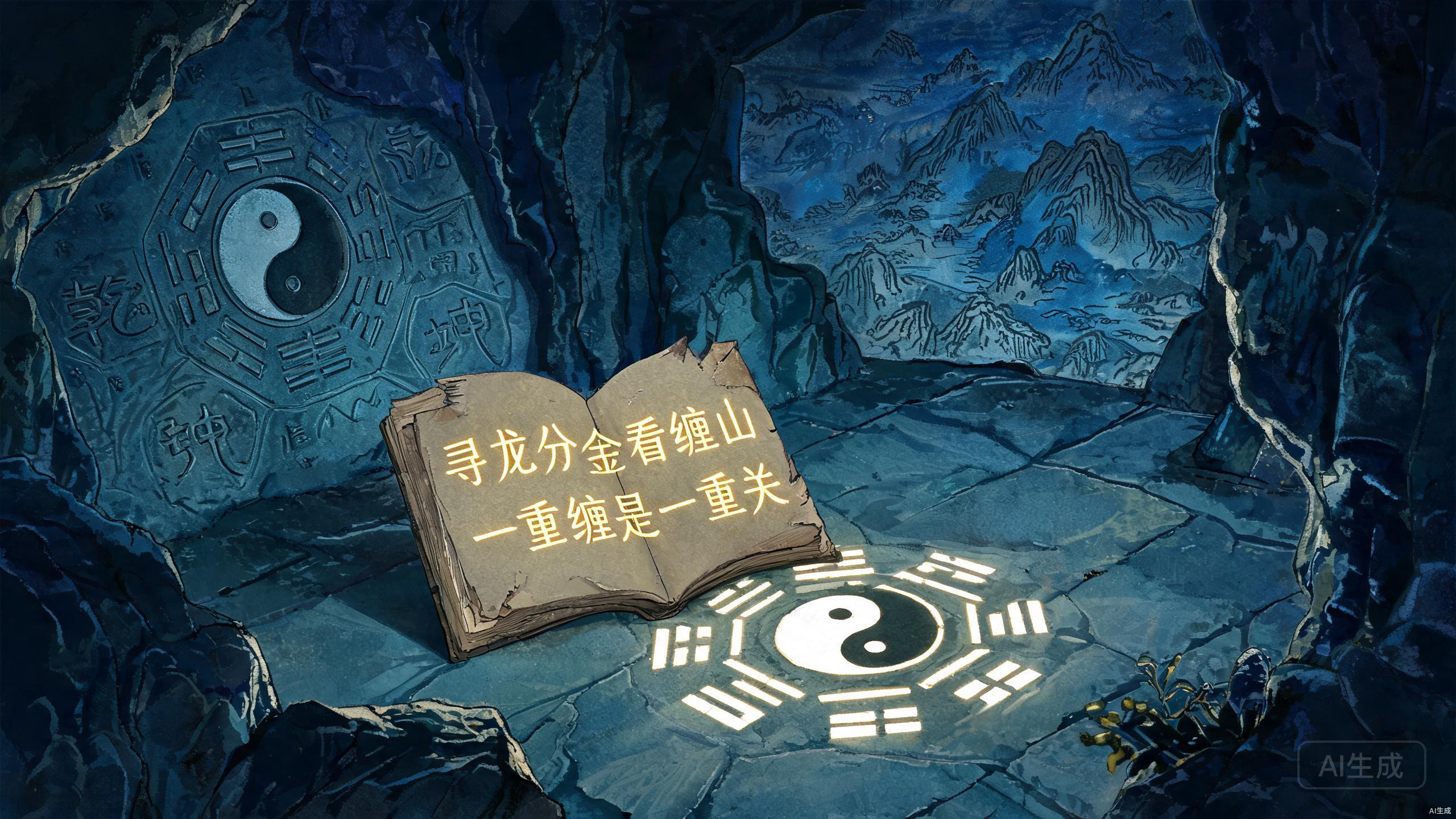
In the world of tomb-raiding fiction, there exists a legendary tome known as the Sixteen Character Yin Yang Feng Shui Secrets (十六字阴阳风水秘术). Described as the supreme manual authored by Qing Dynasty "Touching Gold Officers" (摸金校尉), it supposedly encompasses the ultimate mysteries of Yin and Yang Feng Shui. Although this work is entirely fictional, the Feng Shui knowledge system it constructs is remarkably intriguing — and has even inspired countless readers to explore the real art of Feng Shui.
The World's Greatest Enigmatic Text
According to the novel's lore, despite being called "Sixteen Characters," the manual actually contains sixteen volumes, each named after one character drawn from the ancient Zhou Celestial Hexagrams: Heaven (天), Earth (地), Humanity (人), Ghost (鬼), Spirit (神), Buddha (佛), Sha Qi (魔), Beast (畜), Subdue (慑), Suppress (镇), Vanish (遁), Matter (物), Transform (化), Yin (阴), Yang (阳), and Void (空).
Cultural Context: Zhou Celestial Hexagrams (周天古卦) refer to the cosmological framework used in classical Chinese metaphysics to map the heavens onto earthly space. The novel uses these sixteen characters as symbolic chapter titles, drawing on the mystique of ancient Chinese cosmological thinking.
This "ancient text" not only records a systematic theory of Yin and Yang Feng Shui, but also contains extensive descriptions of tomb architecture, structure, and layout across various dynasties — along with the countless dangers tomb raiders face. The novel proudly calls it "The Genuine Guide to Touching Gold and Treading the Dipper" (摸金倒斗指南).
The Sixteen Volumes: Each a Masterpiece
The novel's design of these sixteen volumes is remarkably deliberate, covering virtually every aspect of Feng Shui study:
Heaven Volume (天字卷) — Deals with Stellar Studies: observing the celestial bodies above and examining the earth's veins below. Stellar Feng Shui (天星风水) genuinely exists in real Feng Shui practice, primarily using celestial observations to determine auspicious and inauspicious directions on the ground.
Earth Volume (地字卷) — Covers Landform: observing the flow of mountains and rivers, tracing the Dragon Vein's (龙脉) source and terminus. It draws upon the four essentials: Dragon, Sand, Acupoint, and Water (龙、砂、穴、水). This aligns almost perfectly with the Form School (形势派) of real Feng Shui.
Humanity Volume (人字卷) — Focuses on Yang Dwellings (阳宅): the selection of residences for the living, corresponding to the "Eight Mansions Bright Mirror" (八宅明镜) technique. The Eight Mansions School (八宅派) is indeed one of the most widespread Feng Shui schools in actual practice.
Cultural Context: The Eight Mansions School divides human residences into East Four Mansions and West Four Mansions, then matches them to occupants' Life Gua to determine compatibility. This system remains hugely popular among modern Feng Shui practitioners worldwide.
Subdue Volume (慑字卷) — Addresses Gold Division and Acupoint Location (分金定穴): locating the Dragon, Sand, Acupoint, Water, and Direction without needing a Luopan (Feng Shui Compass). In real practice, this represents one of the most core and demanding skills of any Feng Shui master.
Suppress Volume (镇字卷) — Covers Sha-Suppression and Sha-Avoidance: methods for neutralizing dangerous Feng Shui configurations. Real Feng Shui practice does place significant emphasis on managing Sha Qi (harmful energy).
Transform Volume (化字卷) — Addresses Feng Shui Modification: from changing doors and windows to reshaping entire layouts. This is considered the most challenging operation in a Feng Shui master's repertoire. The novel's framing of it as a "forbidden technique" echoes the ancient caution against "recklessly disturbing Heaven and Earth."
Void Volume (空字卷) — Represents the highest realm: "The greatest form has no shape; the greatest sound is rarely heard." Through gradual cultivation, one eventually attains the Dao itself. This philosophy flows directly from the Daoist principle of "governing through non-action" (无为而治).
From Fiction to Reality
Although the Sixteen Character Yin Yang Feng Shui Secrets is pure literary creation, readers find it convincing because the author drew heavily from genuine Feng Shui knowledge while writing.
Concepts like Seeking Dragon and Pointing Acupoint (寻龙点穴), the five essentials of Dragon, Sand, Acupoint, Water, and Direction (龙砂穴水向), the technical term Fen Jin Acupoint Location (分金定穴), the distinction between Yang and Yin Dwellings, and the differences between the Form School and Compass School — these are all genuine core elements of real Feng Shui study.
In a sense, this novel unintentionally serves as an accessible "popular science reader" of Feng Shui culture. Many readers encounter the basic framework of Feng Shui for the first time through this book, then develop deeper interest in studying authentic Feng Shui practices.
This also reminds us: while Feng Shui in literature is often dramatized or even mythologized, its underlying knowledge framework typically originates from real Chinese traditional metaphysical culture. Interested readers can use this as a starting point to further explore what genuine Feng Shui study truly entails.
How to Explore Feng Shui After Fiction: A Beginner's Path
If this novel has sparked your curiosity about real Feng Shui, here's how to begin your authentic journey:
- Start with foundational concepts: Learn the basics of Qi (气), Yin and Yang (阴阳), and the Five Elements (Wu Xing) — these are the building blocks of all Feng Shui practice
- Understand the two main schools: Study the Form School's focus on physical landforms and the Compass School's emphasis on directional energy calculations
- Read classical texts: Begin with accessible translations of the Zhai Jing (Classic of Dwelling) and Yang Zhai Shi Shu (Ten Books on Yang Dwelling) for Yang Dwelling practice
- Practice observation: Train yourself to notice Qi flow in everyday spaces — how furniture placement, lighting, and pathways affect the energy of a room
- Avoid sensationalist shortcuts: Steer clear of practices promising instant wealth or supernatural powers — authentic Feng Shui emphasizes harmony, balance, and gradual improvement
Quick Tips:
- Distinguish clearly between fictional Feng Shui (entertainment) and classical Feng Shui (study) — they share vocabulary but differ greatly in purpose and method
- Look for Feng Shui teachers who reference classical texts and traditional lineages rather than those making grandiose claims
- Real Feng Shui is about creating harmony between people and their environment — not superstition or fortune-telling
Key Feng Shui Concepts Mentioned
-
Touching Gold Officer (摸金校尉): A fictional ancient tomb-raiding military title from the novel, loosely inspired by historical positions like Cao Cao's "Tomb-Opening General" (发丘中郎将) and "Touching Gold Officer" (摸金校尉) — specialized military roles responsible for excavating imperial tombs.
-
Form School vs. Compass School (形势派与理气派): The two major mainstream schools of Feng Shui. The Form School emphasizes physical observation of mountains and terrain, while the Compass School focuses on Bagua and Five Elements calculations across time. The novel's framework leans toward the Form School approach.
Cultural Context: The Form School (also called the Luan Tou School) traces its lineage back to Yang Yunsong of the Tang Dynasty, while the Compass School developed later with more mathematical and cosmological complexity. Many modern practitioners blend both approaches.
-
Gold Division Acupoint Location (分金定穴): The method of using a Luopan (Feng Shui Compass) to determine precise directional measurements for locating an acupoint. "Gold Division" (分金) refers to the precise degree measurements on the Luopan's Heavenly Stems and Earthly Branches dial.
-
Seeking Dragon and Pointing Acupoint (寻龙点穴): The foundational skill of Feng Shui Kanyu (勘舆). "Seeking Dragon" (寻龙) means tracing mountain ranges to their source and following their flow, while "Pointing Acupoint" (点穴) means identifying the exact spot where Vital Qi (生气) concentrates most powerfully along a Dragon Vein.
Related Articles
- [[../06-风水文化与历史/09-十六字阴阳风水秘术考.md|Cultural Analysis of the Sixteen Character Yin Yang Feng Shui Secrets: Heaven, Earth, Humanity, Ghost, Spirit, Buddha, Sha Qi, and Beast]]
- [[../01-风水入门/30-风水基础测试题100道.md|100 Feng Shui Fundamentals Practice Questions]]
- [[../02-家居风水/33-阳台风水植物.md|Balcony Feng Shui Plants: Greenery for Wealth and Sha Dissolution]]
- [[../02-家居风水/37-植物与风水.md|Plants and Feng Shui: Five Elements Harmony and Wealth Activation Through Home Greenery]]