Snake-Shaped Land Feng Shui: Serpentine Mountain Form and Hidden Wealth Energy
In folk Feng Shui tales, the "Snake-Shaped Land" (蛇形地, shé xíng dì) is a recurring theme. The snake holds a unique position in traditional Feng Shui — it is both the "Lesser Dragon" and a "spiritual c
Snake-Shaped Land Legend: The Feng Shui Mystery of Serpentine Mountains
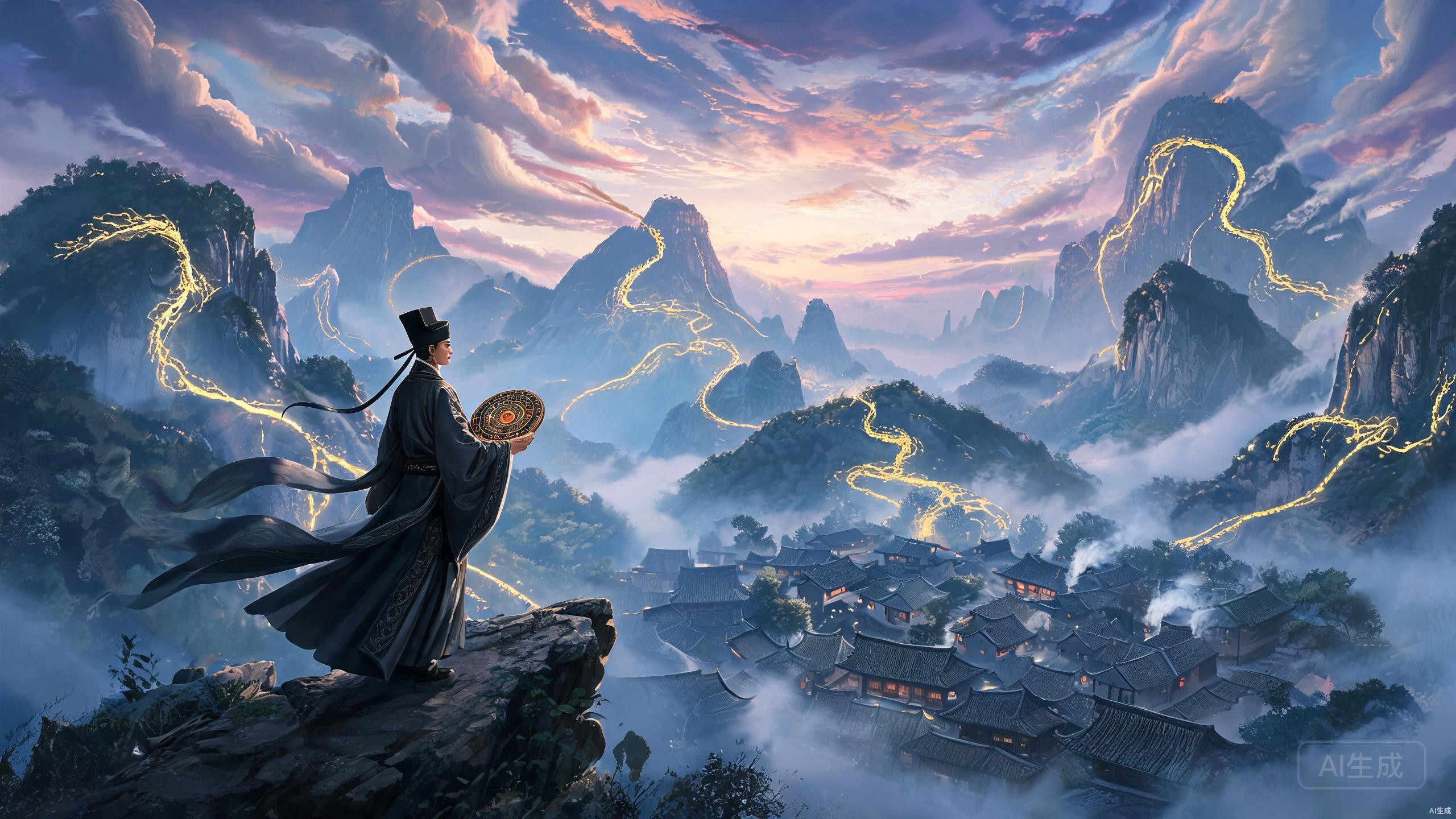
In folk Feng Shui tales, the "Snake-Shaped Land" (蛇形地, shé xíng dì) is a recurring theme. The snake holds a unique position in traditional Feng Shui — it is both the "Lesser Dragon" and a "spiritual creature." The Feng Shui Points (穴位, xué wèi) formed by serpentine mountain ranges carry distinct auspicious and inauspicious meanings. Legends about Snake-Shaped Land circulate widely across regions, each with different storylines, yet all contain profound Feng Shui wisdom.
The Snake in Feng Shui
In traditional Chinese culture, the snake holds a particularly special place. It is considered one of the "Five Poisons," feared by many, yet also revered as the "Lesser Dragon" (小龙) with spiritual essence. In the Twelve Chinese Zodiac, the snake is called "Si" (巳) and is associated with Fire, governing wisdom. In Feng Shui's Earthly Branches, "Si" represents the southeast-by-south position, adjacent to the "Chen Dragon."
Feng Shui teaches that mountains winding like a snake are called "Snake-Form Dragon" (蛇形龙) or "Snake Dragon." Though the Snake Dragon lacks the majestic presence of a "True Dragon," it is nimble and ever-changing. The Feng Shui Points it forms often govern "intelligence, adaptability, and hidden wealth."
| Snake-Shaped Land Feature | Feng Shui Meaning |
|---|---|
| Mountain range winding like a snake | Adaptability, governing intelligence |
| Slender, elongated mountain body | Delicate Qi channels, governing literary talent |
| Raised snake head area | Ideal for placing a Feng Shui Point, governing prominence |
| Curved section of snake body | Qi gathers here, suitable for burial |
| Drooping snake tail area | Qi has dissipated, unsuitable for use |
The Legend of Snake-Shaped Land Producing the Wealthy
In a certain village in Jiangnan, there lived a farming family surnamed Chen, poor for generations. One day, a wandering Feng Shui master passed through and climbed a small hill behind the village to gaze into the distance. He saw the mountain range winding like a green snake, its snake head pointing toward one household in the village. The master declared: "This is Snake-Shaped Land. The household toward which the snake head points will prosper within three years."
The Chen family happened to live exactly where the snake head pointed. The Feng Shui master instructed the Chens to plant three clusters of bamboo behind their house (bamboo is the snake's "companion" and can enhance snake Qi), and to dig a small pond in front of the door (snakes love water, and pond water can "nourish" snake Qi).
Three years later, the Chen family's fortune truly turned. First, they unearthed a jar of silver coins from their land (said to have been buried by previous generations), and then enjoyed a year of abundant harvest. Their household gradually prospered. Within ten years, the Chen family became the wealthiest in the village.
Cultural Context: Folk tradition holds that Snake-Shaped Land governs "hidden wealth" (暗财) — prosperity that comes quietly, without fanfare, yet flows continuously. This aligns with the snake's nature of "moving stealthily and lying hidden."
The Legend of Snake-Shaped Land Producing Scholars
Another tale circulates in Hunan. In a certain place, there stood a mountain shaped like a giant snake coiled up, with an earth mound at the snake's head resembling the snake "flicking its tongue." The local Feng Shui master said: "This Acupoint of the snake flicking its tongue will produce eloquent talents."
Sure enough, within three generations of the family buried at this Feng Shui Point, two juren (举人, imperial examination graduates) and one Hanlin (翰林, imperial academician) emerged — all renowned for "outstanding literary talent and unmatched eloquence." The folk belief holds that the snake's "tongue-flicking" mirrors human "speaking," thus governing eloquence and literary talent.
| Snake Acupoint Type | Physical Feature | Governing Influence |
|---|---|---|
| Snake Head Acupoint | Acupoint placed at raised snake head | Prominence, advancement |
| Snake Flicking Tongue | Small mound before snake head | Literary talent, eloquence |
| Snake Coil Acupoint | Acupoint at coiled snake body | Wealth preservation, stability |
| Snake Entering Water | Snake form extending into water | Hidden wealth, commercial profit |
| Snake Shedding Skin | Snake-form mountain with gaps | Fortune change, rebirth |
The Tale of "The Snake Cannot Surpass the Dragon"
Though Snake-Shaped Land has its auspicious qualities, Feng Shui masters often caution: "The snake cannot surpass the dragon" (蛇不过龙). This means that the power of Snake-Shaped Land ultimately cannot match that of True Dragon Land.
There is a tale: in a certain place, two families buried their ancestors — one in "Snake-Shaped Land" and one in "Dragon-Shaped Land." The Snake-Shaped Land family became wealthy overnight and acted arrogantly for a time; the Dragon-Shaped Land family took ten years to show results, but produced officials generation after generation, with prosperity continuing without end.
The Feng Shui master sighed: "Snake-Shaped Land brings quick rise and quick decline, like a snake shedding its skin — a momentary gain. Dragon-Shaped Land rises slowly but endures, like a dragon lurking in the deep — a foundation for a hundred years. Those who seek quick results get the snake; those who seek lasting prosperity get the dragon. Each has its value, but one must understand the difference."
Later, the Snake-Shaped Land family indeed failed to sustain wealth beyond three generations and declined, while the Dragon-Shaped Land family continued producing scholars and became a prominent clan. This tale serves as a warning: Feng Shui distinguishes between "quick" and "lasting" outcomes — one should not贪 (tān, covet) only immediate gains.
Taboos of Snake-Shaped Land
Though Snake-Shaped Land can be auspicious, it carries many taboos:
First Taboo: "Snake Head Facing a Person" (蛇头对人). If the snake head of a Snake-Form Mountain points directly at a household, it is considered the Sha (煞) of "the snake biting a person," governing injury, illness, and disaster. Remedy: Erect a stone tablet or plant a large tree in the direction of the snake head to "block" it.
Second Taboo: "Snake Entering Dead Water" (蛇入水死). If the tail end of a Snake-Form Mountain extends into stagnant, polluted water, it signifies "the snake drowning," indicating a stalled family fortune. Remedy: Dredge the waterway so the water flows alive rather than stagnant.
Third Taboo: "Snake Pecked by Eagle" (蛇被鹰啄). If a mountain shaped like an eagle (Eagle Beak Mountain) sits near the Snake-Form Mountain and faces the snake head, it is considered "eagle pecking snake," governing sudden disaster. Remedy: Build a small temple at the snake head or erect a "Eagle-Suppressing Stone" (镇鹰石).
Fourth Taboo: "Two Snakes Fighting" (双蛇相斗). If two Snake-Form Mountains entwine and confront each other, it signifies "endless conflict," making the location unsuitable for burial or building a home.
| Snake-Shaped Land Taboo | Manifestation | Remedy |
|---|---|---|
| Snake Head Facing Person | Snake head pointing at residence | Erect tablet, plant tree to block |
| Snake Entering Dead Water | Snake tail extending into polluted stagnant water | Dredge waterway |
| Snake Pecked by Eagle | Nearby eagle-shaped mountain facing snake head | Build temple, erect suppressing stone |
| Two Snakes Fighting | Two Snake-Form Mountains entwined in confrontation | Do not use this location |
The Real Geographic Basis of Folk Snake-Shaped Land
The Feng Shui interpretation of "Snake-Shaped Land" has a certain geographic basis. Snake-Form Mountains are typically "Branch Dragons" (支龙) or "remnant veins" — slender offshoots branching from major Dragon Veins (龙脉), winding like snakes. Though lacking the grandeur of main Dragon Veins, these landscapes are "small yet refined," often forming favorable micro-environments in localized areas.
From a modern geographic perspective, Snake-Form Mountains are typically low ridges in hilly terrain, undulating and winding, with valleys and streams on either side. This terrain is indeed suitable for small-scale settlements — with a small hill behind as backing, a stream in front for use, and hills on both sides for protection. It is a "miniature" Feng Shui layout.
Cultural Context: The ancients likened this terrain to a "snake" — vivid and easy to remember and pass down. This reflects the folk Feng Shui wisdom of "taking form to derive imagery, and using imagery to convey principle" (以形取象、以象寓理).
Modern Lessons from Snake-Shaped Land
Today, we need not fully accept the auspicious and inauspicious claims about Snake-Shaped Land, but the wisdom behind them still offers valuable insights:
First, Adapt to Local Conditions (因地制宜). Though Snake-Shaped Land is not "great land," when used appropriately it still yields results. This shows that Feng Shui is not about being "big" but about being "suitable" — what fits you best is the best for you.
Second, Know Contentment and Know When to Stop (知足知止). The "quick rise and quick decline" nature of Snake-Shaped Land reminds us that what comes quickly often leaves quickly. A truly lasting foundation requires patient accumulation.
Third, Respect Nature (敬畏自然). The various taboos of Snake-Shaped Land are, at their core, expressions of reverence for the natural environment — mountain forms and water flows follow their own patterns and should not be recklessly challenged.
Quick Tips for Choosing Your Land
- Assess the terrain scale honestly: A modest, well-protected site often outperforms an impressive but exposed one
- Think long-term, not just short-term: Prioritize stability over spectacular quick gains — wealth built slowly tends to last longer
- Honor natural patterns: Work with the land's natural flow rather than forcing dramatic alterations
Key Feng Shui Concepts
- Snake-Form Dragon (蛇形龙): A branch vein with serpentine mountain form, considered the "Lesser Dragon" in Feng Shui, governing intelligence, adaptability, and hidden wealth.
- Acupoint Form (穴形): The Form School of Feng Shui names Acupoints according to mountain shapes — snake, dragon, tiger, phoenix, and so on — each governing different influences.
- The Snake Cannot Surpass the Dragon (蛇不过龙): A Feng Shui proverb indicating that Snake-Shaped Land's power cannot match True Dragon Land — quick to rise but difficult to sustain.
- Taking Form to Derive Imagery (以形取象): The core method of the Form School, judging auspiciousness by observing and analogizing mountain and land forms.
- Branch Dragon Remnant Vein (支龙余脉): Slender offshoots from major Dragon Veins. Though smaller in scale, they are "refined in miniature," suitable for ordinary households.
Related Articles
- [[../09-Yin Dwelling风水/12-如何选择风水宝地安葬先人.md|How to Choose a Feng Shui Treasured Land for Ancestral Burial]]
- [[../07-风水故事/25-鲤鱼地传说.md|Carp-Shaped Land Legend: The Feng Shui Lucky Point of the Carp Leaping Over the Dragon Gate]]
- [[../07-风水故事/24-凤凰地传说.md|Phoenix-Shaped Land Legend: The Feng Shui Treasured Land of a Hundred Birds Paying Homage to the Phoenix]]
- [[../01-风水入门/10-风水常见误区澄清.md|Feng Shui Myths Clarified: Distinguishing Superstition from Science]]