Zhu Yuanzhang Ancestral Grave Legend: Feng Shui Secrets of the Fengyang Imperial Tomb
From a cattle-herding boy and wandering monk to the founding emperor of the great Ming Dynasty, Zhu Yuanzhang's (朱元璋) rise to power is nothing short of legendary. Behind this remarkable story, folk tr
Zhu Yuanzhang Ancestral Grave Legend: The Feng Shui Secrets of the Fengyang Imperial Tomb
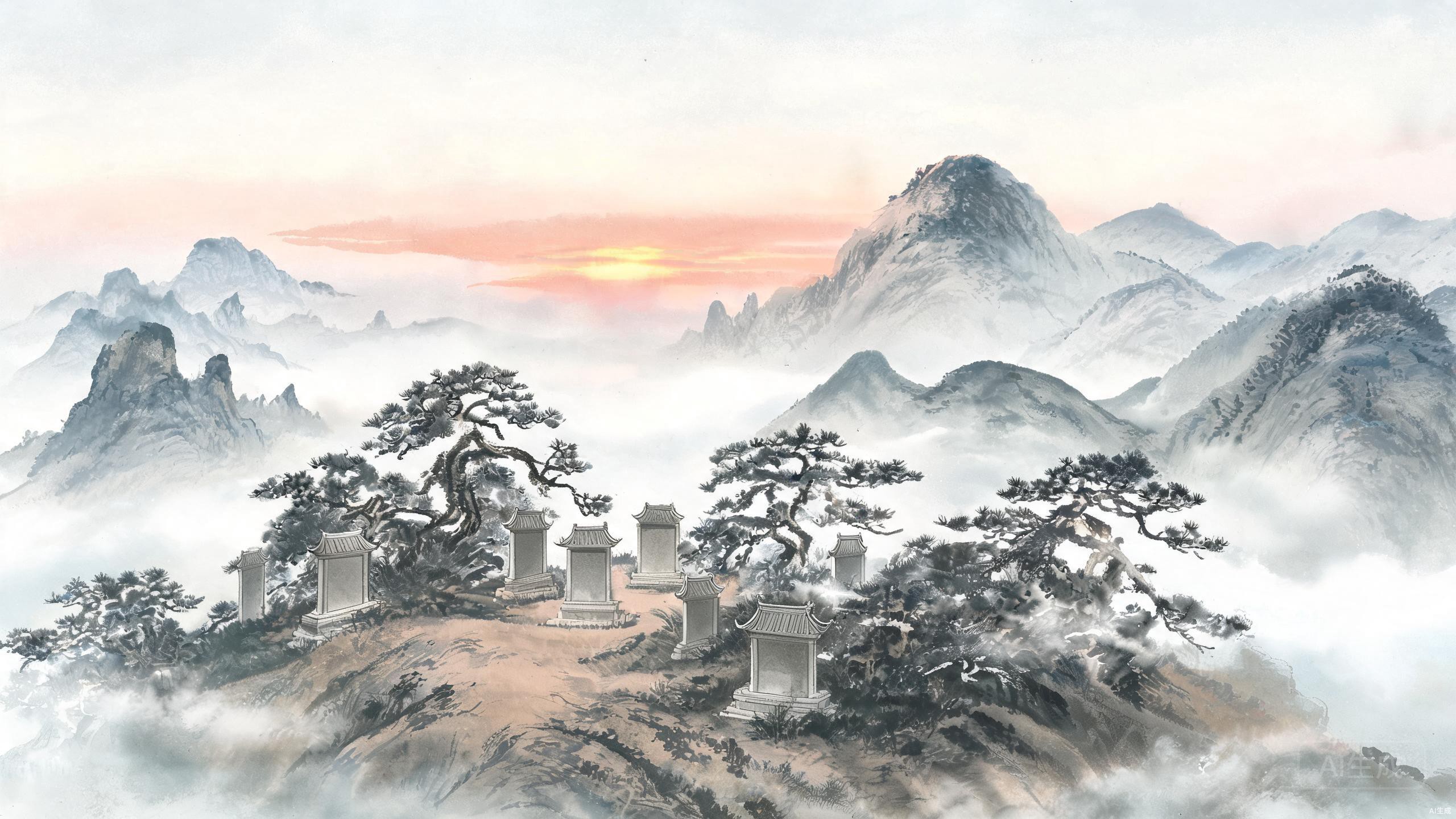
From a cattle-herding boy and wandering monk to the founding emperor of the great Ming Dynasty, Zhu Yuanzhang's (朱元璋) rise to power is nothing short of legendary. Behind this remarkable story, folk tradition holds that the key lies in a Feng Shui tale — his ancestral grave was the "starting point" of it all.
The Cattle Herder's Ancestral Grave
Zhu Yuanzhang, originally named Zhu Chongba (朱重八), was born in Haozhou Zhongli (present-day Fengyang, Anhui Province) into extreme poverty. His grandfather Zhu Chuyi (朱初一) and father Zhu Wusi (朱五四) were both tenant farmers who toiled the land for generations. In 1344 (the 4th year of the Zhizheng era of the Yuan Dynasty), a devastating drought and plague swept through Fengyang, claiming the lives of his parents and older brother in quick succession. Zhu Yuanzhang was so destitute that he could not even afford a coffin to bury them — it was only through the kindness of a neighbor named Liu Jizu (刘继祖), who donated a plot of land, that his family received a proper burial.
No one could have imagined that this "charity plot" would one day become the "Dragon Rising Ground" (龙兴之所) of the Ming Dynasty.
The Legend of a Sage Selecting the Site
A widely circulated folk tale explains how Zhu Yuanzhang's ancestral grave came to be:
Legend has it that one day, while working in the fields, Zhu Chuyi grew weary and lay down to rest in a low-lying area. In a drowsy haze, a white-bearded elder appeared before him and said: "This is a place where the Dragon Vein (龙脉) forms an acupoint. If someone is buried here, their descendants will produce an emperor. If you are fated, remember this place."
Zhu Chuyi awoke, half-believing the vision, and marked the spot beside the hollow. When he later passed away, his family buried him at that location as he had instructed. Years afterward, when Zhu Wusi (Zhu Yuanzhang's father) also died, he too was buried nearby.
Decades later, Zhu Yuanzhang rose to power as predicted — conquering his rivals and ascending the throne. Only then did people realize that the Zhu family's ancestral grave in Fengyang had been built upon a true "Dragon Acupoint" (龙穴) — which explained how it could produce an emperor.
Cultural Context: In Feng Shui theory, a Dragon Vein refers to a continuous flow of Qi through mountain ranges. When this energy converges and pools at a specific spot, it creates a powerful acupoint (穴) — the most energetically charged location in the landscape, traditionally believed to confer extraordinary fortune upon those buried or dwelling there.
Liu Bowen's "Confirmation"
After ascending the throne, Zhu Yuanzhang remained skeptical about the Feng Shui of his ancestral grave. He dispatched Liu Bowen (刘伯温) to Fengyang to investigate whether the site was truly the "Dragon Rising Ground."
Upon arriving, Liu Bowen climbed a nearby height to survey the land and observed:
- Backing (后靠): The surrounding mountain ranges of Tu Mountain (涂山) and Jing Mountain (荆山) formed the posture of "Black Tortoise lowering its head" (玄武垂头);
- Front (前朝): The Huai River (淮河) meandered before the site in the form of "Vermilion Bird soaring" (朱雀翔舞);
- Left and Right: Small hills flanked the grave like "Azure Dragon coiling" (青龙蜿蜒) and "White Tiger crouching" (白虎驯俯);
- Bright Hall (明堂): The open, flat ground before the tomb formed a "Bright Hall that容纳ten thousand horses" (明堂容万马).
Liu Bowen reported: "Your Majesty's ancestral grave has mountains behind and water before, the Four Celestial Animals are all present, and the Bright Hall is wide open — this is truly a Dragon Acupoint. The Dragon Vein originates from Tu Mountain and terminates here, with Qi gathering at this spot. Hence it could nurture a Son of Heaven."
Cultural Context: The Four Celestial Animals (四象, si xiang) — Azure Dragon (青龙), White Tiger (白虎), Vermilion Bird (朱雀), and Black Tortoise (玄武) — are the four protective guardians of a Feng Shui site, corresponding to the east, west, south, and north respectively. A balanced configuration of all four is considered essential for an auspicious location.
Zhu Yuanzhang was overjoyed. He ordered a grand imperial tomb to be built upon the ancestral grave site — what would later become known as the Ming Imperial Tomb (明皇陵).
| Imperial Tomb Feng Shui Element | Fengyang Ming Imperial Tomb | Feng Shui Meaning |
|---|---|---|
| Black Tortoise (Rear Backing) | Continuous Tu Mountain and Jing Mountain | Dragon Vein origin, stable backing mountain |
| Vermilion Bird (Front Facing) | Meandering Huai River | Water embraces with affection, open Bright Hall |
| Azure Dragon (Left Guardian) | Small hills embracing the left side | Noble person support, flourishing literary fortune |
| White Tiger (Right Guardian) | Right-side hills providing protection | Martial generals assist, stable authority |
| Bright Hall (明堂) | Open flat ground before the tomb | Grand Qi configuration, capacity of ten thousand horses |
Construction of the Imperial Tomb
In 1369 (the 2nd year of the Hongwu reign), Zhu Yuanzhang ordered the construction of an imperial tomb at the original Fengyang ancestral grave site to bury his parents, brother, and sister-in-law. The project was enormous in scale and took over a decade to complete.
The layout of the Ming Imperial Tomb strictly followed Feng Shui principles:
- Spirit Path (神道): Extending from south to north for hundreds of zhang, lined with stone guardian figures on both sides to guide Vital Qi (生气, sheng qi) into the tomb;
- Tomb Palace (陵宫): Built in the center, backed by the extensions of Tu Mountain, following the "Back to Mountain Facing Water" (背山面水) configuration;
- Stele Pavilion (碑亭): Zhu Yuanzhang personally composed the Imperial Stele of the Royal Tomb (《御制皇陵碑》), recounting his family's origins and the hardships of founding his empire — a sincere and moving masterpiece of literary work;
- Tree Planting (植树): Pine and cypress trees were extensively planted throughout the grounds, achieving the effect of "Storing Wind and Gathering Qi" (藏风聚气) while adding solemn dignity to the site.
Unfortunately, the Ming Imperial Tomb suffered severe damage during the peasant uprisings of the late Ming Dynasty and was further damaged during the Qing Dynasty and Republican era. Today only partial ruins and stone guardian figures remain. Yet even so, the grandeur of its original layout can still be discerned.
The Regret of "Missed Burials"
Another interesting folk tale tells of a regret during construction: when building the imperial tomb, Zhu Yuanzhang intended to relocate all ancestral Zhu family graves in the Fengyang area into the imperial tomb to "concentrate the Dragon Qi." However, the grave of a distant uncle, being too old and difficult to locate, was missed.
Liu Bowen lamented: "The Dragon Qi is not fully concentrated. Though the Ming Dynasty will flourish, there may be trouble from a 'side branch.'" Centuries later, when the Jianwen Emperor was overthrown by Zhu Di (朱棣, the Yongle Emperor) through the "Jingnan Campaign," people connected this event to the "missed burial of a side branch causing the Dragon Qi to split" — of course, this was a retroactive interpretation, but it reflects the folk belief that Feng Shui arrangements must be "complete" to be effective.
The Geographic Foundation of Fengyang as "Dragon Rising Ground"
Setting legends aside, Fengyang's reputation as a "Dragon Rising Ground" does have genuine geographic foundations. Situated at the boundary between the Jianghuai Plain and hilly terrain, with Tu Mountain and Jing Mountain as its northern screen and the Huai River as its southern belt, Fengyang possessed fertile land, convenient transportation, and was a contested strategic location throughout history. When Zhu Yuanzhang rose in rebellion here, he benefited both from the geography and from the fierce local character that made gathering troops easier.
So-called "Ancestral Grave Feng Shui" (祖坟风水) is often more of a "posthumous recognition" — successful people inevitably seek "Mandate of Heaven" explanations for their success, and ancestral grave Feng Shui provides the most convenient narrative.
How to Apply These Feng Shui Principles
Even without an imperial tomb, you can apply these concepts in your own home:
- Create the Four Protectors: Position your home so it has solid backing (a hill, tall building, or wall), open space in front (a yard or low-rise view), and balanced flanking features on both sides
- Establish a Bright Hall: Keep the area immediately in front of your entrance open and well-lit — this represents your "Bright Hall" where Qi can gather
- Mind Your Water Features: Position water elements (real or symbolic) in front of your home, with gentle curves rather than sharp angles or rushing flow
- Respect Your Ancestors: Set aside a clean, elevated spot for family photos or memorial items — honoring ancestors strengthens Bloodline Resonance (血脉感应)
Quick Tips:
- A home with strong backing and open front views tends to feel more secure and prosperous
- Avoid sharp corners from neighboring buildings pointing directly at your entrance — this creates Sha Qi
- Keep the area before your entrance clean and welcoming — your "Bright Hall" should never be cluttered
Key Feng Shui Knowledge Points
- Four Celestial Animals Configuration (四兽格局): The four Feng Shui elements of site selection — Black Tortoise (rear backing), Vermilion Bird (front facing), Azure Dragon (left guardian), and White Tiger (right guardian). All four must be present for an auspicious site.
- Bright Hall (明堂): The open area in front of the acupoint. Wide, flat, and embraced by water indicates good fortune, signifying grand Qi configuration.
- Dragon Vein Termination and Convergence (龙脉止聚): Where the Dragon Vein's energy comes to rest and forms an acupoint, becoming a true acupoint — usually marked by the convergence of mountains and waters.
- Spirit Path (神道): The pathway before a tomb, lined with stone guardian figures. Its function is to guide Vital Qi and display imperial dignity.
- Dragon Rising Ground (龙兴之地): The place where an emperor began his rise to power, often regarded as the favored site of the Dragon Vein. Fengyang earned this name because of Zhu Yuanzhang.
Related Articles
- [[../01-风水入门/42-皇家风水与民间风水.md|Royal Feng Shui and Folk Feng Shui: From the Forbidden City to Common Homes]]
- [[../05-命理与运势/10-气色观风水.md|Qi Color Observation: Facial Complexion and Ancestral Grave Feng Shui]]
- [[../06-风水文化与历史/03-楚威王埋金镇王气.md|King Wei of Chu Buried Gold to Suppress Royal Qi: Nanjing Feng Shui Legend]]
- [[../06-风水文化与历史/04-秦始皇东游压天子气.md|Qin Shi Huang's Eastern Tour to Suppress Imperial Qi: An Emperor's Feng Shui Destruction]]