Zhuge Liang's Tomb Mystery: The Ancient Enigma Beneath Dingjun Mountain
"Before the campaign's triumph, his life was claimed; forever heroes weep with sleeves full of tears." Zhuge Liang (诸葛亮) devoted himself entirely to his cause, only to fall ill and die at Wuzhang Plat
Zhuge Liang's Tomb Mystery: The Ancient Enigma Beneath Dingjun Mountain
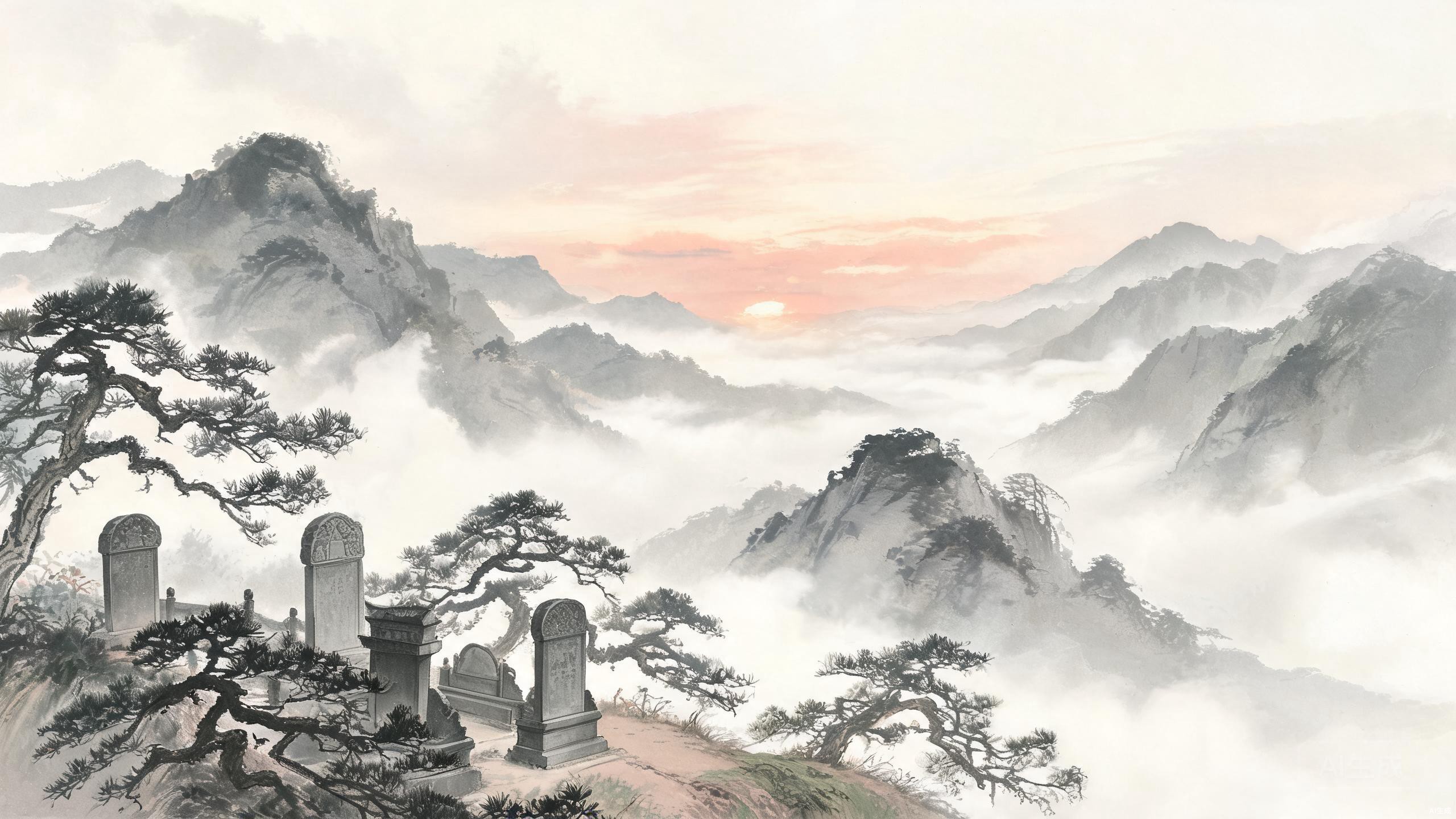
"Before the campaign's triumph, his life was claimed; forever heroes weep with sleeves full of tears." Zhuge Liang (诸葛亮) devoted himself entirely to his cause, only to fall ill and die at Wuzhang Plateau. Yet the location of his burial has become an eternal enigma — where exactly lies the true tomb of the Marquis of Wu? This is not only a historical mystery, but also one of the most famous cases in Feng Shui lore.
Death at Wuzhang Plateau
In the twelfth year of Jianxing (234 AD) during the Shu Han era, Zhuge Liang launched his sixth Northern Expedition, confronting Sima Yi across the southern bank of the Wei River at Wuzhang Plateau. In August, the exhausted Zhuge Liang fell gravely ill and passed away in his military camp at the age of fifty-four.
On his deathbed, Zhuge Liang left these final instructions: "Bury me at Dingjun Mountain in Hanzhong; let the mountain itself serve as the tomb. The mound need only contain the coffin; dress me in my everyday clothes and place no burial objects within." — He requested burial at Dingjun Mountain, with the mountain itself forming the tomb. The grave was to be just large enough for the coffin, he was to be dressed in his ordinary garments, and no grave goods were to be included.
These instructions were brief yet extraordinary, concealing profound meaning behind their simplicity.
Why Was Dingjun Mountain Chosen?
Why did Zhuge Liang abandon Chengdu and his hometown in favor of Dingjun Mountain in Hanzhong? This question has sparked countless theories throughout history.
| Theory | Basis | Analysis |
|---|---|---|
| Strategic Wish Theory | Dingjun Mountain was the Hanzhong stronghold; burial here would allow his "spirit to guard Hanzhong" | Aligns with Zhuge Liang's "Northern Expedition" ambitions |
| Frugal Burial Theory | The mountain itself as tomb, no burial objects | Reflects Zhuge Liang's integrity and thrift |
| Feng Shui Site Selection Theory | Dingjun Mountain's favorable Feng Shui landscape | Dragon-like mountain ridges, Qi gathers and does not scatter |
| Anti-Grave Robbery Theory | A modest burial with no valuables deters tomb raiders | Using "emptiness" to guard against "fullness" |
| Political Symbolism Theory | Hanzhong was the land of Han's revival; burial here demonstrates loyalty | Echoes the ideal of "restoring the Han Dynasty" |
From a Feng Shui perspective, Dingjun Mountain possesses truly remarkable qualities. Located in present-day Mian County, Shaanxi, it belongs to the southern extension of the Qinling Mountains. The terrain is majestic and powerful, with mountain ranges embracing it on both sides. To its front, the Han River winds gracefully past. With "Back to Mountain Facing Water" (背山面水) and the complete presence of all Four Celestial Animals (四象), it forms a naturally auspicious site.
Cultural Context: The Four Celestial Animals (四象) — Azure Dragon (青龙) to the east, White Tiger (白虎) to the west, Vermilion Bird (朱雀) to the south, and Black Tortoise (玄武) to the north — form the classical Feng Shui guardian framework. A site flanked by all four represents perfect environmental harmony and protection.
More importantly, Dingjun Mountain was the frontier stronghold of Zhuge Liang's Northern Expeditions — the place that occupied his thoughts until his final breath. Being buried here offered the most fitting interpretation of his life motto, "Devote one's all until death," and also embodied the Feng Shui principle of "Bury in a Suitable Place; Let the Soul Find Its Home" (葬于所宜、魂归有处).
The True Tomb and the Memorial Tomb
The heart of the Zhuge Liang tomb mystery lies in the debate over the "true tomb" versus the "memorial tomb."
Today, there are two main locations associated with Zhuge Liang's burial:
1. Wuhou Tomb in Mian County
Located at the foot of Dingjun Mountain in Mian County, Shaanxi, this is the officially recognized tomb of the Marquis of Wu from historical records. The mound is tall and imposing, with a shrine standing before it that has been maintained and restored through successive dynasties. Among the numerous stone inscriptions within, the most ancient is the "Wuhou New Temple Stele" erected by Shen Jiong (沈迥) during the Tang Dynasty. The majority of historians consider this site to contain Zhuge Liang's true tomb.
2. The Memorial Tomb at Chengdu Wuhou Shrine
Within the Chengdu Wuhou Shrine, there is also a "Zhuge Liang Tomb," which scholars generally regard as a "memorial tomb" (衣冠冢) — a commemorative burial containing only garments and headwear, not the actual remains. Since Zhuge Liang instructed burial at Dingjun Mountain, the Chengdu tomb is believed to have been constructed by later generations as a memorial.
3. The "Secret Burial" of Folk Legend
Another popular folk account claims that Zhuge Liang, knowing full well his "merits had outshone his lord's," feared his tomb would be desecrated or politically exploited after death. He therefore secretly ordered his most trusted followers to bury him at an undisclosed location on Dingjun Mountain, while the publicly known "Wuhou Tomb" was only a memorial tomb.
| Zhuge Liang Tomb Location | Nature | Primary Evidence |
|---|---|---|
| Dingjun Mountain Wuhou Tomb, Mian County | Officially recognized true tomb | Records of the Three Kingdoms records burial instructions |
| Chengdu Wuhou Shrine Tomb | Memorial tomb | Built by later generations for commemoration |
| Legendary secret burial site | Folk legend | Speculation based on Zhuge Liang's legendary foresight |
"Four Men Bore the Coffin; Where the Rope Broke, There He Was Buried"
Regarding Zhuge Liang's burial process, there is a widely circulated legend:
On his deathbed, Zhuge Liang secretly instructed Liu Shan, telling four soldiers to carry the coffin southward: "Where the rope breaks, there bury me." Liu Shan followed the instructions, and the four soldiers set off carrying the coffin. However, after several days, the rope simply would not break. Exhausted, the soldiers secretly conspired among themselves, cut the rope, buried the coffin on the spot, and reported to Liu Shan that "the rope broke and we buried him there."
Liu Shan grew suspicious and tortured them until they confessed the truth; all four were executed. From that moment on, the true location of Zhuge Liang's tomb became an eternal, unsolvable mystery.
Although this legend does not appear in official historical records, it reflects the popular reverence for Zhuge Liang's "divine ingenuity" — even after death, he ensured his burial site would remain secret through the "rope-breaking" method. This wisdom of "protecting the tomb through mystery" is perfectly consistent with the brilliant stratagems he employed during his lifetime, such as the "Empty Fort Strategy" and the "Straw Boat Borrowing Arrows."
A Feng Shui Perspective
From a Feng Shui standpoint, the Zhuge Liang tomb mystery reflects several fascinating concepts:
First, the minimalist principle of "using the mountain as the tomb." Zhuge Liang's instruction to "let the mountain serve as the tomb, the mound containing only the coffin" completely abandoned the elaborate burial traditions of emperors and nobility. This was not merely frugality — it also aligned with the highest Feng Shui ideal of "taking the mountain as the acupoint and nature as the coffin." The finest Feng Shui is, after all, the natural world itself.
Second, the principle of "Bury in a Suitable Place." Zhuge Liang was not buried in his hometown (Langya Yangdu) nor in Chengdu, but at Dingjun Mountain — embodying the idea of "burying where it is fitting, so the soul finds its home." Dingjun Mountain symbolized his life's work, and burial here gave his spirit a place to rest.
Third, the anti-theft wisdom of "using nothing to protect against something." The "no burial objects" minimalist burial, from a Feng Shui "form" perspective, represents "emptiness" — yet this emptiness served as the most effective anti-theft measure: with nothing to steal, no one would bother to rob it. This philosophy of "using emptiness to overcome fullness" is deeply aligned with Laozi's teaching that "through non-action, nothing is left undone."
Centuries of Pilgrimage
Since its establishment, Zhuge Liang's tomb has drawn countless pilgrims across the ages. During the Tang Dynasty, Du Fu visited; in the Song Dynasty, Lu You made the journey; in the Ming Dynasty, Yang Shen paid his respects. These luminaries left behind numerous poems and inscriptions. The most famous remains Du Fu's line, "Before the campaign's triumph, his life was claimed; forever heroes weep with sleeves full of tears" — a verse that has become an immortal masterpiece.
| Dynasty | Notable Pilgrim | Representative Verse / Inscription |
|---|---|---|
| Tang | Du Fu | "Before the campaign's triumph, his life was claimed" |
| Song | Lu You | "Weeping for the Marquis of Wu before Dingjun Mountain" |
| Ming | Yang Shen | Composed shrine couplets |
| Qing | Prince Guo | Inscribed the plaque "Famous Throughout the Universe" |
| Modern Era | Yu Youren and others | Numerous poems and inscriptions |
The True Tomb's Location No Longer Matters
After eighteen hundred years, the true location of Zhuge Liang's tomb may never be definitively confirmed. Yet for later generations, this no longer matters. What endures is the spirit of Zhuge Liang's "utter devotion until death," which transcends any specific burial site and remains deeply etched in the memory of the Chinese people.
As a couplet before the Wuhou Tomb eloquently states: "The river's waves murmur like a hero's tears; the mountain named Dingjun holds the heart of a timeless champion." Whether Feng Shui or mystery, what truly moves the heart is that enduring spirit of devotion to one's country.
Key Feng Shui Concepts
- Using the Mountain as the Tomb (因山为坟): The Feng Shui principle of burial following natural mountain contours without constructing artificial mounds, representing the highest ideal of "taking nature as the acupoint."
- Modest Burial (薄葬): A burial method with minimal or no grave goods, reflecting both frugality and practical anti-theft considerations.
- Memorial Tomb (衣冠冢): A commemorative burial containing only garments and headwear rather than remains, commonly used to honor figures whose remains cannot be recovered or whose burial site is unknown.
- Bury in a Suitable Place (葬于所宜): The principle of selecting a burial location connected to the deceased's life and aspirations, so the soul finds its proper resting place.
- Rope-Breaking Burial (绳断而葬): A folk narrative motif of "letting heaven determine the burial site," reflecting reverence for "acting in accordance with the natural order."
Related Articles
- [[../05-命理与运势/09-面相断Yin Dwelling风水.md|Face Reading for Yin Dwelling Feng Shui — Reading Graves Through the Nose and Facial Correspondences]]
- [[../08-百科问答库/50-墓碑有什么风水讲究?墓碑朝向怎么定?.md|Feng Shui Guidelines for Tombstones — How to Determine Tombstone Orientation]]
- [[../08-百科问答库/29-什么是穴位?点穴是什么意思?.md|What Are Acupoints in Feng Shui? What Does Pointing Acupoints Mean?]]
- [[../09-Yin Dwelling风水/53-Yin Dwelling风水中的理气方法.md|Compass Energy Methods in Yin Dwelling Feng Shui]]