Feng Shui vs Superstition: What Is the Difference and How to Think About Feng Shui?
Answer: Understanding the distinction between Feng Shui and superstition is essential for anyone who wants to apply Feng Shui knowledge correctly in their life. ### The Fundamental Differences Between
Question: What is the real difference between Feng Shui and superstition? Why do many people dismiss Feng Shui as mere superstition?
Answer: Understanding the distinction between Feng Shui and superstition is essential for anyone who wants to apply Feng Shui knowledge correctly in their life.
The Fundamental Differences Between Feng Shui and Superstition
First, the theoretical foundations are different. Feng Shui is built on a complete theoretical system — including Yin and Yang, the Five Elements (Wu Xing), Bagua (Eight Trigrams), Nine Palaces, and the Heavenly Stems and Earthly Branches. Although these concepts originated in ancient philosophy, they follow an internal logic and systematic structure. Superstition, by contrast, lacks any systematic theory — it tends to be scattered, one-dimensional, and held without any logical basis.
Cultural Context: The theoretical framework of Feng Shui — Yin and Yang, Five Elements, Bagua — was developed over thousands of years by Chinese scholars, astronomers, and architects. Think of it as an early form of environmental design science, similar to how Western architecture developed Vitruvian principles of "firmness, commodity, and delight."
Second, the methods of practice are different. Feng Shui emphasizes "adapting to local conditions" and "adapting to the individual." It analyzes and adjusts specifically based on environment, timing, and the people involved, following a complete set of operational methods and evaluation criteria. Superstition, on the other hand, tends to be dogmatic, mechanical, and indifferent to specific circumstances.
Third, the methods of verification are different. Many Feng Shui principles can be validated through modern science — including environmental studies, psychology, and architecture — and their effects can be observed and tested to a degree. Superstition cannot typically be verified through scientific methods; it relies more on psychological suggestion.
Fourth, the goals are different. The purpose of Feng Shui is to optimize the relationship between people and their environment, improving quality of life — at its core, it is about "seeking the auspicious and avoiding the inauspicious." Superstition often exploits fear, creates dependency, and can even be used to control others or extract profit.
Why Is Feng Shui Often Mistaken for Superstition?
There are several reasons for this common misunderstanding:
One — Historical reasons. Over its long history, Feng Shui did become mixed with certain folk rituals and religious ceremonies. When these elements were exaggerated, they cast a mysterious shadow over the entire practice.
Two — Commercial exploitation. In modern society, some unethical Feng Shui practitioners exaggerate its powers to create anxiety and sell expensive "lucky charms," leaving the public with a negative impression of the practice.
Three — Cognitive bias. Many people's understanding of Feng Shui stops at surface-level sayings like "Place a fish tank to get rich" or "Hang a Bagua Mirror to dissolve Sha Qi." Without exploring the deeper principles, of course it looks like superstition.
Four — Cultural disconnection. In recent history, traditional Chinese culture was often neglected, causing the true substance and practical value of Feng Shui to be lost to the general public.
Question: How should we approach Feng Shui correctly? What scientific attitudes and methods can we adopt?
Answer: A proper approach to Feng Shui requires considering several angles.
1. Understand Feng Shui as Environmental Science
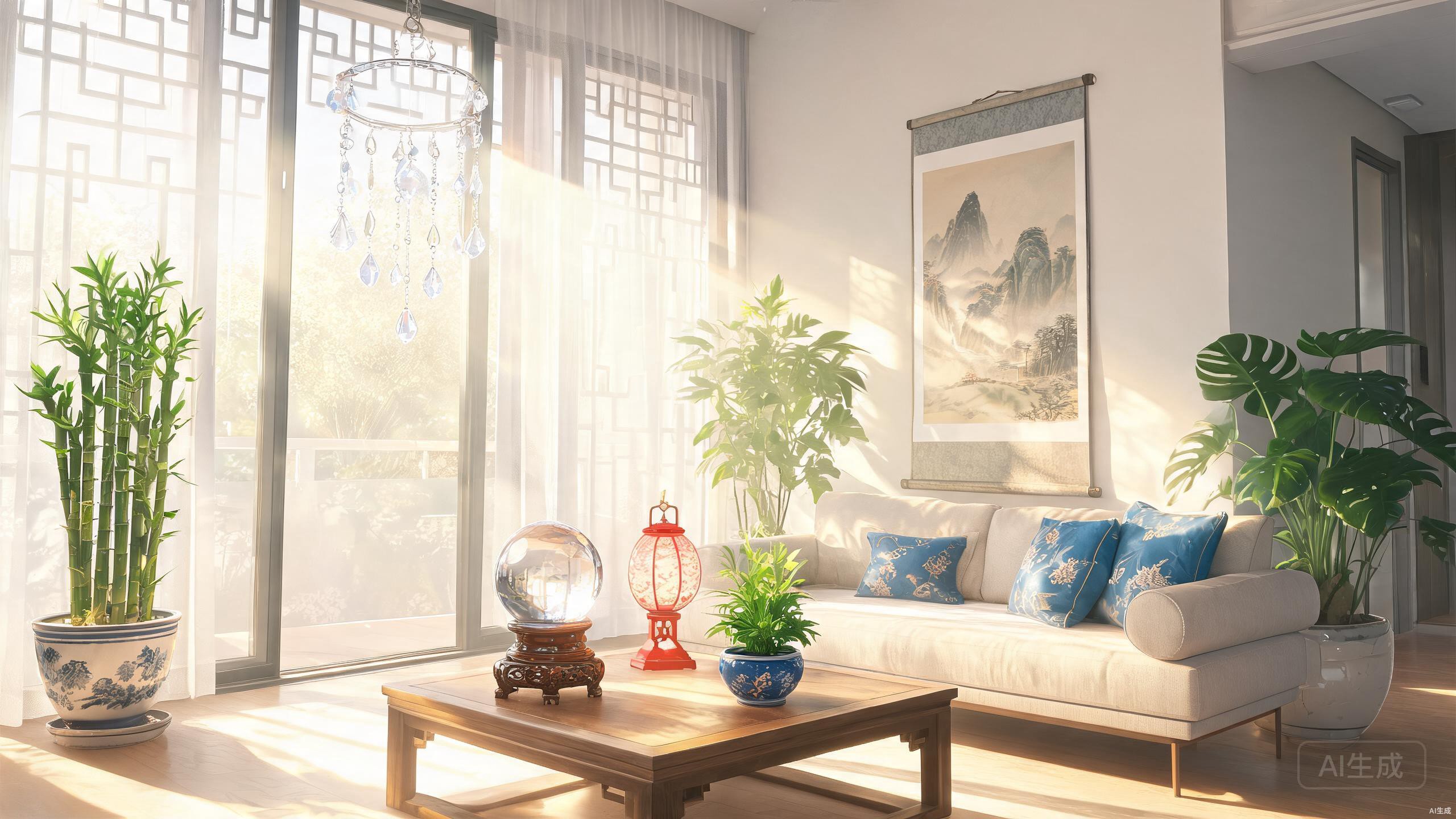
At its core, Feng Shui studies the relationship between people and their environment. A good Feng Shui environment always features: ample natural light, good ventilation, sensible layout, smooth traffic flow, and harmonious colors. From an environmental science perspective, Feng Shui is about creating a living space that nurtures both body and mind.
For example, Feng Shui emphasizes that the Bright Hall (明堂) should be open and spacious, and that the home should achieve "Storing Wind and Gathering Qi" (藏风聚气). In modern terms, this means: the living room should be bright and spacious, the bedroom should be quiet and private, and the study should have good ventilation and natural light. These are basic principles of environmental design.
How to Apply This in Your Home
- Maximize natural light: Open curtains during the day and consider mirrors to reflect light into darker corners
- Ensure proper ventilation: Allow fresh air to circulate, but avoid sleeping directly in a strong draft
- Create smooth flow: Arrange furniture so people can move easily between rooms without obstacles
- Maintain visual harmony: Choose a consistent color palette that feels calm and welcoming
Quick Tips:
- A bright, airy living room naturally invites positive social and financial energy
- Bedrooms should feel like a sanctuary — cool, quiet, and free from clutter
- Your home office should have a solid wall behind your desk (the "backing mountain" principle) for stability and focus
2. Apply Feng Shui as a Form of Psychology
A significant portion of Feng Shui's influence on people operates through psychological suggestion. A tidy, bright, organized environment makes people feel joyful and energized; a cluttered, dark, oppressive environment makes people feel down and inefficient.
So-called "auspicious" arrangements in Feng Shui tend to give people a sense of security and comfort. So-called "inauspicious" arrangements often cause visual or psychological discomfort. From this perspective, Feng Shui can be understood as a kind of "environmental psychology."
3. Respect Tradition Without Being Superstitious
Feng Shui does contain some elements that are difficult to explain through modern science — such as Life Gua (命卦) and Annual Flying Stars (流年飞星). For these, we can maintain an open mind: neither fully rejecting nor blindly believing.
The correct approach is: first meet basic environmental needs, then consider metaphysical enhancements. In other words, ensure the fundamental conditions of your living space (light, ventilation, safety, comfort) first — and if conditions allow, then reference Feng Shui teachings for further refinement.
4. Spend Wisely and Avoid Being Scammed
When it comes to Feng Shui-related purchases, keep these precautions in mind:
- Don't be swayed by claims of "consecration" or "blessing" — these are often just ways to inflate prices
- Don't blindly buy expensive Feng Shui items — much of the benefit comes from psychological suggestion, not the object itself
- Don't fall for fear-based statements like "disaster will strike if you don't fix this" — that's a classic predatory sales tactic
- Stay within your budget — Feng Shui adjustments should never cause financial stress
Quick Tip: Before buying any Feng Shui product, ask yourself: "Would this make me feel calmer and more positive?" If the answer is yes, and the price is reasonable, it may be worth it. If you're feeling pressured or fearful, walk away.
5. Focus on Action, Not Mysticism
The highest level of Feng Shui is captured in the saying: "When the heart is upright, the environment becomes upright." Rather than obsessing over external adjustments, focus on cultivating your inner character. A positive, hardworking person living in a modest home will always create a better life than a fearful, passive person living in a "perfect" Feng Shui mansion.
Question: How can you tell a genuine Feng Shui practitioner from a charlatan?
Answer: This is a very practical question. Here are some reliable criteria:
| Evaluation Criteria | Genuine Feng Shui Practitioner | Charlatan |
|---|---|---|
| Theoretical Knowledge | Can systematically explain Feng Shui principles | Only uses vague, mystical jargon |
| Site Inspection | Must visit the location to assess the environment | Claims to give conclusions remotely |
| Fee Structure | Transparent, reasonable pricing | Inflated fees, "pay based on results" |
| Recommendations | Specific, practical, realistic advice | Pushes expensive items or rituals |
| Promised Results | Cautious, conservative, no guarantees | Exaggerates effects, promises wealth and promotion |
| Attitude Toward Science | Acknowledges the validity of modern science | Rejects science, emphasizes only mystical power |
How to Protect Yourself from Feng Shui Scams
- Ask for credentials: A genuine practitioner should be able to explain their training and background
- Request a written assessment: Legitimate consultations produce clear, documented analysis
- Be wary of urgency: Real Feng Shui analysis does not require "immediate action to avoid disaster"
- Check references: Ask for testimonials from previous clients
- Trust your instincts: If something feels manipulative or fear-based, seek a second opinion
Quick Tip: A genuine Feng Shui consultation focuses on understanding your space and circumstances — not on selling you products. If the visit feels more like a sales pitch than an analysis, you're likely dealing with a charlatan.
Summary: Feng Shui is an ancient discipline of environmental design. It carries genuine cultural value and offers practical wisdom for modern living. The correct attitude toward Feng Shui is: understand it with a scientific mindset, apply it with rational methods, and avoid superstition, blind faith, and unnecessary expense.
Related Articles
- [[../06-风水文化与历史/60-风水学的未来展望.md|The Future of Feng Shui Studies]]
- [[../01-风水入门/10-风水常见误区澄清.md|Common Feng Shui Misconceptions: Distinguishing Superstition from Science]]
- [[../01-风水入门/51-风水测量工具大全.md|Complete Guide to Feng Shui Measurement Tools: From Traditional to Modern Equipment]]
- [[../02-家居风水/33-阳台风水植物.md|Feng Shui Plants for Your Balcony: Greenery for Wealth and Sha Qi Protection]]