Gravestone Feng Shui: How to Choose Materials, Inscriptions, and Direction for Auspicious Energy
Answer: A gravestone holds great importance in Yin Dwelling Feng Shui (阴宅风水, yǐn zhái fēng shuǐ) — the practice of placing burial sites to bring peace to ancestors and prosperity to descendants. The s
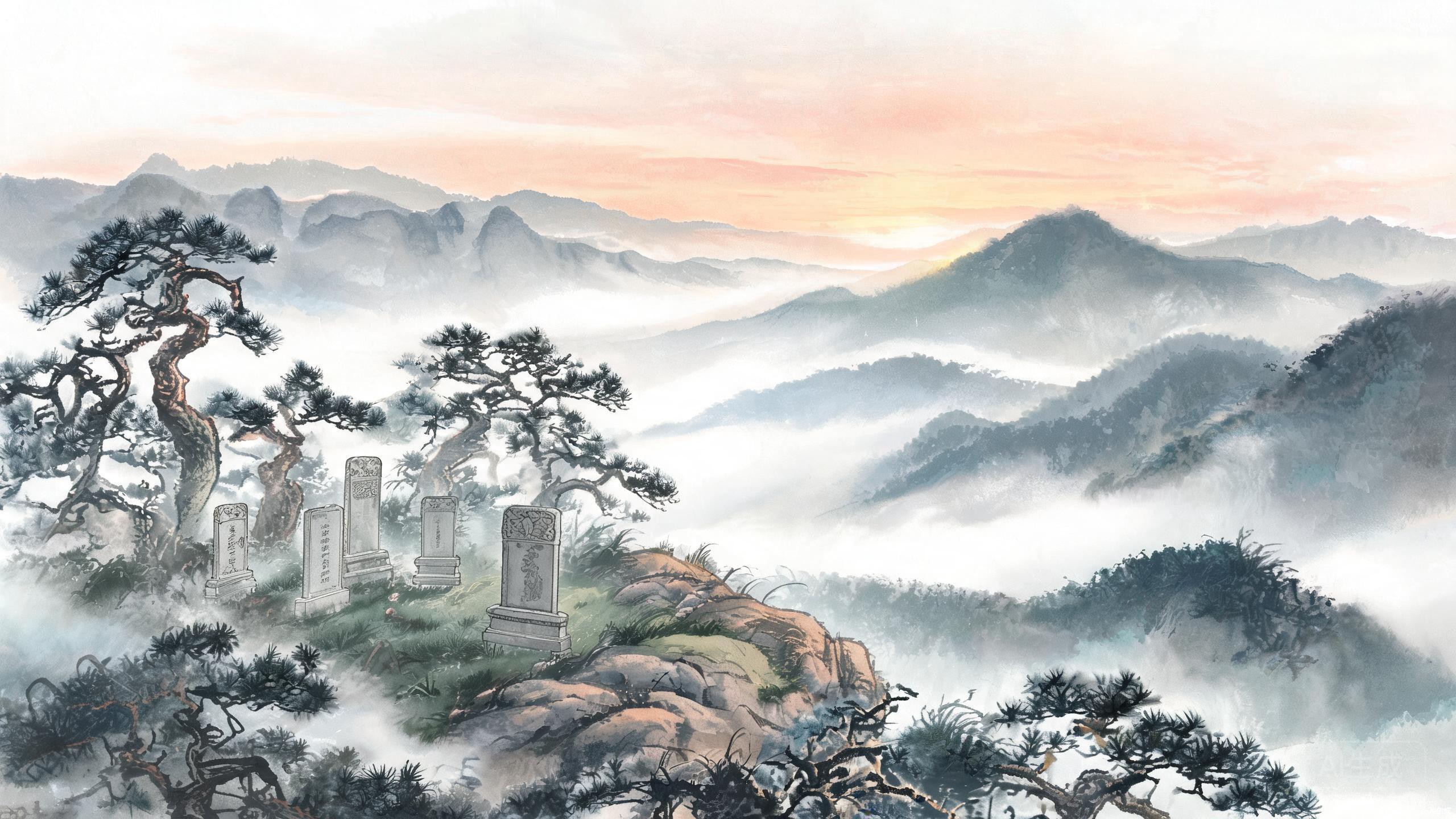
Question: What Are the Feng Shui Considerations for a Gravestone?
Answer: A gravestone holds great importance in Yin Dwelling Feng Shui (阴宅风水, yǐn zhái fēng shuǐ) — the practice of placing burial sites to bring peace to ancestors and prosperity to descendants. The stone's material, color, size, and inscriptions all carry auspicious significance.
Cultural Context: In Chinese tradition, graves are considered "Yin Dwellings" — homes for the deceased whose energy directly influences the living descendants. A well-placed gravestone helps anchor protective Qi at the burial site and ensures the ancestral spirits rest peacefully, which in turn blesses the family line.
Gravestone Materials
1. Stone Type: Gravestones are typically crafted from natural stone such as granite or marble — materials prized for their durability and dignified appearance.
2. Color: Black, gray, and white are the most common colors. Each carries its own energy and visual gravitas.
3. Quality: Choose high-quality stone that resists weathering, cracking, and discoloration over time.
Gravestone Inscriptions
1. Legible Characters: Inscriptions must be carved clearly and neatly — illegible text is considered disrespectful to the deceased.
2. Complete Content: A proper inscription should include the ancestor's full name, birth and death dates, and the names of those erecting the stone.
3. Font Style: Traditional fonts such as regular script (Kai) or clerical script (Li) are most commonly used for their elegant, time-honored appearance.
Quick Tips:
- When selecting stone, tap it lightly — a clear ringing sound indicates denser, higher-quality material
- Avoid inscriptions that face directly into harsh afternoon sun, as fading over decades is common
- Include both solar and lunar (or cyclical) calendar dates for traditional accuracy
Question: How Is Gravestone Direction Determined?
Answer: Determining the proper direction for a gravestone requires balancing several factors — classical Feng Shui principles, the ancestor's personal energy, and the surrounding landscape.
Cultural Context: A gravestone's direction is far more than a physical orientation — it determines which Qi flows toward the ancestor, how the spirit "faces" the world, and which blessings are channeled to descendants. This is why master practitioners spend hours consulting Luopan (Feng Shui Compass) readings before a single stone is placed.
1. Follow Feng Shui Principles
The gravestone direction should align with the flow of the Dragon Vein (龙脉) beneath the burial site. Generally, the stone faces toward open, expansive land — preferably where water is present or where Qi gathers naturally.
2. Consult the Ancestor's Life Gua
The gravestone direction can be chosen according to the ancestor's Life Gua (命卦) — the personal trigram derived from birth year and gender. This ensures the direction harmonizes with the deceased's original energetic signature.
3. Adapt to the Terrain
Practical considerations matter: the gravestone should face toward lower ground and open vistas whenever possible. This allows Qi to flow gently toward the stone rather than crashing against it.
4. Common Auspicious Directions
| Direction | Pinyin | Meaning & Symbolism |
|---|---|---|
| Sitting North Facing South (坐北朝南) | zuò běi cháo nán | The most common and favorable direction — abundant Yang Qi |
| Sitting West Facing East (坐西朝东) | zuò xī cháo dōng | Faces the rising sun — symbolizes hope and renewal |
| Sitting Northwest Facing Southeast (坐西北朝东南) | zuò xī běi cháo dōng nán | Backing the Qian (Heaven) position, facing the Xun (Wind) position — a balanced harmony of Trigrams |
How to Determine the Best Direction for a Gravestone
- Survey the Dragon Vein: Walk the surrounding hills and observe where the landform's energy naturally flows — the gravestone should align with, not against, this current
- Read the Luopan: Use a Luopan (Feng Shui Compass) to identify the proper facing direction based on the site's Twenty-Four Mountains (二十四山)
- Check personal compatibility: Cross-reference the chosen direction with the ancestor's Life Gua for Life-Mansion Compatibility (命宅相配)
- Confirm visual harmony: Stand at the proposed stone position and check that the view is expansive, peaceful, and free of aggressive Sha Qi (harmful energy)
Quick Tips:
- Sitting North Facing South is considered the universal default — safe and auspicious in most regions
- Avoid facing the gravestone directly toward a road, cliff, or sharp corner — these create Form Sha (形煞)
- A gentle slope descending in front of the grave allows "water" (Qi) to gather naturally
Question: What Other Feng Shui Considerations Apply to Gravestones?
Answer: Beyond material and direction, several practical details ensure the gravestone maintains its auspicious energy over decades and generations:
1. Appropriate Height: The gravestone should not be too low or too tall — moderate proportions create visual stability and balanced energy. Extremely tall stones can appear ostentatious; very low stones may seem neglected.
2. Vertical Alignment: The gravestone must remain perfectly upright. Any tilting signals disrespect and disrupts the flow of protective Qi around the burial site.
3. Maintenance & Repair: A damaged or cracked gravestone should be repaired or replaced promptly. Broken stone is considered a serious breach of filial duty in Chinese tradition.
4. Clear Foreground: Nothing should obstruct the area directly in front of the gravestone. Maintain open, clear space so Qi can flow freely toward the ancestor.
5. Clean Surroundings: Keep the area around the gravestone free of weeds, trash, fallen branches, and clutter. Regular cleaning honors the deceased and preserves the site's energetic purity.
Quick Tips:
- Visit and clean the gravestone at least once per year — ideally during Qingming (Tomb-Sweeping) Festival or the ancestor's death anniversary
- Offer fresh flowers, incense, and clean water to keep the energy of the site vibrant and harmonious
- If the gravestone shifts due to ground settling, have it re-leveled immediately to prevent energy disruption
Summary
The gravestone is a vital component of Yin Dwelling Feng Shui (阴宅风水), carrying deep meaning in material selection, inscription quality, and directional placement. When the gravestone direction is chosen wisely — in harmony with the Dragon Vein, the ancestor's Life Gua, and the natural terrain — it brings peace to the departed and lasting auspicious fortune (运势, yùn shì) to their descendants for generations to come.
Related Articles
- [[../09-Yin Dwelling风水/22-墓碑朝向的确定方法.md|How to Determine the Direction of a Gravestone]]
- [[../05-命理与运势/09-面相断Yin Dwelling风水.md|Face Reading and Yin Dwelling Feng Shui — Reading Burial Sites Through the Nose and Facial Features]]
- [[../07-风水故事/58-风水与丧葬.md|Feng Shui and Burial Customs — The Ancient Tradition of Yin Dwelling Feng Shui]]
- [[../07-风水故事/01-曾国藩葬地择选记.md|The Burial Site Selection of Zeng Guofan — The Feng Shui Wisdom of "Heaven Fears Cunning"]]